

Finding the right words can make your English clearer, more precise, and effective. The phrase “abuse of power” is commonly used when someone unfairly uses their authority, position, or influence for personal or improper purposes.
Learning a synonym for abuse of power can help you avoid repetition and describe misuse of authority more accurately. Depending on the context, terms such as misuse of authority, exploitation of power, corruption, or oppression may be appropriate.
In this guide, we will explore useful alternatives, their meanings, and simple examples. Understanding a synonym for abuse of power can help students, writers, bloggers, and English learners discuss authority and unfair behavior clearly.
Whether you are writing an essay, preparing a report, creating content, or improving everyday English, choosing the right expression matters. By learning each synonym for abuse of power, you can communicate your ideas with greater clarity and confidence.
What Does “Synonym For Abuse Of Power” Really Mean?
Synonym for abuse of power means finding alternative terms that express the corrupt, unfair, or illegal exercise of authority by leaders. It sets up a serious political tone aimed at capturing tyranny, corruption, or executive overreach.
Native speakers use these terms when discussing corrupt politicians, unfair corporate bosses, or unlawful police actions. It carries a heavy political, legal, and moral emotional tone. It usually suggests betrayal of trust, executive tyranny, and systemic corruption.
Connotative Meaning
- Positive tone: None; this concept is inherently critical and points entirely toward political corruption.
- Negative tone: Associated with tyranny, oppression, corruption, and the betrayal of public trust.
- Neutral tone: Used in academic political science texts, legal indictments, and historical analyses.
- Connotation definition: (The emotional or cultural feeling attached to a word or phrase beyond its strict dictionary definition).

Etymology
- Source Language: Latin and Anglo-French roots combined with legal terminology for office and misuse.
- Original Meaning: Originally referred to using an official office or duty wrongly or deceitfully for personal gain.
- Old English (450–1100): Early Germanic terms expressed ruling wrongly, using native words for harsh rule and theft.
- Middle English (1100–1500): Borrowed French and Latin legal terms entered administrative vocabulary for official misbehavior.
- Modern English (1500–Present): Fully established as standard expressions describing government corruption and executive overreach.
Pronunciation (US & UK – IPA)
- US: /ˈsɪnəˌnɪm fɔːr əˈbjuːs ʌv ˈpaʊər/
- UK: /ˈsɪnənɪm fɔːr əˈbjuːs ʌv ˈpaʊə/
Syllables & Affixation Pattern
- Syllables: syn-o-nym-for-a-buse-of-pow-er
- Root: uti (to use) and potis (powerful)
- Prefix: ab- (away from / wrong)
- Suffix: -ion (noun-forming suffix)
Synonyms List
Corruption (Noun) — US: /kəˈrʌpʃən/ — UK: /kəˈrʌpʃn/
- Meaning: Dishonest or fraudulent conduct by those in power, typically involving bribery.
- Tone/Register: Formal, political.
- Example: Government reforms aimed at eliminating public sector corruption.
- Example: Investigative reporters uncovered deep financial corruption in office.
Tyranny (Noun) — US: /ˈtɪrəni/ — UK: /ˈtɪrəni/
- Meaning: Cruel and oppressive government or rule by a single absolute leader.
- Tone/Register: Literary, formal.
- Example: Citizens fought hard against decades of military tyranny.
- Example: History books study the fall of ancient political tyranny.
Malfeasance (Noun) — US: /mælˈfiːzəns/ — UK: /mælˈfiːzəns/
- Meaning: Wrongdoing, especially by a public official in an administrative role.
- Tone/Register: Legal, formal.
- Example: The mayor faced criminal charges for official malfeasance.
- Example: Auditors investigated the agency for financial malfeasance.
Misconduct (Noun) — US: /ˌmɪsˈkɑːndʌkt/ — UK: /ˌmɪsˈkɒndʌkt/
- Meaning: Unacceptable or illegal behavior by a person in a professional position.
- Tone/Register: Professional, legal.
- Example: Police officers faced suspension due to serious professional misconduct.
- Example: The board investigated executives for workplace sexual misconduct.
Overreach (Noun) — US: /ˈoʊvərˌriːtʃ/ — UK: /ˈəʊvəˌriːtʃ/
- Meaning: An act of going too far or exceeding proper limits of authority.
- Tone/Register: Political, formal.
- Example: Critics argued the new regulations were executive overreach.
- Example: Lawmakers debated limits to prevent federal judicial overreach.
Despotism (Noun) — US: /ˈdɛspəˌtɪzəm/ — UK: /ˈdespətɪzəm/
- Meaning: The exercise of absolute power, especially cruelly and oppressively.
- Tone/Register: Academic, formal.
- Example: Philosophers wrote essays warning against the rise of despotism.
- Example: The revolution successfully overthrew royal despotism.
Autocracy (Noun) — US: /ɔːˈtɑːkrəsi/ — UK: /ɔːˈtɒkrəsi/
- Meaning: A system of government by one person with absolute political power.
- Tone/Register: Political, formal.
- Example: Democratic nations opposed the expansion of regional autocracy.
- Example: Citizens protested the shift toward state autocracy.
Oppression (Noun) — US: /əˈprɛʃən/ — UK: /əˈpreʃn/
- Meaning: Prolonged cruel or unjust treatment and exercise of authority.
- Tone/Register: Formal, serious.
- Example: Refugees fled their homeland to escape political oppression.
- Example: Literature often explores themes of social oppression.
Misrule (Noun) — US: /ˈmɪsˌruːl/ — UK: /ˈmɪsˌruːl/
- Meaning: Bad administration or governance of a country or institution.
- Tone/Register: Literary, formal.
- Example: Years of economic misrule ruined the national currency.
- Example: Citizens blamed the famine on royal misrule.
Perversion (Noun) — US: /pərˈvɜːrʒən/ — UK: /pɜːˈvɜːʃn/
- Meaning: The alteration of something from its original course, meaning, or state to a bad one.
- Tone/Register: Formal, serious.
- Example: Legal scholars called the biased verdict a perversion of justice.
- Example: Critics viewed the rigged election as a perversion of democracy.
Extortion (Noun) — US: /ɪkˈstɔːrʃən/ — UK: /ɪkˈstɔːʃn/
- Meaning: The practice of obtaining something, especially money, through force or threats.
- Tone/Register: Legal, criminal.
- Example: Mob bosses were convicted of systematic extortion and fraud.
- Example: Corrupt officials faced prison sentences for extortion.
Graft (Noun) — US: /ɡræft/ — UK: /ɡrɑːft/
- Meaning: Practices, especially bribery, used to secure illicit gains in politics or business.
- Tone/Register: Journalistic, formal.
- Example: Newspapers published exposés detailing municipal political graft.
- Example: The anti-corruption committee targeted government graft.
Nepotism (Noun) — US: /ˈnɛpəˌtɪzəm/ — UK: /ˈnepətɪzəm/
- Meaning: The practice among those with power or influence of favoring relatives or friends.
- Tone/Register: Professional, formal.
- Example: The CEO resigned following scandals involving corporate nepotism.
- Example: Government hiring policies banned nepotism and cronyism.
Cronyism (Noun) — US: /ˈkroʊniˌɪzəm/ — UK: /ˈkrəʊniɪzəm/
- Meaning: The appointment of friends and associates to positions of authority without regard to qualifications.
- Tone/Register: Political, formal.
- Example: Voters rejected the candidate because of widespread cronyism.
- Example: Administrative reforms aimed at rooting out institutional cronyism.
Exploitation (Noun) — US: /ˌɛksplɔɪˈteɪʃən/ — UK: /ˌeksplɔɪˈteɪʃn/
- Meaning: The action or fact of treating someone unfairly to benefit from their work.
- Tone/Register: Academic, formal.
- Example: Labor unions protested against corporate worker exploitation.
- Example: Laws were passed to prevent the financial exploitation of elders.
Subjugation (Noun) — US: /ˌsʌbdʒəˈɡeɪʃən/ — UK: /ˌsʌbdʒɪˈɡeɪʃn/
- Meaning: The action of bringing someone or something under control by force.
- Tone/Register: Historical, formal.
- Example: Imperial powers enforced the subjugation of indigenous populations.
- Example: Historical texts recorded centuries of colonial subjugation.
Hegemony (Noun) — US: /hɪˈɡɛməni/ or /ˈhɛdʒəmoʊni/ — UK: /hɪˈɡeməni/
- Meaning: Leadership or dominance, especially by one state or social group over others.
- Tone/Register: Academic, political.
- Example: Superpowers competed for global economic hegemony.
- Example: Cultural hegemony influenced modern media production.
Domination (Noun) — US: /ˌdɑːmɪˈneɪʃən/ — UK: /ˌdɒmɪˈneɪʃn/
- Meaning: The exercise of control or power over someone or something.
- Tone/Register: Formal, serious.
- Example: The empire sought regional military domination.
- Example: Athletes trained hard to achieve market domination.
Coercion (Noun) — US: /koʊˈɜːrʒən/ — UK: /kəʊˈɜːʃn/
- Meaning: The practice of persuading someone to do something by using force or threats.
- Tone/Register: Legal, formal.
- Example: Confessions obtained through police coercion were thrown out.
- Example: Contracts signed under coercion are legally invalid.
Intimidation (Noun) — US: /ɪnˌtɪmɪˈdeɪʃən/ — UK: /ɪnˌtɪmɪˈdeɪʃn/
- Meaning: The action of intentionally frightening someone, especially to get them to do something.
- Tone/Register: Legal, journalistic.
- Example: Voters reported facing intimidation outside polling stations.
- Example: The boss faced lawsuits for workplace bullying and intimidation.
Tyrannizing (Verb) — US: /ˈtɪrəˌnaɪzɪŋ/ — UK: /ˈtɪrənaɪzɪŋ/
- Meaning: Ruling or controlling someone cruelly and oppressively.
- Tone/Register: Literary, formal.
- Example: Local gangs spent years tyrannizing small business owners.
- Example: The harsh dictator enjoyed tyrannizing civilian populations.
Bullying (Noun) — US: /ˈbʊliɪŋ/ — UK: /ˈbʊliɪŋ/
- Meaning: Superior strength or influence used to intimidate someone, typically to force them to do something.
- Tone/Register: Everyday, professional.
- Example: Schools implemented strict policies against student bullying.
- Example: Corporate leaders cracked down on executive bullying.

Harassment (Noun) — US: /ˈhærəsmənt/ or /həˈræsmənt/ — UK: /həˈræsmənt/
- Meaning: Aggressive pressure or intimidation, especially in a workplace.
- Tone/Register: Legal, professional.
- Example: Employees filed formal complaints regarding workplace harassment.
- Example: Laws protect citizens against online stalking and harassment.
Usurpation (Noun) — US: /ˌjuːsərˈpeɪʃən/ — UK: /ˌjuːzəˈpeɪʃn/
- Meaning: The illegal taking or holding of a position of power or throne by force.
- Tone/Register: Historical, formal.
- Example: Historians studied the political usurpation of the crown.
- Example: The military coup was viewed as a direct usurpation of authority.
Dictatorship (Noun) — US: /dɪkˈtātərSHəp/ — UK: /dɪkˈteɪtəʃɪp/
- Meaning: Government by a dictator holding absolute autocratic power.
- Tone/Register: Political, formal.
- Example: The nation transitioned from dictatorship to a democratic republic.
- Example: Human rights groups condemned the brutal military dictatorship.
Hegemonic (Adjective) — US: /hɪˈɡɛmɑːnɪk/ — UK: /hɪˈɡemɒnɪk/
- Meaning: Ruling or dominant in a political or social context.
- Tone/Register: Academic, formal.
- Example: Scholars analyzed hegemonic influences in global trade.
- Example: The empire maintained hegemonic control over trade routes.
Arbitrariness (Noun) — US: /ˌɑːrbɪˈtrɛrɪnəs/ — UK: /ˌɑːbɪˈtrerɪnəs/
- Meaning: The quality of being based on random choice or personal whim rather than reason.
- Tone/Register: Legal, academic.
- Example: Lawyers criticized the arbitrariness of the judicial sentencing.
- Example: Citizens disliked the arbitrariness of bureaucratic rule enforcement.
Authoritarianism (Noun) — US: /əˌθɔːrɪˈtɛriənɪzəm/ — UK: /ɔːˌθɒrɪˈteəriənɪzəm/
- Meaning: The enforcement or advocacy of strict obedience to authority at the expense of personal freedom.
- Tone/Register: Political, formal.
- Example: Political scientists tracked the global rise of authoritarianism.
- Example: Protesters marched against state authoritarianism.
Totalitarianism (Noun) — US: /toʊˌtælɪˈtɛriənɪzəm/ — UK: /təʊˌtælɪˈteəriənɪzəm/
- Meaning: A system of government that is centralized and dictatorial and requires complete subservience to the state.
- Tone/Register: Academic, formal.
- Example: Historical textbooks detail twentieth-century European totalitarianism.
- Example: Novels like 1984 portray the horrors of totalitarianism.
Hegemony (Noun) — US: /hɪˈɡɛməni/ — UK: /hɪˈɡeməni/
- Meaning: Political or cultural dominance of one over others.
- Tone/Register: Academic, formal.
- Example: Economic hegemony allows powerful nations to set global terms.
- Example: Regional hegemony destabilized neighboring states.
Overlordship (Noun) — US: /ˈoʊvərˌlɔːrdʃɪp/ — UK: /ˈəʊvəˌlɔːdʃɪp/
- Meaning: The status, rule, or authority of an overlord.
- Tone/Register: Historical, literary.
- Example: Vassal states resented imperial overlordship and high taxes.
- Example: Medieval lords maintained strict overlordship of regional lands.
Misapplication (Noun) — US: /ˌmɪsæplɪˈkeɪʃən/ — UK: /ˌmɪsæplɪˈkeɪʃn/
- Meaning: The incorrect application of a rule, law, or funds.
- Tone/Register: Legal, formal.
- Example: Auditors discovered the misapplication of municipal grant funds.
- Example: Lawyers argued the misapplication of copyright laws.
Misappropriation (Noun) — US: /ˌmɪsəˌproʊpriˈeɪʃən/ — UK: /ˌmɪsəˌprəʊpriˈeɪʃn/
- Meaning: The unauthorized use of funds entrusted to one’s care, typically for embezzlement.
- Tone/Register: Legal, financial.
- Example: The treasurer was jailed for the misappropriation of charity funds.
- Example: Corporate audits revealed massive asset misappropriation.
Embezzlement (Noun) — US: /ɪmˈbɛzəlmənt/ — UK: /ɪmˈbezəlmənt/
- Meaning: Theft or misappropriation of funds placed in one’s trust or belonging to one’s employer.
- Tone/Register: Legal, financial.
- Example: Accountants uncovered millions lost to corporate embezzlement.
- Example: The bank manager faced trial for grand embezzlement.
Defalcation (Noun) — US: /ˌdiːfælˈkeɪʃən/ — UK: /ˌdiːfælˈkeɪʃn/
- Meaning: Embezzlement of funds by a person entrusted with them.
- Tone/Register: Legal, archaic.
- Example: Court documents detailed the clerk’s financial defalcation.
- Example: Insurance covered losses from employee defalcation.
Malversation (Noun) — US: /ˌmælvərˈseɪʃən/ — UK: /ˌmælvəˈseɪʃn/
- Meaning: Misbehavior or corruption in a public office or position of trust.
- Tone/Register: Legal, formal.
- Example: The official was impeached for grave malversation of duties.
- Example: Historical statutes punished public malversation severely.
Injustice (Noun) — US: /ɪnˈdʒʌstɪs/ — UK: /ɪnˈdʒʌstɪs/
- Meaning: Lack of fairness or justice; an unfair act.
- Tone/Register: Standard, formal.
- Example: Activists protested against systemic social injustice.
- Example: The court ruling was seen as a profound injustice.
Tyrannous (Adjective) — US: /ˈtɪrənəs/ — UK: /hɪˈɡeməni/ -> /ˈtɪrənəs/
- Meaning: Exercising power in a cruel, authoritarian, or oppressive way.
- Tone/Register: Literary, formal.
- Example: Citizens resisted the tyrannous demands of the governor.
- Example: Poets wrote verses against tyrannous rulers.
Oppressive (Adjective) — US: /əˈprɛsɪv/ — UK: /əˈpresɪv/
- Meaning: Inflicting harsh and authoritarian treatment.
- Tone/Register: Formal, descriptive.
- Example: Workers complained about oppressive tax laws.
- Example: The heat was oppressive during the summer drought.
Despotic (Adjective) — US: /dɪˈspɑːtɪk/ — UK: /dɪˈspɒtɪk/
- Meaning: Of or typical of a despot; tyrannical.
- Tone/Register: Academic, formal.
- Example: The despotic ruler banned independent newspapers.
- Example: Citizens fled the despotic regime.
Autocratic (Adjective) — US: /ˌɔːtəˈkrætɪk/ — UK: /ˌɔːtəˈkrætɪk/
- Meaning: Relating to a ruler who has absolute power.
- Tone/Register: Political, formal.
- Example: The prime minister rejected autocratic governance styles.
- Example: Protesters demanded an end to autocratic rule.
Dictatorial (Adjective) — US: /ˌdɪktəˈtɔːriəl/ — UK: /ˌdɪktəˈtɔːriəl/
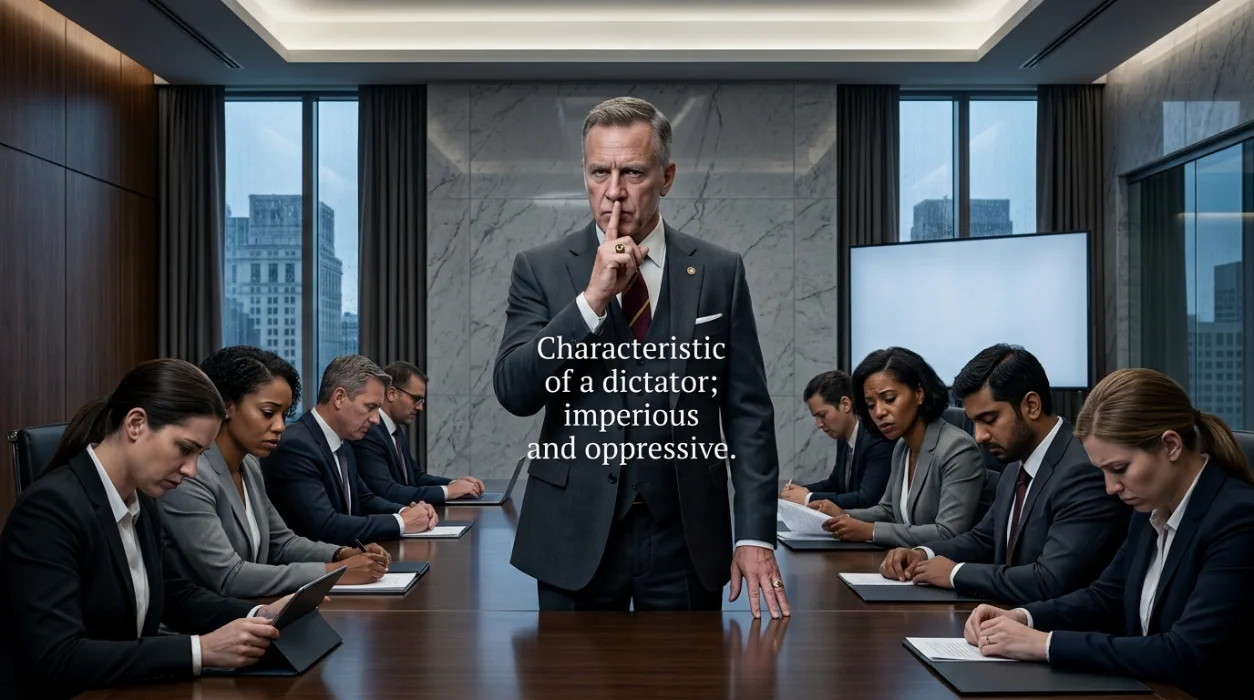
- Meaning: Characteristic of a dictator; imperious and oppressive.
- Tone/Register: Formal, critical.
- Example: Staff disliked the manager’s dictatorial leadership approach.
- Example: The union opposed dictatorial workplace decrees.
Arbitrary (Adjective) — US: /ˌɑːrbɪˈtrɛri/ — UK: /ˌɑːbɪˈtrəri/
- Meaning: Based on random choice or personal whim, rather than any reason or system.
- Tone/Register: Formal, legal.
- Example: Employees resented arbitrary rule changes by management.
- Example: The judge overturned arbitrary arrest warrants.
Coercive (Adjective) — US: /koʊˈɜːrsɪv/ — UK: /kəʊˈɜːsɪv/
- Meaning: Relating to or using force or threats.
- Tone/Register: Legal, formal.
- Example: International treaties ban coercive interrogation techniques.
- Example: The company used coercive tactics to retain clients.
Overbearing (Adjective) — US: /ˌoʊvərˈbɛrɪŋ/ — UK: /ˌəʊvəˈbeərɪŋ/
- Meaning: Unpleasantly dominant and dictatorial.
- Tone/Register: Descriptive, formal.
- Example: His overbearing attitude alienated team members quickly.
- Example: She disliked overbearing bosses who micromanaged work.
Imperious (Adjective) — US: /ɪmˈpɪəriəs/ — UK: /ɪmˈpɪəriəs/
- Meaning: Assuming power or authority without justification; arrogant and domineering.
- Tone/Register: Literary, formal.
- Example: The director made imperious demands on the staff.
- Example: She gave an imperious wave of her hand.
Domineering (Adjective) — US: /ˌdɑːmɪˈnɪrɪŋ/ — UK: /ˌdɒmɪˈnɪərɪŋ/
- Meaning: Asserting one’s will over another in an arrogant way.
- Tone/Register: Descriptive, formal.
- Example: A domineering supervisor ruined office morale.
- Example: He tried hiding his domineering personality during interviews.
High-handed (Adjective) — US: /ˈhaɪˌhændɪd/ — UK: /ˌhaɪˈhændɪd/
- Meaning: Using authority without considering the feelings or wishes of others.
- Tone/Register: Journalistic, formal.
- Example: Voters condemned the council’s high-handed decision-making.
- Example: Management apologized for high-handed policy rollouts.
Absolute (Adjective) — US: /ˈæbsəˌluːt/ — UK: /ˈæbsəluːt/
- Meaning: Total and complete; not qualified or diminished in any way.
- Tone/Register: Formal, philosophical.
- Example: Absolute power corrupts political leaders over time.
- Example: Monarchy required absolute obedience from subjects.
Unchecked (Adjective) — US: /ʌnˈtʃɛkt/ — UK: /ʌnˈtʃekt/
- Meaning: Not restrained, controlled, or held in check.
- Tone/Register: Journalistic, formal.
- Example: Unchecked corporate power harms small businesses.
- Example: Corruption grew rapidly while left unchecked by courts.
Unbridled (Adjective) — US: /ʌnˈbraɪdɪld/ — UK: /ʌnˈbraɪdɪld/
- Meaning: Uncontrolled; unconstrained.
- Tone/Register: Literary, formal.
- Example: Historians warned against unbridled executive authority.
- Example: Markets suffered from unbridled speculation.
Unaccountable (Adjective) — US: /ˌʌnəˈkaʊntəbəl/ — UK: /ˌʌnəˈkaʊntəbl/
- Meaning: Unable to be accounted for or not required to account for one’s actions.
- Tone/Register: Political, formal.
- Example: Citizens protested against unaccountable government agencies.
- Example: Power left unaccountable breeds systemic corruption.
Despot (Noun) — US: /ˈdɛspɑːt/ — UK: /ˈdespɒt/
- Meaning: A ruler with absolute power, typically one who exercises it cruelly.
- Tone/Register: Literary, formal.
- Example: The brutal despot was driven from power by rebels.
- Example: History remembers cruel despots with infamy.
Autocrat (Noun) — US: /ˈɔːtəˌkræt/ — UK: /ˈɔːtəkræt/
- Meaning: A ruler with absolute power or someone who demands total obedience.
- Tone/Register: Political, formal.
- Example: The political leader ruled like an autocrat.
- Example: Reforms stripped the autocrat of emergency decree powers.
Tyrant (Noun) — US: /ˈtaɪrənt/ — UK: /ˈtaɪrənt/
- Meaning: A cruel and oppressive ruler.
- Tone/Register: Literary, historical.
- Example: Legends told of heroes overthrowing the kingdom’s tyrant.
- Example: The tyrant silenced all opposition voices in the press.
Synonyms by Tone
Choosing the right alternative depends entirely on whether you want to sound political, legal, or literary.
- Positive tone: None; political corruption concepts carry entirely critical or neutral academic tones.
- Neutral tone: Malfeasance, misconduct, overreach, misappropriation.
- Negative tone: Tyranny, corruption, oppression, despotism.
- Formal / Legal tone: Defalcation, malversation, usurpation, arbitrary.
Tone matters because using a literary word like tyrant in a corporate accounting audit report sounds overly dramatic, while saying malfeasance in a casual story looks robotic.
Mini Comparison: Corruption vs. Tyranny vs. Abuse of Power
- Corruption specifically focuses on dishonest practices, bribery, and financial gain by officials.
- Tyranny highlights cruel, absolute oppression and the total suppression of civil liberties.
- Abuse of power serves as the broad general term for any wrongful or unauthorized use of official authority.
Use corruption for bribery scandals, tyranny for brutal dictatorships, and abuse of power when discussing executive overreach.
Context-Based Usage
- Daily conversation: In casual talk, native speakers use simple words like corruption, bullying, or cheating.
- Writing or blogging: Authors use evocative terms like overreach, cronyism, or nepotism to analyze political trends.
- Professional or academic tone: Specialists rely on precise terms like malfeasance, misappropriation, and totalitarianism.
- Creative or informal use: Bloggers employ vivid terms like unbridled or unchecked to describe growing authority.
Common Mistakes & Native Usage
Common Mistakes Learners Make
- Misuse scenarios: Applying intense legal words like defalcation to simple workplace disagreements.
- Confusing tone: Mixing formal terms like malversation into casual text messages about office politics.
- Overuse warnings: Repeating the same political term throughout an essay makes your vocabulary feel repetitive rather than rich.
Register Notes
- Spoken political chats favor direct words like corruption and bullying.
- Written legal briefs reward descriptive choices like malfeasance and misappropriation.
Real-Life Mini Scenarios
- Workplace: The corporate board investigated executives for misappropriation of department travel funds.
- Social situations: Neighbors discussed stopping the unfair, high-handed rules set by the homeowners association.
- Media/pop culture: Documentaries explored political corruption and executive overreach in historical regimes.
- Writing or storytelling: Authors revised political essays, replacing basic phrases with tyranny for formal clarity.

Conclusion
Understanding different alternatives can make your English more precise, natural, and effective. A synonym for abuse of power can help you describe the misuse of authority, influence, or control in different situations.
Terms such as misuse of authority, exploitation, oppression, corruption, and tyranny can express related ideas with different meanings and levels of intensity. Choosing the right synonym for abuse of power helps make your writing clearer and more accurate.
Whether you are a student, writer, blogger, or English learner, expanding your vocabulary can improve communication. By practicing each synonym for abuse of power in essays, reports, and daily conversations, you can express your ideas with confidence.
Practice Exercise
- Which legal term best describes official wrongdoing or misconduct by a public official?
- A) Malfeasance
- B) Jogging
- C) Sleeping
- D) Swimming
- What emotional tone does the literary word tyranny typically carry?
- A) Cruel and oppressive
- B) Joyful
- C) Humorous and funny
- D) Casual and silly
- Which term is ideal for describing the unauthorized use of trust funds for personal theft?
- A) Misappropriation
- B) Donation
- C) Savings
- D) Investment
- If a government leader exercises absolute, cruel power without limits, they lead a:
- A) Despotism
- B) Republic
- C) Democracy
- D) Cooperative
- The formal term for favoring relatives for government jobs without merit is:
- A) Nepotism
- B) Gardening
- C) Teaching
- D) Cooking
- What part of speech category do words like corruption and tyranny belong to?
- A) Nouns
- B) Adjectives only
- C) Verbs only
- D) Conjunctions only
- Which expression means exceeding the proper limits of executive authority?
- A) Overreach
- B) Underline
- C) Downplay
- D) Outlines
- Describing government rule based on personal whim rather than law is called:
- A) Arbitrariness
- B) Precision
- C) Logic
- D) Reason
- The illegal taking of political power or a throne by force is known as:
- A) Usurpation
- B) Election
- C) Promotion
- D) Graduation
- Which word describes political appointments given to close friends regardless of skill?
- A) Cronyism
- B) Meritocracy
- C) Fairness
- D) Justice
Reflection Task
Write one short, original sentence using the word malfeasance to describe a corrupt public official.
Answer Key: 1: A | 2: A | 3: A | 4: A | 5: A | 6: A | 7: A | 8: A | 9: A | 10: A
FAQs
1. What is a common synonym for abuse of power?
A common synonym for abuse of power is misuse of authority. Other related terms include exploitation of power, corruption, oppression, tyranny, and misuse of authority. The best choice depends on the situation and the level of wrongdoing being described.
2. What is another way to say abuse of power?
You can say misuse of authority, exploitation of power, abuse of authority, or misuse of influence. These phrases are useful when someone uses their position, control, or influence unfairly or improperly.
3. Is “misuse of authority” the same as abuse of power?
Yes, misuse of authority is very similar to abuse of power. Both describe situations where someone uses their official position or authority in an improper, unfair, or harmful way. However, “abuse of power” is broader and can include social, political, or personal influence.
4. What is the opposite of abuse of power?
The opposite of abuse of power is responsible use of authority. Other expressions include fair leadership, ethical conduct, proper use of authority, and responsible governance. These terms describe using power fairly, responsibly, and for appropriate purposes.
5. How can I use a synonym for abuse of power in a sentence?
Choose an alternative based on your context. For example, “The investigation revealed a misuse of authority,” or “The organization was criticized for exploiting its influence.” Using precise alternatives can make your writing more natural and effective.

Hasnain Ali is an SEO Content Strategist and the founder of wordvora.com, a trusted vocabulary platform that helps writers, students, professionals, and English learners find accurate synonyms, antonyms, word meanings, and real-life usage examples. He specializes in keyword research, on-page SEO, topical authority, and creating search-first content that aligns with Google’s latest Search Quality and E-E-A-T guidelines. His work focuses on producing clear, well-structured, and reader-friendly resources that satisfy search intent while maintaining high editorial standards.
Through extensive hands-on experience with SEO tools such as Google Search Console, Google Analytics, SEMrush, and Ahrefs, Hasnain researches user search behavior and develops content that is both informative and easy to understand. Every article published on wordvora.com is carefully reviewed for accuracy, readability, and contextual relevance before publication. His mission is to build one of the web’s most reliable English vocabulary resources by providing practical language guidance, trustworthy explanations, and content that helps readers improve their writing, communication, and vocabulary with confidence.