A synonym for alcohol is a word or expression that refers to alcohol, an alcoholic drink, or a specific type of beverage containing ethanol. Common alternatives include liquor, spirits, booze, and intoxicating drink. The best choice depends on context, tone, and meaning.
Imagine writing a school assignment about public health. You use the word alcohol several times, and your paragraph begins to sound repetitive. Choosing a suitable alternative can make your writing clearer and more natural.
The word alcohol appears in everyday conversations, medical information, science, news, and social discussions. Learning its alternatives helps you describe drinks accurately without changing your intended meaning.
For students, bloggers, and content writers, the right vocabulary makes explanations more precise. Daily English users can also benefit from knowing when a formal term sounds better than casual slang.
Searching for a synonym for alcohol can reveal useful differences between words such as spirits, beverage alcohol, and booze. These expressions overlap, but they do not always mean the same thing.
What Does “Alcohol” Really Mean?
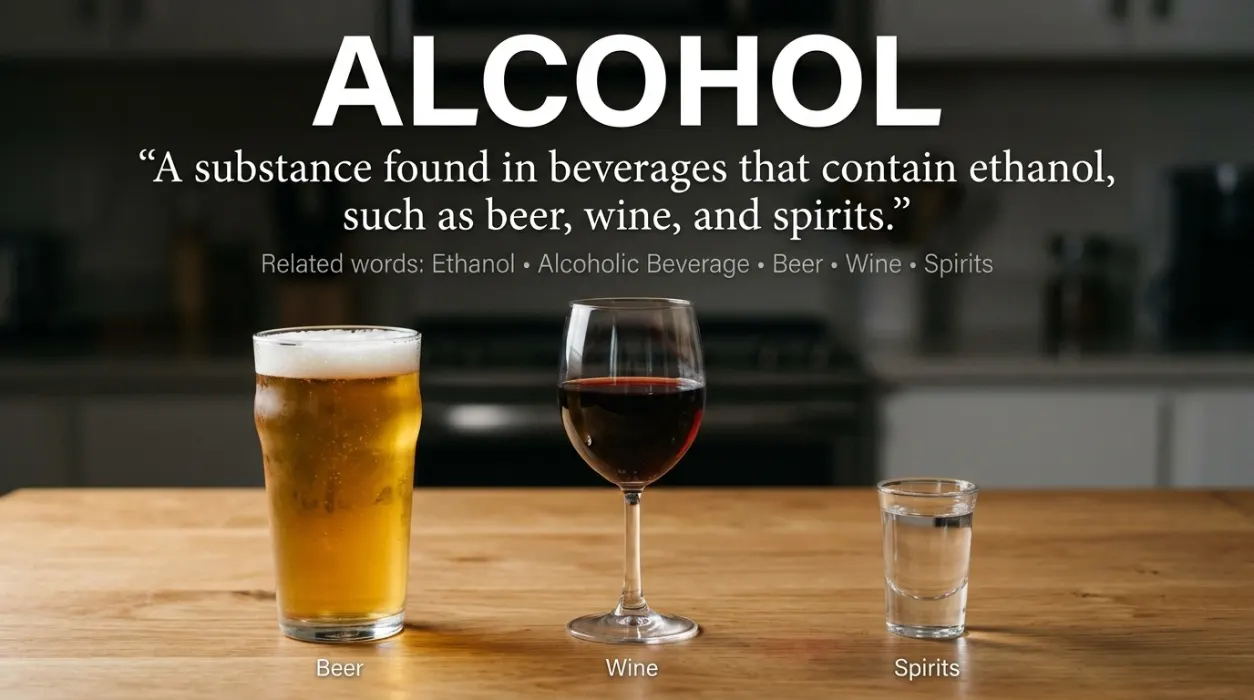
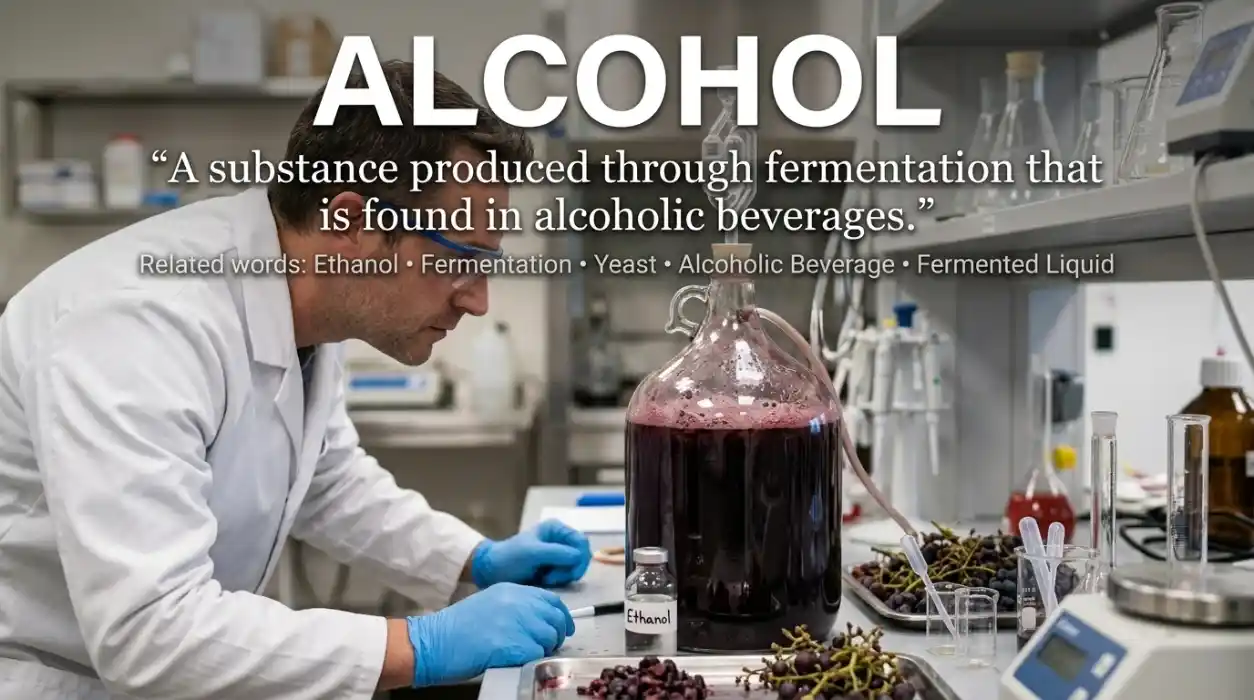
Alcohol is a noun with several related meanings. In everyday English, it usually refers to ethanol, the substance found in alcoholic drinks such as beer, wine, and spirits.
In chemistry, alcohol describes a broader class of organic compounds. Ethanol is only one member of that group. Therefore, the word’s meaning depends on whether the discussion concerns beverages, health, or chemistry.
Native English speakers generally understand alcohol to mean beverage alcohol when they hear phrases such as alcohol consumption, alcohol-free, or alcohol-related harm. Scientific writing may use the word more broadly.
Part of Speech
- Noun: A chemical substance or the intoxicating ingredient in alcoholic beverages.
- Adjective modifier: It can appear before another noun, as in alcohol policy or alcohol content.
Simple Definition
Alcohol is a chemical substance called ethanol that occurs in beer, wine, spirits, and other alcoholic beverages. In chemistry, the term also refers to a larger family of compounds.
Connotative Meaning
(Connotation is the emotional or cultural association a word carries beyond its basic dictionary meaning.)
- Positive tone: A celebratory drink can suggest a social occasion, although the phrase does not necessarily mean alcohol.
- Neutral tone: Alcohol, ethanol, and alcoholic beverage are generally factual and descriptive.
- Negative tone: Booze can sound dismissive, while intoxicant emphasizes a substance’s intoxicating effects.
No term is automatically positive or negative in every situation. The surrounding sentence and the speaker’s attitude influence how readers interpret it.
Etymology: Where Does “Alcohol” Come From?
The English word alcohol entered through Medieval Latin and Arabic. It is commonly traced to Arabic al-kuḥl, a term originally associated with a finely powdered substance used as an eye cosmetic. The word’s meaning later broadened through scientific and alchemical writing.
A Brief History Across English Periods
Old English (450–1100): The modern word alcohol was not part of ordinary Old English vocabulary. People described intoxicating drinks using other words, including terms related to ale and wine.
Middle English (1100–1500): English adopted alcohol through learned and scientific language, influenced by Latin and Arabic terminology. Its earlier associations were not limited to drinking.
Modern English (1500–present): The word gradually became associated with distilled substances and then with the intoxicating component of alcoholic drinks. Modern chemistry uses it for a family of compounds, including ethanol.
Pronunciation, Syllables, and Word Structure
- US pronunciation: /ˈæl.kə.hɔːl/ or /ˈæl.kə.hɑːl/, depending on accent
- UK pronunciation: /ˈæl.kə.hɒl/
- Syllables: al-co-hol
- Root: Borrowed through Latin from Arabic al-kuḥl
- Prefix: None in the modern English word
- Suffix: No productive English suffix in the modern word; the ending is part of the borrowed form
The stress usually falls on the first syllable: AL-co-hol.
Synonyms List
Not every alternative is interchangeable with alcohol. Some name ethanol itself, some refer to drinks that contain it, and others are informal expressions. The notes below explain these differences so you can choose accurate wording.
1. Ethanol (noun) — US: /ˈɛθəˌnɔːl/ | UK: /ˈɛθənɒl/
Meaning: Ethanol is the specific chemical compound responsible for the intoxicating effects of ordinary beverage alcohol.
Tone/Register: Scientific, medical, formal.
Examples: The laboratory measured the ethanol in the sample.
The report explains how ethanol affects the body.
2. Ethyl Alcohol (noun) — US: /ˌɛθəl ˈæl.kə.hɔːl/ | UK: /ˌiːθaɪl ˈæl.kə.hɒl/
Meaning: Ethyl alcohol is another name for ethanol, especially in technical and product-label contexts.
Tone/Register: Scientific, technical.
Examples: The label lists ethyl alcohol among the ingredients.
The researcher used ethyl alcohol in the experiment.
3. Beverage Alcohol (noun) — US: /ˈbɛvərɪdʒ ˈæl.kə.hɔːl/ | UK: /ˈbɛvərɪdʒ ˈæl.kə.hɒl/
Meaning: Beverage alcohol refers specifically to ethanol present in drinks intended for consumption.
Tone/Register: Public health, policy, formal.
Examples:
The survey examined patterns of beverage alcohol consumption.
The article distinguishes beverage alcohol from industrial alcohol.
4. Alcoholic Beverage (noun) — US: /ˌælkəˈhɔːlɪk ˈbɛvərɪdʒ/ | UK: /ˌælkəˈhɒlɪk ˈbɛvərɪdʒ/
Meaning: An alcoholic beverage is a drink that contains ethanol.
Tone/Register: Neutral, formal, informational.
Examples:
The restaurant lists each alcoholic beverage separately.
Local rules restrict the sale of alcoholic beverages to minors.
5. Alcoholic Drink (noun) — US: /ˌælkəˈhɔːlɪk drɪŋk/ | UK: /ˌælkəˈhɒlɪk drɪŋk/
Meaning: An alcoholic drink is a beverage containing alcohol, such as beer, wine, or a spirit-based drink.
Tone/Register: Neutral, everyday.
Examples:
She chose a non-alcoholic drink with dinner.
The menu identifies which alcoholic drinks contain allergens.
6. Liquor (noun) — US: /ˈlɪkər/ | UK: /ˈlɪkə/
Meaning: In common US usage, liquor usually means distilled alcoholic drinks such as vodka, whisky, rum, and gin.
Tone/Register: Neutral, everyday, hospitality.
Examples:
The shop keeps the liquor behind the counter.
The recipe calls for a small amount of orange liqueur.
7. Spirits (noun) — US: /ˈspɪrɪts/ | UK: /ˈspɪrɪts/
Meaning: Spirits are alcoholic beverages produced by distillation, including whisky, vodka, gin, and rum.
Tone/Register: Neutral, hospitality, formal.
Examples:
The menu separates spirits from beer and wine.
Some cocktails contain more than one type of spirit.
8. Hard Liquor (noun) — US: /ˌhɑːrd ˈlɪkər/ | UK: /ˌhɑːd ˈlɪkə/
Meaning: Hard liquor is an informal term for distilled alcoholic drinks, often used to distinguish them from beer and wine.
Tone/Register: Informal, everyday.
Examples:
The venue serves beer and wine but no hard liquor.
He asked whether the sauce contained hard liquor.
9. Distilled Spirits (noun) — US: /dɪˌstɪld ˈspɪrɪts/ | UK: /dɪˌstɪld ˈspɪrɪts/
Meaning: Distilled spirits are concentrated alcoholic beverages made by distilling a fermented liquid.
Tone/Register: Technical, regulatory, formal.
Examples:
The report categorizes distilled spirits separately.
The recipe uses a spirit distilled from grain.
10. Booze (noun) — US: /buːz/ | UK: /buːz/
Meaning: Booze is a casual word for alcoholic drinks in general.
Tone/Register: Informal, conversational.
Examples:
They agreed not to bring booze to the family picnic.
The comedy features a character who frequently talks about booze.
11. Hooch (noun) — US: /huːtʃ/ | UK: /huːtʃ/
Meaning: Hooch is slang for alcohol, especially homemade or illegally produced liquor in some contexts.
Tone/Register: Slang, playful or disapproving.
Examples:
The old film refers to homemade hooch.
The character jokes about the terrible taste of the hooch.
12. Tipple (noun) — US: /ˈtɪpəl/ | UK: /ˈtɪpəl/
Meaning: Tipple can mean an alcoholic drink, particularly one someone enjoys regularly.
Tone/Register: Informal, sometimes old-fashioned or playful.
Examples:
Her usual tipple is a glass of red wine.
The novel describes the detective’s favorite evening tipple.
13. Drink (noun) — US: /drɪŋk/ | UK: /drɪŋk/
Meaning: Drink can refer to an alcoholic beverage when the context makes that meaning clear, but it also refers to non-alcoholic liquids.
Tone/Register: Neutral, conversational.
Examples:
He declined a drink and ordered sparkling water.
They discussed whether the event would serve alcoholic drinks.
14. Intoxicating Beverage (noun) — US: /ɪnˈtɑːksɪˌkeɪtɪŋ ˈbɛvərɪdʒ/ | UK: /ɪnˈtɒksɪˌkeɪtɪŋ ˈbɛvərɪdʒ/
Meaning: An intoxicating beverage is a drink capable of causing intoxication, usually because it contains ethanol.
Tone/Register: Formal, legal, educational.
Examples:
The law defines an intoxicating beverage for regulatory purposes.
The safety leaflet warns about the effects of intoxicating beverages.
15. Intoxicant (noun) — US: /ɪnˈtɑːksɪkənt/ | UK: /ɪnˈtɒksɪkənt/
Meaning: An intoxicant is a substance that can impair mental or physical functioning; alcohol is one example.
Tone/Register: Medical, legal, formal.
Examples:
The policy addresses alcohol and other intoxicants.
The term intoxicant covers more than beverage alcohol alone.
16. Alcoholic Liquor (noun) — US: /ˌælkəˈhɔːlɪk ˈlɪkər/ | UK: /ˌælkəˈhɒlɪk ˈlɪkə/
Meaning: Alcoholic liquor is a broad formal expression for a liquid containing alcohol beverages, although legal definitions can vary.
Tone/Register: Formal, legal, regulatory.
Examples:
The document specifies rules for transporting alcoholic liquor.
The phrase appears in some licensing regulations.
17. Potable Alcohol (noun) — US: /ˈpoʊtəbəl ˈæl.kə.hɔːl/ | UK: /ˈpəʊtəbəl ˈæl.kə.hɒl/
Meaning: Potable alcohol means alcohol suitable for drinking, generally referring to ethanol intended for beverage use.
Tone/Register: Technical, scientific.
Examples:
The guidance distinguishes potable alcohol from denatured alcohol.
Not every product containing ethanol is potable alcohol.
18. Ethanol-Based Drink (noun) — US: /ˈɛθəˌnɔːl beɪst drɪŋk/ | UK: /ˈɛθənɒl beɪst drɪŋk/
Meaning: An ethanol-based drink is a beverage whose alcoholic content comes from ethanol.
Tone/Register: Technical, descriptive.
Examples:
The study compared several ethanol-based drinks.
The phrase makes the chemical component explicit.
19. Fermented Beverage (noun) — US: /fərˈmɛntɪd ˈbɛvərɪdʒ/ | UK: /fəˈmentɪd ˈbɛvərɪdʒ/
Meaning: A fermented beverage is a drink produced through fermentation; it is an alcohol alternative only when the drink contains ethanol.
Tone/Register: Scientific, culinary.
Examples:
Beer is a fermented beverage.
Some fermented beverages contain little or no alcohol, so the term alone does not guarantee alcoholic content.
20. Alcoholic Concoction (noun) — US: /ˌælkəˈhɔːlɪk kənˈkɑːkʃən/ | UK: /ˌælkəˈhɒlɪk kənˈkɒkʃən/
Meaning: An alcohol concoction is an informal description of a mixed alcoholic drink, especially one with several ingredients.
Tone/Register: Informal, expressive.
Examples:
The bartender created a colorful alcoholic concoction.
Nobody could remember all the ingredients in the unusual mixture.
21. Alcoholic Libation (noun) — US: /ˌælkəˈhɔːlɪk laɪˈbeɪʃən/ | UK: /ˌælkəˈhɒlɪk laɪˈbeɪʃən/
Meaning: A libation is a drink poured out as an offering or, more loosely, a formal or literary term for a drink.
Tone/Register: Literary, ceremonial, formal.
Examples:
The poem describes a libation offered to the gods.
The phrase sounds ceremonial rather than conversational.
Usage note: Libation is not a general everyday synonym for the chemical substance alcohol.
22. Alcoholic Refreshment (noun) — US: /ˌælkəˈhɔːlɪk rɪˈfrɛʃmənt/ | UK: /ˌælkəˈhɒlɪk rɪˈfreʃmənt/
Meaning: An alcohol refreshment is a polite or hospitality-oriented way to describe an alcoholic drink.
Tone/Register: Polite, hospitality, formal.
Examples:
Guests could choose analcoholicl refreshment or fruit juice.
The invitation clearly labels the available refreshments.
Usage note: Refreshment is a broad category, not a direct substitute for alcohol in every sentence.
23. Alcoholic Beverage Product (noun) — US: /ˌælkəˈhɔːlɪk ˈbɛvərɪdʒ ˈprɑːdʌkt/ | UK: /ˌælkəˈhɒlɪk ˈbɛvərɪdʒ ˈprɒdʌkt/
Meaning: This formal phrase refers to a product sold or classified as a beverage containing alcohol.
Tone/Register: Regulatory, business, technical.
Examples:
The form asks whether the company distributes alcoholic beverage products.
The report groups each alcoholic beverage product by category.
Usage note: This is a descriptive phrase rather than a compact synonym for alcohol.
24. Alcoholic Solution (noun) — US: /ˌælkəˈhɔːlɪk səˈluːʃən/ | UK: /ˌælkəˈhɒlɪk səˈluːʃən/
Meaning: An alcohol solution is a liquid mixture containing alcohol, often used in scientific or medical contexts rather than to describe a drink.
Tone/Register: Scientific, technical.
Examples:
The laboratory prepared an alcohol solution for testing.
The solution was not intended for drinking.
Usage note: This term describes a mixture, not necessarily a beverage alcohol.
25. Alcoholic Content (noun phrase) — US: /ˌælkəˈhɔːlɪk ˈkɑːntɛnt/ | UK: /ˌælkəˈhɒlɪk ˈkɒntent/
Meaning: Alcoholic content refers to the amount or proportion of alcohol in a product.
Tone/Register: Technical, informational.
Examples:
The label states the beverage’s alcoholic content.
The article compares alcoholic content across drink categories.
Usage note: This phrase refers to the alcohol present, not to alcohol itself as a substance or beverage.
26. Alcoholic Drink Mixture (noun phrase) — US: /ˌælkəˈhɔːlɪk drɪŋk ˈmɪkstʃər/ | UK: /ˌælkəˈhɒlɪk drɪŋk ˈmɪkstʃə/
Meaning: An alcoholic drink mixture is a combination of ingredients that produces a beverage containing alcohol.
Tone/Register: Descriptive, culinary.
Examples:
The recipe describes an alcoholic drink mixture with fruit and herbs.
The menu identifies each mixed drink by its ingredients.
27. Cocktail (noun) — US: /ˈkɑːkˌteɪl/ | UK: /ˈkɒkˌteɪl/
Meaning: A cocktail is usually a mixed drink that contains one or more alcoholic ingredients, although non-alcoholic versions also exist.
Tone/Register: Neutral, hospitality, social.
Examples:
He ordered a cocktail with citrus and mint.
The restaurant also offers alcohol-free cocktails.
28. Mixed Drink (noun) — US: /ˌmɪkst ˈdrɪŋk/ | UK: /ˌmɪkst ˈdrɪŋk/
Meaning: A mixed drink combines two or more ingredients and often contains a spirit, mixer, or both.
Tone/Register: Neutral, conversational.
Examples:
She asked whether the mixed drink contained gin.
The menu lists the ingredients for every mixed drink.
29. Beer (noun) — US: /bɪr/ | UK: /bɪə/
Meaning: Beer is an alcoholic beverage typically brewed from fermented grains, although some beers are alcohol-free or very low in alcohol.
Tone/Register: Neutral, everyday.
Examples:
The article compares beer with other beverage categories.
He chose a non-alcoholic beer at the gathering.
30. Wine (noun) — US: /waɪn/ | UK: /waɪn/
Meaning: Wine is a beverage commonly made by fermenting grapes or other fruit; it often contains ethanol.
Tone/Register: Neutral, culinary, everyday.
Examples:
The recipe mentions white wine as an ingredient.
The host provided a non-alcoholic alternative.
31. Cider (noun) — US: /ˈsaɪdər/ | UK: /ˈsaɪdə/
Meaning: Cider can refer to analcoholicl fermented apple drink or, particularly in the United States, unfermented apple juice, depending on context.
Tone/Register: Neutral, regional.
Examples:
The menu specifies whether the cider contains alcohol.
In the United States, apple cider may be non-alcoholic.
32. Ale (noun) — US: /eɪl/ | UK: /eɪl/
Meaning: Ale is a type of beer traditionally made using top-fermenting yeast.
Tone/Register: Neutral, culinary, sometimes traditional.
Examples:
The historical novel mentions a local ale.
The brewery describes its ale as a distinct beer style.
33. Lager (noun) — US: /ˈlɑːɡər/ | UK: /ˈlɑːɡə/
Meaning: Lager is a beer style fermented and conditioned using methods associated with lager yeast.
Tone/Register: Neutral, everyday.
Examples:
The menu separates lager from other beer styles.
The character orders a non-alcoholic lager.
34. Stout (noun) — US: /staʊt/ | UK: /staʊt/
Meaning: Stout is a dark beer style often associated with roasted malt flavors.
Tone/Register: Neutral, culinary.
Examples:
The guide explains how stout differs from pale beer.
The recipe uses a stout-style non-alcoholic beer.
35. Whisky or Whiskey (noun) — US: /ˈwɪski/ | UK: /ˈwɪski/
Meaning: Whisky or whiskey is a distilled spirit made from fermented grain; spelling conventions vary by region and producer.
Tone/Register: Neutral, culinary.
Examples:
The article discusses the history of Irish whiskey.
The recipe lists whisky as an optional flavoring ingredient.
36. Vodka (noun) — US: /ˈvɑːdkə/ | UK: /ˈvɒdkə/
Meaning: Vodka is a distilled spirit commonly made from grain or other fermentable materials.
Tone/Register: Neutral, hospitality.
Examples:
The guide explains how vodka differs from gin.
The fictional detective refuses a drink containing vodka.
37. Gin (noun) — US: /dʒɪn/ | UK: /dʒɪn/
Meaning: Gin is a distilled spirit characterized by juniper as a defining flavor.
Tone/Register: Neutral, hospitality.
Examples:
The recipe identifies gin as its main spirit.
The menu provides a non-alcoholic alternative with similar botanical notes.
38. Rum (noun) — US: /rʌm/ | UK: /rʌm/
Meaning: Rum is a distilled spirit produced from sugarcane products, such as molasses or sugarcane juice.
Tone/Register: Neutral, culinary.
Examples:
The dessert recipe mentions rum as an optional ingredient.
The chef explains how rum changes the flavor of the sauce.
39. Brandy (noun) — US: /ˈbrændi/ | UK: /ˈbrændi/
Meaning: Brandy is a spirit made by distilling wine or another fermented fruit product.
Tone/Register: Neutral, culinary, traditional.
Examples:
The recipe calls for a little brandy.
The guide compares fruit brandies with grape brandy.
40. Tequila (noun) — US: /təˈkiːlə/ | UK: /təˈkiːlə/
Meaning: Tequila is a Mexican distilled spirit made from blue agave under defined production rules.
Tone/Register: Neutral, hospitality.
Examples:
The article describes tequila’s regional origins.
The restaurant lists a tequila-free version of the cocktail.
41. Mezcal (noun) — US: /mɛˈskæl/ | UK: /mɛˈskæl/
Meaning: Mezcal is a Mexican spirit made from agave, using production methods that vary by region and style.
Tone/Register: Neutral, culinary, specialist.
Examples:
The guide compares mezcal with tequila.
The tasting notes describe the mezcal’s smoky character.
42. Liqueur (noun) — US: /lɪˈkɜːr/ | UK: /lɪˈkjʊə/
Meaning: A liqueur is a sweetened alcoholic spirit flavored with ingredients such as fruit, herbs, spices, or cream.
Tone/Register: Neutral, culinary.
Examples:
The dessert recipe uses orange liqueur.
The label lists the liqueur’s flavoring ingredients.
43. Aperitif (noun) — US: /əˌpɛrəˈtiːf/ | UK: /əˈperətiːf/
Meaning: An aperitif is a drink served before a meal to stimulate the appetite; it is often alcoholic but can have non-alcoholic forms.
Tone/Register: Formal, culinary.
Examples:
The restaurant offers an aperitif before dinner.
The menu includes an alcohol-free aperitif.
44. Digestif (noun) — US: /ˌdiːdʒɛˈstiːf/ | UK: /ˌdiːdʒestɪf/
Meaning: A digestif is a drink served after a meal, often an alcohol spirit or liqueur.
Tone/Register: Formal, culinary.
Examples:
The menu suggests a digestif after dessert.
The server explains which digestifs contain alcohol.
45. Hard Cider (noun) — US: /ˌhɑːrd ˈsaɪdər/ | UK: /ˌhɑːd ˈsaɪdə/
Meaning: Hard cider is fermented apple cider that contains alcohol, especially in North American English.
Tone/Register: Neutral, regional.
Examples:
The menu labels the hard cider clearly.
The article distinguishes hard cider from ordinary apple cider.
46. Malt Beverage (noun) — US: /ˈmɔːlt ˌbɛvərɪdʒ/ | UK: /ˈmɔːlt ˌbɛvərɪdʒ/
Meaning: A malt beverage is a drink made from fermented malted grains; the term often refers to beer or related products.
Tone/Register: Technical, regulatory.
Examples:
The report classifies the product as a malt beverage.
The label explains whether the malt beverage contains alcohol.
47. Fermented Alcoholic Drink (noun phrase) — US: /fərˌmɛntɪd ˌælkəˈhɔːlɪk drɪŋk/ | UK: /fəˌmentɪd ˌælkəˈhɒlɪk drɪŋk/
Meaning: A fermented alcoholic drink is a beverage in which fermentation produces ethanol.
Tone/Register: Scientific, descriptive.
Examples:
The lesson explains how yeast produces ethanol in a fermented alcoholic drink.
The report distinguishes fermented drinks from distilled spirits.
48. Recreational Alcohol (noun phrase) — US: /ˌrekriˈeɪʃənəl ˈæl.kə.hɔːl/ | UK: /ˌrekriˈeɪʃənəl ˈæl.kə.hɒl/
Meaning: Recreational alcohol describes alcohol consumed in social or leisure settings rather than for industrial or laboratory purposes.
Tone/Register: Public health, analytical.
Examples:
The study examines recreational alcohol use among adults.
The author separates social drinking from alcohol used in medical or industrial contexts.
Usage note: This phrase describes a pattern or purpose of use, not a particular drink.
49. Social Drink (noun phrase) — US: /ˈsoʊʃəl drɪŋk/ | UK: /ˈsəʊʃəl drɪŋk/
Meaning: A social drink is a beverage consumed during a social occasion; it may contain alcohol, but the phrase does not guarantee that it does.
Tone/Register: Conversational, social.
Examples:
He declined a social drink and joined the conversation with tea.
The invitation says guests can choose an alcohol or alcohol-free drink.
50. Boozy Drink (noun phrase) — US: /ˈbuːzi drɪŋk/ | UK: /ˈbuːzi drɪŋk/
Meaning: A boozy drink is an informal expression for an alcoholic beverage, often suggesting that it is strong or that alcohol is a prominent feature.
Tone/Register: Informal, playful.
Examples:
The character orders a boozy drink in the comedy.
The writer replaced “boozy drink” with “alcoholic beverage” in the formal report.
Important distinction: Several entries above name specific beverages or describe a context rather than acting as exact synonyms for the chemical substance. For precise writing, ethanol is the closest chemical alternative, while alcoholic beverage is useful when you mean a drink containing alcohol.
Synonyms by Tone
The right word depends on your audience. A chemistry report needs precision, while a conversation with friends may sound more natural with casual vocabulary.
Positive or Hospitality-Oriented
These expressions can sound welcoming or polished, although they do not make alcohol itself inherently positive.
- Alcoholic refreshment — polite hospitality language.
- Aperitif — a drink served before a meal.
- Digestif — a drink served after a meal.
- Libation — ceremonial or literary wording.
Neutral
Use these terms when accuracy matters more than emotional effect.
- Alcohol
- Ethanol
- Ethyl alcohol
- Beverage alcohol
- Alcoholic beverage
- Alcoholic drink
- Spirits
- Liquor
- Distilled spirits
- Potable alcohol
Negative or Cautionary
These terms may emphasize impairment, risk, or disapproval.
- Intoxicant — highlights the capacity to impair.
- Booze — can sound dismissive in serious discussions.
- Hooch — may suggest crude or illegally produced alcohol.
- Hard liquor — emphasizes a category of distilled drinks, sometimes in discussions about strength.
Playful or Informal
- Booze
- Hooch
- Tipple
- Boozy drink
- Drink, when the context clearly means alcohol.
Why tone matters: A word can change how a sentence feels without changing its basic subject. Alcohol consumption sounds neutral and analytical. Booze consumption sounds more casual and may seem flippant in a medical report.
“Alcohol” vs. Close Alternatives
| Word | Main meaning | Best context |
|---|---|---|
| Alcohol | Usually ethanol or the alcohol in drinks | General conversation, health information, everyday writing |
| Ethanol | The specific chemical compound | Chemistry, medicine, technical explanations |
| Liquor | Usually distilled alcoholic beverages in US English | Menus, retail categories, everyday US usage |
| Booze | Informal term for alcoholic drinks | Casual dialogue, informal storytelling |
| Alcoholic beverage | A drink that contains alcohol | Formal writing, public health, regulations |
Which Word Should You Choose?
Use alcohol when you need a familiar, broad term. Choose ethanol when the chemical substance matters. Use liquor when referring specifically to distilled drinks in contexts where that meaning is understood.
Choose booze for informal dialogue, not for formal health guidance. When you want a precise and neutral phrase for a drink, alcoholic beverage is usually a reliable choice.
How Alcohol Vocabulary Changes by Context
Daily Conversation
People often say drink, liquor, or booze in casual conversation. The surrounding sentence helps listeners understand what the speaker means.
For example, “Does this drink contain alcohol?” is clearer than simply asking, “Is there a drink?”
Writing and Blogging
Bloggers should vary their vocabulary without sacrificing accuracy. Alcohol, ethanol, and alcoholic beverage work in different contexts, so avoid replacing every instance of alcohol with an alternative.
For an article about health, define the term early. Then use specific wording when discussing the chemical, the beverage, or a pattern of consumption.
Professional and Academic Writing
Scientific writing favors ethanol when referring to the compound. Public health writing often uses alcohol consumption, alcohol use, or alcohol-related harm.
These phrases are not interchangeable in every sentence. Choose wording that matches the specific issue being discussed.
Creative and Informal Writing
Fiction writers can use booze, tipple, or hooch to convey a character’s personality, setting, or attitude. These words can make dialogue sound natural, but their effects differ by region and generation.
A narrator’s word choice can also shape a scene. A glass of wine sounds specific, while a bit of booze sounds casual and less precise.
Common Mistakes Learners Make
1. Treating Every Alternative as an Exact Synonym
Ethanol names a chemical compound. Beer names a particular type of beverage. Neither can replace alcohol in every sentence.
2. Confusing Liquor With All Alcoholic Drinks
In US English, liquor commonly refers to distilled spirits. Beer and wine are alcoholic drinks, but people do not always classify them as liquor.
3. Using Slang in Formal Writing
Words such as booze and hooch may suit dialogue or casual posts. They usually sound unsuitable in academic essays, medical guidance, and formal workplace documents.
4. Assuming “Drink” Always Means Alcohol
A drink can be water, tea, juice, or another beverage. Specify alcoholic drink if the distinction matters.
5. Using “Alcohol-Free” Without Checking the Meaning
Product labels and legal definitions can differ. Some products may be described as non-alcoholic while containing trace amounts of alcohol. Check the relevant labeling rules when exact content matters.
Register Notes
- Formal and technical: ethanol, ethyl alcohol, beverage alcohol, alcoholic beverage.
- Everyday and neutral: alcohol, alcoholic drink, spirits, liquor.
- Informal: booze, hooch, tipple.
- Specific beverage names: beer, wine, vodka, gin, rum, and other drink categories.
For related vocabulary practice, consider an internal article on formal vs. informal English vocabulary.
Real-Life Mini Scenarios
Workplace: A safety report uses “ethanol exposure” because it discusses a specific chemical, not alcoholic drinks.
Social situation: Someone asks whether a punch contains alcohol. The host checks the ingredients and offers an alcohol-free version.
Media and pop culture: A film character says “booze” in casual dialogue. A news report about the same event uses “alcohol” for a more neutral tone.
Writing and storytelling: A novelist describes a character’s “evening tipple” to suggest a habitual drink. A health article would use a more direct phrase, such as “regular alcohol consumption.”
Practice Exercise
1. You are writing a chemistry report about the substance in an alcoholic drink. Which term is most precise?
A. Hooch
B. Ethanol
C. Tipple
D. Cocktail
2. Which expression is most suitable for a formal public health report?
A. Booze
B. Hooch
C. Alcohol consumption
D. A boozy drink
3. In everyday US English, which word usually refers to distilled drinks such as vodka and whisky?
A. Liquor
B. Juice
C. Cider
D. Refreshment
4. A friend uses a casual slang word for alcohol. Which option best fits?
A. Ethyl alcohol
B. Booze
C. Beverage alcohol
D. Potable alcohol
5. Which word describes a sweetened spirit flavored with fruit, herbs, or spices?
A. Lager
B. Liqueur
C. Ale
D. Ethanol
6. Which sentence uses drink without assuming that the beverage contains alcohol?
A. Every drink contains ethanol.
B. She ordered a drink, but the menu did not specify its ingredients.
C. Drink always means liquor.
D. A drink must contain spirits.
7. A researcher is discussing a substance that can impair mental or physical functioning. Which broad term may apply?
A. Intoxicant
B. Aperitif
C. Lager
D. Tipple
8. Which term describes a drink served before a meal?
A. Digestif
B. Aperitif
C. Hooch
D. Ethanol
9. Which word is most suitable for casual dialogue in a novel?
A. Ethyl alcohol
B. Beverage alcohol
C. Booze
D. Alcoholic content
Reflection Task
Write two short sentences about the same situation. Use alcoholic beverage in the first sentence and booze in the second. Notice how the tone changes.
Answer key: 1-B, 2-C, 3-A, 4-B, 5-B, 6-B, 7-A, 8-B, 9-C
External sources:
Merriam-Webster Dictionary — https://www.merriam-webster.com/ ; Cambridge Dictionary — https://dictionary.cambridge.org/ ; Encyclopaedia Britannica — https://www.britannica.com/
Conclusion
Learning a synonym for alcohol is not just about avoiding repetition. It helps you choose words that match your meaning, audience, and purpose.
Precise vocabulary improves essays, blog posts, workplace communication, and everyday conversation. Understanding the difference between ethanol, liquor, and booze makes your English more natural.
You do not need to memorize all 50 alternatives at once. Start with a few useful terms and practice them in sentences that reflect real situations.
Try using three new expressions in an email, essay, or daily conversation this week. Pay attention to tone, check the meaning, and let your vocabulary grow naturally.
Frequently Asked Questions
1. What is the best synonym for alcohol in academic writing?
Ethanol is the most precise alternative when you mean the specific chemical compound found in alcoholic drinks. For a drink itself, use alcoholic beverage. In public health writing, phrases such as alcohol consumption and alcohol-related harm may be more appropriate. Choose the term that matches your subject rather than substituting words only to avoid repetition.
2. Is ethanol exactly the same as alcohol?
Not in every scientific context. Ethanol is one specific type of alcohol, while chemistry uses alcohol for a broader family of compounds. In everyday conversation, however, people often use alcohol to mean ethanol in beer, wine, and spirits. The distinction matters in laboratory, medical, industrial, and educational writing.
3. What is a polite way to say alcohol?
Alcoholic beverage is a clear, neutral expression for a drink containing alcohol. In hospitality settings, alcoholic refreshment may sound more polished, although it is less precise. For health or safety information, direct wording is usually better than euphemisms because readers need to understand exactly what the message refers to.
4. What is the difference between liquor, spirits, and alcohol?
Alcohol is the broadest everyday term. In US English, liquor commonly refers to distilled alcoholic beverages. Spirits is a standard category name for distilled drinks such as gin, rum, and whisky. Beer and wine contain alcohol, but they are generally classified separately from spirits.
5. Can “booze” be used in professional writing?
Usually, booze is too informal for academic papers, medical guidance, official reports, or most business documents. It can work in dialogue, informal blogs, and creative writing when the casual tone is intentional. If you want a neutral alternative, use alcohol, alcoholic drinks, or alcoholic beverages.

Hasnain Ali is an SEO Content Strategist and the founder of wordvora.com, a trusted vocabulary platform that helps writers, students, professionals, and English learners find accurate synonyms, antonyms, word meanings, and real-life usage examples. He specializes in keyword research, on-page SEO, topical authority, and creating search-first content that aligns with Google’s latest Search Quality and E-E-A-T guidelines. His work focuses on producing clear, well-structured, and reader-friendly resources that satisfy search intent while maintaining high editorial standards.
Through extensive hands-on experience with SEO tools such as Google Search Console, Google Analytics, SEMrush, and Ahrefs, Hasnain researches user search behavior and develops content that is both informative and easy to understand. Every article published on wordvora.com is carefully reviewed for accuracy, readability, and contextual relevance before publication. His mission is to build one of the web’s most reliable English vocabulary resources by providing practical language guidance, trustworthy explanations, and content that helps readers improve their writing, communication, and vocabulary with confidence.