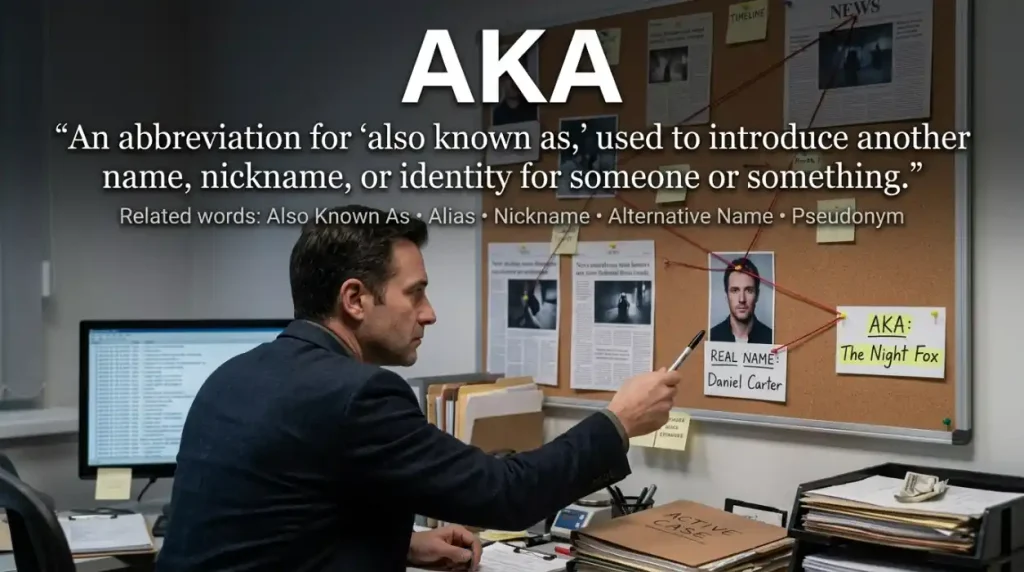
A synonym for aka is a word or phrase that means “also known as.” Common alternatives include also called, otherwise known as, known as, and alias. The best choice depends on whether you are writing formally, introducing a nickname, or describing an alternative name.
Imagine writing a biography about a musician who performs under a stage name. You might write, “Jordan Lee, aka Jay L.” In a formal article, “Jordan Lee, also known as Jay L.” may read more smoothly.
The abbreviation aka appears in social media posts, news stories, biographies, entertainment articles, and everyday messages. It helps readers connect two names for the same person, place, or thing.
Finding the right synonym for aka helps students write clearer essays and helps bloggers avoid repetitive wording. Content writers can also choose expressions that suit their audience and style.
In daily English, these alternatives make introductions easier to understand. Once you know the difference between alias, also called, and otherwise known as, you can choose a phrase that fits the situation.
What Does “AKA” Really Mean?
AKA stands for “also known as.” People use it to introduce another name, nickname, stage name, title, or identity associated with the same person or thing.
For example:
- “Samuel Clemens, aka Mark Twain, wrote famous American novels.”
- “The city’s old market, also known as the bazaar, attracts many visitors.”
- “My brother, otherwise known as the family comedian, always makes us laugh.”
AKA is an abbreviation, not a conventional standalone noun or verb. It usually appears before an alternative name or description. In informal writing, people also use it humorously to introduce a familiar label.
Native English speakers generally understand aka as a quick, convenient way to connect names. It is especially common in online writing, entertainment coverage, legal descriptions, and casual conversation.
Connotative Meaning
(Connotation means the feelings, associations, or extra meanings a word carries beyond its basic definition.)
- Positive tone: Also known as can introduce a respected professional name, a stage name, or an affectionate nickname.
- Negative tone: Alias may suggest concealment or a false identity in crime-related contexts, although it can be neutral in other settings.
- Neutral tone: AKA, also called, and otherwise known as can simply clarify that one person or thing has another name.
The expression itself is usually neutral. The surrounding words determine whether the alternative name sounds affectionate, humorous, official, or suspicious.
Etymology and History of AKA
The abbreviation aka comes from the initial letters of the phrase also known as. It developed as a compact way to identify another name or identity without writing the full expression each time.
The word also comes from Old English, while known developed from the verb know, which has Old English roots. The word also has Old English origins. Together, the phrase communicates that someone or something is recognized by another name.
Old English (450–1100)
The modern abbreviation aka did not exist in Old English. However, English already had words related to knowing, naming, and describing people or things. These older words contributed to the language from which the full phrase eventually developed.
Middle English (1100–1500)
English vocabulary and spelling continued to change during the Middle English period. The words that make up the phrase also known as evolved within the language, but the modern abbreviation was not yet established.
Modern English (1500–present)
As writing practices developed, English speakers increasingly used shortened forms and initialisms. AKA became a convenient abbreviation for also known as, particularly in reference works, legal contexts, journalism, biographies, and later digital communication.
Today, writers use it to introduce alternative names quickly. The full phrase remains a clear option when a formal or more accessible style is preferable.
Pronunciation (US and UK IPA)
- US: /ˌeɪ.keɪˈeɪ/ when the letters are spoken individually.
- UK: /ˌeɪ.keɪˈeɪ/ when the letters are spoken individually.
Speakers usually pronounce the three letters separately: “A-K-A.”
Syllables
A-K-A — three spoken letter names.
Word Structure and Affixation Pattern
- Root: The initials of also known as.
- Prefix: None.
- Suffix: None.
- Word formation: Initialism formed from the first letters of three words.
AKA is generally written in capital letters in formal writing. Lowercase aka is also common in informal digital communication.
Synonyms List
The most accurate replacement for aka is usually also known as. Other alternatives depend on whether you are introducing a nickname, an alternative title, a pseudonym, or an informal description.
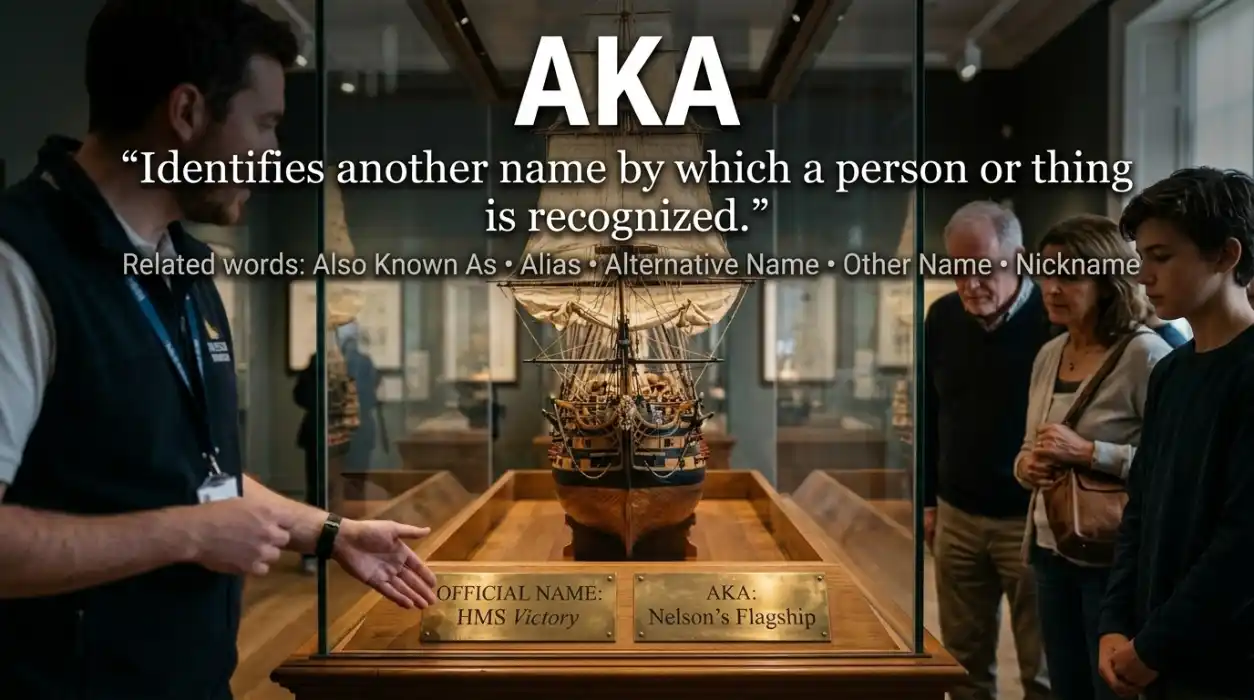
1. Also Known As (Phrase) — US / UK: /ˈɔlsoʊ noʊn æz/; /ˈɔːlsəʊ nəʊn æz/
Meaning: Identifies another name by which a person or thing is recognized.
Tone/Register: Neutral, formal, informal.
Examples:
The author, also known as Maya Rose, writes contemporary fiction.
The building is also known as the Old Town Hall.
2. Also Called (Phrase) — US / UK: /ˈɔlsoʊ kɔld/; /ˈɔːlsəʊ kɔːld/
Meaning: Introduces another common name or label for someone or something.
Tone/Register: Neutral, everyday, academic.
Examples:
Aubergine, also called eggplant, is used in many dishes.
Our neighbor is also called Coach Mike by the children.
3. Otherwise Known As (Phrase) — US / UK: /ˈʌðərˌwaɪz noʊn æz/; /ˈʌðəwaɪz nəʊn æz/
Meaning: Presents an alternative name or identity for the same person or thing.
Tone/Register: Neutral to formal.
Examples:
The novelist, otherwise known as Elena Gray, writes under a pen name.
The narrow lane, otherwise known as Lantern Street, is popular with tourists.
4. Alias (Noun) — US / UK: /ˈeɪliəs/
Meaning: An alternative name used by a person, sometimes to conceal their real identity.
Tone/Register: Formal, legal, sometimes associated with crime.
Examples:
The online account used an alias rather than the person’s real name.
The detective discovered that the suspect had traveled under an alias.
5. Also Referred to As (Phrase) — US / UK: /ˈɔlsoʊ rɪˈfɜrd tuː æz/; /ˈɔːlsəʊ rɪˈfɜːd tuː æz/
Meaning: States that a person, object, or concept is described by another name or term.
Tone/Register: Formal, academic, professional.
Examples:
The condition is also referred to as seasonal affective disorder.
The document, also referred to as the final report, contains the updated figures.
6. Known As (Phrase) — US / UK: /noʊn æz/; /nəʊn æz/
Meaning: Gives the name or label by which someone or something is recognized.
Tone/Register: Neutral, versatile.
Examples:
Her grandmother is known as Nana Jo throughout the family.
The region is known as the Garden of the North.
7. Nicknamed (Verb) — US / UK: /ˈnɪkˌneɪmd/
Meaning: Describes someone or something that has been given an informal or familiar name.
Tone/Register: Informal, conversational.
Examples:
The goalkeeper was nicknamed The Wall by local fans.
Our puppy was nicknamed Rocket because he runs everywhere.
8. By the Name of (Phrase) — US / UK: /baɪ ðə neɪm əv/
Meaning: Introduces a particular name, often when identifying someone or something.
Tone/Register: Neutral, conversational.
Examples:
I met a photographer by the name of Daniel Price.
A café by the name of Bluebird recently opened nearby.
9. Under the Name (Phrase) — US / UK: /ˈʌndər ðə neɪm/; /ˈʌndə ðə neɪm/
Meaning: Indicates the name under which someone publishes, performs, registers, or operates.
Tone/Register: Neutral, formal or informal.
Examples:
She publishes her short stories under the name L. M. Hart.
The band released its first album under the name Silver Avenue.
10. Pen Name (Noun Phrase) — US / UK: /ˈpɛn neɪm/
Meaning: A name an author uses instead of their personal name when publishing work.
Tone/Register: Literary, neutral.
Examples:
The mystery writer chose a pen name to protect her privacy.
His early poems appeared under a different pen name.
11. Stage Name (Noun Phrase) — US / UK: /ˈsteɪdʒ neɪm/
Meaning: A name adopted by a performer for professional or public use.
Tone/Register: Entertainment, neutral.
Examples:
The singer adopted a stage name before releasing her first single.
His stage name is easier for international audiences to remember.
12. Pseudonym (Noun) — US / UK: /ˈsuːdənɪm/; /ˈsjuːdənɪm/
Meaning: A fictitious name used by someone instead of their real name.
Tone/Register: Formal, literary.
Examples:
The columnist wrote under a pseudonym for several years.
She selected a pseudonym for her first published novel.
13. Nom de Plume (Noun Phrase) — US / UK: /ˌnɑːm də ˈpluːm/; /ˌnɒm də ˈpluːm/
Meaning: A French-derived expression for a pen name used by an author.
Tone/Register: Literary, formal.
Examples:
The poet’s nom de plume became more famous than his legal name.
She used a nom de plume when submitting stories to magazines.
14. Nom de Scène (Noun Phrase) — US / UK: /ˌnɑːm də ˈseɪn/; /ˌnɒm də ˈseɪn/
Meaning: A French expression for a stage name used by a performer.
Tone/Register: Formal, artistic.
Examples:
The performer chose a nom de scène that suited her musical style.
His nom de scène appears on every concert poster.
15. Screen Name (Noun Phrase) — US / UK: /ˈskriːn neɪm/
Meaning: A name used to identify someone on a website, platform, or digital service.
Tone/Register: Informal, digital.
Examples:
I recognized her screen name from the photography forum.
Choose a screen name that does not reveal private information.
16. Username (Noun) — US / UK: /ˈjuːzərˌneɪm/; /ˈjuːzəneɪm/
Meaning: A name used to identify an account on a digital system.
Tone/Register: Technical, everyday.
Examples:
He uses the same username on his writing profile.
Your username appears beside your comments.
17. Handle (Noun) — US / UK: /ˈhændəl/
Meaning: An informal name or identifier used on social media or online platforms.
Tone/Register: Informal, digital.
Examples:
Her social media handle includes the word “travels.”
I couldn’t find the artist because I had the wrong handle.
18. Moniker (Noun) — US / UK: /ˈmɑnɪkər/; /ˈmɒnɪkə/
Meaning: A name or nickname by which a person is known.
Tone/Register: Informal to literary.
Examples:
The street artist became famous under the moniker Night Owl.
His playful moniker followed him from school into adulthood.
19. Sobriquet (Noun) — US / UK: /ˈsoʊbrɪˌkeɪ/; /ˈsəʊbrɪˌkeɪ/
Meaning: A descriptive nickname given to a person, often because of a notable quality.
Tone/Register: Literary, formal.
Examples:
The explorer earned the sobriquet “The Ice Walker.”
The journalist’s memorable sobriquet appeared in several biographies.
20. Byname (Noun) — US / UK: /ˈbaɪˌneɪm/
Meaning: An additional name associated with a person, often based on a feature, occupation, or family connection.
Tone/Register: Historical, literary.
Examples:
The medieval record identifies the knight by a distinctive byname.
Historians used the ruler’s byname to distinguish him from others.
21. Appellation (Noun) — US / UK: /ˌæpəˈleɪʃən/
Meaning: A name or title used to identify a person, place, or thing.
Tone/Register: Formal, academic.
Examples:
The appellation reflects the town’s long maritime history.
The title became an accepted appellation for the celebrated composer.
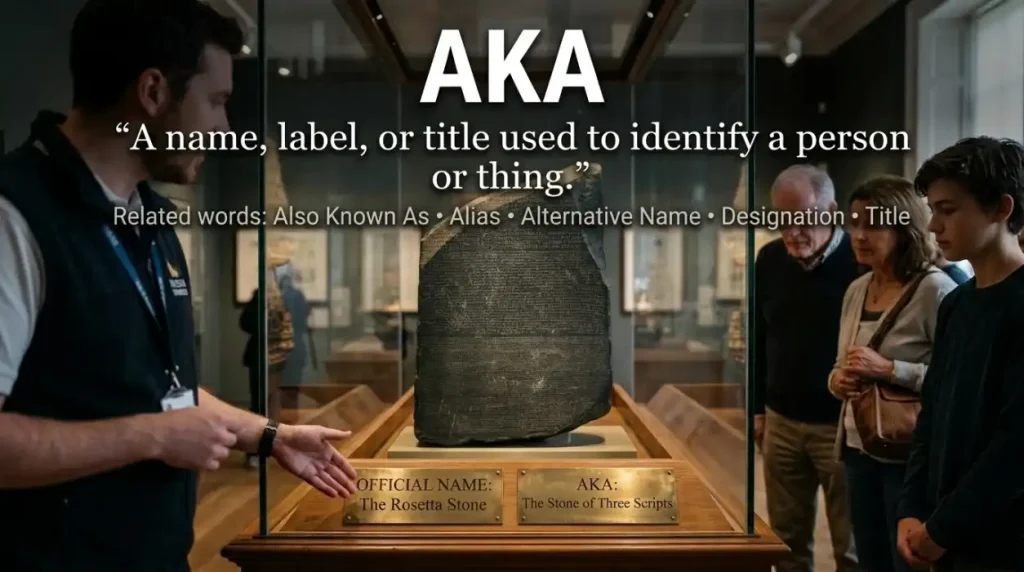
22. Designation (Noun) — US / UK: /ˌdɛzɪɡˈneɪʃən/
Meaning: A name, label, or title assigned to identify something or someone.
Tone/Register: Formal, technical, professional.
Examples:
The official designation of the site changed last year.
The new designation distinguishes the senior role from the junior position.
23. Alternative Name (Noun Phrase) — US / UK: /ɔlˈtɜrnətɪv neɪm/; /ɔːlˈtɜːnətɪv neɪm/
Meaning: Another name used for the same person, place, object, or concept.
Tone/Register: Neutral, clear.
Examples:
The plant has an alternative name that is more familiar to local gardeners.
The database lists an alternative name for the historic neighborhood.
24. Other Name (Noun Phrase) — US / UK: /ˈʌðər neɪm/; /ˈʌðə neɪm/
Meaning: A different name by which someone or something may also be identified.
Tone/Register: Everyday, neutral.
Examples:
Do you know the other name for this flower?
The village has another name that older residents still use.
25. Alternate Name (Noun Phrase) — US / UK: /ˈɔltərnət neɪm/; /ˈɔːltənət neɪm/
Meaning: A second name used alongside or instead of the primary name.
Tone/Register: Neutral, technical.
Examples:
The map includes an alternate name for the river.
The archive stores each location’s alternate name.
26. Alternative Identity (Noun Phrase) — US / UK: /ɔlˈtɜrnətɪv aɪˈdɛntəti/; /ɔːlˈtɜːnətɪv aɪˈdentəti/
Meaning: Another identity or persona associated with the same individual.
Tone/Register: Formal, psychological, creative.
Examples:
The character develops an alternative identity to escape public attention.
The performer explores an alternative identity on stage.
27. Assumed Name (Noun Phrase) — US / UK: /əˈsuːmd neɪm/
Meaning: A name someone adopts for a particular purpose rather than using their usual name.
Tone/Register: Formal, legal, neutral to suspicious depending on context.
Examples:
The writer used an assumed name when submitting the manuscript.
The form asks whether the business operates under an assumed name.
28. Fictitious Name (Noun Phrase) — US / UK: /fɪkˈtɪʃəs neɪm/
Meaning: A name that has been invented rather than being a person’s actual or legal name.
Tone/Register: Formal, legal, descriptive.
Examples:
The character introduces himself using a fictitious name.
The report notes that the seller registered a fictitious business name.
29. False Name (Noun Phrase) — US / UK: /fɔls neɪm/; /fɔːls neɪm/
Meaning: A name someone gives that is not their real name, often to mislead others.
Tone/Register: Negative, direct.
Examples:
The visitor gave a false name at the front desk.
Investigators discovered that the account had been created using a false name.
30. Cover Name (Noun Phrase) — US / UK: /ˈkʌvər neɪm/; /ˈkʌvə neɪm/
Meaning: A name used to conceal a person’s identity or an operation’s real purpose.
Tone/Register: Secretive, intelligence-related, fictional.
Examples:
The agent operated under a cover name during the assignment.
The thriller’s main character uses a cover name to avoid detection.
31. Code Name (Noun Phrase) — US / UK: /ˈkoʊd neɪm/; /ˈkəʊd neɪm/
Meaning: A special name used to refer to a person, project, or operation, often for privacy or convenience.
Tone/Register: Technical, military, informal.
Examples:
The development team called the project by a code name.
The operation’s code name appeared in the archived documents.
32. Nickname (Noun) — US / UK: /ˈnɪkˌneɪm/
Meaning: An informal name used instead of, or in addition to, someone’s given name.
Tone/Register: Informal, familiar.
Examples:
Everyone calls Alexander by the nickname Alex.
Her nickname came from a funny childhood story.
33. Pet Name (Noun Phrase) — US / UK: /ˈpɛt neɪm/
Meaning: An affectionate name used for a loved one or, in some contexts, a familiar name for an animal.
Tone/Register: Affectionate, informal.
Examples:
“Sunshine” is the pet name he uses for his partner.
The family gave their dog a pet name that suits her cheerful nature.
34. Term of Endearment (Noun Phrase) — US / UK: /tɜrm əv ɪnˈdɪrmənt/; /tɜːm əv ɪnˈdɪəmənt/
Meaning: A word or phrase used affectionately to address someone.
Tone/Register: Warm, informal.
Examples:
“Sweetheart” is a common term of endearment in some families.
Her grandmother uses a different term of endearment for each grandchild.
35. Familiar Name (Noun Phrase) — US / UK: /fəˈmɪliər neɪm/; /fəˈmɪliə neɪm/
Meaning: A name people commonly use in a comfortable or informal setting.
Tone/Register: Neutral, conversational.
Examples:
The formal name is Elizabeth, but Liz is the familiar name she prefers.
Locals still use the familiar name for the old cinema.
36. Common Name (Noun Phrase) — US / UK: /ˈkɑmən neɪm/; /ˈkɒmən neɪm/
Meaning: A widely used everyday name for a person, plant, animal, place, or thing.
Tone/Register: Neutral, educational.
Examples:
The bird’s common name is easier to remember than its scientific name.
The guide lists the common name beside the Latin name.
37. Popular Name (Noun Phrase) — US / UK: /ˈpɑpjələr neɪm/; /ˈpɒpjʊlə neɪm/
Meaning: A name that is widely recognized or commonly used by a community.
Tone/Register: Neutral, general.
Examples:
The landmark’s popular name differs from its official title.
The plant is known by a popular name throughout the region.
38. Local Name (Noun Phrase) — US / UK: /ˈloʊkəl neɪm/; /ˈləʊkəl neɪm/
Meaning: A name used by people in a particular region or community.
Tone/Register: Neutral, geographical.
Examples:
The guide explains the local name for the mountain flower.
Residents use a local name that does not appear on most maps.
39. Traditional Name (Noun Phrase) — US / UK: /trəˈdɪʃənəl neɪm/
Meaning: A name passed down through a community, culture, or family tradition.
Tone/Register: Cultural, neutral.
Examples:
The family chose a traditional name that honors an ancestor.
The festival is still known by its traditional name in the village.
40. Official Name (Noun Phrase) — US / UK: /əˈfɪʃəl neɪm/
Meaning: The formally recognized name of a person, organization, place, or institution.
Tone/Register: Formal, administrative.
Examples:
The school’s official name appears on all certificates.
The city restored the building’s official name after the renovation.
41. Legal Name (Noun Phrase) — US / UK: /ˈliːɡəl neɪm/
Meaning: The name recognized for a person or entity in official legal records.
Tone/Register: Formal, legal.
Examples:
Please enter your legal name on the application.
Her professional name differs from her legal name.
42. Professional Name (Noun Phrase) — US / UK: /prəˈfɛʃənəl neɪm/
Meaning: A name someone uses in their working life or public professional identity.
Tone/Register: Professional, neutral.
Examples:
The photographer uses a professional name for her business.
His professional name appears on his publications and conference profile.
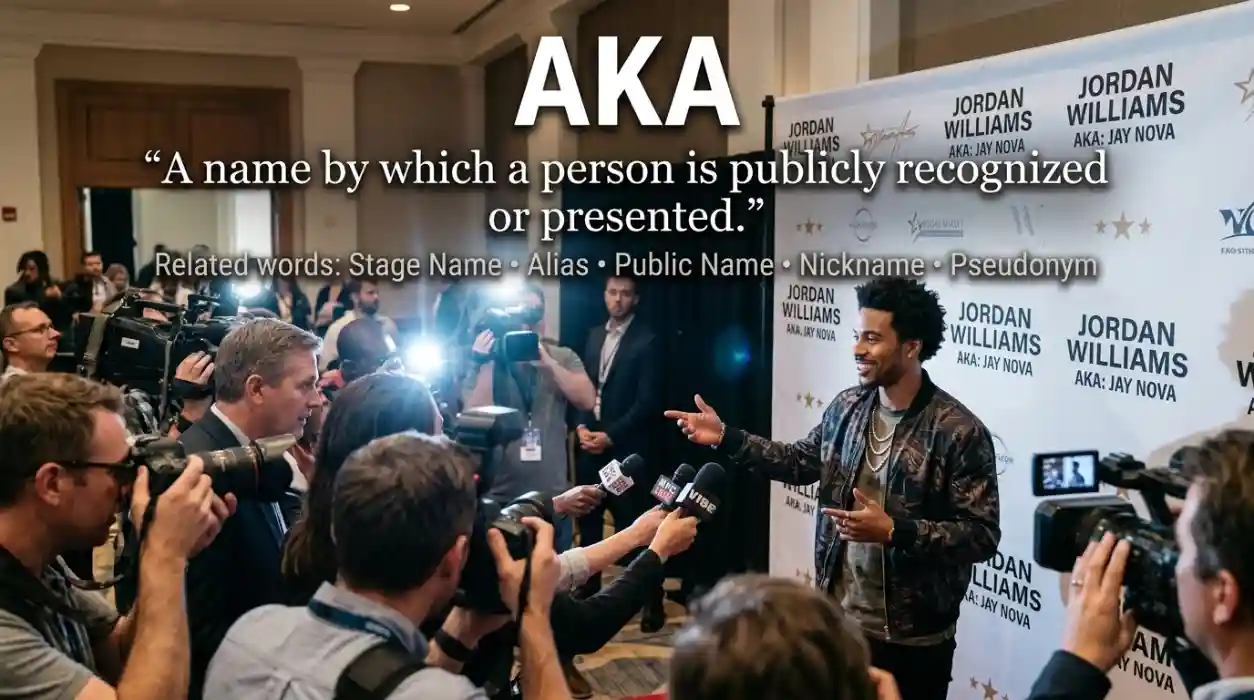
43. Public Name (Noun Phrase) — US / UK: /ˈpʌblɪk neɪm/
Meaning: A name by which a person is publicly recognized or presented.
Tone/Register: Neutral, media-related.
Examples:
The artist’s public name is easier to pronounce than his full birth name.
She uses a public name when speaking at large events.
44. Chosen Name (Noun Phrase) — US / UK: /ˈtʃoʊzən neɪm/; /ˈtʃəʊzən neɪm/
Meaning: A name a person has selected for personal, social, or professional reasons.
Tone/Register: Neutral, respectful.
Examples:
The speaker introduced herself using her chosen name.
He updated his profile to reflect the name he uses in everyday life.
45. Preferred Name (Noun Phrase) — US / UK: /prɪˈfɜrd neɪm/; /prɪˈfɜːd neɪm/
Meaning: The name a person wants others to use when addressing or referring to them.
Tone/Register: Professional, respectful.
Examples:
The form includes a field for your preferred name.
Please use her preferred name in the meeting notes.
46. Stage Alias (Noun Phrase) — US / UK: /ˈsteɪdʒ ˈeɪliəs/
Meaning: An alternative name used by a performer, often as part of a public persona.
Tone/Register: Entertainment, descriptive.
Examples:
The magician became famous under a memorable stage alias.
She selected a stage alias that suited her comedy act.
47. Screen Alias (Noun Phrase) — US / UK: /ˈskriːn ˈeɪliəs/
Meaning: An alternative name used by someone in online or screen-based settings.
Tone/Register: Informal, digital.
Examples:
The gamer uses a screen alias during online tournaments.
She chose a screen alias that protects her personal identity.
48. Alternate Identity (Noun Phrase) — US / UK: /ˈɔltərnət aɪˈdɛntəti/; /ˈɔːltənət aɪˈdentəti/
Meaning: A different identity or persona adopted by a person in a particular setting.
Tone/Register: Neutral, creative, psychological.
Examples:
The comic character’s alternate identity is a quiet librarian.
The performer uses an alternate identity for the fictional character’s online posts.
49. In Other Words (Phrase) — US / UK: /ɪn ˈʌðər wɜrdz/; /ɪn ˈʌðə wɜːdz/
Meaning: Introduces a restatement or explanation rather than necessarily an alternative name.
Tone/Register: Neutral, explanatory.
Examples:
The deadline is flexible; in other words, we have some room to adjust it.
He is the team’s coordinator; in other words, the person who keeps everyone organized.
Usage note: This is not a direct synonym for aka. Use it to explain or rephrase an idea, not simply to introduce another name.
50. Namely (Adverb) — US / UK: /ˈneɪmli/
Meaning: Introduces the specific person or thing being identified, rather than a second name for the same entity.
Tone/Register: Formal, academic.
Examples:
Two people will lead the project, namely Aisha Khan and Robert Miles.
The report identifies one main issue, namely the lack of reliable data.
Usage note: Namely is not interchangeable with aka. It specifies what someone means rather than presenting an alternative name.
Important vocabulary note: The closest replacements for aka are also known as, also called, otherwise known as, and known as. Terms such as alias, pseudonym, and nickname apply to particular types of alternative names. Phrases such as in other words and namely serve different grammatical purposes and should not replace aka in a sentence that introduces another name.
Synonyms by Tone
The right alternative depends on your audience and the kind of name you are introducing. A nickname in a family message does not need the same wording as an alternative name in a legal document.
Positive or Friendly
- Nickname: A familiar, informal name.
- Pet name: An affectionate name used for someone close to you.
- Term of endearment: A warm expression used to show affection.
- Chosen name: A name a person selects for themselves.
- Preferred name: The name someone wants others to use.
These options work well for personal stories, introductions, and warm conversational writing.
Neutral
- Also known as: The most versatile alternative to aka.
- Also called: A simple way to give another common name.
- Known as: A concise expression for a recognized name.
- Alternative name: A clear, general description.
- Alternate name: A useful option in databases and reference material.
- Official name: The formally recognized name.
- Common name: The everyday name for a person, place, plant, or thing.
These terms fit general writing, educational content, and everyday conversation.
Negative or Potentially Suspicious
- Alias: Can suggest a concealed identity, especially in crime reporting.
- False name: Indicates a name that is not genuine and may be intended to mislead.
- Cover name: Suggests an identity used to conceal a person or operation.
- Fictitious name: Describes an invented name, particularly in formal or legal contexts.
These words are not automatically negative in every context. However, they can imply secrecy or deception, so use them only when the meaning fits.
Playful or Informal
- Moniker: An informal or colorful word for a name.
- Handle: A name used online.
- Screen name: An identifier used on a website or platform.
- Nickname: A casual name used among friends, family, or colleagues.
- Stage name: A name adopted for performance or entertainment.
Tone matters because an alternative name can signal affection, professionalism, secrecy, or humor. Choosing the right phrase helps readers understand both the identity and the intended mood.
“AKA” vs. Close Alternatives
| Expression | Meaning | Tone | When to use it |
|---|---|---|---|
| AKA / also known as | Identifies another name for the same person or thing | Neutral, concise | Biographies, profiles, news, informal writing |
| Alias | An alternative name used by a person | Formal; may suggest concealment | Legal reports, crime stories, discussions of assumed identities |
| Nickname | An informal or familiar name | Friendly, casual | Family stories, personal profiles, everyday conversation |
| Pseudonym | A fictitious name used instead of a real name | Literary, formal | Authors, writers, and published work |
| Also called | Gives another common name | Plain, accessible | Explanations, educational writing, everyday speech |
Which One Should You Choose?
Use also known as when you want a reliable replacement that works in most situations. It conveys the same basic meaning as aka without relying on an abbreviation.
Use alias when the alternative identity itself matters. Use nickname when the name is informal or familiar. For an author’s invented publishing name, pseudonym or pen name is more precise.
For example, “Nora Ellis, also known as N. E. Gray” clearly introduces another name. “Nora Ellis uses the pseudonym N. E. Gray” more specifically explains that she publishes under a different name.
How “AKA” Changes by Context
Daily Conversation
In casual speech, people often say also called or known as. These expressions sound natural and are easy for English learners to understand.
For example: “My cousin, also known as the family DJ, controls the music at every party.” The phrase introduces a playful label rather than a formal alternative identity.
Writing and Blogging
Bloggers can use also known as, otherwise known as, or also called to introduce a nickname or alternate title. The full phrase can improve readability when the audience may not recognize the abbreviation.
For instance, a travel article might explain that a landmark is “also known as the Blue Mosque” before describing its history. This makes the relationship between the names clear.
Professional or Academic Writing
In academic writing, also known as and also referred to as are often suitable. For a technical topic, define the alternative name on first use and then use one term consistently.
In legal or administrative contexts, distinguish an alias from an official or legal name. Those expressions have different implications, and the distinction may matter.
Creative or Informal Use
In dialogue, social posts, and humorous writing, aka can add personality. A sentence such as “Meet Lina, aka the office snack expert” sounds playful and conversational.
In a formal biography, however, the full phrase also known as may look more polished. Choose the form that fits the voice of the piece.
Common Mistakes Learners Make
1. Treating Every Alternative Name as an Alias
An alias can be a name adopted instead of a person’s usual name. It may imply that the person is concealing their identity.
Better choice: Use also known as when you simply want to connect two names without suggesting secrecy.
2. Confusing a Nickname With a Pseudonym
A nickname is usually informal and may come from a person’s real name, personality, or a shared memory. A pseudonym is a fictitious name used in place of a real one, often for publication.
Better choice: Use a nickname for “Liz” as a familiar form of “Elizabeth.” Use pseudonym for an author who publishes under an invented name.
3. Using “Namely” as a Direct Replacement
Namely introduces a specific detail or identifies exactly what is being discussed. It does not usually introduce another name for the same person or object.
Incorrect: “The singer, namely Starbird, released a new album,” if you mean that Starbird is the singer’s alternative name.
Better: “The singer, also known as Starbird, released a new album.”
4. Assuming “Also Known As” Always Introduces a Person
The phrase can identify places, objects, concepts, and organizations as well as people.
For example: “The chemical is also known as table salt” introduces another name for a substance. The phrase is not limited to nicknames or stage names.
5. Overusing AKA in Formal Writing
The abbreviation is efficient, but repeated use can make a formal article feel abrupt or overly casual. Readers may also be unfamiliar with it.
Better choice: Write also known as the first time, especially when clarity matters. Use aka when its shorter, informal style suits the context.
Register Notes
- Formal: also known as, also referred to as, pseudonym, appellation.
- Neutral: also called, known as, alternative name.
- Informal: aka, nickname, moniker, handle.
- Legal or identity-related: alias, assumed name, legal name, fictitious name.
If you are writing about a real person, respect the name they use for themselves. Do not imply that a preferred or chosen name is false simply because it differs from a legal record.
Related reading idea: A vocabulary article about synonyms for nickname can help explain the difference between familiar names, stage names, and pseudonyms.
Real-Life Mini Scenarios
Workplace
A new employee introduces herself as “Katherine, but everyone calls me Kate.” In a staff profile, you could write “Katherine, also known as Kate,” though “Katherine, who goes by Kate” may sound more natural.
Social Situations
Your friend is famous in the group for planning every trip. You might jokingly call him “Omar, aka the holiday organizer.” The abbreviation creates a light, friendly tone.
Media and Pop Culture
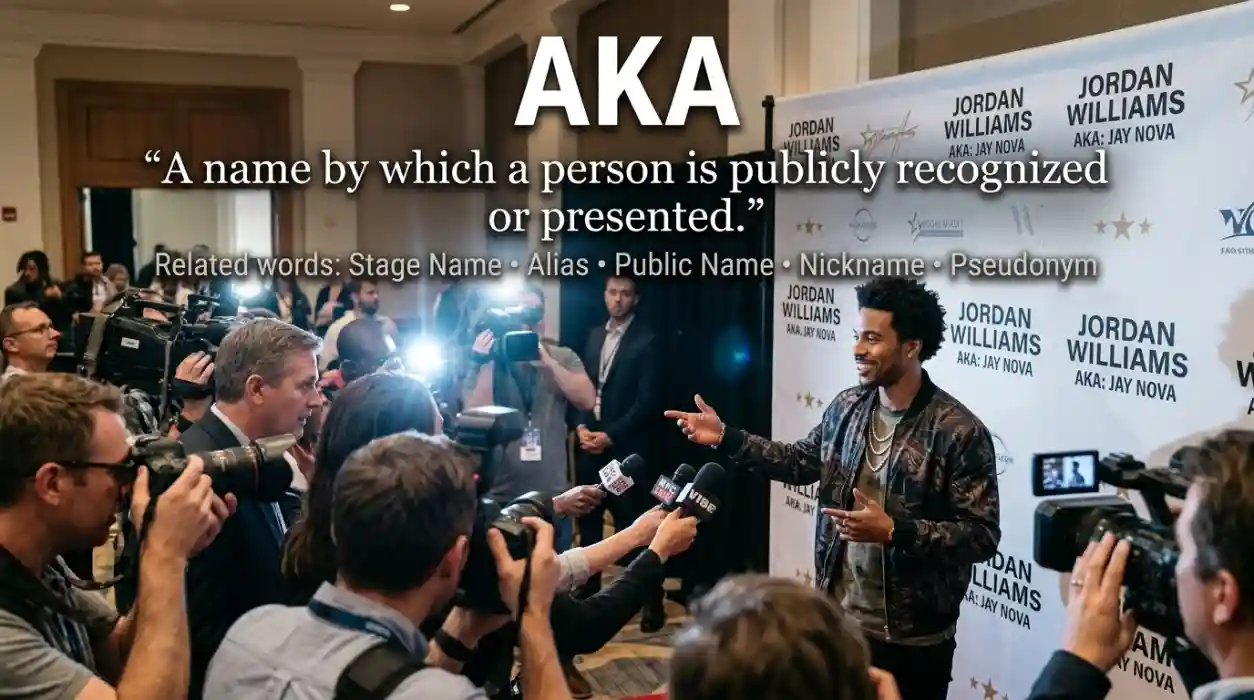
An actor performs under a public name that differs from their birth name. An entertainment article could introduce the performer as “known professionally as…” or “also known as…” depending on the publication’s style.
Writing and Storytelling
A mystery character uses a false identity to avoid detection. In that context, alias or assumed name may be more informative than also called because the hidden identity is important to the plot.
Practice Quiz
1. You want a clear, general alternative to “aka” in a biography. Which phrase fits best?
- A. Also known as
- B. In other words
- C. Namely
2. An author publishes novels under an invented name. What is that name called?
- A. Legal name
- B. Pseudonym
- C. Handle
3. A family uses “Sunny” as an affectionate name for a child. Which term fits best?
- A. Cover name
- B. Pet name
- C. Designation
4. A person uses an alternative name to conceal their identity in a crime story. Which word is most suitable?
- A. Alias
- B. Preferred name
- C. Common name
5. You are explaining that “eggplant” is another name for “aubergine.” Which phrase sounds most natural?
- A. Also called
- B. Under the name
- C. False name
6. A singer adopts a new name for performances. What is it called?
- A. Stage name
- B. Legal name
- C. Local name
7. A social media user wants a casual term for their account identifier. Which word fits best?
- A. Appellation
- B. Handle
- C. Sobriquet
8. A form asks what name someone wants colleagues to use. Which term is appropriate?
- A. Preferred name
- B. Cover name
- C. Code name
9. You want to describe the formally registered name of a school. Which expression should you use?
- A. Pet name
- B. Official name
- C. Screen alias
10. A writer wants to introduce another name for a historical building in a general-interest article. Which phrase is most accessible?
- A. Also known as
- B. False name
- C. Assumed name
Answer key: 1-A, 2-B, 3-B, 4-A, 5-A, 6-A, 7-B, 8-A, 9-B, 10-A,
Reflection Task
Write three short sentences about a fictional person who uses a nickname, a professional name, and an online handle. Explain why each name is appropriate in its setting.
External Reference
For reliable definitions and pronunciation guidance, consult Cambridge Dictionary and Oxford Learner’s Dictionaries. Search for alias, nickname, pseudonym, and abbreviation to compare their meanings and see how each term works in context.
Conclusion
Learning synonyms for aka helps you introduce alternative names clearly and naturally. The best replacement depends on whether you mean a nickname, a public identity, or an official title.
For students, bloggers, and content writers, varied vocabulary improves clarity and flow. For everyday speakers, it makes introductions and explanations easier to follow.
Try using also known as, alias, and nickname in separate sentences. Notice how each expression changes the meaning and tone of your writing.
Keep practising with emails, essays, biographies, and daily conversations. Choose three expressions from this guide and write your own examples to make them part of your active vocabulary.
FAQs
1. What is the best synonym for AKA in formal English?
Also known as is usually the best formal alternative to aka. It expresses the same idea without using an abbreviation, making it suitable for reports, biographies, educational articles, and professional documents. If you are discussing a writer’s invented name, pseudonym,m or pen name may be more precise.
2. Can I use “aka” in an academic essay?
Yes, but use it selectively. Academic writing generally benefits from clear, fully written expressions, so also known as or also referred to as may be more appropriate. Follow your institution’s style guide when one applies. If you introduce an alternative technical term, explain it clearly and use the terminology consistently afterward.
3. What is the difference between AKA and an alias?
AKA is an abbreviation meaning “also known as,” while an alias is an alternative name used by a person. The abbreviation introduces another name; the noun describes the name itself. An alias can suggest concealment in legal or crime-related contexts, but not every alternative name is an alias.
4. What does AKA mean on social media?
On social media, aka usually introduces a nickname, online persona, humorous label, or another name for the same person. For example, “Rina, aka the group photographer” gives Rina a playful description. The expression is informal and widely understood, but also known as may be clearer in a professional profile.
5. Is “aka” grammatically correct in professional writing?
Yes. AKA is a recognized initialism, but whether it suits a particular document depends on the audience and style. In formal writing, spell out also known as when clarity or a polished tone matters. For legal documents, be especially careful to distinguish an alias from a person’s official or legal name.

Hasnain Ali is an SEO Content Strategist and the founder of wordvora.com, a trusted vocabulary platform that helps writers, students, professionals, and English learners find accurate synonyms, antonyms, word meanings, and real-life usage examples. He specializes in keyword research, on-page SEO, topical authority, and creating search-first content that aligns with Google’s latest Search Quality and E-E-A-T guidelines. His work focuses on producing clear, well-structured, and reader-friendly resources that satisfy search intent while maintaining high editorial standards.
Through extensive hands-on experience with SEO tools such as Google Search Console, Google Analytics, SEMrush, and Ahrefs, Hasnain researches user search behavior and develops content that is both informative and easy to understand. Every article published on wordvora.com is carefully reviewed for accuracy, readability, and contextual relevance before publication. His mission is to build one of the web’s most reliable English vocabulary resources by providing practical language guidance, trustworthy explanations, and content that helps readers improve their writing, communication, and vocabulary with confidence.