A synonym for trapper usually means a word or phrase describing a person who catches wild animals with traps or snares. Depending on context, useful alternatives include animal trapper, fur trapper, hunter-trapper, and wildlife-control specialist.
Imagine reading a story about a person who spends days in the wilderness setting traps. Calling that person a trapper is natural, but another term may fit the exact context better.
The word trapper is common in historical writing, wildlife discussions, and stories about hunting. Knowing close alternatives helps you choose a more precise expression.
For students, bloggers, and content writers, learning a synonym for trapper can prevent repetitive writing and make descriptions sound more natural and specific.
Daily English users can also benefit. A precise word can show whether someone traps animals for fur, controls pests, works with wildlife, or belongs to a historical setting.
What Does “Synonym for Trapper” Really Mean?
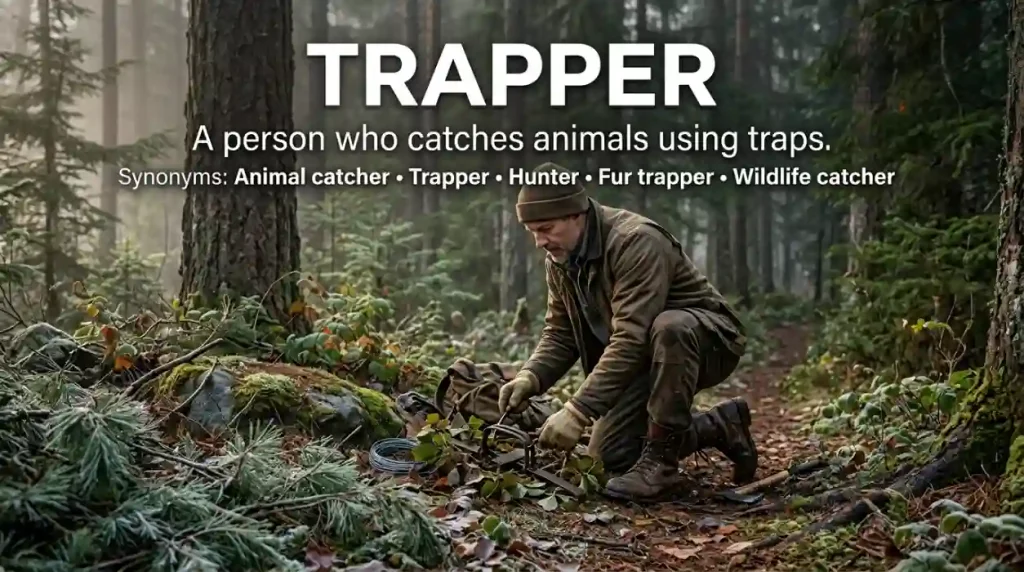
A trapper is a person who catches wild animals by using traps, snares, or similar methods. The word is especially associated with people who trap animals for fur, food, wildlife management, or pest control.
Cambridge defines trapper as a person who catches wild animals, usually for their fur. It also records the American English meaning as someone who catches wild animals, especially to sell their fur.
The noun is usually neutral. However, its emotional effect can change with context.
In a historical novel, trapper may sound adventurous or traditional. In a modern wildlife-management article, a more specific term such as wildlife-control specialist may sound more professional.
The most important point is that trapper is a narrow occupational noun. Words such as hunter or animal handler overlap with it but do not always mean the same thing.
Part of Speech
Trapper is a countable noun.
Simple definition: A person who catches animals using traps or snares.
Plural: trappers
Example:
The trapper checked his traps early in the morning.
Connotative Meaning
Connotation (the feeling, association, or emotional meaning a word carries beyond its basic dictionary definition) can affect which alternative sounds best.
Positive Tone
In historical or literary writing, trapper can suggest independence, outdoor skill, patience, and knowledge of nature.
Words such as experienced trapper or traditional trapper may carry a respectful or descriptive tone.
Negative Tone
In some modern discussions, trapping may be viewed negatively because of concerns about animal welfare. In such contexts, terms like animal trapper can sound more clinical or direct.
The tone usually comes from the subject and surrounding language rather than from the word trapper itself.
Neutral Tone
Trapper, animal trapper, fur trapper, and wildlife trapper can be neutral when they simply identify someone’s activity or occupation.
For formal writing, choose the most factually accurate term instead of trying to make the person sound positive or negative.
Etymology
The word trapper comes from the verb trap plus the agent suffix -er.
The noun trapper, meaning a person whose occupation is trapping animals, is recorded from the late 18th century. Etymological sources date this occupational sense to about 1768.
The older word trap has a much longer history. Etymological evidence traces the noun to Middle English trappe and late Old English forms such as træppe and treppe, meaning a snare or trap for catching animals.
Old English: 450–1100
Old English had forms related to the idea of a trap or snare. The word was connected with catching or ensnaring animals.
The modern occupational noun trapper did not yet exist in its current form.
Middle English: 1100–1500
During Middle English, trap developed further as a word for a device used to catch animals. The verb also developed meanings connected with ensnaring and capturing.
By this period, trap was becoming closer to its modern English form.
Modern English: 1500–Present
Modern English expanded the meanings of trap and trapping. The occupational noun trapper later emerged for a person who made trapping animals a business or occupation.
Today, trapper can refer to historical fur trappers, professional wildlife trappers, pest-control workers who use traps, or people who trap animals in specific management contexts.
Syllables
trap-per
Affixation Pattern of “Trapper”
Root: trap
Prefix: none
Suffix: -er
The suffix -er often forms nouns for people who act.
For example:
- teach → teacher
- drive → driver
- farm → farmer
- trap → trapper
Synonyms List
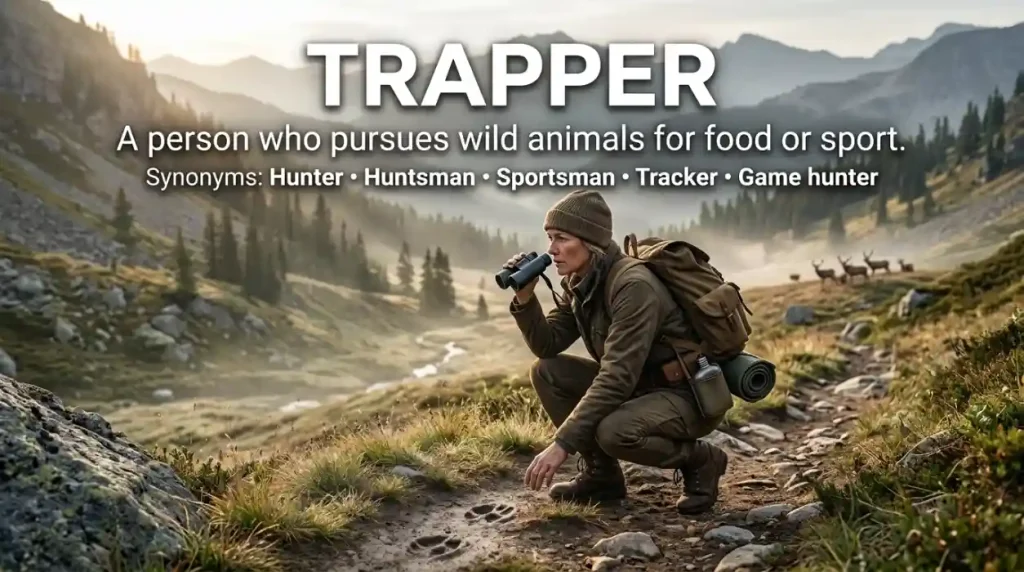
1. Hunter (Noun)
- Meaning: A person who pursues wild animals for food or sport.
- Tone/Register: Neutral / General
- Example: The experienced hunter tracked deer through the snowy brush.
- Example: Every autumn, the local hunter prepares his gear for the season.
2. Poacher (Noun)
- Meaning: A person who illegally hunts or captures wildlife on property that is not their own.
- Tone/Register: Negative / Legal
- Example: Rangers patrol the national park to catch any active poachers.
- Example: The greedy poacher set illegal snares near the riverbank.
3. Furrier (Noun)
- Meaning: A person who prepares or deals in animal furs and pelts.
- Tone/Register: Formal / Occupational
- Example: The skilled furrier examined the quality of the mink pelts.
- Example: Winter coats in the boutique were crafted by a master furrier.
4. Outdoorsman (Noun)
- Meaning: A person who is fond of or skilled in outdoor sports and activities like hunting and camping.
- Tone/Register: Informal / Descriptive
- Example: My grandfather was a rugged outdoorsman who loved the mountains.
- Example: Every true outdoorsman respects the balance of nature.
5. Woodsman (Noun)
- Meaning: A person who lives or works in the woods, skilled in forest survival.
- Tone/Register: Traditional / Literary
- Example: The quiet woodsman built a sturdy cabin by the lake.
- Example: He navigated the dense forest like an expert woodsman.
6. Forager (Noun)
- Meaning: A person who searches widely for food or provisions in the wild.
- Tone/Register: Neutral / Academic
- Example: The careful forager collected edible mushrooms after the rain.
- Example: Ancient humans survived as hunter-gatherers and skilled forager groups.
7. Snarer (Noun)
- Meaning: One who catches animals using hidden wire or rope loops.
- Tone/Register: Formal / Technical
- Example: The cautious snarer checked his hidden wire loops at dawn.
- Example: Local laws strictly regulate any licensed snarer in the valley.
8. Prospector (Noun)
- Meaning: An explorer searching for mineral deposits or valuable resources.
- Tone/Register: Historical / Literary
- Example: A lone prospector panned for gold in the icy stream.
- Example: The weathered prospector carried a pickaxe and a canvas bag.
9. Mountaineer (Noun)
- Meaning: A person who lives in or climbs mountains.
- Tone/Register: Descriptive / Adventure
- Example: The daring mountaineer scaled the sheer icy cliff face.
- Example: Local villagers lived the hard life of a mountain mountaineer.
10. Pathfinder (Noun)
- Meaning: A person who discovers a path through unknown territory.
- Tone/Register: Inspirational / Literary
- Example: The scout acted as a trusted pathfinder for the wagon train.
- Example: Every great explorer needs a skilled pathfinder to lead the way.
11. Tracker (Noun)
- Meaning: A person who follows the tracks or marks left by animals or people.
- Tone/Register: Neutral / Action-oriented
- Example: The expert tracker found footprints in the muddy trail.
- Example: Rescue teams relied on a native tracker to find the lost hiker.
12. Pioneer (Noun)
- Meaning: A person who is among the first to explore or settle a new country or area.
- Tone/Register: Formal / Historical
- Example: The brave pioneer built a homestead on the western plains.
- Example: Early settlers and pioneer families faced harsh winter weather.
13. Wilderness Guide (Noun)
- Meaning: A professional who leads travelers safely through remote natural regions.
- Tone/Register: Professional / Outdoor
- Example: Our certified wilderness guide taught us how to filter river water.
- Example: The experienced wilderness guide checked the weather radar.
14. Frontiersman (Noun)
- Meaning: A man who lives on the frontier or edge of settled civilization.
- Tone/Register: Historical / Literary
- Example: The legendary frontiersman wore a heavy buckskin jacket.
- Example: Stories of the American frontier feature many a brave frontiersman.
15. Scout (Noun)
- Meaning: A soldier or other person sent out ahead to gather information.
- Tone/Register: Military / Informal
- Example: The cavalry scout reported enemy movement across the valley.
- Example: Our lead scout surveyed the ridge before we moved forward.
16. Voyager (Noun)
- Meaning: A person who goes on a long, sometimes dangerous journey, often by water.
- Tone/Register: Literary / Poetic
- Example: The French-Canadian voyager paddled his canoe down the rushing river.
- Example: Every brave voyager carried supplies for months away from home.
17. Relocation Expert (Noun)
- Meaning: Modern metaphorical term for someone who catches and relocates nuisance wildlife.
- Tone/Register: Professional / Modern
- Example: The city called a wildlife relocation expert to remove the raccoon.
- Example: A humane relocation expert safely transferred the beaver to a sanctuary.
18. Gamekeeper (Noun)
- Meaning: A person employed to maintain and protect game wildlife on an estate.
- Tone/Register: British / Professional
- Example: The estate gamekeeper fed the pheasants during the cold snap.
- Example: Poachers tried to avoid the watchful eye of the local gamekeeper.
19. Ranger (Noun)
- Meaning: A keeper of a park, forest, or area of countryside.
- Tone/Register: Official / Environmental
- Example: The park ranger answered visitor questions at the station.
- Example: A forest ranger patrolled the remote hiking trail on horseback.
20. Nomad (Noun)
- Meaning: A member of a community that moves from place to place without a permanent home.
- Tone/Register: Anthropological / Cultural
- Example: The desert nomad led his camels toward the distant oasis.
- Example: Ancient nomadic leagues followed seasonal migration patterns of herds.
21. Hermit (Noun)
- Meaning: A person living in solitude as a religious act or simple preference.
- Tone/Register: Literary / Descriptive
- Example: An aging hermit lived in the stone cottage deep in the woods.
- Example: The friendly hermit welcomed lost travelers into his warm shelter.
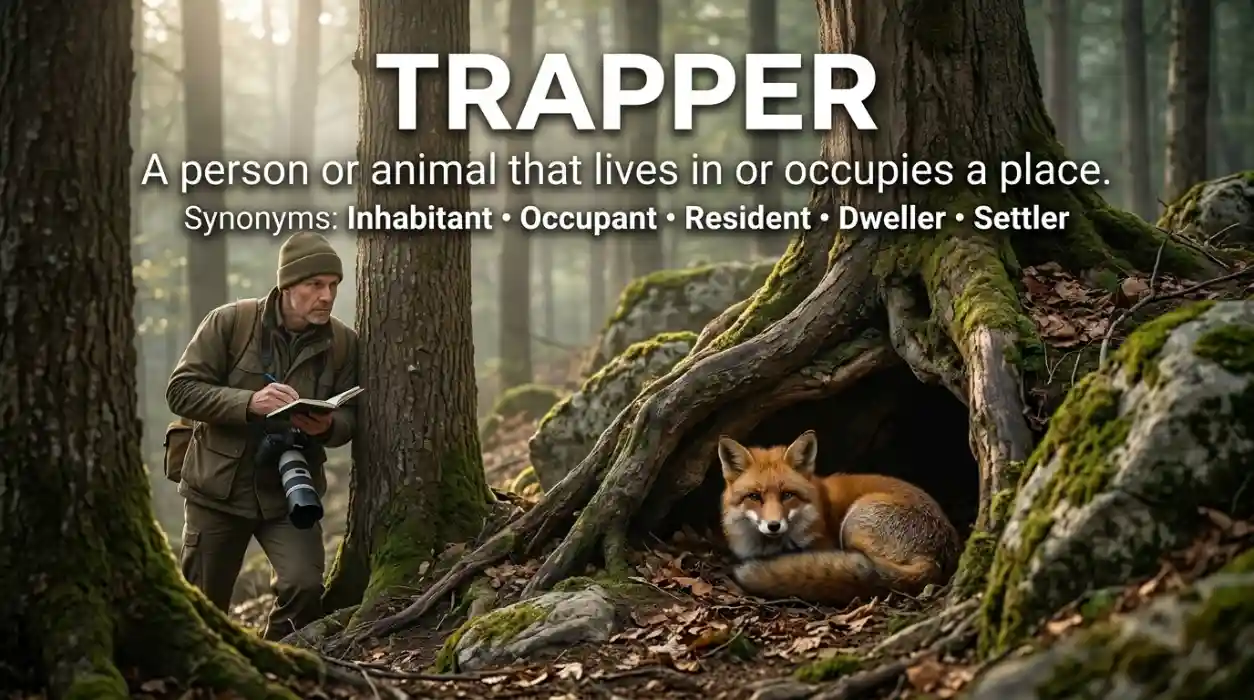
22. Inhabitant (Noun)
- Meaning: A person or animal that lives in or occupies a place.
- Tone/Register: Formal / Sociological
- Example: Every forest inhabitant prepares for the upcoming winter freeze.
- Example: The valley inhabitant greeted tourists with a warm smile.
23. Settler (Noun)
- Meaning: A person who has migrated to an area and established permanent residence.
- Tone/Register: Historical / Narrative
- Example: The weary settler cleared trees to build a wooden farmhouse.
- Example: New settler families planted crops before the first autumn frost.
24. Adventurer (Noun)
- Meaning: A person who enjoys thrilling or dangerous experiences.
- Tone/Register: Enthusiastic / Literary
- Example: A bold adventurer sailed across the stormy Atlantic Ocean.
- Example: Every young adventurer dreams of discovering hidden treasure.
25. Explorer (Noun)
- Meaning: A person exploring an unfamiliar area or country.
- Tone/Register: Academic / Descriptive
- Example: The polar explorer mapped the frozen coastline during a blizzard.
- Example: Famous explorer journals fill the shelves of the university library.
26. Backpacker (Noun)
- Meaning: A traveler carrying belongings in a backpack, often hiking outdoors.
- Tone/Register: Modern / Casual
- Example: A lone backpacker filtered water from the mountain stream.
- Example: College students enjoy backpacking through European national parks.
27. Camper (Noun)
- Meaning: A person spending a vacation living in a tent or camp.
- Tone/Register: Casual / Recreational
- Example: Every morning, the cheerful camper lit a small campfire.
- Example: Heavy rain soaked the tents of every unprepared camper.
28. Hiker (Noun)
- Meaning: A person who walks for long distances in the countryside for pleasure.
- Tone/Register: Recreational / Active
- Example: An energetic hiker reached the summit before noon.
- Example: The seasoned hiker wore sturdy boots to prevent ankle injuries.
29. Naturalist (Noun)
- Meaning: An expert in or student of natural history.
- Tone/Register: Academic / Scientific
- Example: The observant naturalist recorded bird migration patterns all spring.
- Example: A dedicated naturalist led the guided tour through the wetlands.
30. Biologist (Noun)
- Meaning: An expert in the study of living organisms.
- Tone/Register: Scientific / Professional
- Example: The wildlife biologist tagged wolves for research purposes.
- Example: Fieldwork keeps the marine biologist busy near the coral reef.
31. Conservationist (Noun)
- Meaning: A person who advocates for the protection of the natural environment.
- Tone/Register: Formal / Environmental
- Example: The passionate conservationist spoke at the city council meeting.
- Example: Donations helped the conservationist buy land for a nature reserve.
32. Environmentalist (Noun)
- Meaning: A person concerned with protecting the environment from pollution.
- Tone/Register: Social / Political
- Example: Young environmentalist groups organized a community river cleanup.
- Example: The scientist and environmentalist published a report on water quality.
33. Animal Control Officer (Noun)
- Meaning: Official worker responsible for animal welfare and stray capture.
- Tone/Register: Official / Municipal
- Example: An animal control officer rescued the stray dog from traffic.
- Example: The local shelter dispatched an animal control officer promptly.
34. Pest Controller (Noun)
- Meaning: A person who removes unwanted household or commercial pests.
- Tone/Register: Occupational / Commercial
- Example: The licensed pest controller inspected the basement for rodents.
- Example: Property managers hired a professional pest controller for the apartment.
35. Exterminator (Noun)
- Meaning: A person who eliminates unwanted pests like insects and rodents.
- Tone/Register: Practical / Direct
- Example: The commercial exterminator sprayed the warehouse to remove beetles.
- Example: Homeowners called an exterminator when termites appeared.
36. Catcher (Noun)
- Meaning: A person or device that catches something.
- Tone/Register: Simple / General
- Example: The skilled baseball catcher signaled the pitcher for a curveball.
- Example: Dog catchers worked in teams across the suburban neighborhoods.
37. Collector (Noun)
- Meaning: A person who collects things of a specified type.
- Tone/Register: Neutral / General
- Example: A rare book collector bought a first-edition novel online.
- Example: The antique coin collector visited shops every weekend.
38. Gatherer (Noun)
- Meaning: A person who harvests wild food plants or materials.
- Tone/Register: Anthropological / Historical
- Example: Early human societies depended on both hunter and gatherer roles.
- Example: The berry gatherer filled her woven basket before sunset.
39. Harvester (Noun)
- Meaning: A person who gathers a crop or natural resource.
- Tone/Register: Agricultural / Occupational
- Example: Grape harvester workers started picking fruit at dawn.
- Example: The seasonal harvester operated heavy machinery in the wheat field.
40. Reapers (Noun)
- Meaning: People who harvest crops, typically grain.
- Tone/Register: Traditional / Literary
- Example: Weary reapers rested under the shade of an oak tree.
- Example: Golden fields awaited the arrival of the local reapers.
41. Seeker (Noun)
- Meaning: A person who attempts to find something or someone.
- Tone/Register: Literary / Philosophical
- Example: A spiritual seeker traveled across India to find peace.
- Example: The truth seeker questioned every historical assumption.
42. Pursuer (Noun)
- Meaning: A person or group that chases someone.
- Tone/Register: Action / Narrative
- Example: The tired runner looked back to check on his pursuer.
- Example: Police officers acted as relentless pursuers through the alleys.
43. Stalker (Noun)
- Meaning: Someone who pursues stealthily or tracks game.
- Tone/Register: Suspenseful / Intense
- Example: The silent stalker crept through the tall savannah grass.
- Example: Wildlife photographers act like a careful stalker to capture shots.
44. Prowler (Noun)
- Meaning: A person who moves about stealthily, often with bad intentions.
- Tone/Register: Suspicious / Informal
- Example: Homeowners reported a suspicious prowler near the back fence.
- Example: Streetlights helped deter any nighttime prowler in the neighborhood.
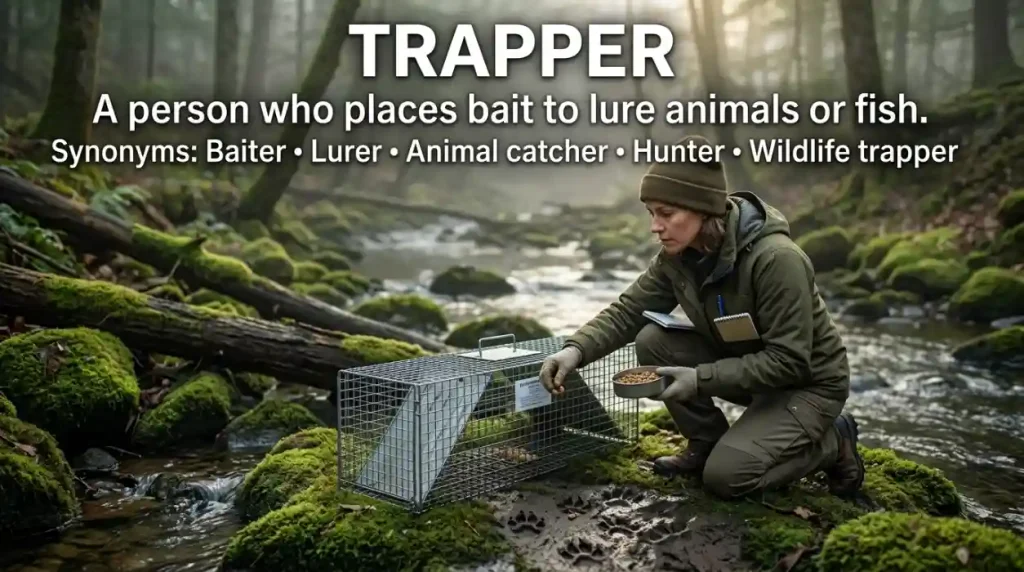
45. Baiter (Noun)
- Meaning: Someone who places bait to lure animals or fish.
- Tone/Register: Technical / Angling
- Example: The expert baiter prepped hooks with artificial lures.
- Example: Commercial fishermen relied on an experienced baiter for their lines.
46. Angler (Noun)
- Meaning: A person who fishes with a rod and line.
- Tone/Register: Recreational / Outdoor
- Example: A patient angler cast his fishing line into the calm lake.
- Example: Early morning is the favorite time for every dedicated angler.
47. Fisher (Noun)
- Meaning: A person who catches fish, either professionally or as a sport.
- Tone/Register: Occupational / General
- Example: The coastal fisher mended torn nets on the wooden dock.
- Example: Commercial fisher boats returned to harbor before the storm.
48. Woodseller (Noun)
- Meaning: Someone who cuts and sells firewood from the forest.
- Tone/Register: Traditional / Occupational
- Example: The local woodseller delivered dry oak logs for winter stoves.
- Example: Villagers bought firewood directly from the town woodseller.
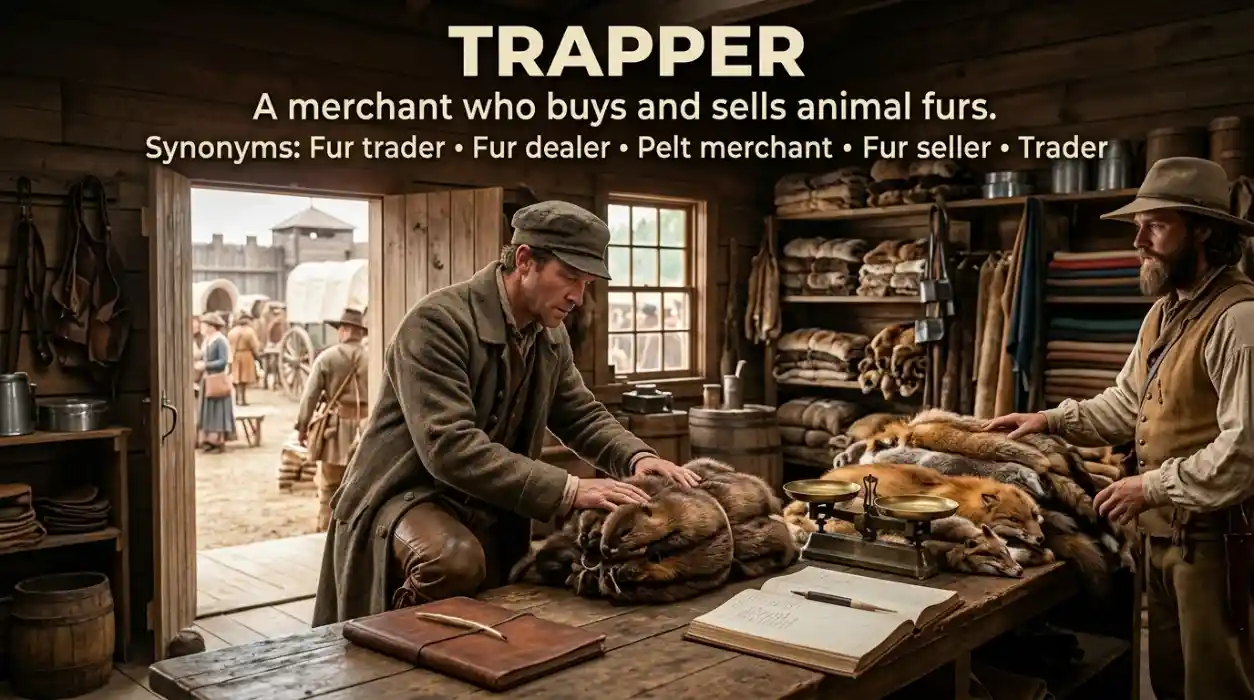
49. Pelt-dealer (Noun)
- Meaning: A merchant who buys and sells animal skins.
- Tone/Register: Historical / Business
- Example: The traveling pelt-dealer bartered for fox skins at the fort.
- Example: Historical records document many a wealthy pelt-dealer in town.
50. Fur-trader (Noun)
- Meaning: A merchant involved in the buying and selling of animal furs.
- Tone/Register: Historical / Economic
- Example: The 18th-century fur-trader traveled west by canoe.
- Example: Forts were established by every major fur-trader company.
Synonyms by Tone
Tone matters because the wrong alternative can make a sentence sound inaccurate or unnatural.
Positive or Respectful
These expressions can sound respectful when describing experience or skill:
- experienced trapper
- traditional trapper
- professional trapper
- skilled trapper
- wilderness trapper
- backcountry trapper
They are useful when writing biographies, historical stories, documentaries, or personal profiles.
Neutral
These are generally factual:
- trapper
- animal trapper
- wildlife trapper
- fur trapper
- game trapper
- hunter-trapper
- licensed trapper
- local trapper
- field trapper
Use these when accuracy matters more than emotional effect.
Negative or Potentially Sensitive
The word trapper itself is not automatically negative. However, some contexts about animal welfare may create a negative association.
Terms such as animal trapper can sound more direct because they emphasize the act of capturing animals.
Avoid choosing emotionally loaded wording unless the context genuinely requires it.
Playful or Informal
There are relatively few playful synonyms for trapper. Terms such as bush trapper may sound informal or regional.
In creative writing, a descriptive phrase can be more natural than forcing a humorous synonym.
“Trapper” vs Close Alternatives
| Word or phrase | Meaning difference | Tone | Best use |
|---|---|---|---|
| Trapper | A person who catches animals with traps | Neutral | General writing |
| Hunter | A person who pursues animals, usually without implying traps | Neutral | Hunting contexts |
| Wildlife-control specialist | A professional managing wildlife problems | Professional | Modern technical writing |
| Fur trapper | A trapper specifically associated with fur-bearing animals | Historical/occupational | History and wildlife writing |
The biggest mistake is assuming hunter and trapper mean the same thing.
A hunter may pursue an animal with a firearm, bow, or other method. A trapper specifically uses traps or snares.
Likewise, wildlife-control specialist is broader than trapper. The specialist may use traps, but trapping is only one possible method.
How “Trapper” Changes by Context
Daily Conversation
In everyday conversation, trapper is usually enough when everyone understands the context.
For example:
My grandfather was a trapper.
If the listener needs more detail, add a modifier:
My grandfather was a fur trapper.
This is clearer than searching for an unusual one-word synonym.
Writing and Blogging
Bloggers should choose the term that matches the subject.
A history article may naturally use fur trapper or traditional trapper. A wildlife article may prefer wildlife trapper or wildlife-control specialist.
Specific language improves readability because readers immediately understand the person’s role.
Professional or Academic Writing
Formal writing benefits from precision.
Instead of writing someone who traps animals, you might use wildlife-control specialist when that accurately describes the person’s occupation.
However, do not replace trapper with a professional-sounding phrase simply to make the sentence sound sophisticated.
Creative and Informal Writing
Stories often benefit from trapper, wilderness trapper, or backcountry trapper.
These phrases quickly establish setting and character.
For example:
The old trapper disappeared into the forest before sunrise.
The word creates a strong wilderness image without requiring a long explanation.
Common Mistakes Learners Make
Mistake 1: Using “Hunter” as a Perfect Synonym
A hunter and a trapper can both catch wild animals, but their methods differ.
Use hunter when the person hunts. Use trapper when trapping is central.
Mistake 2: Using “Furrier”
A furrier is not the same as a trapper.
A furrier traditionally works with fur, such as preparing, making, or selling fur products. A trapper catches animals.
Mistake 3: Using “Animal Handler”
An animal handler works directly with animals but does not necessarily capture them.
The term is much broader.
Mistake 4: Assuming Every Alternative Is Interchangeable
Wildlife-control specialist may work well in a professional article but sound unnatural in a historical novel.
Always match the word to the setting.
Mistake 5: Overusing “Trapper”
Repeatedly writing the trapper can make a paragraph monotonous.
Try a precise phrase such as the wildlife specialist, the hunter-trapper, or the experienced outdoorsman only when the replacement remains factually accurate.
Register Notes
Trapper: neutral and common in the correct context.
Fur trapper: descriptive and often historical.
Wildlife-control specialist: professional and modern.
Fowler: literary or historical.
Snarer: specialized and less common.
For an internal vocabulary resource, consider linking this topic with another article about synonyms for hunter to help readers distinguish overlapping outdoor occupations.
Real-Life Mini Scenarios
Workplace
A wildlife-management team needs someone experienced with animal trapping.
Natural wording:
The team hired an experienced wildlife trapper for the field project.
In a more formal report:
A wildlife-control specialist was assigned to the case.
Social Situation
Someone talks about a family member who lived in a remote area.
Natural wording:
My grandfather was a trapper who spent most of his life outdoors.
A more specific version:
My grandfather was a fur trapper in northern Canada.
Media and Pop Culture
A documentary may introduce a historical character.
The film follows a wilderness trapper living far from civilization.
A wildlife documentary may use:
The program interviews a professional wildlife trapper.
Writing and Storytelling
For fiction, trapper is often stronger than a technical occupational phrase.
The old trapper watched the trail from beneath the trees.
The word quickly suggests experience, isolation, and outdoor knowledge.
For modern nonfiction:
A wildlife-control specialist inspected the property.
The second version sounds more professional and contemporary.
Practice Exercise
1. A person catches wild animals using traps as their occupation. What is the most natural general term?
A. Furrier
B. Trapper
C. Animal handler
D. Ranger
2. A professional deals specifically with unwanted wildlife around homes.
A. Wildlife-control specialist
B. Fowler
C. Hunter-trapper
D. Game hunter
3. A historical character catches animals mainly for their fur.
A. Fur trapper
B. Animal handler
C. Wildlife technician
D. Gamekeeper
4. A person catches wild birds. Which specialized term fits?
A. Trapper
B. Fowler
C. Furrier
D. Ranger
5. A person uses snares specifically to catch animals.
A. Snarer
B. Hunter
C. Handler
D. Furrier
6. Which term sounds most professional in a modern wildlife-management report?
A. Bush trapper
B. Wildlife-control specialist
C. Birdcatcher
D. Wilderness trapper
7. Which word is broader than “trapper” because it does not require the use of traps?
A. Hunter
B. Fur trapper
C. Snarer
D. Trap setter
8. Which phrase specifically describes someone who catches mink?
A. Fox trapper
B. Mink trapper
C. Game catcher
D. Wildlife handler
9. Which term may sound literary or historical?
A. Fowler
B. Pest controller
C. Wildlife technician
D. Animal-control officer
10. Which phrase emphasizes that trapping is part of the person’s professional work?
A. Professional trapper
B. Animal handler
C. Wildlife catcher
D. Hunter
Answer key: 1-B | 2-A | 3-A | 4-B | 5-A | 6-B | 7-A | 8-B | 9-A | 10-A
Reflection Task
Write one sentence about a person who catches or manages wild animals. Use trapper, fur trapper, wildlife-control specialist, or another suitable alternative from this article.
Conclusion
Learning a synonym for trapper is less about memorizing dozens of replacements and more about choosing the most accurate word for each situation.
Terms such as fur trapper, wildlife trapper, and wildlife-control specialist can make writing clearer while showing exactly what a person does.
Better vocabulary also helps bloggers, students, and everyday speakers avoid repetition. Precise words make descriptions sound more confident and natural.
Keep practicing these alternatives in emails, essays, stories, and daily conversations. The more you use them, the easier precise English becomes.
External reference
For external reference, the Cambridge Dictionary provides the definition and pronunciation of trapper, while the Online Etymology Dictionary provides useful historical information about trap and trapper: Cambridge Dictionary — trapper and Online Etymology Dictionary — trapper.
Frequently Asked Questions
1. What is the closest synonym for trapper in everyday English?
The closest general synonym is usually animal trapper because it keeps the core meaning of a person who catches animals with traps. Fur trapper is more specific and works when fur-bearing animals are involved. Hunter is related but is not an exact synonym because hunting does not necessarily involve traps.
2. Is hunter a synonym for trapper?
Not exactly. A hunter is someone who pursues animals for hunting, while a trapper specifically catches animals using traps or snares. One person can be both a hunter and a trapper, so the terms overlap, but they describe different methods.
3. What is another word for a person who traps animals?
Depending on context, you can say animal trapper, wildlife trapper, fur trapper, snarer, hunter-trapper, or wildlife-control specialist. The best choice depends on why the person traps animals and whether the writing is historical, conversational, technical, or professional.
4. What is a professional word for trapper?
In modern professional writing, wildlife-control specialist or wildlife trapping specialist may work when the person’s role involves managing wildlife problems. However, these terms are broader or more specific than trapper, so they should only be used when they accurately describe the person’s job.
5. What is the difference between a trapper and a furrier?
A trapper catches animals, usually with traps or snares. A furrier works with fur, traditionally by preparing, making, selling, or dealing with fur products. A person could be involved in both activities, but the two words describe different occupations.

Hasnain Ali is an SEO Content Strategist and the founder of wordvora.com, a trusted vocabulary platform that helps writers, students, professionals, and English learners find accurate synonyms, antonyms, word meanings, and real-life usage examples. He specializes in keyword research, on-page SEO, topical authority, and creating search-first content that aligns with Google’s latest Search Quality and E-E-A-T guidelines. His work focuses on producing clear, well-structured, and reader-friendly resources that satisfy search intent while maintaining high editorial standards.
Through extensive hands-on experience with SEO tools such as Google Search Console, Google Analytics, SEMrush, and Ahrefs, Hasnain researches user search behavior and develops content that is both informative and easy to understand. Every article published on wordvora.com is carefully reviewed for accuracy, readability, and contextual relevance before publication. His mission is to build one of the web’s most reliable English vocabulary resources by providing practical language guidance, trustworthy explanations, and content that helps readers improve their writing, communication, and vocabulary with confidence.