

Finding the right words can make your English clearer, more precise, and engaging. The word “abolition” is commonly used when discussing the official ending or removal of a system, practice, law, or institution.
Learning a synonym for abolition can help you avoid repetition and choose a word that fits your context. Depending on the situation, alternatives such as elimination, repeal, cancellation, removal, or termination may be appropriate.
In this guide, we will explore useful alternatives, their meanings, and simple examples. Understanding a synonym for abolition can help students, writers, bloggers, and English learners express ideas about ending practices or systems more effectively.
Whether you are writing an essay, creating content, preparing a report, or improving your everyday English, vocabulary matters. By learning each synonym for abolition, you can communicate your ideas with greater clarity and confidence.
What Does “Synonym For Abolition” Really Mean?
Synonym for abolition means finding alternative words that express the official ending, stopping, or dismantling of a law, system, or institution. It sets up a formal tone aimed at capturing cancellation, repeal, or eradication.
Native speakers use these terms when discussing historical law changes, tax dissolutions, or policy eliminations. It carries a serious political, legal, and institutional emotional tone. It usually suggests official authority, structural change, and permanent closure.
Connotative Meaning
- Positive tone: Associated with progressive reform, ending oppressive rules, and achieving civil liberation.
- Negative tone: Linked with dismantling cherished traditions, abrupt state disruption, or the loss of protective structures.
- Neutral tone: Used in legal, administrative, and parliamentary contexts such as cancelling statutes.
- Connotation definition: (The emotional or cultural feeling attached to a word or phrase beyond its strict dictionary definition).
Etymology
- Source Language: Latin roots derived from abolere, meaning to destroy or wipe out.
- Original Meaning: Originally referred to washing away, arresting development, or officially annulling a practice.
- Old English (450–1100): Early Germanic terms expressed ending things using native verbs for breaking or stopping.
- Middle English (1100–1500): Borrowed Latin and French legal terms entered administrative vocabulary for canceling decrees.
- Modern English (1500–Present): Fully established as standard nouns for the termination of slavery, laws, and systemic practices.
Pronunciation (US & UK – IPA)
- US: /ˈsɪnəˌnɪm fɔːr ˌæbəˈlɪʃən/
- UK: /ˈsɪnənɪm fɔːr ˌæbəˈlɪʃn/
Syllables & Affixation Pattern
- Syllables: syn-o-nym-for-a-bo-li-tion
- Root: abolere (to abolish or destroy)
- Prefix: none
- Suffix: -tion (noun-forming suffix)
Synonyms List
Repeal (Noun) — US: /rɪˈpiːl/ — UK: /rɪˈpiːl/
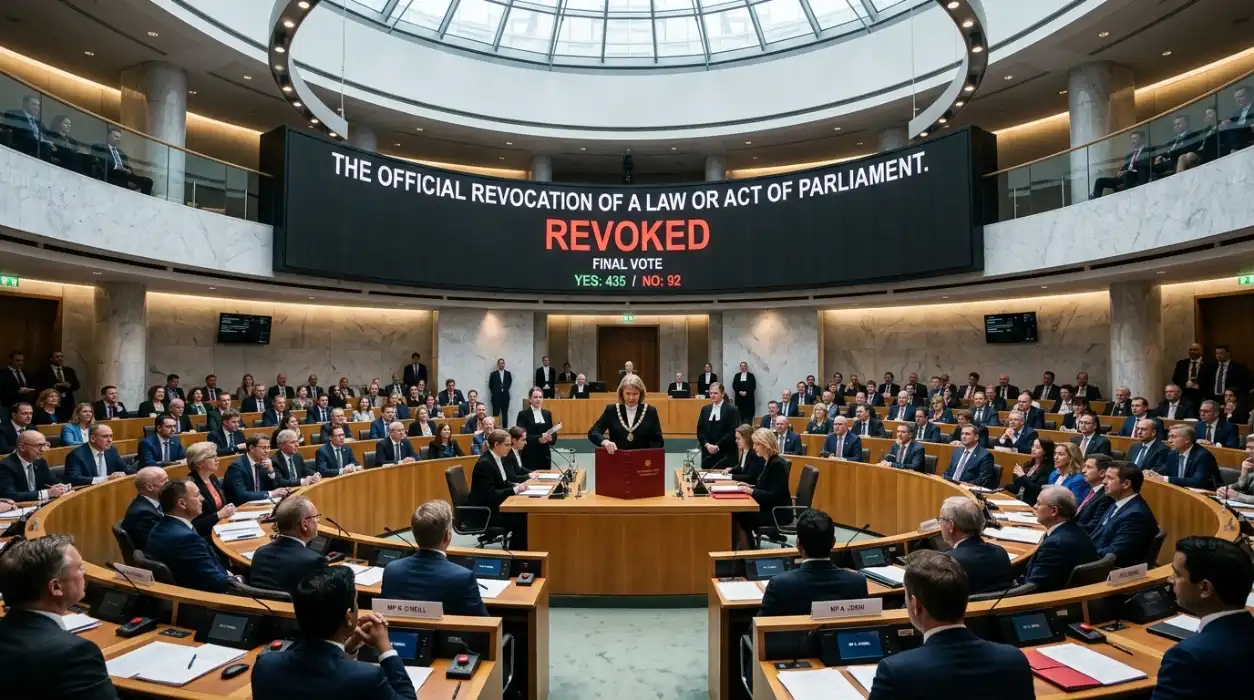
- Meaning: The official revocation of a law or act of parliament.
- Tone/Register: Legal, formal.
- Example: The Senate voted to repeal the outdated tax statute.
- Example: Citizens celebrated the repeal of the restrictive curfew law.
Abrogation (Noun) — US: /ˌæbrəˈɡeɪʃən/ — UK: /ˌæbrəˈɡeɪʃn/
- Meaning: The repeal or abolition of a law, right, or formal agreement.
- Tone/Register: Academic, legal.
- Example: Legal experts debated the abrogation of the trade treaty.
- Example: The treaty faced sudden abrogation after border disputes escalated.
Annulment (Noun) — US: /əˈnʌlmənt/ — UK: /əˈnʌlmənt/
- Meaning: The act of declaring something legally void or invalid.
- Tone/Register: Legal, formal.
- Example: The judge granted the annulment of the fraudulent contract.
- Example: They sought the annulment of the unfair corporate merger.
Cancellation (Noun) — US: /ˌkænsəˈleɪʃən/ — UK: /ˌkænsəˈleɪʃn/
- Meaning: The action of deciding that a planned event or agreement will not happen.
- Tone/Register: Standard, administrative.
- Example: The sudden cancellation of the seminar disappointed attendees.
- Example: Train schedule cancellation updates appeared on digital boards.
Termination (Noun) — US: /ˌtɜːrmɪˈneɪʃən/ — UK: /ˌtɜːmɪˈneɪʃn/
- Meaning: The action of bringing something to an end.
- Tone/Register: Professional, formal.
- Example: Early contract termination required a formal written notice.
- Example: Employees received updates regarding project termination dates.
Dissolution (Noun) — US: /ˌdɪsəˈluːʃən/ — UK: /ˌdɪsəˈluːʃn/
- Meaning: The closing down or dismissal of an assembly, partnership, or official body.
- Tone/Register: Formal, political.
- Example: The prime minister announced the dissolution of parliament.
- Example: Partners agreed on the peaceful dissolution of the firm.
Erasure (Noun) — US: /ɪˈreɪʒər/ — UK: /ɪˈreɪʒə/
- Meaning: The process of removing or wiping out something completely.
- Tone/Register: Literary, formal.
- Example: Historians warned against the cultural erasure of minority traditions.
- Example: Digital archives prevented the permanent erasure of records.
Eradication (Noun) — US: /ɪˌrædɪˈkeɪʃən/ — UK: /ɪˌrædɪˈkeɪʃn/
- Meaning: The destruction or elimination of something unwanted.
- Tone/Register: Formal, serious.
- Example: Scientists focused on the eradication of infectious diseases.
- Example: Local councils planned the eradication of invasive weeds.
Elimination (Noun) — US: /ɪˌlɪmɪˈneɪʃən/ — UK: /ɪˌlɪmɪˈneɪʃn/
- Meaning: The complete removal or dropping of something.
- Tone/Register: Standard, formal.
- Example: The elimination of waste improved factory efficiency.
- Example: Tournament rules required the elimination of losing teams.
Extinction (Noun) — US: /ɪkˈstɪŋkʃən/ — UK: /ɪkˈstɪŋkʃn/
- Meaning: The state or process of a species, family, or custom dying out.
- Tone/Register: Scientific, formal.
- Example: Conservationists fought hard to prevent animal extinction.
- Example: Ancient languages face the risk of cultural extinction.
Suppressing (Verb) — US: /səˈprɛsɪŋ/ — UK: /səˈpresɪŋ/
- Meaning: Forcibly putting an end to something or keeping it secret.
- Tone/Register: Formal, authoritative.
- Example: Authorities worked on suppressing illegal trade networks.
- Example: She tried suppressing her laughter during the lecture.
Quashing (Verb) — US: /ˈkwɑːʃɪŋ/ — UK: /ˈkwɒʃɪŋ/
- Meaning: Rejecting or officially voiding a legal decision or charge.
- Tone/Register: Legal, formal.
- Example: The appellate court succeeded in quashing the wrongful conviction.
- Example: Lawyers filed motions aimed at quashing the subpoena.
Invalidation (Noun) — US: /ɪnˌvælɪˈdeɪʃən/ — UK: /ɪnˌvælɪˈdeɪʃn/
- Meaning: The action of making an argument, ticket, or contract invalid.
- Tone/Register: Official, formal.
- Example: Technical errors led to the invalidation of voting ballots.
- Example: The strict policy resulted in passport invalidation.
Revocation (Noun) — US: /ˌrɛvəˈkeɪʃən/ — UK: /ˌrevəˈkeɪʃn/
- Meaning: The official cancellation of a decree, decision, or license.
- Tone/Register: Legal, administrative.
- Example: Driving under the influence caused license revocation.
- Example: The board discussed the revocation of the operating permit.
Rescission (Noun) — US: /rɪˈsɪʒən/ — UK: /rɪˈsɪʒn/
- Meaning: The revocation, cancellation, or repeal of a law or agreement.
- Tone/Register: Legal, formal.
- Example: Business partners agreed on the mutual rescission of the deal.
- Example: Lawmakers debated the rescission of the emergency decree.
Voids (Verb) — US: /vɔɪdz/ — UK: /vɔɪdz/
- Meaning: Canceling or making something legally null and void.
- Tone/Register: Legal, direct.
- Example: Missing payment deadlines voids the rental agreement.
- Example: Breaking club rules voids membership privileges instantly.
Countermanding (Verb) — US: /ˈkaʊntərˌmændɪŋ/ — UK: /ˌkaʊntəˈmændɪŋ/
- Meaning: Revoking an order or instruction previously given.
- Tone/Register: Formal, military.
- Example: Headquarters issued orders countermanding the previous advance.
- Example: The captain spent the morning countermanding faulty directions.
Overturning (Verb) — US: /ˌoʊvərˈtɜːrnɪŋ/ — UK: /ˌəʊvəˈtɜːnɪŋ/
- Meaning: Reversing a legal decision, system, or ruling.
- Tone/Register: Legal, journalistic.
- Example: Supreme Court rulings ended up overturning past precedents.
- Example: Activists fought for overturning unfair zoning restrictions.
Dissolving (Verb) — US: /dɪˈzɑːlvɪŋ/ — UK: /dɪˈzɒlvɪŋ/
- Meaning: Closing down or formally ending an organization or partnership.
- Tone/Register: Formal, business.
- Example: Shareholders voted on dissolving the family corporation.
- Example: The committee considered dissolving after finishing the project.
Discontinuing (Verb) — US: /ˌdɪskənˈtɪnjuːɪŋ/ — UK: /ˌdɪskənˈtɪnjuːɪŋ/
- Meaning: Stopping the manufacture, use, or provision of something.
- Tone/Register: Business, standard.
- Example: The bakery is discontinuing its seasonal pumpkin loaf.
- Example: Manufacturers announced discontinuing older printer models.
Dropping (Verb) — US: /ˈdrɑːpɪŋ/ — UK: /ˈdrɒpɪŋ/
- Meaning: Ceasing to include or pursue a charge, case, or plan.
- Tone/Register: Conversational, professional.
- Example: Prosecutors decided to drop charges against the suspect.
- Example: The team considered dropping the failing marketing plan.
Abandoning (Verb) — US: /əˈbændənɪŋ/ — UK: /əˈbændənɪŋ/
- Meaning: Completely giving up a practice, policy, or project.
- Tone/Register: Standard, descriptive.
- Example: Farmers started abandoning outdated irrigation methods.
- Example: The city is abandoning plans for the downtown bridge.
Shelving (Verb) — US: /ˈʃɛlvɪŋ/ — UK: /ˈʃelvɪŋ/
- Meaning: Temporarily or permanently setting aside a plan or project.
- Tone/Register: Business, journalistic.
- Example: Executives decided on shelving the expansion proposal.
- Example: Parliament considered shelving the debate until autumn.

Scrapping (Verb) — US: /ˈskræpɪŋ/ — UK: /ˈskræpɪŋ/
- Meaning: Discarding something as useless or abandoning a policy.
- Tone/Register: Informal, business.
- Example: The council voted for scrapping the vehicle tax.
- Example: Engineers talked about scrapping the faulty design blueprint.
Stopping (Verb) — US: /ˈstɑːpɪŋ/ — UK: /ˈstɒpɪŋ/
- Meaning: Bringing an activity or motion to an end.
- Tone/Register: Everyday, common.
- Example: Stopping the machinery required pressing the red button.
- Example: She focused on stopping bad spending habits.
Halting (Verb) — US: /ˈhɔːltɪŋ/ — UK: /ˈhɔːltɪŋ/
- Meaning: Bringing or coming to an abrupt stop.
- Tone/Register: Formal, journalistic.
- Example: Police succeeded in halting traffic near the bridge.
- Example: New regulations aimed at halting industrial pollution.
Freezing (Verb) — US: /ˈfriːzɪŋ/ — UK: /ˈfriːzɪŋ/
- Meaning: Keeping prices, wages, or assets at a fixed level and stopping changes.
- Tone/Register: Economic, political.
- Example: The central bank considered freezing interest rates.
- Example: Landlords faced laws freezing annual rent increases.
Suspending (Verb) — US: /səˈspɛndɪŋ/ — UK: /səˈspendɪŋ/
- Meaning: Temporarily stopping an activity or rule.
- Tone/Register: Formal, administrative.
- Example: School officials announced suspending classes due to storms.
- Example: The referee considered suspending the lightning match.
Postponing (Verb) — US: /poʊˈspoʊnɪŋ/ — UK: /pəˈspəʊnɪŋ/
- Meaning: Causing something to happen at a later time than planned.
- Tone/Register: Standard, professional.
- Example: Rain forced organizers to postpone the outdoor concert.
- Example: Employees requested postponing the morning strategy meeting.
Delaying (Verb) — US: /dɪˈleɪɪŋ/ — UK: /dɪˈleɪɪŋ/
- Meaning: Making someone or something late or slow.
- Tone/Register: Everyday, common.
- Example: Traffic accidents kept delaying morning commuters.
- Example: She hated delaying her departure for vacation.
Interrupted (Verb) — US: /ˌɪntəˈrʌptɪd/ — UK: /ˌɪntəˈrʌptɪd/
- Meaning: Stopping an ongoing action or speech with a barrier.
- Tone/Register: Standard, common.
- Example: Thunder interrupted the evening storytelling session.
- Example: Phone calls kept interrupting his deep concentration.
Breaking (Verb) — US: /ˈbreɪkɪŋ/ — UK: /ˈbreɪkɪŋ/
- Meaning: Ending or severing an alliance, habit, or routine.
- Tone/Register: Conversational, common.
- Example: Breaking bad routines takes immense mental discipline.
- Example: Storm winds kept breaking power lines downtown.
Severing (Verb) — US: /ˈsɛvərɪŋ/ — UK: /ˈsevərɪŋ/
- Meaning: Completely ending a connection or relationship.
- Tone/Register: Dramatic, formal.
- Example: Senators discussed severing diplomatic ties with the regime.
- Example: She felt ready to sever business ties with partners.
Cutting (Verb) — US: /ˈkʌtɪŋ/ — UK: /ˈkʌtɪŋ/
- Meaning: Reducing or eliminating funding, programs, or staff.
- Tone/Register: Business, political.
- Example: Budget reviews resulted in cutting administrative expenses.
- Example: The network planned to cut unpopular television shows.
Withdrawing (Verb) — US: /wɪðˈdrɔːɪŋ/ — UK: /wɪðˈdrɔːɪŋ/
- Meaning: Removing support, funds, or military forces from a place.
- Tone/Register: Formal, political.
- Example: Nations considered withdrawing troops from disputed borders.
- Example: Investors started withdrawing capital from the venture.
Pulling (Verb) — US: /ˈpʊlɪŋ/ — UK: /ˈpʊlɪŋ/
- Meaning: Removing or retracting an offer, product, or team.
- Tone/Register: Casual, professional.
- Example: Retailers started pulling defective toys from shelves.
- Example: The studio considered pulling the movie from theaters.
Retracting (Verb) — US: /rɪˈtræktɪŋ/ — UK: /rɪˈtræktɪŋ/
- Meaning: Drawing back or officially taking back a statement or offer.
- Tone/Register: Formal, journalistic.
- Example: The newspaper published an article retracting the false claim.
- Example: The politician refused to retract her public statement.
Recanting (Verb) — US: /rɪˈkæntɪŋ/ — UK: /rɪˈkæntɪŋ/
- Meaning: Saying that one no longer holds an opinion or belief.
- Tone/Register: Formal, literary.
- Example: Witnesses refused to recant their original testimony in court.
- Example: The author spent years recanting her former philosophy.
Renouncing (Verb) — US: /rɪˈnaʊnsɪŋ/ — UK: /rɪˈnaʊnsɪŋ/
- Meaning: Formally declaring one’s abandonment of a claim or belief.
- Tone/Register: Formal, legal.
- Example: Renouncing royal privileges allowed him quiet freedom.
- Example: She signed documents renouncing inheritance rights.
Forgoing (Verb) — US: /fɔːrˈɡoʊɪŋ/ — UK: /fɔːˈɡəʊɪŋ/
- Meaning: Omitting or declining to take something pleasant or offered.
- Tone/Register: Formal, literary.
- Example: He preferred forgoing dessert to maintain a healthy diet.
- Example: Workers considered forgoing bonuses during the downturn.
Relinquishing (Verb) — US: /rɪˈlɪŋkwɪʃɪŋ/ — UK: /rɪˈlɪŋkwɪʃɪŋ/
- Meaning: Voluntarily ceasing to claim or keep a right or role.
- Tone/Register: Formal, official.
- Example: Relinquishing leadership took careful succession planning.
- Example: She felt relief after relinquishing old grievances.
Waiving (Verb) — US: /ˈweɪvɪŋ/ — UK: /ˈweɪvɪŋ/
- Meaning: Refraining from applying or enforcing a rule or fee.
- Tone/Register: Legal, administrative.
- Example: Banks agreed to waive late payment fees for clients.
- Example: The university considered waiving entrance exam requirements.
Forfeiting (Verb) — US: /ˈfɔːrfɪtɪŋ/ — UK: /ˈfɔːfɪtɪŋ/
- Meaning: Losing or giving up property or rights as a penalty.
- Tone/Register: Legal, formal.
- Example: Breaking contract terms meant forfeiting security deposits.
- Example: Players risked forfeiting the match by arriving late.
Surrendering (Verb) — US: /səˈrʌndərɪŋ/ — UK: /səˈrʌndərɪŋ/
- Meaning: Ceasing resistance and giving up control to an authority.
- Tone/Register: Dramatic, formal.
- Example: Leaders negotiated the surrender of the fortress peacefully.
- Example: He stopped fighting and started surrendering to reality.

Expelling (Verb) — US: /ɪkˈspɛlɪŋ/ — UK: /ɪkˈspelɪŋ/
- Meaning: Officially forcing someone to leave an institution or country.
- Tone/Register: Formal, administrative.
- Example: Schools enforce strict rules, expelling students for cheating.
- Example: Governments considered expelling foreign diplomats.
Ousting (Verb) — US: /ˈaʊstɪŋ/ — UK: /ˈaʊstɪŋ/
- Meaning: Driving someone out or removing them from political power.
- Tone/Register: Journalistic, formal.
- Example: The sudden ousting of the director shocked investors.
- Example: Rebels planned the quiet ousting of the regime.
Discharging (Verb) — US: /dɪsˈtʃɑːrdʒɪŋ/ — UK: /dɪsˈtʃɑːdʒɪŋ/
- Meaning: Releasing someone from duty, service, or confinement.
- Tone/Register: Official, legal.
- Example: Hospitals began discharging recovering patients by noon.
- Example: Officers finished discharging their legal obligations.
Dismissal (Noun) — US: /dɪˈsmɪsəl/ — UK: /dɪˈsmɪsl/
- Meaning: The official removal of someone from employment or a case.
- Tone/Register: Professional, legal.
- Example: The employee received immediate dismissal for theft.
- Example: Judges ordered the dismissal of the weak lawsuit.
Liquidating (Verb) — US: /ˈlɪkwəˌdeɪtɪŋ/ — UK: /ˈlɪkwɪdeɪtɪŋ/
- Meaning: Closing down a business by settling accounts and selling assets.
- Tone/Register: Financial, legal.
- Example: Liquidating company assets helped pay off lingering debts.
- Example: Retailers started liquidating winter stock at half price.
Phasing out (Verb) — US: /ˈfeɪzɪŋ aʊt/ — UK: /ˈfeɪzɪŋ aʊt/
- Meaning: Discontinuing a product or practice gradually in stages.
- Tone/Register: Business, administrative.
- Example: Corporations are phasing out older plastic packaging materials.
- Example: The city started phasing out old diesel buses.
Sunset (Verb) — US: /ˈsʌnsɛt/ — UK: /ˈsʌnset/
- Meaning: Providing for a law or program to expire automatically on a date.
- Tone/Register: Legal, political.
- Example: Lawmakers included clauses sunsetting the tax break.
- Example: The temporary security measure faced automatic sunset.
Dissolving (Noun) — US: /dɪˈzɑːlvɪŋ/ — UK: /dɪˈzɒlvɪŋ/
- Meaning: The act of breaking up or terminating an arrangement.
- Tone/Register: Formal, legal.
- Example: Dissolving the alliance took months of tough talks.
- Example: The partners agreed on dissolving the joint venture.
Quashing (Noun) — US: /ˈkwɑːʃɪŋ/ — UK: /ˈkwɒʃɪŋ/
- Meaning: The suppression or nullification of a legal proceeding.
- Tone/Register: Legal, formal.
- Example: Defense lawyers worked toward the quashing of warrants.
- Example: The hearing centered on quashing unfair indictments.
Abrogation (Noun) — US: /ˌæbrəˈɡeɪʃən/ — UK: /ˌæbrəˈɡeɪʃn/
- Meaning: Total official nullification of established laws.
- Tone/Register: Academic, legal.
- Example: Constitutional scholars studied the abrogation of decrees.
- Example: Protests followed the abrogation of civil rights acts.
Repeal (Verb) — US: /rɪˈpiːl/ — UK: /rɪˈpiːl/
- Meaning: To revoke or annul a law or congressional act.
- Tone/Register: Legal, political.
- Example: Lawmakers drafted bills aiming at repealing tariffs.
- Example: Citizens urged representatives to repeal bad statutes.
Synonyms by Tone
Choosing the right alternative depends entirely on whether you want to sound formal, legal, or conversational.
- Positive tone: Reforming, waiving, sunsetting, restructuring.
- Neutral tone: Cancelling, stopping, dropping, discontinuing.
- Negative tone: Eradicating, expelling, extinguishing, revoking.
- Formal / Legal tone: Abrogation, annulment, rescission, countermanding.
Tone matters because using a harsh legal word like abrogation in a casual note about stopping a hobby sounds overly dramatic, while saying dropping in a Supreme Court ruling looks unprofessional.
Mini Comparison: Repeal vs. Abrogation vs. Abolition
- Repeal specifically emphasizes the legislative cancellation or official revoking of an established law.
- Abrogation carries a formal, academic tone denoting the total annulment of a right or treaty.
- Abolition serves as the broad historic term for permanently destroying or ending a major system or practice.
Use repeal for parliamentary law cancellations, abrogation in legal treaty discussions, and abolition when describing systemic institutional endings.
Context-Based Usage
- Daily conversation: In casual talk, native speakers use simple, relaxed words like stopping, dropping, or cancelling.
- Writing or blogging: Authors use evocative terms like repealing, phasing out, or scrapping to discuss policy updates.
- Professional or academic tone: Specialists rely on precise terms like abrogation, rescission, and annulment.
- Creative or informal use: Bloggers employ vivid idioms like shelving or sunsettling to describe delayed projects.
Common Mistakes & Native Usage
Common Mistakes Learners Make
- Misuse scenarios: Applying intense legal words like abrogation to everyday household chores like stopping a subscription.
- Confusing tone: Mixing formal terms like countermanding into casual text messages about weekend plans.
- Overuse warnings: Repeating the same termination verb throughout an essay makes your vocabulary feel repetitive rather than rich.
Register Notes
- Spoken political chats favor direct words like cancelling and stopping.
- Written legal briefs reward descriptive choices like abrogation and rescission.
Real-Life Mini Scenarios
- Workplace: The corporate board voted on phasing out outdated software systems before winter.
- Social situations: Neighbors discussed stopping the noisy evening construction work.
- Media/pop culture: Historians published articles exploring the nineteenth-century abolition movement.
- Writing or storytelling: Authors revised political essays, replacing basic verbs with repealing for formal clarity.

Conclusion
Understanding different alternatives can make your English more precise, natural, and effective. A synonym for abolition can help you describe the ending, removal, or cancellation of a system, law, or practice.
Words such as elimination, repeal, removal, termination, and cancellation can express similar ideas, depending on the context. Choosing the right synonym for abolition helps avoid repetition while making your writing clearer and more accurate.
Whether you are a student, writer, blogger, or English learner, expanding your vocabulary can improve communication skills. By practicing each synonym for abolition in essays, reports, and daily conversations, you can express your ideas with confidence.
Practice Quiz
- Which legal term is best for the official legislative cancellation of an act of parliament?
- A) Repeal
- B) Jogging
- C) Eating
- D) Sleeping
- What emotional tone does the formal academic word abrogation typically carry?
- A) Serious and legal
- B) Joyful
- C) Humorous and funny
- D) Casual and silly
- Which term is ideal for gradually stopping a product line over several months?
- A) Phasing out
- B) Collecting
- C) Saving
- D) Hoarding
- If a court officially declares a contract legally void and invalid, it is granting:
- A) Annulment
- B) Vacation
- C) Promotion
- D) Graduation
- The formal military or administrative verb meaning to revoke a previous order is:
- A) Countermanding
- B) Shouting
- C) Whispering
- D) Laughing
- What part of speech category do words like repeal and abrogation belong to?
- A) Nouns
- B) Adjectives only
- C) Verbs only
- D) Conjunctions only
- Which expression means permanently setting aside a project plan for later consideration?
- A) Shelving
- B) Welcoming
- C) Hugging
- D) Greeting
- Describing the complete biological destruction of a species is known as:
- A) Extinction
- B) Creation
- C) Growth
- D) Expansion
- An automatic expiration clause built into a government law or program is called a:
- A) Sunset
- B) Sunrise
- C) Morning
- D) Dawn
- Which word describes official government cancellation of a driver’s license?
- A) Revocation
- B) Renewal
- C) Issuance
- D) Printing
Reflection Task
Write one short, original sentence using the word repealing to describe changing a city regulation.
Answer Key: 1: A | 2: A | 3: A | 4: A | 5: A | 6: A | 7: A | 8: A | 9: A | 10: A
FAQs
1. What is a common synonym for abolition?
A common synonym for abolition is elimination. Other alternatives include removal, repeal, termination, cancellation, and eradication. The best choice depends on the context and whether you are discussing a law, system, practice, or institution.
2. What is another word for abolition of a law?
Repeal is usually the most appropriate word when referring to the official removal of a law. For example, “The government repealed the old law” clearly explains that the law was formally ended.
3. Is “elimination” the same as “abolition”?
Elimination and abolition have similar meanings, but they are not always interchangeable. Abolition often refers to officially ending a system, practice, or institution, while elimination can mean completely removing something more generally.
4. What is the opposite of abolition?
The opposite of abolition can be establishment, introduction, or continuation, depending on the context. For example, establishing a new law is conceptually opposite to abolishing an existing one.
5. How can I use abolition synonyms in writing?
Choose an alternative based on the exact meaning of your sentence. Use repeal for laws, elimination for removing something completely, and termination for formally ending something. This makes your writing more precise and natural.

Hasnain Ali is an SEO Content Strategist and the founder of wordvora.com, a trusted vocabulary platform that helps writers, students, professionals, and English learners find accurate synonyms, antonyms, word meanings, and real-life usage examples. He specializes in keyword research, on-page SEO, topical authority, and creating search-first content that aligns with Google’s latest Search Quality and E-E-A-T guidelines. His work focuses on producing clear, well-structured, and reader-friendly resources that satisfy search intent while maintaining high editorial standards.
Through extensive hands-on experience with SEO tools such as Google Search Console, Google Analytics, SEMrush, and Ahrefs, Hasnain researches user search behavior and develops content that is both informative and easy to understand. Every article published on wordvora.com is carefully reviewed for accuracy, readability, and contextual relevance before publication. His mission is to build one of the web’s most reliable English vocabulary resources by providing practical language guidance, trustworthy explanations, and content that helps readers improve their writing, communication, and vocabulary with confidence.