
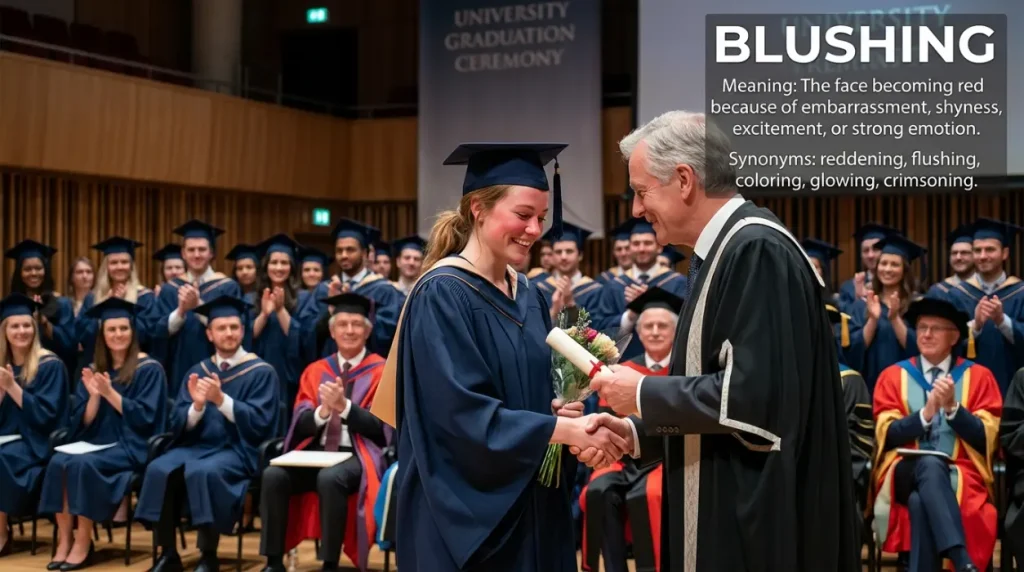
Synonyms for blushing can turn a simple scene into vivid English. Imagine a student answering a surprise question as her cheeks slowly turn pink.
That small moment may be called blushing, flushing, reddening, or coloring. Each choice adds a slightly different shade, so synonyms make your English more precise.
Because blushing is common in daily speech, stories, chats, and social writing, learners often need alternatives that sound natural rather than forced or overly formal.
Students, bloggers, content writers, and daily English users can all benefit. Learning a synonym for blushing helps you describe emotion, appearance, and social moments clearly.
What Does “Blushing” Really Mean?
Blushing means the skin, especially the face or cheeks, becomes noticeably red or pink, usually because of embarrassment, shyness, excitement, warmth, attraction, exercise, or strong emotion.
Part of speech:
Blushing is usually the present participle of the verb blush. It can also work as an adjective, as in “her blushing cheeks.”
Simple definition:
Blushing means becoming red or pink in the face because of emotion, embarrassment, physical warmth, or another natural reaction.
Native speakers commonly use blush, blushing, and blushed in everyday conversation. The word also appears frequently in novels, personal stories, romantic writing, interviews, and descriptions of social situations.
For example:
“She started blushing when everyone applauded.”
The sentence suggests a visible facial reaction. It does not automatically mean the person feels ashamed. The reason could be happiness, embarrassment, praise, attraction, nervousness, or excitement.
Connotative Meaning
Connotation (the feeling, association, or emotional shade connected with a word beyond its basic dictionary meaning) matters when choosing a synonym.
Positive tone
Blushing can suggest warmth, charm, excitement, modesty, pleasure, or romantic interest.
Example:
“She was blushing after receiving the compliment.”
Negative tone
It can suggest embarrassment, discomfort, shame, nervousness, or self-consciousness.
Example:
“He was visibly blushing after making the mistake.”
Neutral tone
In some contexts, blushing simply describes a physical change in skin color.
Example:
“Her cheeks were blushing after the long run.”
Therefore, the best synonym depends on the reason, intensity, and setting.
Etymology of “Blushing”
The verb blush has Germanic roots and is connected with the idea of becoming red or showing redness.
It developed through Middle English forms related to bluschen, with an earlier Old English form blyscan, associated with becoming red or burning in appearance.
Old English: 450–1100
The older Germanic form was associated with redness, burning, or a reddening appearance. The word belonged to a group of terms describing visible color changes.
Middle English: 1100–1500
Middle English developed forms such as bluschen. The word increasingly became connected with the visible reddening of the face, especially during emotional situations.
Modern English: 1500–Present
Modern English established blush as both a physical and emotional word. Today, it can describe facial redness caused by embarrassment, excitement, attraction, heat, exertion, or other reactions.
Pronunciation
US: /blʌʃ/
UK: /blʌʃ/
Syllables
blush-ing
Affixation Pattern
Root: blush
Prefix: none
Suffix: -ing
The -ing suffix creates the present participle blushing.
Synonyms List
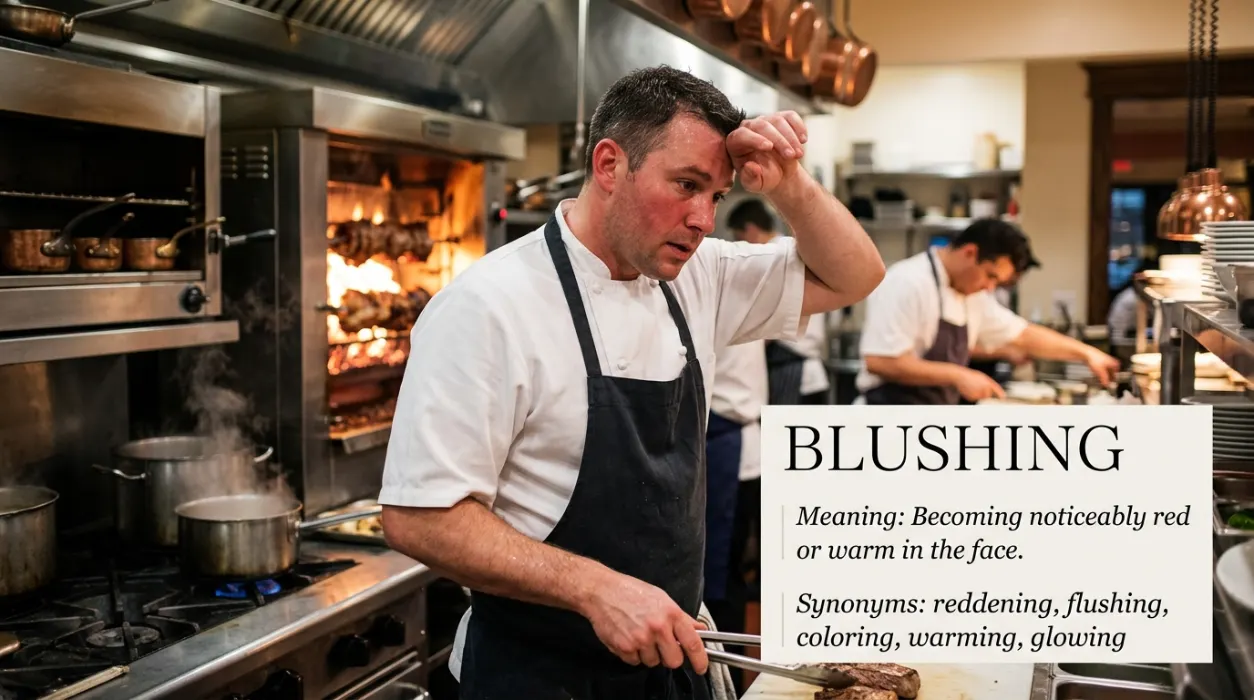
Flushing (verb/adjective) — US / UK: /ˈflʌʃɪŋ/
Meaning: Becoming noticeably red or warm in the face.
Tone/Register: Neutral, everyday
Example:
Her face was flushing after the unexpected compliment.
He noticed that his cheeks were flushing during the interview.
Reddening (verb) — US / UK: /ˈrɛdənɪŋ/
Meaning: Becoming red, especially when describing a visible change in skin color.
Tone/Register: Neutral, descriptive
Example:
Her cheeks were reddening as the conversation continued.
His face began reddening in the cold wind.
Coloring (verb) — US / UK: /ˈkʌlərɪŋ/
Meaning: Becoming pink or red in the face.
Tone/Register: Neutral, conversational
Example:
She started coloring when her friends mentioned the date.
His ears were coloring as he tried to explain himself.
Turning Red (phrase) — US / UK: /ˈtɜrnɪŋ rɛd/
Meaning: Becoming visibly red in the face, often from emotion or embarrassment.
Tone/Register: Informal, everyday
Example:
He was turning red when everyone looked at him.
She started turning red after hearing the joke.
Going Red (phrase) — US / UK: /ˈɡoʊɪŋ rɛd/
Meaning: Becoming red-faced because of emotion, heat, embarrassment, or exertion.
Tone/Register: Informal, conversational
Example:
I could see her going red during the presentation.
He went red when his name was called.
Becoming Red (phrase) — US / UK: /bɪˈkʌmɪŋ rɛd/
Meaning: Developing a noticeably red facial color.
Tone/Register: Neutral
Example:
Her cheeks were becoming red in the warm room.
His face was becoming red after the race.
Turning Pink (phrase) — US / UK: /ˈtɜrnɪŋ pɪŋk/
Meaning: Becoming visibly pink, usually with a softer emotional effect than turning red.
Tone/Register: Informal, descriptive
Example:
Her cheeks were turning pink as she read the message.
He started turning pink after the friendly teasing.
Going Pink (phrase) — US / UK: /ˈɡoʊɪŋ pɪŋk/
Meaning: Developing a pink facial color.
Tone/Register: Informal
Example:
She was going pink while talking about her favorite actor.
His face went pink when the compliment reached him.
Becoming Rosy (phrase) — US / UK: /bɪˈkʌmɪŋ ˈroʊzi/
Meaning: Developing a warm pink or red color.
Tone/Register: Descriptive, slightly literary
Example:
Her cheeks became rosy in the evening air.
The child’s face grew rosy after playing outside.
Growing Rosy (phrase) — US / UK: /ˈɡroʊɪŋ ˈroʊzi/
Meaning: Gradually becoming pink or warm-looking.
Tone/Register: Descriptive
Example:
His cheeks were growing rosy in the cold.
Her face grew rosy when she heard the praise.
Rosy-Cheeked (adjective) — US / UK: /ˌroʊzi ˈtʃiːkt/
Meaning: Having naturally or temporarily pink or red cheeks.
Tone/Register: Descriptive, positive
Example:
The rosy-cheeked runner smiled at the finish line.
She looked rosy-cheeked after her walk.
Pink-Cheeked (adjective) — US / UK: /ˌpɪŋk ˈtʃiːkt/
Meaning: Having cheeks that appear noticeably pink.
Tone/Register: Neutral, descriptive
Example:
The pink-cheeked student laughed at the compliment.
He looked pink-cheeked after the chilly ride home.
Red-Cheeked (adjective) — US / UK: /ˌrɛd ˈtʃiːkt/
Meaning: Having visibly red cheeks.
Tone/Register: Neutral
Example:
The red-cheeked cyclist stopped for water.
She arrived red-cheeked after rushing across campus.
Red-Faced (adjective) — US / UK: /ˌrɛd ˈfeɪst/
Meaning: Having a visibly red face, often because of embarrassment or anger.
Tone/Register: Informal, common
Example:
He stood there red-faced after forgetting the answer.
She became red-faced when the mistake was noticed.
Flushed (adjective) — US / UK: /flʌʃt/
Meaning: Having a warm or reddish facial appearance.
Tone/Register: Neutral
Example:
Her flushed cheeks showed that she had just run upstairs.
He looked flushed after the heated discussion.
Rosy (adjective) — US / UK: /ˈroʊzi/
Meaning: Having a pleasant pink or reddish color.
Tone/Register: Neutral, descriptive
Example:
Her rosy cheeks stood out against the winter coat.
The cold air left his face rosy.
Pink (adjective) — US / UK: /pɪŋk/
Meaning: Having a light reddish color in the face.
Tone/Register: Neutral
Example:
Her cheeks became pink when she heard her name.
His ears looked pink after the awkward question.
Reddish (adjective) — US / UK: /ˈrɛdɪʃ/
Meaning: Slightly red in appearance.
Tone/Register: Neutral, descriptive
Example:
His face looked reddish after the hike.
Her cheeks had a reddish glow.
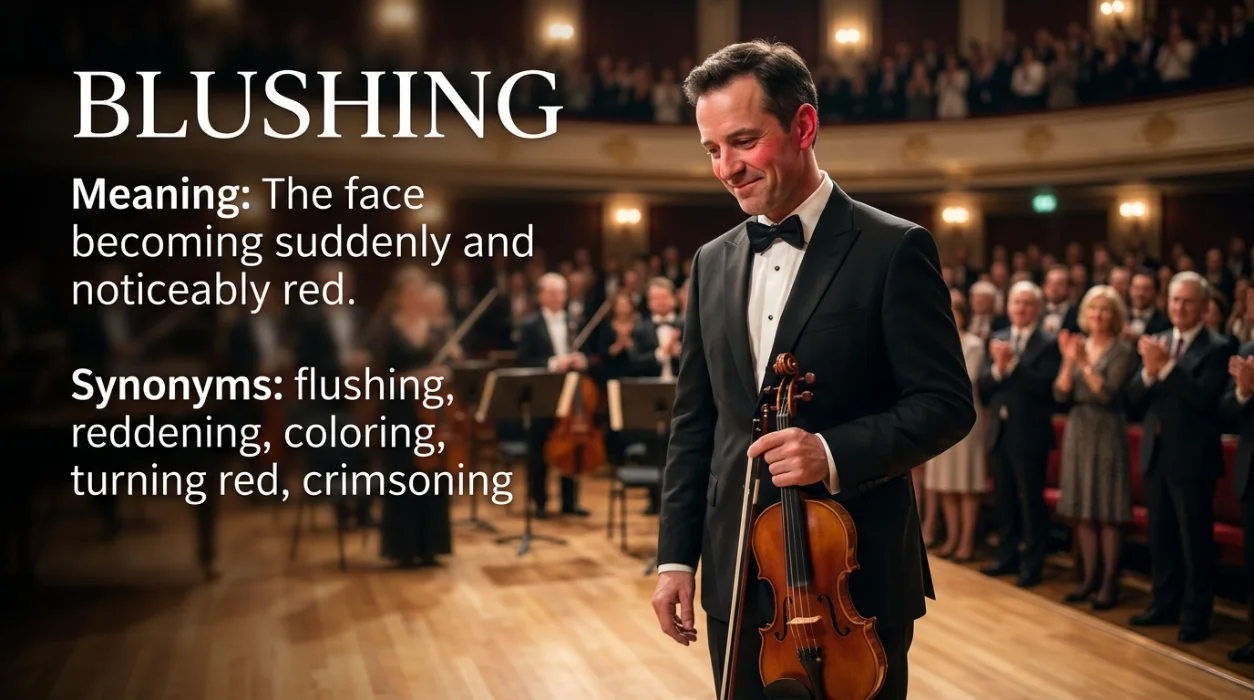
Crimson (adjective/verb) — US / UK: /ˈkrɪmzən/
Meaning: Becoming or appearing deep red, suggesting stronger intensity than ordinary blushing.
Tone/Register: Literary, dramatic
Example:
Her cheeks turned crimson when the room went silent.
He crimsoned at the unexpected attention.
Scarlet (adjective/verb) — US / UK: /ˈskɑrlət/
Meaning: Becoming a vivid bright red.
Tone/Register: Literary, dramatic
Example:
His face went scarlet after the embarrassing announcement.
Her cheeks appeared scarlet beneath the stage lights.
Flare Red (phrase) — US / UK: /flɛr rɛd/
Meaning: To become suddenly and noticeably red.
Tone/Register: Informal, expressive
Example:
His cheeks flared red after the playful comment.
Her face flared red when she realized everyone had heard.
Glow (verb) — US / UK: /ɡloʊ/
Meaning: To appear warmly colored or radiant, sometimes because of happiness or emotion.
Tone/Register: Positive, descriptive
Example:
Her face seemed to glow after the good news.
His cheeks glowed with excitement.
Glowing (adjective) — US / UK: /ˈɡloʊɪŋ/
Meaning: Looking warm, healthy, happy, or radiant.
Tone/Register: Positive
Example:
She had a glowing face after the celebration.
He looked glowing with pride.
Warm Up (verb/phrase) — US / UK: /wɔrm ʌp/
Meaning: To become warmer and sometimes redder in the face.
Tone/Register: Neutral
Example:
Her cheeks warmed up during the conversation.
His face warmed up after the long walk.
Warming (verb) — US / UK: /ˈwɔrmɪŋ/
Meaning: Becoming warmer, sometimes with visible facial redness.
Tone/Register: Neutral
Example:
Her cheeks were warming as the compliment continued.
His face started warming in the crowded room.
Heating (phrase) — US / UK: /ˈhiːtɪŋ ʌp/
Meaning: Becoming physically warmer, which may cause facial redness.
Tone/Register: Informal
Example:
Her face was heating up under the bright lights.
He felt himself heating up after the awkward question.
Burning (verb/adjective) — US / UK: /ˈbɜrnɪŋ/
Meaning: Feeling extremely warm or visibly red in the face.
Tone/Register: Informal, expressive
Example:
Her cheeks felt like they were burning.
His face was burning after the public compliment.
Blushing Deeply (phrase) — US / UK: /ˈblʌʃɪŋ ˈdiːpli/
Meaning: Blushing strongly or noticeably.
Tone/Register: Neutral, descriptive
Example:
She was blushing deeply while reading the letter.
He sat quietly, blushing deeply at the praise.
Blushing Brightly (phrase) — US / UK: /ˈblʌʃɪŋ ˈbraɪtli/
Meaning: Showing a vivid and noticeable facial flush.
Tone/Register: Literary, expressive
Example:
Her cheeks were blushing brightly beneath the warm lights.
He smiled, blushing brightly after the applause.
Flushing Red (phrase) — US / UK: /ˈflʌʃɪŋ rɛd/
Meaning: Becoming noticeably red in the face.
Tone/Register: Informal, descriptive
Example:
She was flushing red as the questions became personal.
His neck was flushing red during the discussion.
Flushing Pink (phrase) — US / UK: /ˈflʌʃɪŋ pɪŋk/
Meaning: Developing a soft pink facial color.
Tone/Register: Informal, descriptive
Example:
Her cheeks were flushing pink as she laughed.
He began flushing pink when his friends teased him.
Showing Color (phrase) — US / UK: /ˈʃoʊɪŋ ˈkʌlər/
Meaning: Developing visible facial color because of emotion or physical activity.
Tone/Register: Neutral
Example:
She was showing color after the short sprint.
His face started showing color during the conversation.
Taking on Color (phrase) — US / UK: /ˈteɪkɪŋ ɑn ˈkʌlər/
Meaning: Developing a stronger visible color.
Tone/Register: Descriptive
Example:
Her cheeks took on color as she listened.
His face took on color after the compliment.
Growing Red (phrase) — US / UK: /ˈɡroʊɪŋ rɛd/
Meaning: Gradually becoming redder.
Tone/Register: Neutral
Example:
His face was growing red as the debate continued.
She noticed her ears growing red.
Growing Pink (phrase) — US / UK: /ˈɡroʊɪŋ pɪŋk/
Meaning: Gradually developing a pink facial color.
Tone/Register: Neutral, descriptive
Example:
Her cheeks were growing pink during the conversation.
His face started growing pink after the joke.
Becoming Flush (phrase) — US / UK: /bɪˈkʌmɪŋ flʌʃ/
Meaning: Developing a warm or reddish facial appearance.
Tone/Register: Neutral, descriptive
Example:
Her cheeks became flushed after the dance.
His face became flushed in the heated room.
Looking Flushed (phrase) — US / UK: /ˈlʊkɪŋ flʌʃt/
Meaning: Appearing warm, red, or pink in the face.
Tone/Register: Neutral
Example:
You look flushed. Did you just come back from outside?
She looked flushed after climbing the stairs.
Looking Rosy (phrase) — US / UK: /ˈlʊkɪŋ ˈroʊzi/
Meaning: Appearing pleasantly pink or warm in the face.
Tone/Register: Positive, descriptive
Example:
You are looking rosy after that morning walk.
She looked rosy in the cool evening air.
Looking Red (phrase) — US / UK: /ˈlʊkɪŋ rɛd/
Meaning: Appearing visibly red in the face.
Tone/Register: Informal
Example:
You are looking red after the workout.
He was looking red when the teacher called on him.
Looking Pink (phrase) — US / UK: /ˈlʊkɪŋ pɪŋk/
Meaning: Appearing visibly pink in the face.
Tone/Register: Informal
Example:
Her face was looking pink after the cold walk.
He looked pink when the room became warm.
Becoming Scarlet (phrase) — US / UK: /bɪˈkʌmɪŋ ˈskɑrlət/
Meaning: Becoming intensely bright red.
Tone/Register: Literary, dramatic
Example:
His cheeks became scarlet when the secret was revealed.
She became scarlet after the unexpected compliment.
Becoming Crimson (phrase) — US / UK: /bɪˈkʌmɪŋ ˈkrɪmzən/
Meaning: Becoming a deep, strong red.
Tone/Register: Literary, dramatic
Example:
Her face became crimson under the sudden attention.
His ears became crimson when the room laughed.
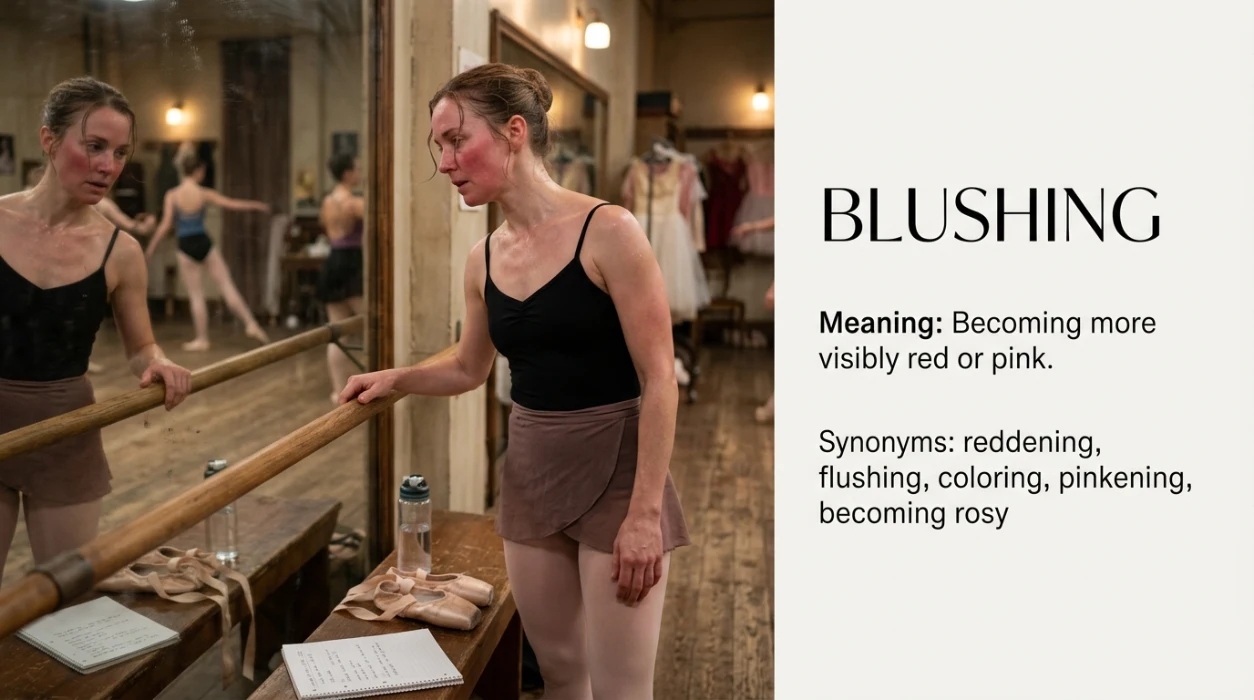
Deepening in Color (phrase) — US / UK: /ˈdiːpənɪŋ ɪn ˈkʌlər/
Meaning: Becoming more visibly red or pink.
Tone/Register: Descriptive, literary
Example:
The color in her cheeks was deepening.
His face was deepening in color as the story continued.
Darkening in Color (phrase) — US / UK: /ˈdɑrkənɪŋ ɪn ˈkʌlər/
Meaning: Becoming visibly deeper or stronger in color.
Tone/Register: Literary, descriptive
Example:
The color of his cheeks was darkening.
Her face kept darkening as the attention increased.
Suffusing (verb) — US / UK: /səˈfjuːzɪŋ/
Meaning: Spreading a color or feeling gradually across the face.
Tone/Register: Formal, literary
Example:
A warm color was suffusing her cheeks.
Embarrassment seemed to be suffusing his face.
Suffused (adjective) — US / UK: /səˈfjuːzd/
Meaning: Covered or filled with a soft, spreading color.
Tone/Register: Formal, literary
Example:
Her face was suffused with a gentle pink.
He stood there with suffused cheeks after the compliment.
Mantled (verb/adjective) — US / UK: /ˈmæntəld/
Meaning: Covered with a visible color, especially across the face.
Tone/Register: Literary
Example:
A soft red mantled her cheeks.
His face was mantled with color after the announcement.
Crimsoning (verb) — US / UK: /ˈkrɪmzənɪŋ/
Meaning: Becoming crimson or deep red.
Tone/Register: Literary
Example:
Her cheeks were crimsoning as the story continued.
His face began crimsoning under the spotlight.
Scarleting (verb) — US / UK: /ˈskɑrlətɪŋ/
Meaning: Becoming scarlet or intensely red.
Tone/Register: Literary, uncommon
Example:
His cheeks were scarleting with embarrassment.
Her face seemed to be scarleting beneath the warm lights.
Rosening (verb) — US / UK: /ˈroʊzənɪŋ/
Meaning: Becoming rosy or pink.
Tone/Register: Literary, uncommon
Example:
Her cheeks were rosening in the winter air.
His face began rosening after the exercise.
Pinkening (verb) — US / UK: /ˈpɪŋkənɪŋ/
Meaning: Becoming pinker.
Tone/Register: Descriptive, uncommon
Example:
Her cheeks were pinkening as she smiled.
His ears were pinkening during the conversation.
Reddening Up (phrasal expression) — US / UK: /ˈrɛdənɪŋ ʌp/
Meaning: Becoming visibly redder.
Tone/Register: Informal
Example:
His face was reddening up after the run.
Her cheeks started reddening up during the discussion.
Flushing With Emotion (phrase) — US / UK: /ˈflʌʃɪŋ wɪð ɪˈmoʊʃən/
Meaning: Becoming visibly red because of a strong feeling.
Tone/Register: Neutral, descriptive
Example:
She was flushing with emotion as she accepted the award.
He flushed with emotion when his family arrived.
Flushing With Embarrassment (phrase) — US / UK: /ˈflʌʃɪŋ wɪð ɪmˈbærəsmənt/
Meaning: Becoming red because of embarrassment.
Tone/Register: Neutral
Example:
She was flushing with embarrassment after the mistake.
He flushed with embarrassment when the joke was explained.
Blushing With Pleasure (phrase) — US / UK: /ˈblʌʃɪŋ wɪð ˈplɛʒər/
Meaning: Showing a blush caused by happiness or delight.
Tone/Register: Positive, literary
Example:
She was blushing with pleasure after the praise.
He accepted the gift, blushing with pleasure.
Synonyms by Tone
Tone matters because two expressions can describe a similar color change while creating very different impressions.
Positive
- rosy
- rosy-cheeked
- pink-cheeked
- glowing
- glowing with excitement
- blushing with pleasure
- blushing with excitement
- a rosy flush
- looking rosy
These choices can suggest happiness, warmth, charm, excitement, or good health.
Neutral
- flushing
- reddening
- coloring
- flushed
- turning red
- turning pink
- getting flushed
- showing a flush
- facial flush
- developing a flush
- showing facial redness
These are useful when you want to describe the physical reaction without adding much emotion.
Negative or uncomfortable
- red-faced
- flushing with embarrassment
- blushing with embarrassment
- burning
- turning crimson
- turning scarlet
- getting red
These choices may suggest embarrassment, discomfort, anger, nervousness, or intense self-consciousness.
Playful or informal
- going red
- going pink
- getting pink
- getting red
- turning pink
- heating up
- looking red
These work well in casual conversation, social posts, dialogue, and light storytelling.
“Blushing” vs Close Alternatives
Flushing vs Blushing
Blushing often suggests an emotional cause such as embarrassment, shyness, praise, or attraction.
Flushing is broader. It can result from exercise, heat, illness, anger, alcohol, or emotion.
Use “blushing” when the emotional meaning matters.
Use “flushing” when you want to emphasize the physical change.
Blushing vs Reddening
Reddening focuses mainly on the color change. It sounds more descriptive and less emotional.
For example:
“Her face was reddening.”
This tells us what happened visually. It does not clearly tell us why.
Blushing vs Coloring
Coloring is softer and can sound slightly old-fashioned or literary in some contexts.
“She began coloring when he mentioned her name.”
It works particularly well in narrative writing.
How “Blushing” Changes by Context
Daily Conversation
In casual English, blushing, going red, turning red, and getting flushed are natural choices.
For example:
“I started blushing when everyone clapped.”
Or:
“He went red when she mentioned the message.”
Short expressions usually sound most natural in spoken English.
Writing and Blogging
Bloggers can use flushing, reddening, turning pink, or developing a rosy flush to avoid repetitive descriptions.
For example:
“Her cheeks turned pink when the audience praised her work.”
This creates a more visual description than repeating “she was blushing.”
Professional or Academic Tone
Formal writing usually favors objective expressions such as facial redness, facial flushing, reddening, or a visible flush.
For example:
“The participant developed noticeable facial flushing during the activity.”
Avoid overly dramatic words such as scarleting in formal reports.
Creative and Informal Use
Stories can use stronger expressions such as turning crimson, turning scarlet, burning, or glowing.
The best choice depends on the character and scene.
A romance writer may choose “her cheeks turned pink.” A dramatic novelist may choose “his face turned crimson.”
Common Mistakes Learners Make
Mistake 1: Treating Every Synonym as Identical
“Blushing,” “flushing,” and “reddening” overlap, but they do not always communicate the same cause.
A person can flush from heat without feeling embarrassed.
Mistake 2: Using “Embarrassed” as a Direct Synonym
Embarrassed describes an emotional state.
Blushing describes a visible physical reaction.
Someone can feel embarrassed without blushing. Someone can also blush from excitement.
Mistake 3: Overusing “Red-Faced”
“Red-faced” can suggest embarrassment, anger, or frustration.
Therefore, it may sound too strong if you only mean that someone’s cheeks became slightly pink.
Mistake 4: Using Literary Words in Casual Speech
Words such as mantled, suffusing, and scarleting can sound literary or unusual.
They may work beautifully in fiction, but everyday speakers usually prefer blushing, flushing, or going red.
Mistake 5: Ignoring Intensity
“Turning pink” usually sounds softer than “turning crimson.”
“Turning scarlet” creates a particularly strong visual image.
Choose according to the intensity of the scene.
Register Notes
Formal: facial flushing, facial redness, suffused, reddening
Neutral: blushing, flushing, coloring, flushed, reddening
Informal: going red, getting red, turning pink, getting flushed
Literary: mantled, crimsoning, scarleting, suffusing, rosy
Spoken English: blushing, flushing, going red, turning red, getting flushed
For related vocabulary, you can also explore an internal article about synonyms for embarrassed to compare emotional states with visible physical reactions.
Real-Life Mini Scenarios
Workplace
A colleague receives unexpected praise during a meeting.
“She started blushing when her manager praised her presentation.”
Here, blushing suggests a mixture of modesty, pleasure, and attention.
Social Situation
Friends tease someone about a secret crush.
“He went red as soon as they mentioned her name.”
Here, went red sounds natural and conversational.
Media and Pop Culture
An actor receives a compliment during a live interview.
“Her cheeks turned pink when the host praised her performance.”
This description feels visual without sounding overly dramatic.
Writing and Storytelling
A character receives a surprising confession.
“A warm flush spread across her face as she read the note.”
The phrase creates a softer and more atmospheric image.

Practice Exercise
1. A student feels embarrassed after giving the wrong answer. Which phrase fits best?
A. Glowing
B. Flushing with embarrassment
C. Looking rosy
D. Developing facial color
2. A runner finishes a five-kilometer race. Which expression focuses on the physical reaction?
A. Blushing with pleasure
B. Flushing
C. Blushing with shyness
D. Coloring
3. A character receives a romantic compliment in a novel. Which phrase creates a soft image?
A. A rosy flush
B. Facial redness
C. Reddening up
D. Showing facial redness
4. Which expression sounds most natural in casual conversation?
A. Suffusing
B. Mantled
C. Going red
D. Crimsoning
5. Which term is most suitable for formal descriptive writing?
A. Going pink
B. Facial flushing
C. Getting red
D. Going red
6. Someone becomes intensely red after public embarrassment. Which phrase suggests strong intensity?
A. Turning crimson
B. Looking pink
C. Going pink
D. Rosy
7. Which word focuses mainly on a color change?
A. Reddening
B. Pleasure
C. Shyness
D. Excitement
8. Someone is happy after receiving an award and their face looks radiant. Which word works well?
A. Glowing
B. Red-faced
C. Burning
D. Going red
9. Which phrase specifically connects the reaction with excitement?
A. Blushing with excitement
B. Facial redness
C. Reddening
D. Looking red
10. Which word can describe redness caused by heat, exercise, or emotion?
A. Flushing
B. Shyness
C. Embarrassment
D. Pleasure
Reflection task:
Write one sentence using a synonym for blushing. Then rewrite the sentence using a different synonym and notice how the tone changes.
Answer key: 1-B | 2-B | 3-A | 4-C | 5-B | 6-A | 7-A | 8-A | 9-A | 10-A
Conclusion
Choosing the right synonym for blushing makes your English more vivid. You can show embarrassment, warmth, excitement, or a visible change without repeating one word.
These alternatives improve essays, blog posts, stories, emails, and everyday speech. Small vocabulary choices can make descriptions clearer, smoother, and more natural.
Remember that synonyms for blushing are not always interchangeable. Tone, context, and intensity matter, so notice how native speakers use each expression before you replace blushing.
Keep practicing by writing your own examples. Try one synonym in an email, one in an essay, and one in a daily conversation to build confident, flexible English.
Frequently Asked Questions
1. What is the best synonym for blushing in everyday English?
Flushing is one of the closest everyday alternatives, but going red, turning red, and coloring can also work. The best choice depends on the cause. “Blushing” often suggests emotion, while “flushing” can describe redness caused by heat, exercise, anger, or other physical reactions.
2. What is a good synonym for blushing when someone feels embarrassed?
Useful choices include flushing with embarrassment, turning red, going red, reddening, and red-faced. If you want to clearly identify embarrassment, “flushing with embarrassment” is especially precise. If you want a casual expression, “going red” sounds natural in everyday conversation.
3. What is a positive synonym for blushing?
For a positive or gentle meaning, try rosy, rosy-cheeked, glowing, pink-cheeked, or blushing with pleasure. These expressions can suggest happiness, warmth, excitement, affection, or healthy activity rather than shame. In romantic or creative writing, “a rosy flush” can create a particularly soft image.
4. Is “flushing” the same as “blushing”?
Not always. Blushing usually has a stronger connection with emotion, especially shyness, embarrassment, praise, or attraction. Flushing is broader and can describe redness caused by exercise, heat, anger, illness, or emotion. Therefore, flushing is a wider physical term.
5. What is a formal word for blushing?
In formal or academic writing, facial flushing, facial redness, reddening, and a facial flush are useful choices. These expressions focus on the observable physical reaction. They are generally more objective than emotional phrases such as “blushing with embarrassment.”

Hasnain Ali is an SEO Content Strategist and the founder of wordvora.com, a trusted vocabulary platform that helps writers, students, professionals, and English learners find accurate synonyms, antonyms, word meanings, and real-life usage examples. He specializes in keyword research, on-page SEO, topical authority, and creating search-first content that aligns with Google’s latest Search Quality and E-E-A-T guidelines. His work focuses on producing clear, well-structured, and reader-friendly resources that satisfy search intent while maintaining high editorial standards.
Through extensive hands-on experience with SEO tools such as Google Search Console, Google Analytics, SEMrush, and Ahrefs, Hasnain researches user search behavior and develops content that is both informative and easy to understand. Every article published on wordvora.com is carefully reviewed for accuracy, readability, and contextual relevance before publication. His mission is to build one of the web’s most reliable English vocabulary resources by providing practical language guidance, trustworthy explanations, and content that helps readers improve their writing, communication, and vocabulary with confidence.