
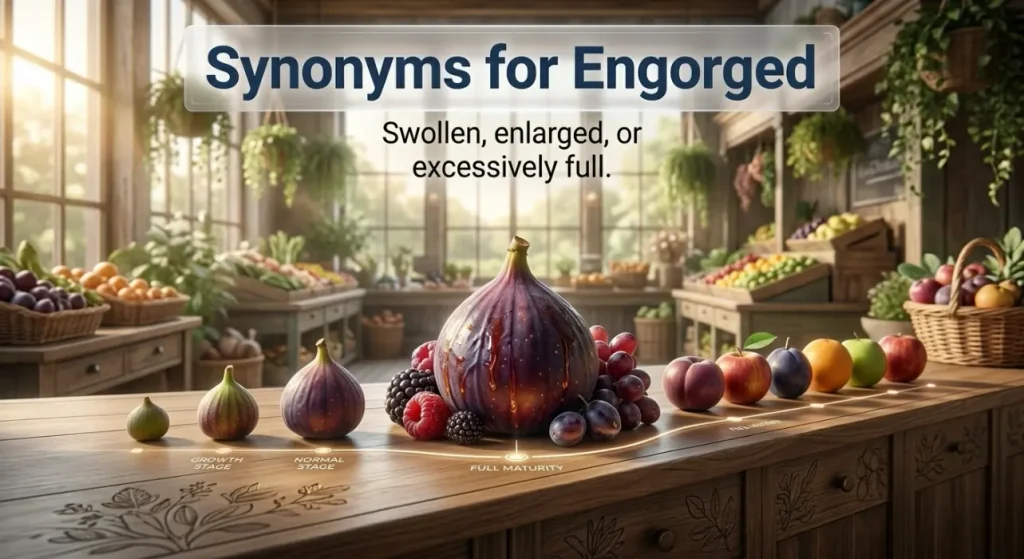
Choosing the right words can make your writing clearer, richer, and more engaging. Synonyms for engorged help describe something that is swollen, enlarged, filled, or excessively full without repeating the same term. They are useful in articles, essays, stories, and everyday communication.
Using synonyms for engorged allows you to select words that fit different situations and meanings. Common alternatives include swollen, enlarged, bloated, filled, saturated, and distended. Each word can express a slightly different idea depending on the context.
A varied vocabulary helps you describe physical conditions, objects, and situations involving excessive fullness more precisely. The right alternative can also make your sentences sound natural and informative.
In this guide, we will explore synonyms for engorged, their meanings, and examples to help expand your vocabulary, avoid repetition, and improve your writing.
What Does “Engorged” Really Mean?
Engorged means swollen or filled to excess with fluid, blood, or another substance. It describes both biological tissues and physical objects swollen by fluid pressure.
Native speakers use this word when discussing medical symptoms, swollen natural waterways, or physiological states. It carries a heavy, intense, and sometimes uncomfortable emotional tone. It usually suggests absolute capacity, pressure, and expansion.
Connotative Meaning
- Positive tone: Neutral to descriptive when used in physiological or medical contexts.
- Negative tone: Associated with discomfort, injury, illness, swelling, or painful blockage.
- Neutral tone: Used in scientific reports to denote fluid accumulation or tissue swelling.
- Connotation definition: (The emotional or cultural feeling attached to a word beyond its strict dictionary definition).
Etymology
- Source Language: Old French (engorgier meaning to swallow, gorge, or choke) combined with Latin roots.
- Original Meaning: Originally referred to swallowing greedily or choking up a passage with excess matter.
- Old English (450–1100): Not used in this exact form; native speakers relied on basic terms like swollen or full.
- Middle English (1100–1500): Adopted through Anglo-French terms relating to gorging food and throat blockages.
- Modern English (1500–Present): Shifted primarily toward describing swollen blood vessels, tissues, and fluid-filled structures.
Pronunciation (US & UK – IPA)
- US: /ɪnˈɡɔːrdʒd/
- UK: /ɪnˈɡɔːdʒd/
Syllables & Affixation Pattern
- Syllables: en-gorged
- Root: gorge (throat or to feed greedily)
- Prefix: en- (meaning to put into or make into)
- Suffix: -ed (past participle suffix forming an adjective)
Synonyms List
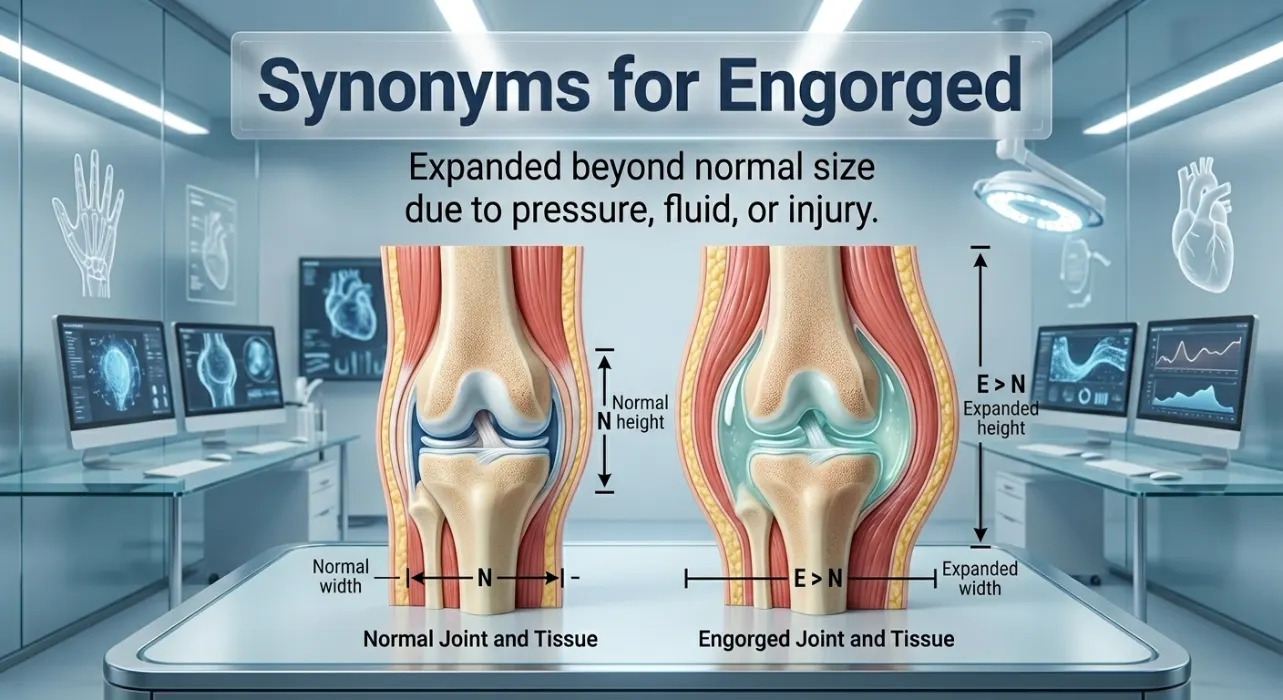
Swollen (Adjective) — US: /ˈswoʊlən/ — UK: /ˈswəʊlən/
- Meaning: Expanded beyond normal size due to pressure, fluid, or injury.
- Tone/Register: Standard, everyday.
- Example: Ice packs helped reduce her swollen ankle after the minor fall.
- Example: Mosquito bites left swollen bumps across his arms.
Distended (Adjective) — US: /dɪˈstɛndɪd/ — UK: /dɪˈstɛndɪd/
- Meaning: Swollen or stretched outward from internal pressure.
- Tone/Register: Formal, medical.
- Example: Doctors examined the patient’s distended abdomen for signs of illness.
- Example: Overinflated bicycle tires looked dangerously distended in the sun.
Bloated (Adjective) — US: /ˈbloʊtɪd/ — UK: /ˈbləʊtɪd/
- Meaning: Swollen with fluid or gas, feeling uncomfortably full.
- Tone/Register: Informal, common.
- Example: He felt bloated after eating a heavy holiday dinner.
- Example: Heavy rains left garden soil bloated and muddy.
Inflated (Adjective) — US: /ɪnˈfleɪtɪd/ — UK: /ɪnˈfleɪtɪd/
- Meaning: Filled with air or gas, or artificially magnified in value.
- Tone/Register: Standard, technical.
- Example: Children played with inflated rubber balloons at the park.
- Example: Economists criticized inflated housing prices in urban markets.
Congested (Adjective) — US: /kənˈdʒɛstɪd/ — UK: /kənˈdʒɛstɪd/
- Meaning: Crowded or blocked with fluid, traffic, or matter.
- Tone/Register: Professional, medical.
- Example: Cold medicine cleared her congested sinuses overnight.
- Example: Commuters avoided congested downtown streets during rush hour.
Overfull (Adjective) — US: /ˌoʊvərˈfʊl/ — UK: /ˌəʊvəˈfʊl/
- Meaning: Filled past the normal limit with no remaining capacity.
- Tone/Register: Everyday, descriptive.
- Example: Trash cans looked overfull after the weekend festival.
- Example: She carried an overfull shopping bag down the sidewalk.
Bulging (Adjective) — US: /ˈbʌldʒɪŋ/ — UK: /ˈbʌldʒɪŋ/
- Meaning: Swelling outward beyond the normal surrounding surface.
- Tone/Register: Descriptive, vivid.
- Example: The backpack was bulging with heavy textbooks and notebooks.
- Example: Old stone walls showed bulging sections needing urgent repair.
Puffed (Adjective) — US: /pʌft/ — UK: /pʌft/
- Meaning: Swollen or expanded outward in soft rounded shapes.
- Tone/Register: Informal, descriptive.
- Example: Her face looked puffed after crying from exhaustion.
- Example: Bakers pulled puffed pastries out of the warm oven.
Expanded (Adjective) — US: /ɪkˈspændɪd/ — UK: /ɪkˈspændɪd/
- Meaning: Made larger in size, volume, or scope.
- Tone/Register: Formal, standard.
- Example: The company operated from an expanded warehouse facility.
- Example: Students studied the expanded curriculum map for autumn.
Enlarged (Adjective) — US: /ɪnˈlɑːrdʒd/ — UK: /ɪnˈlɑːdʒd/
- Meaning: Made bigger than the original standard size.
- Tone/Register: Formal, medical.
- Example: X-rays revealed an enlarged heart chamber requiring testing.
- Example: The framing shop printed enlarged family photographs.
Potbellied (Adjective) — US: /ˈpɑːtˌbɛlid/ — UK: /ˈpɒtˌbɛlid/
- Meaning: Having a large, protruding stomach area.
- Tone/Register: Informal, descriptive.
- Example: The friendly stray dog trotted down the quiet lane.
- Example: Old wood stoves featured classic potbellied designs.
Tumid (Adjective) — US: /ˈtuːmɪd/ — UK: /ˈtjuːmɪd/
- Meaning: Swollen, swollen-looking, or pompous in style.
- Tone/Register: Literary, archaic.
- Example: The bee sting left a tumid mark on his hand.
- Example: Critics dismissed the poet’s tumid prose style.
Turgid (Adjective) — US: /ˈtɜːrdʒɪd/ — UK: /ˈtɜːdʒɪd/
- Meaning: Swollen and distended or overly ornate in language.
- Tone/Register: Academic, literary.
- Example: Plant cells remained turgid when supplied with ample water.
- Example: Scholars struggled to parse the turgid historical manuscript.
Inflamed (Adjective) — US: /ɪnˈfleɪmd/ — UK: /ɪnˈfleɪmd/
- Meaning: Red, swollen, and sore from infection or irritation.
- Tone/Register: Medical, formal.
- Example: Doctors treated her inflamed throat with antibiotics.
- Example: Chemical splashes left his skin red and inflamed.
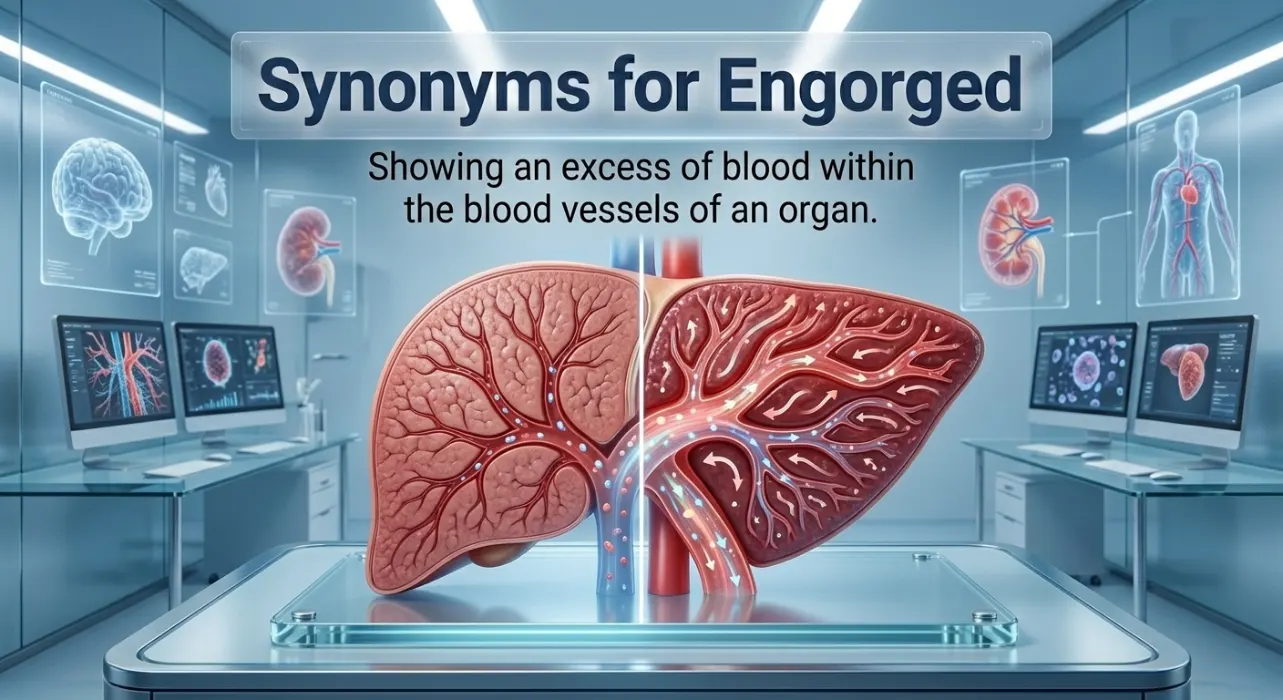
Hyperemic (Adjective) — US: /ˌhaɪpəˈriːmɪk/ — UK: /ˌhʌɪpəˈriːmɪk/
- Meaning: Showing an excess of blood within the blood vessels of an organ.
- Tone/Register: Medical, technical.
- Example: The physician noted hyperemic tissue during the minor procedure.
- Example: Laboratory slides displayed hyperemic mucous membranes clearly.
Plethoric (Adjective) — US: /pləˈθɔːrɪk/ — UK: /pləˈθɒrɪk/
- Meaning: Excessively full or bloated, often relating to blood volume.
- Tone/Register: Medical, formal.
- Example: Medical students studied plethoric conditions in pathology class.
- Example: The report offered a plethoric overview of market data.
Intumescent (Adjective) — US: /ˌɪntjuˈmɛsənt/ — UK: /ˌɪntjuˈmɛsənt/
- Meaning: Swelling or expanding outward, often when heated.
- Tone/Register: Technical, scientific.
- Example: Fire safety paint contained intumescent compounds for protection.
- Example: Chemists analyzed intumescent reactions in the test tubes.
Overloaded (Adjective) — US: /ˌoʊvərˈloʊdɪd/ — UK: /ˌəʊvəˈləʊdɪd/
- Meaning: Loaded with too much weight, data, or substance.
- Tone/Register: Standard, technical.
- Example: Technicians repaired the overloaded electrical circuit breaker.
- Example: Students felt overloaded with homework assignments.
Stuffed (Adjective) — US: /stʌft/ — UK: /stʌft/
- Meaning: Filled tightly with material or food until packed.
- Tone/Register: Informal, everyday.
- Example: He felt too stuffed to eat another slice of pie.
- Example: Toy makers stuffed plush bears with soft cotton.
Packed (Adjective) — US: /pækt/ — UK: /pækt/
- Meaning: Packed tightly together with little space remaining.
- Tone/Register: Standard, everyday.
- Example: Subway trains were packed with morning commuters.
- Example: Campers packed their gear into the car trunk.
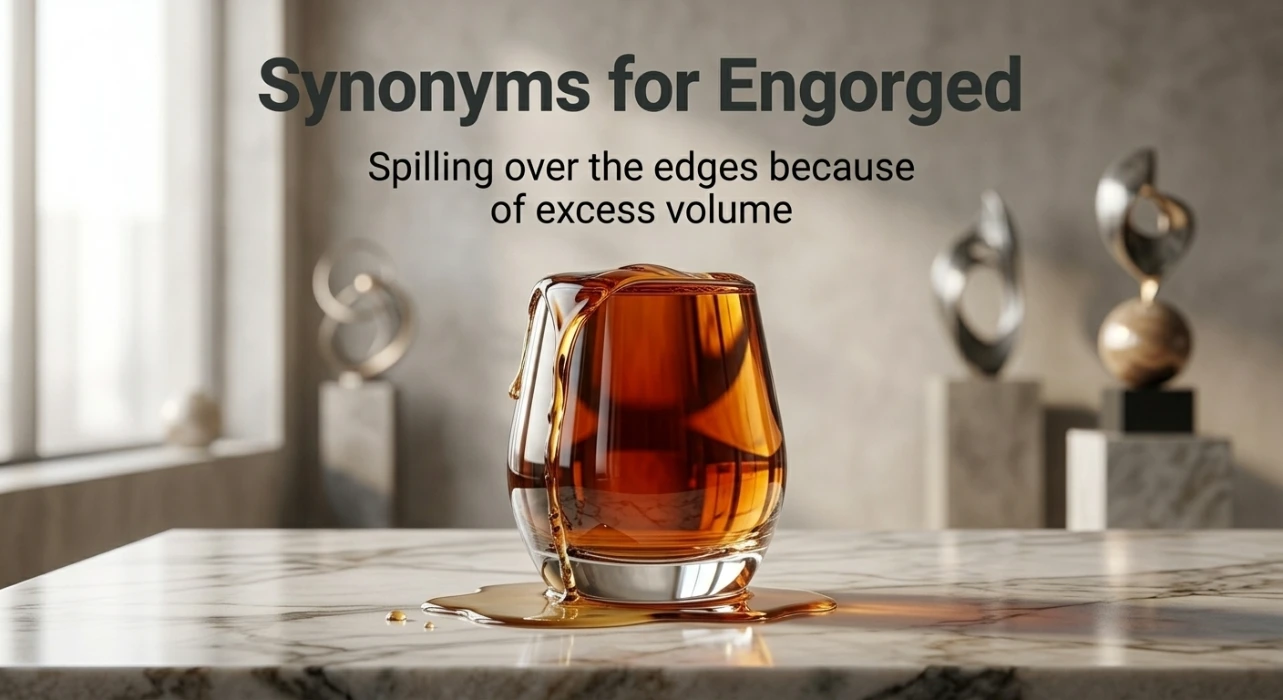
Overflowing (Adjective) — US: /ˌoʊvərˈfloʊɪŋ/ — UK: /ˌəʊvəˈfləʊɪŋ/
- Meaning: Spilling over the edges because of excess volume.
- Tone/Register: Descriptive, poetic.
- Example: Rainwater filled the overflowing barrel in the garden.
- Example: Her heart felt overflowing with joy at the celebration.
Tumescent (Adjective) — US: /tuːˈmɛsənt/ — UK: /tjuːˈmɛsənt/
- Meaning: Swelling or becoming swollen; tumid.
- Tone/Register: Medical, formal.
- Example: Dermatologists evaluated tumescent local anesthesia techniques.
- Example: The biological sample showed tumescent changes under light.
Puffy (Adjective) — US: /ˈpʌfi/ — UK: /ˈpʌfi/
- Meaning: Softly swollen or puffed out in appearance.
- Tone/Register: Casual, everyday.
- Example: She woke up with puffy eyes from lack of sleep.
- Example: Fluffy clouds drifted across the summer afternoon sky.
Bloated (Adjective) — US: /ˈbloʊtɪd/ — UK: /ˈbləʊtɪd/
- Meaning: Expanded by gas or fluid retention.
- Tone/Register: Informal, common.
- Example: Financial audits revealed bloated corporate spending accounts.
- Example: The stray animal looked sick and bloated.
Stretched (Adjective) — US: /strɛtʃt/ — UK: /strɛtʃt/
- Meaning: Pulled or drawn tight across a wider area.
- Tone/Register: Standard, everyday.
- Example: Canvas was stretched tightly over the wooden painting frame.
- Example: The rubber band snapped after being stretched too far.
Distended (Adjective) — US: /dɪˈstɛndɪd/ — UK: /dɪˈstɛndɪd/
- Meaning: Stretched or swollen outward by internal pressure.
- Tone/Register: Formal, medical.
- Example: The medical scan revealed a distended stomach lining.
- Example: Overfilled balloons looked dangerously distended in the heat.
Bloated (Adjective) — US: /ˈbloʊtɪd/ — UK: /ˈbləʊtɪd/
- Meaning: Swollen with gas or fluid, feeling uncomfortably full.
- Tone/Register: Informal, common.
- Example: He felt bloated after eating a massive holiday feast.
- Example: Heavy spring rains left the garden soil bloated and muddy.
Inflated (Adjective) — US: /ɪnˈfleɪtɪd/ — UK: /ɪnˈfleɪtɪd/
- Meaning: Filled with air, gas, or artificially magnified in value.
- Tone/Register: Standard, technical.
- Example: Children played with inflated rubber pool toys.
- Example: Economists criticized inflated housing prices in the city.
Congested (Adjective) — US: /kənˈdʒɛstɪd/ — UK: /kənˈdʒɛstɪd/
- Meaning: Blocked or crowded with fluid, traffic, or matter.
- Tone/Register: Professional, medical.
- Example: Allergy medicine cleared her congested sinuses quickly.
- Example: Drivers avoided congested downtown streets during rush hour.
Overfull (Adjective) — US: /ˌoʊvərˈfʊl/ — UK: /ˌəʊvəˈfʊl/
- Meaning: Filled past the normal limit with zero remaining capacity.
- Tone/Register: Everyday, descriptive.
- Example: Trash cans looked overfull after the weekend street fair.
- Example: She carried an overfull shopping bag down the hall.
Bulging (Adjective) — US: /ˈbʌldʒɪŋ/ — UK: /ˈbʌldʒɪŋ/
- Meaning: Swelling outward past the normal surrounding boundary.
- Tone/Register: Descriptive, vivid.
- Example: The backpack was bulging with heavy textbooks.
- Example: Old retaining walls showed bulging sections needing repair.
Puffed (Adjective) — US: /pʌft/ — UK: /pʌft/
- Meaning: Swollen or expanded outward in soft, rounded shapes.
- Tone/Register: Informal, descriptive.
- Example: Her face looked puffed after crying from exhaustion.
- Example: The baker pulled puffed pastries from the hot oven.

Expanded (Adjective) — US: /ɪkˈspændɪd/ — UK: /ɪkˈspændɪd/
- Meaning: Made larger in physical size, volume, or overall scope.
- Tone/Register: Formal, standard.
- Example: The corporation operated from an expanded warehouse facility.
- Example: Students studied the expanded curriculum map for autumn.
Enlarged (Adjective) — US: /ɪnˈlɑːrdʒd/ — UK: /ɪnˈlɑːdʒd/
- Meaning: Made bigger than the original standard measurement.
- Tone/Register: Formal, medical.
- Example: X-rays revealed an enlarged heart chamber needing care.
- Example: The local framing shop printed enlarged family portraits.
Potbellied (Adjective) — US: /ˈpɑːtˌbɛlid/ — UK: /ˈpɒtˌbɛlid/
- Meaning: Having a large, protruding stomach area.
- Tone/Register: Informal, descriptive.
- Example: The friendly stray dog trotted down the gravel lane.
- Example: Antique wood heaters featured classic potbellied bodies.
Tumid (Adjective) — US: /ˈtuːmɪd/ — UK: /ˈtjuːmɪd/
- Meaning: Swollen, puffy, or pompous in literary style.
- Tone/Register: Literary, archaic.
- Example: The insect sting left a tumid mark on his wrist.
- Example: Critics dismissed the author’s tumid prose style.
Turgid (Adjective) — US: /ˈtɜːrdʒɪd/ — UK: /ˈtɜːdʒɪd/
- Meaning: Swollen and distended or overly ornate in language.
- Tone/Register: Academic, literary.
- Example: Plant cells remained turgid when given enough water.
- Example: Scholars struggled to parse the turgid historical text.
Inflamed (Adjective) — US: /ɪnˈfleɪmd/ — UK: /ɪnˈfleɪmd/
- Meaning: Red, swollen, and sore from infection or irritation.
- Tone/Register: Medical, formal.
- Example: Doctors treated her inflamed throat with prescribed medicine.
- Example: Chemical splashes left his skin red and inflamed.
Hyperemic (Adjective) — US: /ˌhaɪpəˈriːmɪk/ — UK: /ˌhʌɪpəˈriːmɪk/
- Meaning: Showing an excess of blood within tissue blood vessels.
- Tone/Register: Medical, technical.
- Example: The physician noted hyperemic tissue during the exam.
- Example: Lab slides displayed hyperemic mucous membranes clearly.
Plethoric (Adjective) — US: /pləˈθɔːrɪk/ — UK: /pləˈθɒrɪk/
- Meaning: Excessively full or bloated with blood volume.
- Tone/Register: Medical, formal.
- Example: Medical students studied plethoric conditions in class.
- Example: The report offered a plethoric overview of market stats.
Intumescent (Adjective) — US: /ˌɪntjuˈmɛsənt/ — UK: /ˌɪntjuˈmɛsənt/
- Meaning: Swelling or expanding outward, often when exposed to heat.
- Tone/Register: Technical, scientific.
- Example: Fire safety coatings contained intumescent compounds.
- Example: Chemists analyzed intumescent reactions in the lab.
Overloaded (Adjective) — US: /ˌoʊvərˈloʊdɪd/ — UK: /ˌəʊvəˈləʊdɪd/
- Meaning: Loaded down with too much weight, data, or substance.
- Tone/Register: Standard, technical.
- Example: Technicians repaired the overloaded electrical circuit.
- Example: Students felt overloaded with final project assignments.
Stuffed (Adjective) — US: /stʌft/ — UK: /stʌft/
- Meaning: Filled tightly with material or food until packed solid.
- Tone/Register: Informal, everyday.
- Example: He felt too stuffed to eat another dessert slice.
- Example: Toy makers stuffed plush bears with soft cotton.
Packed (Adjective) — US: /pækt/ — UK: /pækt/
- Meaning: Packed tightly together with little space left.
- Tone/Register: Standard, everyday.
- Example: Subway cars were packed with morning commuters.
- Example: Campers packed their gear into the car trunk.
Overflowing (Adjective) — US: /ˌoʊvərˈfloʊɪŋ/ — UK: /ˌəʊvəˈfləʊɪŋ/
- Meaning: Spilling over the edges because of excess volume.
- Tone/Register: Descriptive, poetic.
- Example: Rainwater filled the overflowing barrel in the yard.
- Example: Her heart felt overflowing with joy at the party.
Synonyms by Tone
Choosing the right synonym depends entirely on the tone you want to convey in your writing or speech.
- Positive tone: Overflowing (when used metaphorically for joy).
- Neutral tone: Swollen, expanded, enlarged, stuffed, packed.
- Negative tone: Bloated, congested, distended, inflamed, overloaded.
- Formal / Medical tone: Turgid, hyperemic, tumescent, intumescent.
Tone matters because using a clinical medical term like hyperemic in a casual recipe review sounds bizarre, while using a slang term like bloated in a formal pathology paper lacks scientific professionalism.
Mini Comparison: Engorged vs. Distended vs. Swollen
- Engorged specifically implies being filled to maximum capacity with fluid or blood.
- Distended highlights stretching outward under great internal pressure.
- Swollen is a broad, everyday term for any enlargement caused by injury or fluid.
Use engorged for fluid-filled biological states, distended for stretched structural pressures, and swollen for general bumps and bruises.
Context-Based Usage
- Daily conversation: In casual talk, native speakers say swollen, bloated, or puffy instead of clinical terms.
- Writing or blogging: Essayists and nature writers use terms like engorged, overflowing, or bulging to create vivid imagery.
- Professional or academic tone: Medical researchers rely on precise terms like hyperemic, tumescent, and distended.
- Creative or informal use: Novelists use words like turgid, stuffed, or overloaded to describe dramatic physical conditions.
Common Mistakes & Native Usage
Common Mistakes Learners Make
- Misuse scenarios: Using engorged to describe a solid object that is simply large without internal fluid pressure.
- Confusing tone: Treating clinical words like hyperemic as casual synonyms for everyday tiredness or puffiness.
- Overuse warnings: Repeating the word engorged across every paragraph makes medical or nature writing sound repetitive and awkward.
Register Notes
- Spoken English favors direct adjectives like swollen or puffy.
- Written English rewards precise scholarly terms like distended and turgid.
Real-Life Mini Scenarios
- Workplace: The medical researcher documented hyperemic tissue samples under the microscope.
- Social situations: Runners complained of puffy eyes and swollen ankles after the marathon.
- Media/pop culture: Documentaries described how rivers became engorged during spring snowmelt.
- Writing or storytelling: The historical novel described battlefields filled with exhausted soldiers and overloaded supply wagons.
Practice Exercise
- Which synonym best describes tissue filled with an excess of blood?
- A) Hyperemic
- B) Jogging
- C) Sleeping
- D) Cooking
- What tone does the word bloated typically carry in everyday conversation?
- A) Cheerful
- B) Uncomfortable or negative
- C) Playful
- D) Commercial
- Which term refers specifically to stretching outward from internal pressure?
- A) Distended
- B) Hammer
- C) Wrench
- D) Pliers
- If a face looks soft and slightly swollen from crying, it is often called:
- A) Puffy
- B) Cement
- C) Brickwork
- D) Plumbing
- The general everyday term for an expanded body part due to injury is:
- A) Swollen
- B) Asphalt
- C) Concrete
- D) Gravel
- What part of speech is the word engorged in English grammar?
- A) Adjective
- B) Adverb only
- C) Interjection only
- D) Preposition only
- Which synonym describes rivers overflowing with excess rainwater?
- A) Engorged
- B) Stumbling
- C) Sinking
- D) Falling
- Technical paint that swells when exposed to high heat is called:
- A) Intumescent
- B) Insulation
- C) Drywall
- D) Siding
- A stomach feeling uncomfortably full after a heavy meal is described as:
- A) Bloated
- B) Stumble
- C) Slip
- D) Fall
- Which word describes plant cells kept firm and full of water?
- A) Turgid
- B) Paved
- C) Tiled
- D) Plastered
Reflection Task:
Write one short, original sentence using the word distended to describe an overfilled object under pressure.
Answer Key: 1: A | 2: B | 3: A | 4: A | 5: A | 6: A | 7: A | 8: A | 9: A | 10: A
Conclusion
Understanding synonyms for engorged can help you expand your vocabulary and make your writing more precise. These alternatives allow you to describe swelling, fullness, enlargement, or saturation without relying on the same word repeatedly.
Using synonyms for engorged can make essays, articles, stories, and everyday communication more natural and descriptive. Words such as swollen, enlarged, bloated, distended, filled, and saturated may fit different contexts depending on the meaning you want to express.
Exploring synonyms for engorged gives you more flexibility when choosing the right word. Practice using these alternatives in different sentences to improve your vocabulary, reduce repetition, and communicate your ideas with greater clarity and confidence.
FAQs
What are the best synonyms for engorged?
Common synonyms for engorged include swollen, enlarged, distended, bloated, filled, saturated, and overfull. The best choice depends on the context.
What does engorged mean?
Engorged describes something that has become excessively swollen, enlarged, or filled, often because of an increase in fluid, blood, or another substance.
Is “swollen” a synonym for engorged?
Yes, swollen is one of the closest synonyms for engorged. However, “engorged” often suggests that something is unusually or excessively full, while “swollen” is more general.
What is a synonym for engorged in writing?
Depending on the context, you can use distended, enlarged, bloated, filled, saturated, or overfull as alternatives. Choose the word that best matches the intended meaning.
How can synonyms for engorged improve writing?
Using synonyms for engorged can reduce repetition and make your descriptions more accurate and engaging. They help you express different degrees or types of fullness more effectively.

Hasnain Ali is an SEO Content Strategist and the founder of wordvora.com, a trusted vocabulary platform that helps writers, students, professionals, and English learners find accurate synonyms, antonyms, word meanings, and real-life usage examples. He specializes in keyword research, on-page SEO, topical authority, and creating search-first content that aligns with Google’s latest Search Quality and E-E-A-T guidelines. His work focuses on producing clear, well-structured, and reader-friendly resources that satisfy search intent while maintaining high editorial standards.
Through extensive hands-on experience with SEO tools such as Google Search Console, Google Analytics, SEMrush, and Ahrefs, Hasnain researches user search behavior and develops content that is both informative and easy to understand. Every article published on wordvora.com is carefully reviewed for accuracy, readability, and contextual relevance before publication. His mission is to build one of the web’s most reliable English vocabulary resources by providing practical language guidance, trustworthy explanations, and content that helps readers improve their writing, communication, and vocabulary with confidence.