
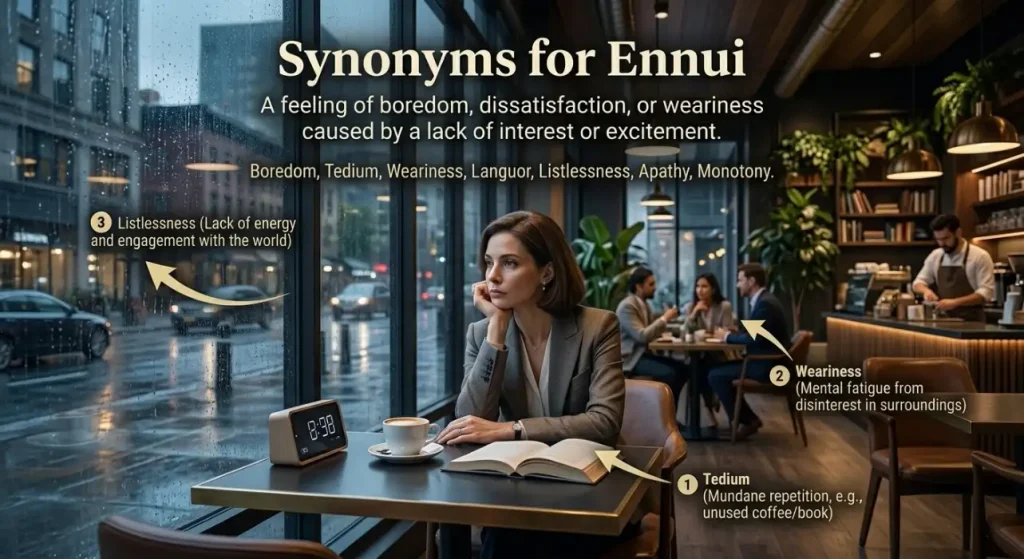
Finding the right words can make your writing clearer and more expressive. Synonyms for ennui help describe boredom, weariness, dullness, or dissatisfaction without repeating the same term. They are useful in essays, stories, articles, blogs, and everyday communication.
Using synonyms for ennui allows you to express different shades of boredom and emotional tiredness. Common alternatives include boredom, tedium, monotony, listlessness, apathy, and weariness. Each word can convey a slightly different feeling depending on the context.
A varied vocabulary is especially helpful when describing emotions, routines, experiences, or situations that feel repetitive. Choosing the right alternative can make your sentences more natural, descriptive, and engaging for readers.
In this guide, we will explore synonyms for ennui, their meanings, and examples. These alternatives can help expand your vocabulary, reduce repetition, and make your writing more precise. Learning them can also improve your communication skills.
What Does “Ennui” Really Mean?
Ennui means a feeling of listlessness and dissatisfaction arising from a lack of occupation or excitement. It describes a deep spiritual weariness that goes far beyond ordinary physical boredom.
Native speakers use this word when discussing heavy psychological fatigue, artistic burnout, or existential sluggishness. It carries a formal, intellectual, and reflective emotional tone. It usually suggests mental stagnation, tiredness, and a lack of stimulating purpose.
Connotative Meaning
- Positive tone: None; the concept inherently describes a negative or heavy emotional state.
- Negative tone: Associated with listlessness, depression, dissatisfaction, and mental stagnation.
- Neutral tone: Used in literary critiques to describe a character’s emotional detachment.
- Connotation definition: (The emotional or cultural feeling attached to a word beyond its strict dictionary definition).
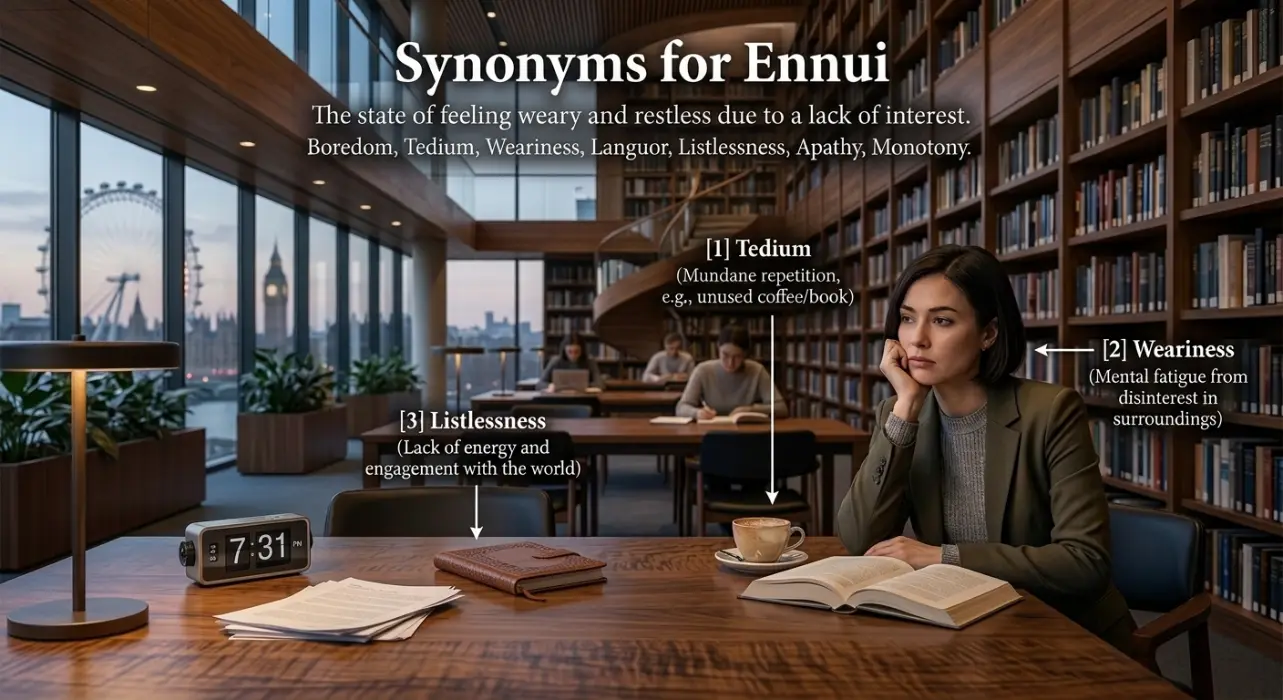
Etymology
- Source Language: French, derived from the Latin phrase in odio meaning “it is hateful” or annoying.
- Original Meaning: Originally referred to severe annoyance, vexation, or mental trouble before shifting to listlessness.
- Old English (450–1100): Not used; native speakers relied on Germanic roots like weary or idle.
- Middle English (1100–1500): Early variants appeared to describe annoyance and deep sorrow rather than modern boredom.
- Modern English (1500–Present): Fully adopted from French into literary English to describe sophisticated psychological weariness.
Pronunciation (US & UK – IPA)
- US: /ɑːnˈwiː/
- UK: /ɒnˈwiː/
Syllables & Affixation Pattern
- Syllables: en-nui
- Root: nui (derived from annoyance or hurt)
- Prefix: en- (forming a state of being)
- Suffix: None (borrowed directly as a monomorphemic loanword in structure)
Synonyms List
Boredom (Noun) — US: /ˈbɔːrdəm/ — UK: /ˈbɔːdəm/
- Meaning: The state of feeling weary and restless through lack of interest.
- Tone/Register: Standard, everyday.
- Example: Children complained of intense boredom during the long car ride.
- Example: Office workers fought afternoon boredom with fresh coffee.
Tedium (Noun) — US: /ˈtiːdiəm/ — UK: /ˈtiːdiəm/
- Meaning: The quality of being tedious, tiresome, or excessively slow.
- Tone/Register: Formal, professional.
- Example: She listened to the endless tedium of corporate bylaws.
- Example: Data entry workers found relief from daily tedium through music.
Languor (Noun) — US: /ˈlæŋɡər/ — UK: /ˈlæŋɡə/
- Meaning: The state or feeling, often pleasant, of tiredness or inertia.
- Tone/Register: Literary, formal.
- Example: A pleasant summer languor settled over the quiet porch.
- Example: The afternoon heat induced a deep, sleepy languor.
Apathy (Noun) — US: /ˈæpəθi/ — UK: /ˈapəθi/
- Meaning: Lack of interest, enthusiasm, or concern for important things.
- Tone/Register: Formal, psychological.
- Example: Voter apathy threatened local municipal election turnout rates.
- Example: Teachers worried about student apathy toward science projects.
Lethargy (Noun) — US: /ˈlɛθərdʒi/ — UK: /ˈlɛθədʒi/
- Meaning: A lack of energy and enthusiasm causing sluggishness.
- Tone/Register: Medical, standard.
- Example: Winter weather induced seasonal lethargy across the city.
- Example: He shook off his morning lethargy with a brisk walk.
Listlessness (Noun) — US: /ˈlɪstləsnəs/ — UK: /ˈlɪstləsnəs/
- Meaning: Having or showing little or no interest in anything.
- Tone/Register: Descriptive, standard.
- Example: The sick puppy showed unusual listlessness all afternoon.
- Example: Emotional listlessness can signal mounting burnout at work.
Weariness (Noun) — US: /ˈwɪərnis/ — UK: /ˈwɪənis/
- Meaning: Extreme tiredness resulting from mental or physical exertion.
- Tone/Register: Standard, emotional.
- Example: Deep weariness showed on the traveler’s tired face.
- Example: Years of hard labor brought physical and mental weariness.
Torpor (Noun) — US: /ˈtɔːrpər/ — UK: /ˈtɔːpə/
- Meaning: A state of physical or mental inactivity; lethargy.
- Tone/Register: Academic, formal.
- Example: The economy sank into a prolonged financial torpor.
- Example: Animals hibernate to survive winter torpor conditions.
Malaise (Noun) — US: /məˈleɪz/ — UK: /maˈleɪz/
- Meaning: A general feeling of discomfort, illness, or uneasiness.
- Tone/Register: Formal, medical.
- Example: A strange cultural malaise affected modern artistic expression.
- Example: The patient reported a mild physical malaise and fatigue.
Melancholy (Noun) — US: /ˈmɛlənˌkɑːli/ — UK: /ˈmɛlənkəli/
- Meaning: A deep, pensive, and often lingering sadness.
- Tone/Register: Literary, emotional.
- Example: Autumn evenings often bring a quiet, gentle melancholy.
- Example: The old song evoked a sweet melancholy in his heart.
Satiety (Noun) — US: /səˈtaɪəti/ — UK: /səˈtaɪəti/
- Meaning: The feeling or state of being sated or overfilled.
- Tone/Register: Formal, literary.
- Example: Luxury bred a quiet satiety that killed their ambition.
- Example: Guests reached total food satiety after the big feast.
Blaséness (Noun) — US: /blɑːˈzeɪnəs/ — UK: /blɑːˈzeɪnəs/
- Meaning: An attitude of unimpressed indifference or worldly boredom.
- Tone/Register: Informal, conversational.
- Example: Teenagers feigned total blaséness toward pop music trends.
- Example: His practiced blaséness hid genuine excitement for the award.
Ennui (Noun) — US: /ɑːnˈwiː/ — UK: /ɒnˈwiː/
- Meaning: A mental state of listlessness and dissatisfaction from inactivity.
- Tone/Register: Literary, intellectual.
- Example: The wealthy aristocrat suffered from chronic afternoon ennui.
- Example: Modern digital habits can sometimes feed quiet personal ennui.
Acedia (Noun) — US: /əˈsiːdiə/ — UK: /əˈsiːdiə/
- Meaning: Spiritual or mental torpor; apathy and listlessness.
- Tone/Register: Archaic, theological.
- Example: Monks fought against spiritual acedia during long winters.
- Example: Historical texts describe acedia as a severe desert affliction.
Sluggishness (Noun) — US: /ˈslʌɡɪʃnəs/ — UK: /ˈslʌɡɪʃnəs/
- Meaning: Slow to respond or moving with diminished energy.
- Tone/Register: Everyday, descriptive.
- Example: Computer processors suffered from unusual operating sluggishness.
- Example: Hot summer days caused afternoon mental sluggishness.
Inactivity (Noun) — US: /ˌɪnækˈtɪvəti/ — UK: /ˌɪnakˈtɪvəti/
- Meaning: The state of being inactive or not operating.
- Tone/Register: Standard, technical.
- Example: Prolonged muscle inactivity weakens physical recovery rates.
- Example: Factory equipment rusted during months of forced inactivity.
Dullness (Noun) — US: /ˈdʌlnəs/ — UK: /ˈdʌlnəs/
- Meaning: Lacking excitement, brightness, or interesting qualities.
- Tone/Register: Standard, everyday.
- Example: Editors complained about the gray dullness of the manuscript.
- Example: Paint colors lacked vibrancy and showed dullness.
Stagnation (Noun) — US: /stæɡˈneɪʃən/ — UK: /staɡˈneɪʃn/
- Meaning: The state of not flowing or moving; lack of progress.
- Tone/Register: Business, formal.
- Example: Economic stagnation worried government financial advisors.
- Example: Career stagnation prompted him to change jobs.
Flatness (Noun) — US: /ˈflætnəs/ — UK: /ˈflatnəs/
- Meaning: Lacking variation, emotion, or interesting depth.
- Tone/Register: Standard, descriptive.
- Example: The singer’s voice carried an emotional flatness.
- Example: The desert landscape showed endless visual flatness.
Emptiness (Noun) — US: /ˈɛmptinəs/ — UK: /ˈɛmptinəs/
- Meaning: Containing nothing; lacking meaning or purpose.
- Tone/Register: Emotional, philosophical.
- Example: Winning the prize brought a strange emotional emptiness.
- Example: Old abandoned houses echoed with hollow emptiness.
Restlessness (Noun) — US: /ˈrɛstləsnəs/ — UK: /ˈrɛstləsnəs/
- Meaning: Unable to rest or relax as a result of anxiety or boredom.
- Tone/Register: Standard, descriptive.
- Example: Creative restlessness drove her to start painting again.
- Example: Dogs showed nighttime restlessness before the storm.
Wearisomeness (Noun) — US: /ˈwɪərisəmnəs/ — UK: /ˈwɪərisəmnəs/
- Meaning: Causing tiredness or boredom through being tedious.
- Tone/Register: Formal, descriptive.
- Example: The sheer wearisomeness of paperwork frustrated accountants.
- Example: Travelers complained about the wearisomeness of layovers.
Monotony (Noun) — US: /məˈnɒtəni/ — UK: /məˈnɒtəni/
- Meaning: Lack of variety and interest; tedious repetition.
- Tone/Register: Standard, formal.
- Example: Daily routine work broke the monotony with coffee breaks.
- Example: Factory workers tried escaping factory monotony with podcasts.
Flatline (Noun) — US: /ˈflætˌlaɪn/ — UK: /ˈflatˌlaɪn/
- Meaning: A period of no change, growth, or emotional variation.
- Tone/Register: Informal, technical.
- Example: Sales figures hit an unexpected flatline this quarter.
- Example: Creative inspiration experienced a sudden flatline.
Drift (Noun) — US: /drɪft/ — UK: /drɪft/
- Meaning: A slow and unfocused movement or state of mind.
- Tone/Register: Literary, descriptive.
- Example: He spent the sabbatical in a comfortable mental drift.
- Example: Without clear goals, life fell into an aimless drift.
Tediousness (Noun) — US: /ˈtiːdiəsnəs/ — UK: /ˈtiːdiəsnəs/
- Meaning: The quality of being tiresome, dull, and long-winded.
- Tone/Register: Formal, descriptive.
- Example: The endless paperwork added unnecessary tediousness to his workday.
- Example: Students complained about the tediousness of reviewing every grammar rule.
Weariness (Noun) — US: /ˈwɪərnis/ — UK: /ˈwɪənis/
- Meaning: Extreme tiredness resulting from mental or physical exertion.
- Tone/Register: Standard, emotional.
- Example: Deep mental weariness weighed heavily on the exhausted coder.
- Example: Years of bureaucracy brought a profound weariness to the team.
Despondency (Noun) — US: /dɪˈspɒndənsi/ — UK: /dɪˈspɒndənsi/
- Meaning: A state of low spirits caused by loss of hope or courage.
- Tone/Register: Psychological, formal.
- Example: Prolonged isolation triggered unexpected despondency in the artist.
- Example: Economic setbacks caused widespread despondency among local merchants.
Dejection (Noun) — US: /dɪˈdʒɛkʃən/ — UK: /dɪˈdʒɛkʃn/
- Meaning: A sad and depressed state; low spirits.
- Tone/Register: Literary, formal.
- Example: His visible dejection revealed that the project application failed.
- Example: She hid her quiet dejection behind a polite smile.
Ennui (Noun) — US: /ɑːnˈwiː/ — UK: /ɒnˈwiː/
- Meaning: A feeling of listlessness and dissatisfaction from a lack of occupation.
- Tone/Register: Literary, intellectual.
- Example: The quiet rainy afternoon fostered an atmosphere of shared ennui.
- Example: Intellectuals often write about modern urban ennui in essays.
World-weariness (Noun) — US: /ˈwɜːrld ˌwɪərnis/ — UK: /ˈwɜːld ˌwɪənis/
- Meaning: Boredom or tiredness with life caused by experience and disillusionment.
- Tone/Register: Literary, philosophical.
- Example: A deep world-weariness showed in the aging detective’s eyes.
- Example: Long years in politics bred a quiet world-weariness.
Satiation (Noun) — US: /ˌseɪʃiˈeɪʃən/ — UK: /ˌseɪʃiˈeɪʃn/
- Meaning: The state of being fed or gratified to capacity or beyond.
- Tone/Register: Formal, technical.
- Example: Overexposure to entertainment led to digital satiation and boredom.
- Example: The market reached consumer satiation for luxury gadgets.
Inanition (Noun) — US: /ˌɪnəˈnɪʃən/ — UK: /ˌɪnəˈnɪʃn/
- Meaning: Exhaustion caused by lack of nourishment or mental emptiness.
- Tone/Register: Archaic, medical.
- Example: The plants withered rapidly from severe nutrient inanition.
- Example: Creative inanition set in after months of isolation.
Vacuity (Noun) — US: /vəˈkjuːəti/ — UK: /vəˈkjuːəti/
- Meaning: State of being empty or lacking intelligence and meaning.
- Tone/Register: Formal, academic.
- Example: He criticized the intellectual vacuity of modern reality television.
- Example: Staring at blank walls induced a sense of mental vacuity.
Blah (Noun) — US: /blɑː/ — UK: /blɑː/
- Meaning: A feeling of dullness, depression, or vague dissatisfaction.
- Tone/Register: Informal, conversational.
- Example: A sudden case of the winter blahs kept him indoors.
- Example: She shook off her afternoon blahs with a cold drink.
Ho-hum (Noun) — US: /ˈhoʊ hʌm/ — UK: /ˈhəʊ hʌm/
- Meaning: A dull, unexciting state of routine or indifference.
- Tone/Register: Informal, colloquial.
- Example: Daily chores felt like a monotonous ho-hum routine.
- Example: Investors treated the minor market report with total ho-hum.
Flatness (Noun) — US: /ˈflætnəs/ — UK: /ˈflatnəs/
- Meaning: Lacking variation, excitement, emotion, or interesting depth.
- Tone/Register: Descriptive, standard.
- Example: The speaker’s monotone voice carried an emotional flatness.
- Example: Creative inspiration hit an extended period of flatness.
Stagnation (Noun) — US: /stæɡˈneɪʃən/ — UK: /staɡˈneɪʃn/
- Meaning: The state of not flowing or moving; lack of progress.
- Tone/Register: Business, formal.
- Example: Career stagnation prompted him to switch industries.
- Example: Intellectual stagnation harmed the isolated research group.
Dryness (Noun) — US: /ˈdraɪnəs/ — UK: /ˈdraɪnəs/
- Meaning: Lacking interest, excitement, or emotional warmth.
- Tone/Register: Descriptive, literary.
- Example: Readers struggled with the dry textual dryness of the manual.
- Example: The academic lecture suffered from absolute structural dryness.
Sterile (Adjective used as noun context) — US: /ˈstɛrəl/ — UK: /ˈstɛrəl/
- Meaning: Lacking inspiration, creativity, or stimulating vitality.
- Tone/Register: Formal, critical.
- Example: The sterile office environment drained creative energy.
- Example: Urban planners avoided sterile architectural designs.
Listlessness (Noun) — US: /ˈlɪstləsnəs/ — UK: /ˈlɪstləsnəs/
- Meaning: Having or showing little or no interest in anything.
- Tone/Register: Descriptive, standard.
- Example: Emotional listlessness can signal mounting burnout at work.
- Example: The cat showed unusual listlessness all afternoon.
Torpor (Noun) — US: /ˈtɔːrpər/ — UK: /ˈtɔːpə/
- Meaning: A state of physical or mental inactivity; lethargy.
- Tone/Register: Academic, formal.
- Example: The economy sank into a prolonged financial torpor.
- Example: Warm weather induced a sleepy afternoon torpor.
Languidness (Noun) — US: /ˈlæŋɡwɪdnəs/ — UK: /ˈlæŋɡwɪdnəs/
- Meaning: The quality of being slow, relaxed, and lacking energy.
- Tone/Register: Literary, descriptive.
- Example: A slow languidness overtook the porch on a hot day.
- Example: Dancers adopted a deliberate languidness for the routine.
Apathy (Noun) — US: /ˈæpəθi/ — UK: /ˈapəθi/
- Meaning: Lack of interest, enthusiasm, or concern for important things.
- Tone/Register: Formal, psychological.
- Example: Voter apathy threatened local municipal election turnout.
- Example: Teachers worried about student apathy toward history.
Melancholy (Noun) — US: /ˈmɛlənˌkɑːli/ — UK: /ˈmɛlənkəli/
- Meaning: A deep, pensive, and often lingering sadness.
- Tone/Register: Literary, emotional.
- Example: Autumn evenings often bring a quiet, gentle melancholy.
- Example: The old photograph evoked a sweet melancholy.
Sluggishness (Noun) — US: /ˈslʌɡɪʃnəs/ — UK: /ˈslʌɡɪʃnəs/
- Meaning: Slow to respond or moving with diminished energy.
- Tone/Register: Everyday, descriptive.
- Example: Computer processors suffered from unusual operating sluggishness.
- Example: Heavy lunches caused afternoon mental sluggishness.
Drift (Noun) — US: /drɪft/ — UK: /drɪft/
- Meaning: A slow and unfocused movement or state of mind.
- Tone/Register: Literary, descriptive.
- Example: He spent his sabbatical in a comfortable mental drift.
- Example: Without clear goals, his career fell into an aimless drift.
Discontent (Noun) — US: /dɪsˈkəntɛnt/ — UK: /dɪsˈkəntɛnt/
- Meaning: Dissatisfaction with one’s circumstances.
- Tone/Register: Formal, standard.
- Example: Growing workplace discontent led to new policy requests.
- Example: Creative discontent pushed her to change careers.
Ennui (Noun) — US: /ɑːnˈwiː/ — UK: /ɒnˈwiː/
- Meaning: A mental state of listlessness and dissatisfaction from inactivity.
- Tone/Register: Literary, intellectual.
- Example: The wealthy aristocrat suffered from chronic afternoon ennui.
- Example: Modern digital habits can sometimes feed quiet personal ennui.
Languor (Noun) — US: /ˈlæŋɡər/ — UK: /ˈlæŋɡə/
- Meaning: The state or feeling, often pleasant, of tiredness or inertia.
- Tone/Register: Literary, formal.
- Example: A pleasant summer languor settled over the quiet garden.
- Example: The afternoon heat induced a deep, sleepy languor.
Synonyms by Tone
Choosing the right synonym depends entirely on the emotional tone you want to convey in your writing.
- Positive tone: None; these terms describe negative or heavy emotional states.
- Neutral tone: Boredom, monotony, dullness, inactivity, sluggishness.
- Negative tone: Apathy, lethargy, listlessness, weariness, stagnation.
- Literary / Intellectual tone: Ennui, languor, melancholy, torpor, acedia.
Tone matters because using an academic term like acedia in a casual sports chat sounds bizarre, while using basic slang like bored in a deep philosophical essay lacks stylistic depth.
Mini Comparison: Ennui vs. Boredom vs. Lethargy
- Ennui specifically emphasizes intellectual and psychological weariness combined with existential dissatisfaction.
- Boredom is a common everyday feeling of missing stimulation or having nothing fun to do.
- Lethargy highlights physical exhaustion, sluggishness, and a severe lack of bodily energy.
Use ennui for artistic or philosophical boredom, boredom for simple daily idle moments, and lethargy for physical tiredness.
Context-Based Usage
- Daily conversation: In casual talk, native speakers say boredom, sluggishness, or tiredness instead of foreign loanwords.
- Writing or blogging: Essayists and cultural critics use terms like ennui, malaise, or monotony to sound engaging and sophisticated.
- Professional or academic tone: Researchers rely on precise terms like torpor, apathy, and stagnation.
- Creative or informal use: Novelists use words like languor, melancholy, or drift to establish evocative moods.
Common Mistakes & Native Usage
Common Mistakes Learners Make
- Misuse scenarios: Using ennui to describe physical sleepiness after running a marathon. Exhaustion or fatigue fits better here.
- Confusing tone: Treating literary terms like acedia as casual everyday slang for skipping chores.
- Overuse warnings: Repeating ennui across every sentence makes personal essays sound overly dramatic and pretentious.
Register Notes
- Spoken English favors direct words like boredom or burnout.
- Written English rewards scholarly choices like malaise and torpor.

Real-Life Mini Scenarios
- Workplace: Employees suffered from intense afternoon monotony during routine spreadsheet reviews.
- Social situations: Guests sat in awkward silence, overcome by a heavy social listlessness.
- Media/pop culture: Film critics described the protagonist’s modern urban ennui as brilliantly acted.
- Writing or storytelling: The rainy Sunday chapter opened with deep psychological torpor and quiet drift.
Practice Exercise
- Which synonym best describes an intellectual weariness and existential dissatisfaction?
- A) Ennui
- B) Sprinting
- C) Shouting
- D) Jumping
- What tone does the word apathy typically carry in psychological discussions?
- A) Cheerful
- B) Detached or negative
- C) Playful
- D) Commercial
- Which term refers specifically to a pleasant state of tiredness or inertia?
- A) Languor
- B) Hammer
- C) Wrench
- D) Pliers
- If a patient experiences physical inactivity and sluggishness, the formal term is:
- A) Torpor
- B) Cement
- C) Brickwork
- D) Plumbing
- The general everyday term for feeling weary from lack of interest is:
- A) Boredom
- B) Asphalt
- C) Concrete
- D) Gravel
- What part of speech is the word ennui in English grammar?
- A) Noun
- B) Adverb only
- C) Interjection only
- D) Preposition only
- Which synonym describes a general feeling of mild illness or unease?
- A) Malaise
- B) Stumbling
- C) Sinking
- D) Falling
- Tedious repetition and lack of variety in daily life is called:
- A) Monotony
- B) Insulation
- C) Drywall
- D) Siding
- A deep, pensive, and lingering sadness is known as:
- A) Melancholy
- B) Stumble
- C) Slip
- D) Fall
- Which word describes a lack of energy causing sluggishness?
- A) Lethargy
- B) Paved
- C) Tiled
- D) Plastered
Reflection Task :
Write one short, original sentence using the word monotony to describe an office worker’s daily routine.
Answer Key: 1: A | 2: B | 3: A | 4: A | 5: A | 6: A | 7: A | 8: A | 9: A | 10: A
Conclusion
Understanding synonyms for ennui can help expand your vocabulary and make your writing more expressive. These alternatives allow you to describe boredom, weariness, dullness, or dissatisfaction with greater precision and variety.
Using synonyms for ennui can make essays, stories, articles, and everyday communication more engaging. Words such as boredom, tedium, monotony, listlessness, apathy, and weariness can fit different situations and help convey specific feelings more accurately.
Exploring synonyms for ennui gives you more flexibility when describing emotional states and experiences. Practice using these alternatives in different sentences to reduce repetition, strengthen your vocabulary, and make your writing clearer, richer, and more effective.
FAQs
What are the best synonyms for ennui?
Common synonyms for ennui include boredom, weariness, tedium, dullness, monotony, listlessness, and apathy. The best choice depends on the context.
What does ennui mean?
Ennui refers to a feeling of boredom, dissatisfaction, or weariness caused by a lack of excitement, interest, or meaningful activity.
Is “boredom” a synonym for ennui?
Yes, boredom is one of the closest synonyms for ennui. However, ennui often suggests a deeper feeling of dissatisfaction, emptiness, or weariness than ordinary boredom.
What is a synonym for ennui in writing?
Depending on the context, useful alternatives include tedium, weariness, monotony, listlessness, apathy, and dullness. Each can express a slightly different shade of meaning.
How can synonyms for ennui improve writing?
Using synonyms for ennui can reduce repetition and help you express different levels of boredom, dissatisfaction, and emotional weariness more precisely. This can make your writing more descriptive and engaging.

Hasnain Ali is an SEO Content Strategist and the founder of wordvora.com, a trusted vocabulary platform that helps writers, students, professionals, and English learners find accurate synonyms, antonyms, word meanings, and real-life usage examples. He specializes in keyword research, on-page SEO, topical authority, and creating search-first content that aligns with Google’s latest Search Quality and E-E-A-T guidelines. His work focuses on producing clear, well-structured, and reader-friendly resources that satisfy search intent while maintaining high editorial standards.
Through extensive hands-on experience with SEO tools such as Google Search Console, Google Analytics, SEMrush, and Ahrefs, Hasnain researches user search behavior and develops content that is both informative and easy to understand. Every article published on wordvora.com is carefully reviewed for accuracy, readability, and contextual relevance before publication. His mission is to build one of the web’s most reliable English vocabulary resources by providing practical language guidance, trustworthy explanations, and content that helps readers improve their writing, communication, and vocabulary with confidence.