
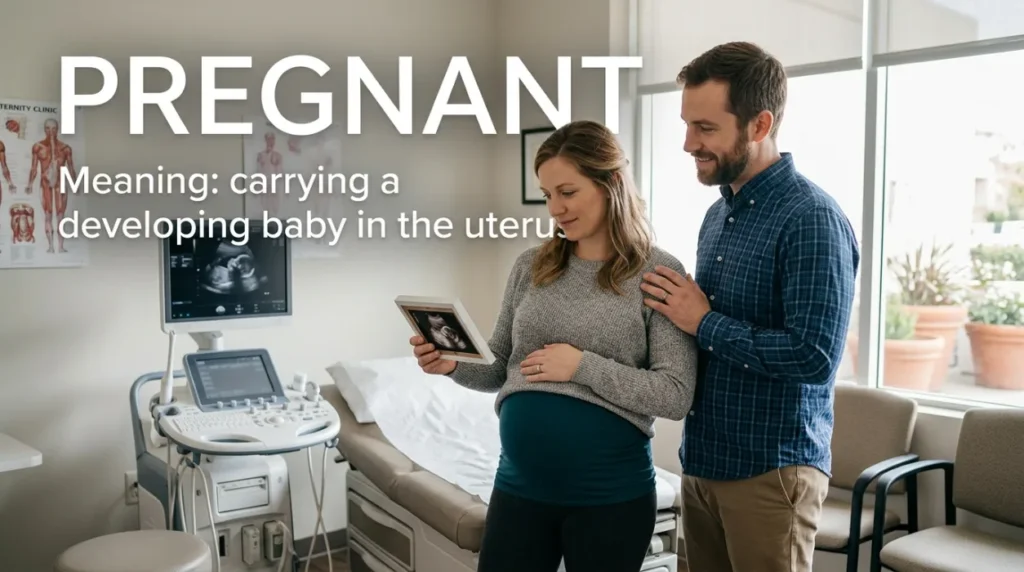
Synonyms for pregnant help you express news with the right tone and context. Imagine sitting at a cozy dinner table when your sister leans in to share her big secret. Instead of repeating the same common term, choosing precise words elevates your storytelling instantly.
Using synonyms for pregnant expands your vocabulary and sharpens your communication skills. A single adjective can transform a medical report into a formal statement or turn a casual text into a warm, joyful celebration.
The word pregnant appears constantly in daily conversations, literature, and news updates. Because it carries vast medical and emotional weight, native speakers rely on specific alternatives depending on who they are addressing.
Mastering synonyms for pregnant benefits writers, students, content creators, and ESL learners alike. Expanding your language toolkit prevents repetitive writing, boosts readability, and builds professional confidence.
What Does “Pregnant” Really Mean?
Pregnant means carrying a developing embryo or fetus inside the female body. Native speakers understand it primarily as a biological state, yet it also carries rich metaphorical meaning. In everyday language, it often describes an idea or a silence that is heavy with potential.
- Part of Speech: Adjective
- Simple Definition: Expecting a child; carrying unborn offspring within the body.
- Emotional Tone: Neutral by default, but context shifts it into joy, anxiety, or medical formality.
Connotative Meaning
(Connotation refers to the emotional association or cultural feeling attached to a word beyond its literal definition.)
- Positive Tone: Associated with life, hope, joy, and family expansion.
- Negative Tone: Associated with unintended stress, physical discomfort, or medical complications.
- Neutral Tone: Used strictly for clinical reporting, scientific data, or biological facts.
Etymology
The word pregnant originates from the Latin term praegnans, meaning “before birth” or “with child.” It combines prae- (before) and gignere (to beget).
- Old English (450–1100): The native term bearn-eaca (child-adding) was primarily used.
- Middle English (1100–1500): The Latin term entered English through Anglo-Norman French as pregnant.
- Modern English (1500–Present): It grew into the standard term, while metaphorical uses like “a pregnant pause” emerged in the 17th century.
Pronunciation & Syllables
- US: /ˈprɛɡ.nənt/
- UK: /ˈprɛɡ.nənt/
- Syllables: preg-nant
Affixation Pattern:
- Root: gna (to beget)
- Prefix: pre- (before)
- Suffix: -ant (forming an adjective)
Synonyms List
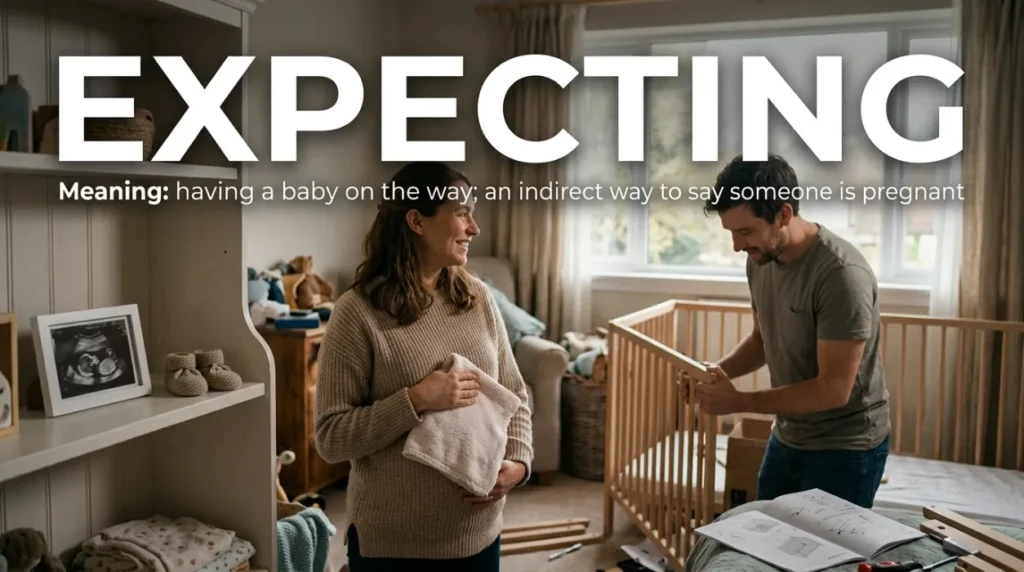
Expecting (Adjective/Present participle) — US / UK: /ɪkˈspɛktɪŋ/ / /ɪkˈspektɪŋ/
Meaning: Having a baby on the way; a common indirect way to say someone is pregnant.
Tone/Register: Warm, neutral, everyday
Example: She is expecting her first baby in December.
Example: They announced that they are expecting.
With Child (Adjectival Phrase) — US / UK: /wɪð tʃaɪld/ / /wɪð tʃaɪld/
Meaning: An older expression meaning pregnant.
Tone/Register: Traditional, literary, somewhat old-fashioned
Example: The story describes a young woman who is with child.
Example: The phrase sounds unusual in modern everyday conversation.
Expecting a Baby (Phrase) — US / UK: /ɪkˈspɛktɪŋ ə ˈbeɪbi/ / /ɪkˈspektɪŋ ə ˈbeɪbi/
Meaning: Preparing for the birth of a baby.
Tone/Register: Warm, friendly, everyday
Example: My cousin is expecting a baby.
Example: They are expecting a baby this summer.
Expecting a Child (Phrase) — US / UK: /ɪkˈspɛktɪŋ ə tʃaɪld/ / /ɪkˈspektɪŋ ə tʃaɪld/
Meaning: Pregnant and awaiting the birth of a child.
Tone/Register: Neutral, polite
Example: She is expecting a child with her partner.
Example: The couple recently shared that they are expecting a child.
Having a Baby (Phrase) — US / UK: /ˈhævɪŋ ə ˈbeɪbi/ / /ˈhævɪŋ ə ˈbeɪbi/
Meaning: A conversational way to refer to pregnancy or an upcoming birth.
Tone/Register: Informal, conversational
Example: She is having a baby in October.
Example: They are thrilled about having a baby.
Having a Child (Phrase) — US / UK: /ˈhævɪŋ ə tʃaɪld/ / /ˈhævɪŋ ə tʃaɪld/
Meaning: Carrying or preparing to have a child.
Tone/Register: Neutral
Example: She is having her first child.
Example: They are preparing to have a child together.
Carrying a Baby (Phrase) — US / UK: /ˈkæriɪŋ ə ˈbeɪbi/ / /ˈkæriɪŋ ə ˈbeɪbi/
Meaning: Having a developing baby during pregnancy.
Tone/Register: Neutral, warm
Example: She is carrying a healthy baby.
Example: The doctor said she is carrying twins.
Carrying a Child (Phrase) — US / UK: /ˈkæriɪŋ ə tʃaɪld/ / /ˈkæriɪŋ ə tʃaɪld/
Meaning: Being pregnant with a developing child.
Tone/Register: Neutral, somewhat formal
Example: She is carrying a child for the first time.
Example: The novel follows a woman carrying a child.
Carrying (Adjective/Present participle) — US / UK: /ˈkæriɪŋ/ / /ˈkæriɪŋ/
Meaning: A shortened contextual expression for being pregnant.
Tone/Register: Informal, contextual
Example: She is carrying and needs extra rest.
Example: The phrase is usually understood from context.
In the Family Way (Idiomatic Phrase) — US / UK: /ɪn ðə ˈfæməli weɪ/ / /ɪn ðə ˈfæməli weɪ/
Meaning: An old euphemism for being pregnant.
Tone/Register: Old-fashioned, humorous, literary
Example: The grandmother smiled when she realized her daughter was in the family way.
Example: You may hear this phrase in older novels.
In a Family Way (Idiomatic Phrase) — US / UK: /ɪn ə ˈfæməli weɪ/ / /ɪn ə ˈfæməli weɪ/
Meaning: A traditional expression meaning pregnant.
Tone/Register: Old-fashioned, euphemistic
Example: The character discovers that she is in a family way.
Example: The expression rarely appears in modern speech.
Gravid (Adjective) — US / UK: /ˈɡrævɪd/ / /ˈɡrævɪd/
Meaning: Pregnant, especially in medical, biological, or technical language.
Tone/Register: Medical, scientific, formal
Example: The study examined gravid patients.
Example: The veterinarian treated a gravid animal.
Gestating (Adjective/Present participle) — US / UK: /dʒɛˈsteɪtɪŋ/ / /dʒɛˈsteɪtɪŋ/
Meaning: Carrying a developing embryo or fetus during gestation.
Tone/Register: Scientific, medical
Example: The researchers observed gestating animals.
Example: The term is more common in biology than casual conversation.
In Gestation (Prepositional Phrase) — US / UK: /ɪn dʒɛˈsteɪʃən/ / /ɪn dʒɛˈsteɪʃən/
Meaning: Undergoing the period during which an embryo or fetus develops.
Tone/Register: Medical, scientific
Example: The fetus is still in gestation.
Example: The report discusses development during gestation.
Undergoing Pregnancy (Verb Phrase) — US / UK: /ˌʌndərˈɡoʊɪŋ ˈprɛɡnənsi/ / /ˌʌndəˈɡəʊɪŋ ˈpreɡnənsi/
Meaning: Experiencing the physical process of pregnancy.
Tone/Register: Formal, medical
Example: The patient is undergoing a normal pregnancy.
Example: Regular monitoring can support someone undergoing pregnancy.
In Pregnancy (Prepositional Phrase) — US / UK: /ɪn ˈprɛɡnənsi/ / /ɪn ˈpreɡnənsi/
Meaning: Experiencing or relating to the state of pregnancy.
Tone/Register: Medical, formal
Example: Exercise can change during pregnancy.
Example: Certain symptoms are common in pregnancy.
During Pregnancy (Prepositional Phrase) — US / UK: /ˈdʊrɪŋ ˈprɛɡnənsi/ / /ˈdjʊərɪŋ ˈpreɡnənsi/
Meaning: Refers to the period when a person is pregnant.
Tone/Register: Neutral, medical, everyday
Example: She avoided certain foods during pregnancy.
Example: Many body changes occur during pregnancy.
Pregnant With Twins (Adjectival Phrase) — US / UK: /ˈprɛɡnənt wɪð twɪnz/ / /ˈpreɡnənt wɪð twɪnz/
Meaning: Pregnant while carrying two babies.
Tone/Register: Neutral, everyday
Example: She is pregnant with twins.
Example: They learned that they were pregnant with twins at the scan.
Pregnant With a Baby (Adjectival Phrase) — US / UK: /ˈprɛɡnənt wɪð ə ˈbeɪbi/ / /ˈpreɡnənt wɪð ə ˈbeɪbi/
Meaning: Pregnant and carrying a developing baby.
Tone/Register: Conversational
Example: She is pregnant with a baby boy.
Example: The phrase sounds natural in family conversations.
In the Mother-to-Be Stage (Phrase) — US / UK: /ɪn ðə ˈmʌðər tə bi steɪdʒ/ / /ɪn ðə ˈmʌðə tə bi steɪdʒ/
Meaning: Describing someone who is expecting to become a mother.
Tone/Register: Informal, celebratory
Example: She is enjoying the mother-to-be stage.
Example: Her friends organized a small celebration for the mother-to-be.
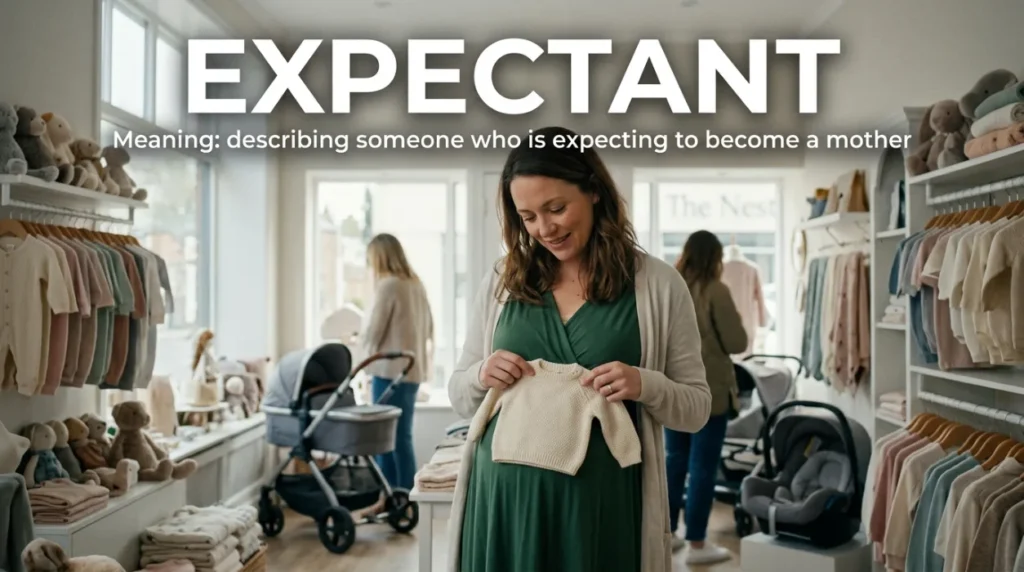
A Mother-to-Be (Noun Phrase) — US / UK: /ə ˈmʌðər tə bi/ / /ə ˈmʌðə tə bi/
Meaning: A woman who is pregnant and will become a mother.
Tone/Register: Warm, informal, celebratory
Example: The mother-to-be opened her gifts.
Example: Everyone congratulated the mother-to-be.
An Expectant Mother (Noun Phrase) — US / UK: /ən ɪkˈspɛktənt ˈmʌðər/ / /ən ɪkˈspektənt ˈmʌðə/
Meaning: A woman who is pregnant and awaiting her baby’s birth.
Tone/Register: Formal, warm, respectful
Example: The clinic provides advice for expectant mothers.
Example: Every expectant mother receives information about prenatal care.
An Expectant Parent (Noun Phrase) — US / UK: /ən ɪkˈspɛktənt ˈpɛrənt/ / /ən ɪkˈspektənt ˈpeərənt/
Meaning: A person who is expecting a baby and will become a parent.
Tone/Register: Neutral, inclusive, modern
Example: The class welcomes expectant parents.
Example: Both expectant parents attended the appointment.
An Expecting Parent (Noun Phrase) — US / UK: /ən ɪkˈspɛktɪŋ ˈpɛrənt/ / /ən ɪkˈspektɪŋ ˈpeərənt/
Meaning: A parent-to-be whose baby is expected.
Tone/Register: Modern, inclusive, conversational
Example: The hospital offers classes for expecting parents.
Example: Every expecting parent may have different questions.
A Parent-to-Be (Noun Phrase) — US / UK: /ə ˈpɛrənt tə biː/ / /ə ˈpeərənt tə biː/
Meaning: Someone who is preparing to become a parent.
Tone/Register: Neutral, friendly
Example: Each parent-to-be received a welcome guide.
Example: The parent-to-be looked excited about the new arrival.
A Woman Expecting (Noun Phrase) — US / UK: /ə ˈwʊmən ɪkˈspɛktɪŋ/ / /ə ˈwʊmən ɪkˈspektɪŋ/
Meaning: A woman who is pregnant.
Tone/Register: Literary, descriptive
Example: The article tells the story of a woman expecting her first child.
Example: The photograph shows a woman expecting.
A Person Expecting (Noun Phrase) — US / UK: /ə ˈpɜrsən ɪkˈspɛktɪŋ/ / /ə ˈpɜːsən ɪkˈspektɪŋ/
Meaning: A gender-neutral way to refer to someone who is pregnant or expecting a baby.
Tone/Register: Inclusive, modern
Example: The service supports every person expecting a baby.
Example: The guide was written for people expecting.
Awaiting a Baby (Participial Phrase) — US / UK: /əˈweɪtɪŋ ə ˈbeɪbi/ / /əˈweɪtɪŋ ə ˈbeɪbi/
Meaning: Waiting for the birth of a baby.
Tone/Register: Warm, literary
Example: The couple is awaiting their first baby.
Example: Their home is being prepared while they await the baby.
Awaiting the Birth of a Child (Phrase) — US / UK: /əˈweɪtɪŋ ðə bɜrθ əv ə tʃaɪld/ / /əˈweɪtɪŋ ðə bɜːθ əv ə tʃaɪld/
Meaning: Waiting for a child to be born.
Tone/Register: Formal, literary
Example: The family is awaiting the birth of their child.
Example: The announcement came shortly before the birth.
Preparing for a Baby (Phrase) — US / UK: /prɪˈpɛrɪŋ fər ə ˈbeɪbi/ / /prɪˈpeərɪŋ fər ə ˈbeɪbi/
Meaning: Getting ready for a baby’s arrival, often because someone is pregnant.
Tone/Register: Everyday, warm
Example: They are preparing for a baby.
Example: She spent the weekend preparing the nursery.
Preparing for Parenthood (Phrase) — US / UK: /prɪˈpɛrɪŋ fər ˈpɛrənthʊd/ / /prɪˈpeərɪŋ fə ˈpeərəntˌhʊd/
Meaning: Getting ready to become a parent, often during pregnancy.
Tone/Register: Neutral, reflective
Example: They are preparing for parenthood together.
Example: The course helped them feel ready for parenthood.
Expecting Their First (Phrase) — US / UK: /ɪkˈspɛktɪŋ ðer fɜrst/ / /ɪkˈspektɪŋ ðeə fɜːst/
Meaning: Expecting the first baby in a family.
Tone/Register: Informal, conversational
Example: They are expecting their first.
Example: She is nervous because they are expecting their first.
Expecting Another (Phrase) — US / UK: /ɪkˈspɛktɪŋ əˈnʌðər/ / /ɪkˈspektɪŋ əˈnʌðə/
Meaning: Expecting another baby after already having a child.
Tone/Register: Conversational
Example: They are expecting another after five years.
Example: Her brother told us they are expecting another.
Expecting Again (Phrase) — US / UK: /ɪkˈspɛktɪŋ əˈɡɛn/ / /ɪkˈspektɪŋ əˈɡen/
Meaning: Pregnant again after a previous pregnancy.
Tone/Register: Informal, warm
Example: She is expecting again.
Example: The family shared that they are expecting again.
Expecting a Little One (Phrase) — US / UK: /ɪkˈspɛktɪŋ ə ˈlɪtəl wʌn/ / /ɪkˈspektɪŋ ə ˈlɪtəl wʌn/
Meaning: A warm, affectionate way to refer to expecting a baby.
Tone/Register: Affectionate, informal
Example: They are expecting a little one.
Example: Her parents are excited about the little one.
Welcoming a Baby (Phrase) — US / UK: /ˈwɛlkəmɪŋ ə ˈbeɪbi/ / /ˈwelkəmɪŋ ə ˈbeɪbi/
Meaning: Preparing to receive a new baby into the family.
Tone/Register: Warm, celebratory
Example: They are welcoming a baby in November.
Example: The family is excited about welcoming their new arrival.
Welcoming a New Arrival (Phrase) — US / UK: /ˈwɛlkəmɪŋ ə nu əˈraɪvəl/ / /ˈwelkəmɪŋ ə njuː əˈraɪvəl/
Meaning: Preparing for the arrival of a newborn.
Tone/Register: Warm, polished
Example: The couple is preparing for a new arrival.
Example: Their home is ready for the new arrival.
With a Baby on the Way (Phrase) — US / UK: /wɪð ə ˈbeɪbi ɑn ðə weɪ/ / /wɪð ə ˈbeɪbi ɒn ðə weɪ/
Meaning: Expecting a baby.
Tone/Register: Friendly, conversational
Example: They have a lot to plan with a baby on the way.
Example: She is excited to move before the baby arrives.
With a Little One on the Way (Phrase) — US / UK: /wɪð ə ˈlɪtəl wʌn ɑn ðə weɪ/ / /wɪð ə ˈlɪtəl wʌn ɒn ðə weɪ/
Meaning: Expecting a baby, expressed affectionately.
Tone/Register: Warm, informal
Example: They are moving into a larger home with a little one on the way.
Example: Life feels different with a little one on the way.
With a New Arrival on the Way (Phrase) — US / UK: /wɪð ə nu əˈraɪvəl ɑn ðə weɪ/ / /wɪð ə njuː əˈraɪvəl ɒn ðə weɪ/
Meaning: Expecting a new baby.
Tone/Register: Warm, celebratory
Example: The family has a new arrival on the way.
Example: They are making plans for the new arrival.
Awaiting Their New Arrival (Phrase) — US / UK: /əˈweɪtɪŋ ðer nu əˈraɪvəl/ / /əˈweɪtɪŋ ðeə njuː əˈraɪvəl/
Meaning: Waiting for a baby to be born.
Tone/Register: Polished, warm
Example: The couple is awaiting their new arrival.
Example: They decorated the room while awaiting their new arrival.
Anticipating a Baby (Phrase) — US / UK: /ænˈtɪsəpeɪtɪŋ ə ˈbeɪbi/ / /ænˈtɪsɪpeɪtɪŋ ə ˈbeɪbi/
Meaning: Looking forward to the arrival of a baby.
Tone/Register: Formal, warm
Example: They are anticipating the arrival of their baby.
Example: The family is excited while anticipating the birth.
Anticipating the Birth (Phrase) — US / UK: /ænˈtɪsəpeɪtɪŋ ðə bɜrθ/ / /ænˈtɪsɪpeɪtɪŋ ðə bɜːθ/
Meaning: Waiting for a baby’s birth with expectation.
Tone/Register: Formal, literary
Example: She spent the final weeks anticipating the birth.
Example: The family gathered while anticipating the birth.
In the Expecting Stage (Phrase) — US / UK: /ɪn ði ɪkˈspɛktɪŋ steɪdʒ/ / /ɪn ði ɪkˈspektɪŋ steɪdʒ/
Meaning: Informally describing the period before a baby’s birth.
Tone/Register: Informal, conversational
Example: They are in the expecting stage of family life.
Example: She is enjoying this expecting stage.
In the Early Stages of Pregnancy (Phrase) — US / UK: /ɪn ði ˈɜrli steɪdʒɪz əv ˈprɛɡnənsi/ / /ɪn ði ˈɜːli steɪdʒɪz əv ˈpreɡnənsi/
Meaning: Pregnant during the beginning part of pregnancy.
Tone/Register: Medical, neutral
Example: She is in the early stages of pregnancy.
Example: Some symptoms are common during the early stages.
In the Later Stages of Pregnancy (Phrase) — US / UK: /ɪn ðə ˈleɪtər steɪdʒɪz əv ˈprɛɡnənsi/ / /ɪn ðə ˈleɪtə steɪdʒɪz əv ˈpreɡnənsi/
Meaning: Pregnant during the later part of the pregnancy.
Tone/Register: Medical, neutral
Example: She is in the later stages of pregnancy.
Example: Rest can become more important in the later stages.
In the Third Trimester (Phrase) — US / UK: /ɪn ðə θɜrd traɪˈmɛstər/ / /ɪn ðə θɜːd traɪˈmestə/
Meaning: Pregnant during the final stage of a typical pregnancy.
Tone/Register: Medical, neutral
Example: She is in her third trimester.
Example: The third trimester can bring noticeable physical changes.
In the Second Trimester (Phrase) — US / UK: /ɪn ðə ˈsɛkənd traɪˌmɛstər/ / /ɪn ðə ˈsekənd traɪˌmestə/
Meaning: Pregnant during the middle stage of pregnancy.
Tone/Register: Medical, neutral
Example: She is in her second trimester.
Example: Her energy improved during the second trimester.
In the First Trimester (Phrase) — US / UK: /ɪn ðə fɜrst traɪˈmɛstər/ / /ɪn ðə fɜːst traɪˈmestə/
Meaning: Pregnant during the first stage of pregnancy.
Tone/Register: Medical, neutral
Example: She is still in her first trimester.
Example: Morning sickness can occur during the first trimester.
In the Prenatal Period (Phrase) — US / UK: /ɪn ðə ˌpriːˈneɪtəl ˈpɪriəd/ / /ɪn ðə ˌpriːˈneɪtəl ˈpɪəriəd/
Meaning: Referring to the period before birth, including pregnancy.
Tone/Register: Medical, formal
Example: Nutrition matters during the prenatal period.
Example: The program supports families during the prenatal period.
In the Antenatal Period (Phrase) — US / UK: /ɪn ði ˌæntiˈneɪtəl ˈpɪriəd/ / /ɪn ði ˌæntiˈneɪtəl ˈpɪəriəd/
Meaning: Referring to the period before childbirth, especially in British medical English.
Tone/Register: Medical, British English
Example: She attended an antenatal appointment.
Example: Antenatal care can provide important support.
Antenatal (Adjective) — US / UK: /ˌæntiˈneɪtəl/ / /ˌæntiˈneɪtəl/
Meaning: Relating to the period of pregnancy before birth.
Tone/Register: Medical, especially British
Example: She has an antenatal appointment tomorrow.
Example: The clinic offers antenatal classes.
Prenatal (Adjective) — US / UK: /ˌpriːˈneɪtəl/ / /ˌpriːˈneɪtəl/
Meaning: Relating to the period before birth, especially during pregnancy.
Tone/Register: Medical, especially American
Example: She scheduled a prenatal checkup.
Example: Prenatal care supports maternal and fetal health.
In a Pregnant State (Phrase) — US / UK: /ɪn ə ˈprɛɡnənt steɪt/ / /ɪn ə ˈpreɡnənt steɪt/
Meaning: A formal or descriptive way of referring to the condition of being pregnant.
Tone/Register: Formal, clinical
Example: The patient was in a pregnant state when admitted.
Example: The phrase sounds clinical rather than conversational.
In the State of Pregnancy (Phrase) — US / UK: /ɪn ðə steɪt əv ˈprɛɡnənsi/ / /ɪn ðə steɪt əv ˈpreɡnənsi/
Meaning: Being pregnant.
Tone/Register: Formal, clinical
Example: Certain medicines require caution in the state of pregnancy.
Example: The phrase is more suitable for formal writing than casual speech.
Synonyms by Tone
Choosing the right word depends heavily on your audience. Tone shapes how your message is received.
- Positive: Expecting, expectant mother, mother-to-be, blessed, carrying life, parent-to-be.
- Neutral: Pregnant, carrying, gestational, child-bearing, expanding, expecting a child.
- Negative/Clinical: Gravid, parturient, nulliparous, multiparous, impregnated.
- Playful/Informal: Preggers, preggo, ready to pop, bun in the oven, eating for two.
Tone matters because using slang like “preggers” in a medical document sounds unprofessional. Conversely, using “gravid” at a baby shower feels cold and clinical. Matching tone ensures your message connects clearly.
Mini Comparison: “Expecting” vs. “Gravid” vs. “Preggers”
| Term | Meaning | Tone | Best Context |
| Expecting | Anticipating a child | Polite / Neutral | Workplaces, announcements, casual conversations |
| Gravid | Carrying a developing fetus | Clinical / Scientific | Medical charts, biological research papers |
| Preggers | Pregnant | Slang / Informal | Texting close friends, informal family banter |
Use expecting when you want to sound polite and warm without being overly personal. Reserve gravid strictly for medical or biological writing. Use preggers only when chatting casually with close peers.
Context-Based Usage
Daily Conversation
In everyday speech, people prefer soft and warm phrasing. Terms like expecting, carrying, or mother-to-be fit naturally without sounding overly formal or blunt.
Writing or Blogging
Bloggers and lifestyle writers use varied phrasing to keep readers engaged. Alternating between expectant mother, parent-to-be, and expecting a little one keeps prose fresh and avoids visual repetition.
Professional or Academic Tone
Medical papers, clinical intake forms, and formal reports demand precise vocabulary. Words like gestational, gravid, primiparous, or parous state scientific facts without emotional bias.
Creative or Informal Use
Fiction writers and poets often reach for descriptive imagery. Phrasing like heavy with child, carrying life, or in an interesting condition adds historical depth and narrative atmosphere.
Common Mistakes & Native Usage
Misuse Scenarios
A common error among English learners is using animal-specific terms for humans. For instance, calling a woman breeding or fecund in daily conversation sounds insulting rather than descriptive.
Confusing Tone
Using slang in professional settings creates awkwardness. Telling your HR department that a colleague is “knocked up” is inappropriate. Instead, state that she is expecting or on maternity leave.
Overuse Warnings
Repeating the word pregnant five times in one paragraph weakens your writing. Swap in natural alternatives like expectant mother or expecting to maintain smooth reading flow.
Real-Life Mini Scenarios
- Workplace: During a team meeting, Sarah announced she was expecting, allowing HR to process her maternity leave smoothly.
- Social Situations: At lunch, Mark joked that his wife was eating for two after she ordered an extra sandwich.
- Media/Pop Culture: Entertainment news headlines declared that the pop star was an expectant mother after her red carpet appearance.
- Storytelling: The historical novel described a young maiden heavy with child walking through the autumn woods.
Conclusion
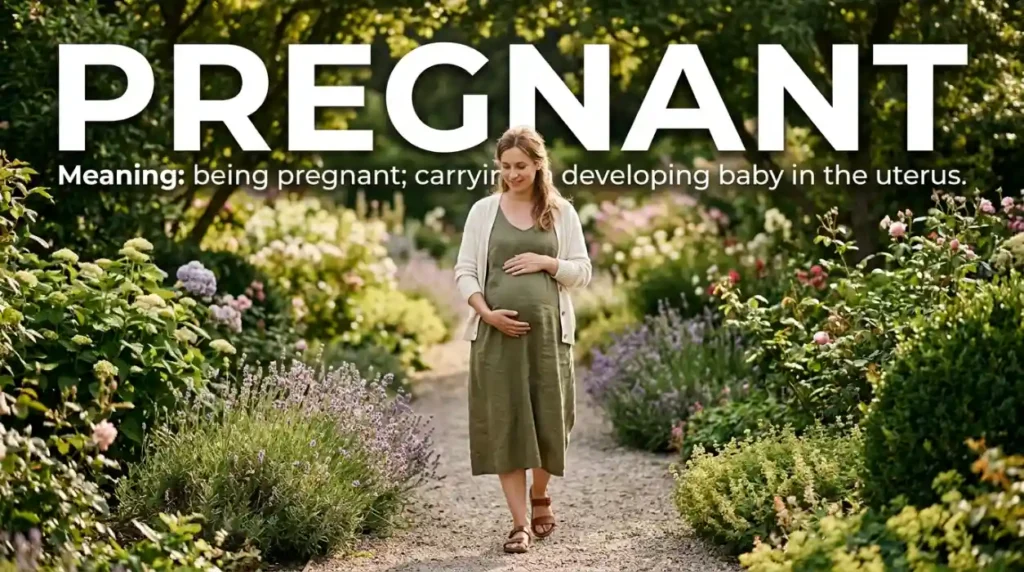
Understanding pregnant can help you describe the state of carrying a developing baby in the uterus. Learning its synonyms, meaning, and examples can improve your English vocabulary and help you communicate clearly.
The word pregnant is commonly used in everyday conversations, healthcare contexts, and written communication. Knowing suitable synonyms and related expressions can help you choose appropriate language for different situations.
By practicing pregnant in sentences and exploring its related words, you can strengthen your vocabulary and express ideas more confidently. A clear understanding of this word will help make your English more natural, accurate, and effective.
Practice Quiz
- Which synonym is best suited for a formal medical report?
- A) Preggers
- B) Gravid
- C) Bun in the oven
- D) Ready to pop
- What is the tone of the term “preggo”?
- A) Medical
- B) Academic
- C) Informal/Slang
- D) Archaic
- Which phrase is an old-fashioned Victorian euphemism?
- A) Gestational
- B) In an interesting condition
- C) Primiparous
- D) Far along
- If a woman is pregnant for the very first time, medical charts refer to her as:
- A) Multiparous
- B) Primiparous
- C) Nulliparous
- D) Fecund
- Which phrase is best used in a polite workplace announcement?
- A) She got knocked up
- B) She is expecting
- C) She is gravid
- D) She is big-bellied
- What does the metaphorical phrase “a pregnant pause” mean?
- A) A break taken by a mother
- B) A silence full of meaning or suspense
- C) A medical delay
- D) A short nap
- Which of the following terms applies ONLY to animals in standard usage?
- A) Expectant
- B) Breeding
- C) Mother-to-be
- D) Carrying
- What does “primiparous” mean in clinical settings?
- A) Giving birth for the first time
- B) Expecting triplets
- C) Not pregnant
- D) Advanced age pregnancy
- Which idiom refers playfully to an expectant mother’s appetite?
- A) Ready to pop
- B) Eating for two
- C) In the family way
- D) Heavy with child
- Which word describes a woman who has never given birth to a viable child?
- A) Nulliparous
- B) Multiparous
- C) Parous
- D) Gravid
Reflection Task:
Create one original sentence using the synonym expectant to describe a real or imagined family event.
Answer Key: 1: B | 2: C | 3: B | 4: B | 5: B | 6: B | 7: B | 8: A | 9: B | 10: A
FAQs
1. What is the most polite synonym for pregnant in everyday English?
Expecting is often the most natural polite alternative to pregnant in everyday English. For example, “She is expecting” sounds warm and indirect. Expecting a baby is even clearer while remaining friendly. However, pregnant itself is not rude. It is a normal, neutral word and works well when direct language is appropriate.
2. Is “expecting” the same as “pregnant”?
Not always. Expecting commonly means being pregnant and waiting for a baby to be born, so the meanings overlap strongly. However, expecting can also mean anticipating something else, such as a delivery or visitor. Because of this, context matters. In a pregnancy-related conversation, “She is expecting” is usually understood as “She is pregnant.”
3. What is the medical term for being pregnant?
Pregnancy is the standard medical noun for the condition, while pregnant is the standard adjective. Medical writing may also use terms such as gestation, prenatal, antenatal, and gravid, depending on the context. Among these, gravid specifically means pregnant but sounds much more technical than everyday pregnant.
4. What is a gender-neutral way to say pregnant?
The simplest gender-neutral expression is still pregnant because the adjective itself does not specify gender. You can also say pregnant person when a noun phrase is needed. Expecting a baby and expecting a child are also useful neutral alternatives when the pregnancy is the focus rather than the person’s gender.
5. Is “with child” still used in modern English?
With child is understandable but sounds old-fashioned today. You may encounter it in historical fiction, older literature, religious writing, or deliberately traditional language. In normal modern conversation, native speakers usually say pregnant, expecting, or expecting a baby. Using with child in a modern casual conversation can sound theatrical or dated.

Hasnain Ali is an SEO Content Strategist and the founder of wordvora.com, a trusted vocabulary platform that helps writers, students, professionals, and English learners find accurate synonyms, antonyms, word meanings, and real-life usage examples. He specializes in keyword research, on-page SEO, topical authority, and creating search-first content that aligns with Google’s latest Search Quality and E-E-A-T guidelines. His work focuses on producing clear, well-structured, and reader-friendly resources that satisfy search intent while maintaining high editorial standards.
Through extensive hands-on experience with SEO tools such as Google Search Console, Google Analytics, SEMrush, and Ahrefs, Hasnain researches user search behavior and develops content that is both informative and easy to understand. Every article published on wordvora.com is carefully reviewed for accuracy, readability, and contextual relevance before publication. His mission is to build one of the web’s most reliable English vocabulary resources by providing practical language guidance, trustworthy explanations, and content that helps readers improve their writing, communication, and vocabulary with confidence.