
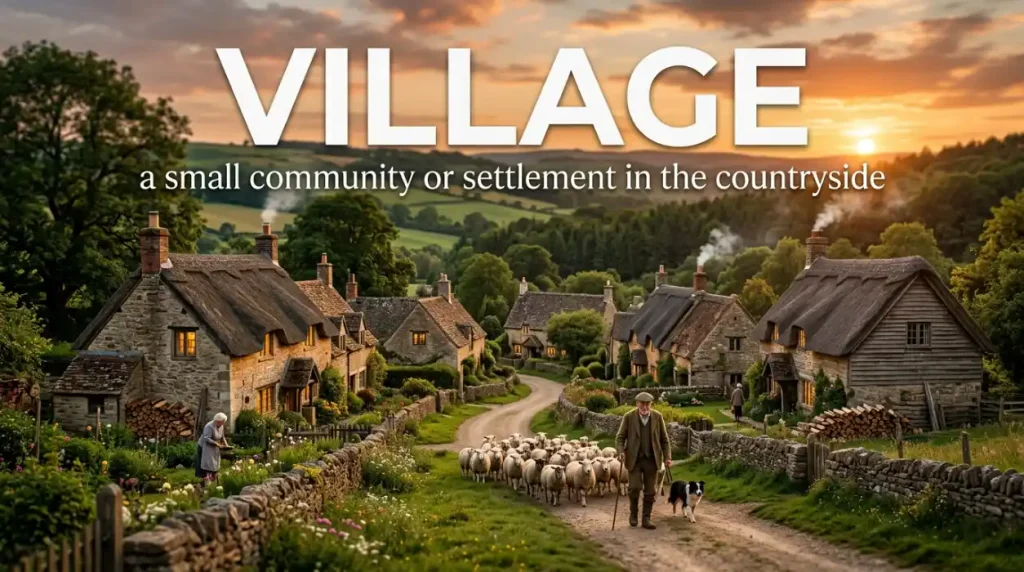
Finding the right words can make your writing more descriptive, natural, and engaging. If you want to describe a small rural community or settlement in different ways, exploring synonyms for village can help you choose the most appropriate term for your context.
The word “village” generally refers to a small community located in a rural or countryside area. Depending on the setting, words such as hamlet, settlement, community, countryside, and rural area may convey similar ideas while offering slightly different meanings and levels of specificity.
Whether you are a student, writer, blogger, traveler, or English learner, learning synonyms for village can expand your vocabulary and help you avoid repetitive language. These alternatives can make descriptions, essays, stories, and articles more interesting and precise.
In this guide, we will explore useful synonyms for village, along with their meanings and examples. Understanding the differences between these words will help you select the right alternative and describe rural communities more effectively in various situations.
What Does “Synonyms For Village” Really Mean?
Synonyms for village means finding alternative terms that express a small group of houses and buildings in a rural area, typically smaller than a town. It sets up a charming tone aimed at capturing rural community life, countryside living, or historic settlements.
Native speakers use these terms when discussing peaceful country getaways, farming districts, or ancestral family homelands. It carries a diverse emotional tone ranging from cozy nostalgic warmth to isolated rural melancholy. It usually suggests close-knit neighborhoods, quiet country roads, and shared community spaces.
Connotative Meaning
- Positive tone: Associated with peaceful countryside retreats, friendly neighbors, and picturesque rural beauty.
- Negative tone: Linked with isolated rural poverty, lack of modern infrastructure, and provincial backwardness.
- Neutral tone: Used in geographical census reports, regional planning maps, and anthropological surveys.
- Connotation definition: (The emotional or cultural feeling attached to a word or phrase beyond its strict dictionary definition).
Etymology
- Source Language: Latin villa (country house, farmstead, or estate).
- Original Meaning: Originally referred to a farmstead with surrounding outbuildings and agricultural workers’ quarters.
- Old English (450–1100): Early Germanic terms and borrowed Latin forms designated rural farming communities and tribal homesteads.
- Middle English (1100–1500): Adopted from Old French village, expanding to mean a cluster of rural dwellings larger than a hamlet.
- Modern English (1500–Present): Fully established as standard nouns describing small country settlements and rural residential communities.
Pronunciation (US & UK – IPA)
- US: /ˈsɪnənɪmz fɔːr ˈvɪlɪdʒ/
- UK: /ˈsɪnənɪmz fɔːr ˈvɪlɪdʒ/
Syllables & Affixation Pattern
- Syllables: syn-o-nyms-for-vil-lage
- Root: vill (country house from Latin)
- Prefixes: syn- (together)
- Suffix: -age (noun suffix)
Synonyms List
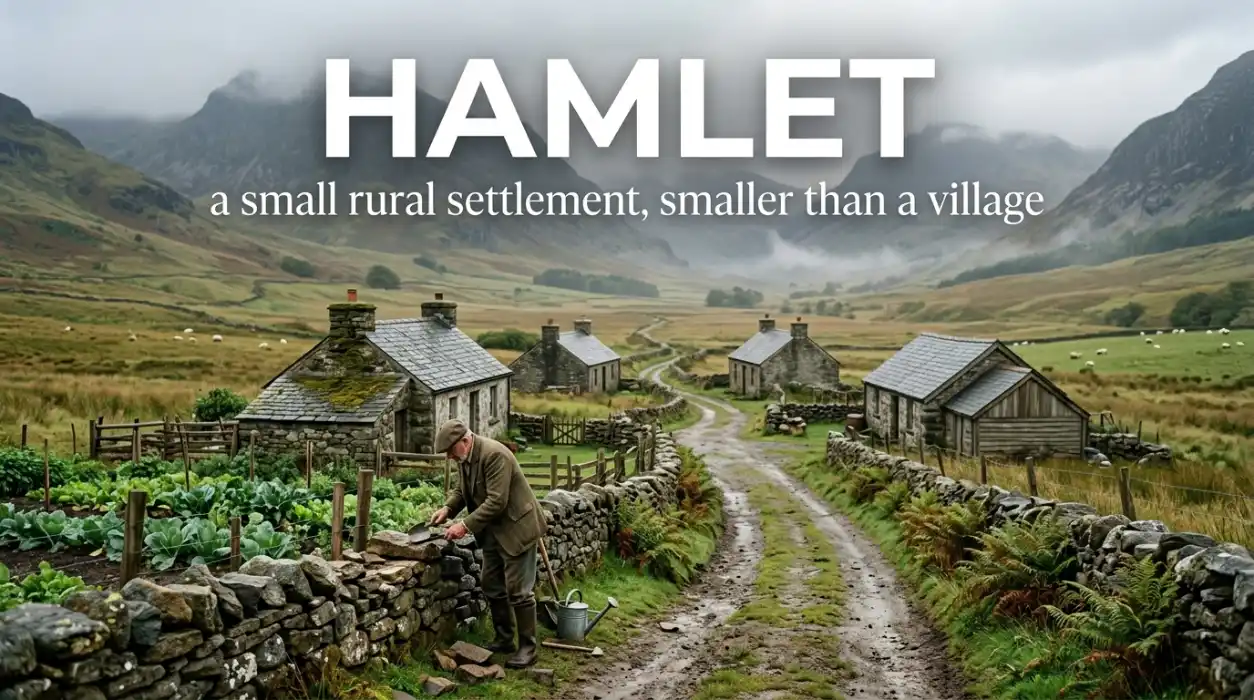
Hamlet (Noun) — US: /ˈhæmlɪt/ — UK: /ˈhæmlɪt/
- Meaning: A small settlement, typically smaller than a village and without a church.
- Tone/Register: Literary, rural.
- Example: Smoke rose from chimneys across the quiet mountain hamlet.
- Example: Travelers stopped for water at the remote desert hamlet.
Settlement (Noun) — US: /ˈsɛtəlmənt/ — UK: /ˈsetlmənt/
- Meaning: A place, typically one that has been uninhabited, where people establish a community.
- Tone/Register: Historical, geographical.
- Example: Archaeologists excavated an ancient farming settlement near the river.
- Example: Pioneers built a sturdy frontier settlement before winter arrived.
Community (Noun) — US: /kəˈmjuːnəti/ — UK: /kəˈmjuːnəti/
- Meaning: A group of people living in the same place or having a particular characteristic in common.
- Tone/Register: Social, standard.
- Example: Local community members gathered at the hall for town meetings.
- Example: The coastal community celebrated the annual fishing festival together.
Township (Noun) — US: /ˈtaʊnˌʃɪp/ — UK: /ˈtaʊnʃɪp/
- Meaning: An administrative division of a county or a small town.
- Tone/Register: Administrative, legal.
- Example: Rural township roads needed immediate repairs after heavy storms.
- Example: Local voters elected new officials in the municipal township election.
Borough (Noun) — US: /ˈbɜːroʊ/ — UK: /ˈbʌrə/
- Meaning: A town or district that constitutes an administrative unit.
- Tone/Register: Official, regional.
- Example: Historic brick buildings lined the streets of the old borough.
- Example: The suburban borough launched a new park recycling program.
Parish (Noun) — US: /ˈpærɪʃ/ — UK: /ˈpærɪʃ/
- Meaning: A small administrative district typically having its own church and priest or pastor.
- Tone/Register: Ecclesiastical, regional.
- Example: Church bells rang across the green agricultural parish.
- Example: Parish volunteers organized charity food drives for local families.
Commune (Noun) — US: /ˈkɑːmjuːn/ — UK: /ˈkɒmjuːn/
- Meaning: A small group of people living together and sharing possessions and work.
- Tone/Register: Sociological, formal.
- Example: Artists established a creative mountain commune to share studios.
- Example: Agricultural workers managed the cooperative farming commune successfully.
Thorpe (Noun) — US: /θɔːrp/ — UK: /θɔːp/
- Meaning: A small village or group of houses, especially in northern England.
- Tone/Register: Archaic, geographical.
- Example: Old maps marked the tiny medieval thorpe near the forest edge.
- Example: Walking trails connected several historic farming thorpes.
Thorpelet (Noun) — US: /ˈθɔːrplɪt/ — UK: /ˈθɔːplɪt/
- Meaning: A very small thorpe or tiny rural settlement.
- Tone/Register: Archaic, rare.
- Example: Historians studied tax records from the isolated forest thorpelet.
- Example: Few modern travelers ever visit the remote hillside thorpelet.
Kraal (Noun) — US: /krɑːl/ — UK: /krɑːl/
- Meaning: A traditional African village of huts enclosed by a fence.
- Tone/Register: Cultural, regional.
- Example: Herders guided cattle back into the protective wooden kraal.
- Example: Elders gathered beneath acacia trees inside the rural kraal.
Pueblo (Noun) — US: /ˈpwɛbloʊ/ — UK: /pweɪbləʊ/
- Meaning: A Spanish-style village or Native American settlement in the southwestern US.
- Tone/Register: Cultural, architectural.
- Example: Adobe brick walls protected the historic desert pueblo.
- Example: Tourists admired traditional pottery made within the ancient pueblo.
Dorf (Noun) — US: /dɔːrf/ — UK: /dɔːf/
- Meaning: A small village, particularly in German-speaking regions.
- Tone/Register: Regional, foreign.
- Example: Snow covered wooden chalets in the Alpine dorf.
- Example: Hikers rested at a cozy inn in the mountain dorf.
Baie (Noun variant / Regional) — US: /beɪ/ — UK: /beɪ/
- Meaning: A rural settlement area or coastal bay community.
- Tone/Register: Regional, descriptive.
- Example: Fishermen docked wooden boats along the sheltered coastal baie.
- Example: Salty breezes swept across the quiet fishing baie.
Township (Rural variant) — US: /ˈtaʊnˌʃɪp/ — UK: /ˈtaʊnʃɪp/
- Meaning: A small country district or outlying rural housing area.
- Tone/Register: Regional, standard.
- Example: Dirt roads connected scattered farmhouses across the sprawling township.
- Example: Local children walked miles to school in the rural township.
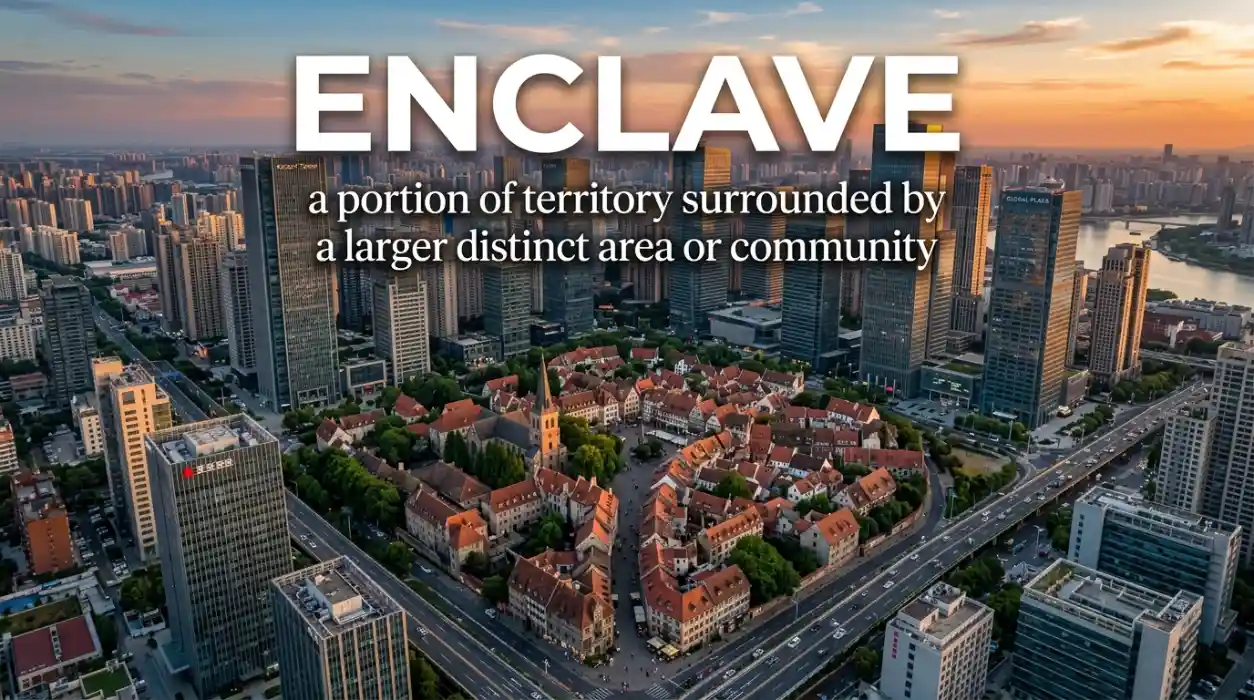
Enclave (Noun) — US: /ˈɛnˌkleɪv/ — UK: /ˈɒnkleɪv/
- Meaning: A portion of territory surrounded by a larger distinct area or community.
- Tone/Register: Formal, geographical.
- Example: An artistic enclave flourished inside the historic mountain valley.
- Example: Wealthy residents built a private gated enclave near the coast.
Outpost (Noun) — US: /ˈaʊtˌpoʊst/ — UK: /ˈaʊtpəʊst/
- Meaning: A small remote settlement established in a frontier region.
- Tone/Register: Journalistic, adventurous.
- Example: Trappers traded furs at the isolated northern forest outpost.
- Example: Scientists worked inside a freezing polar research outpost.
Station (Rural variant) — US: /ˈsteɪʃən/ — UK: /ˈsteɪʃn/
- Meaning: A large Australian sheep or cattle ranch and its residential buildings.
- Tone/Register: Australian, regional.
- Example: Shearers worked long hours on the remote outback cattle station.
- Example: Supply trucks arrived monthly at the sprawling sheep station.
Locality (Noun) — US: /loʊˈkæləti/ — UK: /ləʊˈkæləti/
- Meaning: An area or neighborhood, especially as regarded as a place or community.
- Tone/Register: Formal, geographical.
- Example: Rare birds nested peacefully within the coastal forest locality.
- Example: Local authorities invested in infrastructure for the rural locality.
District (Noun) — US: /ˈdɪstrɪkt/ — UK: /ˈdɪstrɪkt/
- Meaning: An area of a country or city, especially regarded as a distinct administrative unit.
- Tone/Register: Administrative, standard.
- Example: Tea plantations covered the green mountainous agricultural district.
- Example: Historical monuments stood throughout the old downtown district.
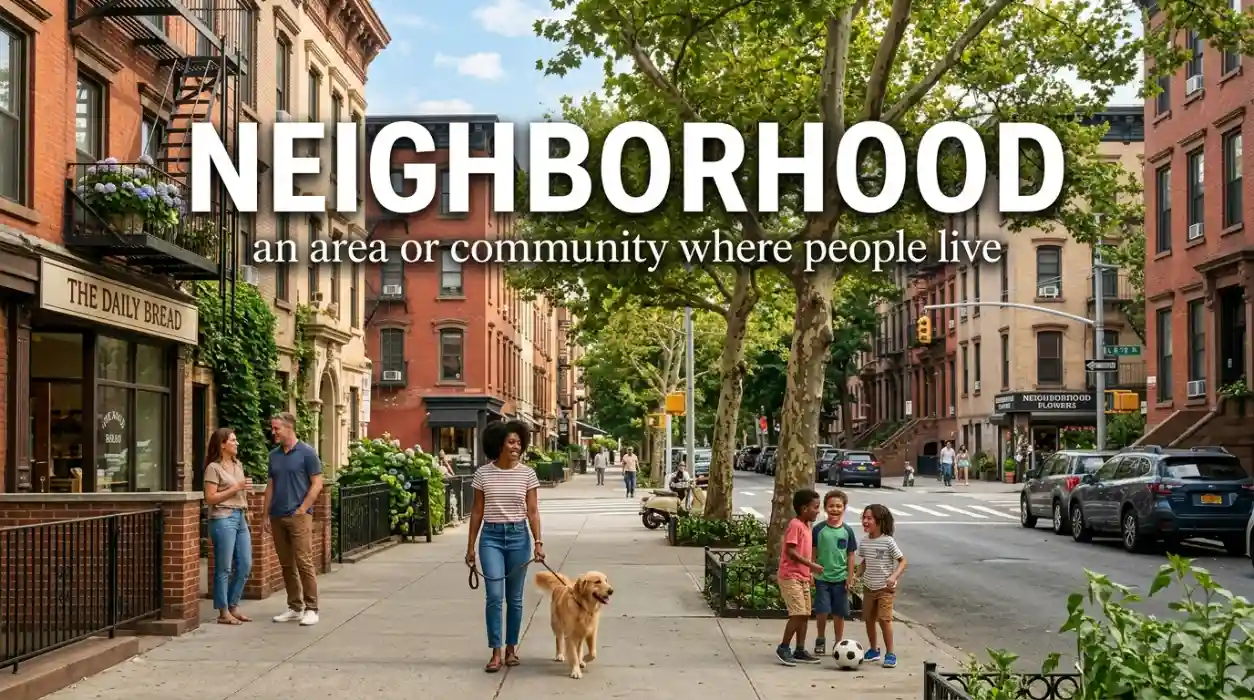
Neighborhood (Noun) — US: /ˈneɪbərˌhʊd/ — UK: /ˈneɪbəhʊd/
- Meaning: A district or community within a town or city.
- Tone/Register: Common, casual.
- Example: Children played safely on grassy streets in the friendly neighborhood.
- Example: Neighbors organized block parties every summer in the residential neighborhood.
Quarter (Noun) — US: /ˈkwɔːrtər/ — UK: /ˈkwɔːtə/
- Meaning: A district or part of a town, city, or community.
- Tone/Register: Urban, historical.
- Example: Cobblestone alleys wound through the historic artisan quarter.
- Example: Tourists explored bustling markets in the old merchant quarter.
Suburb (Noun) — US: /ˈsʌbɜːrb/ — UK: /ˈsʌbɜːb/
- Meaning: An outlying district of a city, especially a residential one.
- Tone/Register: Standard, common.
- Example: Commuters traveled downtown from quiet suburban neighborhoods daily.
- Example: New housing developments expanded across the growing outer suburb.
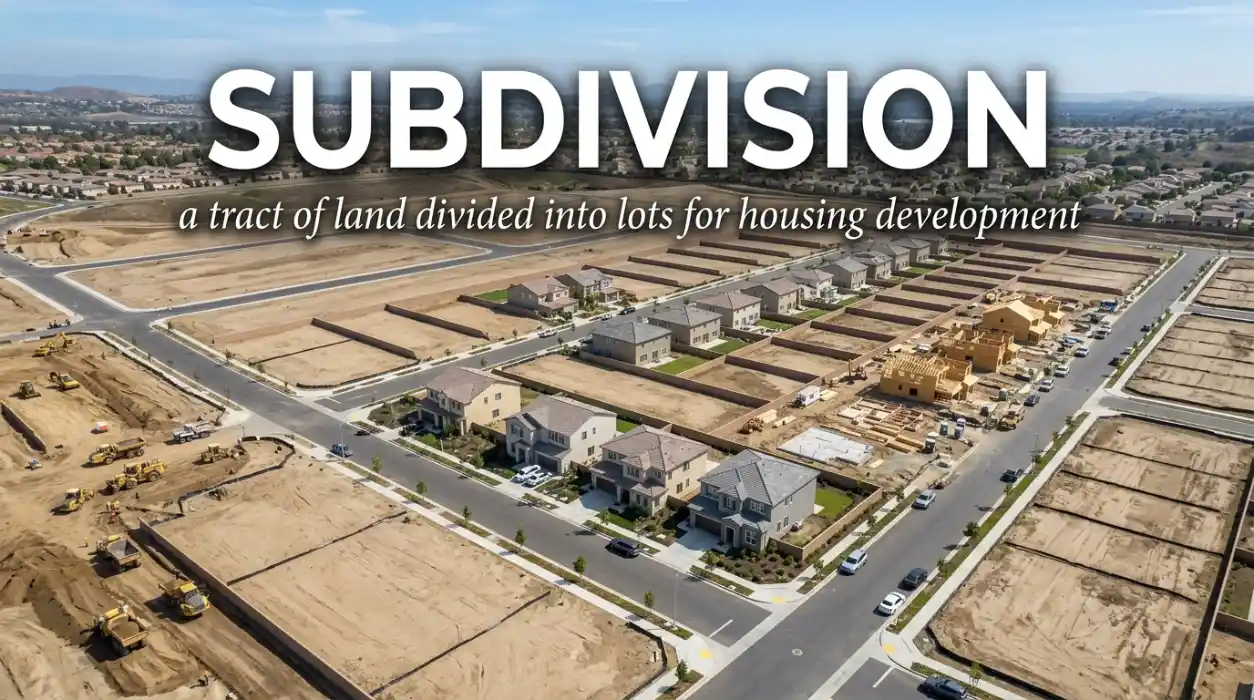
Subdivision (Noun) — US: /ˈsʌbdɪˌvɪʒən/ — UK: /ˈsʌbdɪvɪʒn/
- Meaning: A tract of land divided into lots for housing development.
- Tone/Register: Real estate, modern.
- Example: Construction crews built modern family homes in the new subdivision.
- Example: Paved sidewalks lined the quiet residential property subdivision.
Estate (Noun) — US: /ɪˈsteɪt/ — UK: /ɪˈsteɪt/
- Meaning: An extensive area of land in rural areas with a large house.
- Tone/Register: Formal, real estate.
- Example: Manicured gardens surrounded the historic aristocratic country estate.
- Example: Farm workers managed livestock across the sprawling agricultural estate.
Ranch (Noun) — US: /ræntʃ/ — UK: /rɑːntʃ/
- Meaning: A large farm, especially in the western US or Canada, where cattle or other animals are bred.
- Tone/Register: American, rural.
- Example: Cowboys rounded up cattle across the vast mountain ranch.
- Example: Visitors enjoyed horseback riding at the family-owned dude ranch.
Farmstead (Noun) — US: /ˈfɑːrmˌstɛd/ — UK: /ˈfɑːmstɛd/
- Meaning: A farm and its buildings together.
- Tone/Register: Rural, traditional.
- Example: Smoke curled from the stone chimney of the historic farmstead.
- Example: Apple orchards surrounded the weathered wooden family farmstead.
Homestead (Noun) — US: /ˈhoʊmˌstɛd/ — UK: /ˈhəʊmstɛd/
- Meaning: A dwelling with its land and buildings, occupied by a family as a home.
- Tone/Register: Historical, rural.
- Example: Pioneer families built sturdy log cabins on their western homesteads.
- Example: Generations of farmers worked the fertile ancestral land homestead.
Plantation (Noun) — US: /plænˈteɪʃən/ — UK: /plɑːnˈteɪʃn/
- Meaning: An estate on which crops such as coffee, sugar, and tobacco are cultivated.
- Tone/Register: Historical, agricultural.
- Example: Tall palm trees shaded the historic tropical fruit plantation.
- Example: Workers harvested coffee beans on the high-altitude mountain plantation.
Colony (Noun) — US: /ˈkɑːləni/ — UK: /ˈkɒləni/
- Meaning: A settlement in a new country forming a distinct community.
- Tone/Register: Historical, formal.
- Example: Early settlers established a coastal fishing colony in the bay.
- Example: Artists formed a creative summer colony by the lakeshore.
Camp (Noun) — US: /kæmp/ — UK: /kæmp/
- Meaning: A place with temporary accommodations of huts, tents, or other structures.
- Tone/Register: Casual, outdoor.
- Example: Hikers set up sleeping tents at the base camp.
- Example: Lumberjacks stayed in wooden cabins at the forest logging camp.
Boma (Noun) — US: /ˈboʊmə/ — UK: /ˈbəʊmə/
- Meaning: An enclosure for livestock or a defensive stockade in East Africa.
- Tone/Register: Cultural, regional.
- Example: Villagers secured livestock inside the thorny wooden boma at night.
- Example: Scouts kept watch near the edge of the savannah boma.
Zocalo (Noun context / Plaza community) — US: /soʊˈkɑːloʊ/ — UK: /zəʊˈkɑːləʊ/
- Meaning: A public square or plaza at the center of a town or village.
- Tone/Register: Cultural, architectural.
- Example: Musicians played traditional songs in the sunlit village zocalo.
- Example: Families strolled around fountains in the central town zocalo.
Plaza (Noun) — US: /ˈplɑːzə/ — UK: /ˈplɑːzə/
- Meaning: A public square, marketplace, or open space in a built-up area.
- Tone/Register: Urban, common.
- Example: Outdoor cafes lined the paved cobblestone European town plaza.
- Example: Shoppers gathered around the central fountain in the plaza.
Square (Noun) — US: /skwɛər/ — UK: /skweə/
- Meaning: An open, typically four-sided area surrounded by buildings in a village or town.
- Tone/Register: Common, standard.
- Example: Market stalls filled the historic town square on Saturday mornings.
- Example: Children chased pigeons across the paved village square.
Crossroads (Noun) — US: /ˈkrɔːsˌroʊdz/ — UK: /ˈkrɒsrəʊdz/
- Meaning: A point where two or more roads intersect, often forming a small trading hub.
- Tone/Register: Descriptive, rural.
- Example: A small country store stood at the dusty rural crossroads.
- Example: Travelers met at the busy commercial crossroads for directions.
Junction (Noun) — US: /ˈdʒʌŋkʃən/ — UK: /ˈdʒʌŋkʃn/
- Meaning: A point where two or more lines or roads join.
- Tone/Register: Technical, standard.
- Example: Traffic slowed near the country highway road junction.
- Example: A small diner welcomed drivers at the valley rail junction.
Station (Settlement variant) — US: /ˈsteɪʃən/ — UK: /ˈsteɪʃn/
- Meaning: A stopping place on a railway line with residential buildings.
- Tone/Register: Standard, historical.
- Example: Passengers boarded morning trains at the country station.
- Example: The village grew up around the historic steam railway station.
Port (Noun) — US: /pɔːrt/ — UK: /pɔːt/
- Meaning: A town or city with a harbor where ships load and unload.
- Tone/Register: Maritime, geographical.
- Example: Colorful fishing boats filled the sheltered coastal harbor port.
- Example: Sailors traded goods at the busy Mediterranean port village.
Harbor (Noun) — US: /ˈhɑːrbər/ — UK: /ˈhɑːbə/
- Meaning: A place on the coast where vessels may find shelter.
- Tone/Register: Maritime, descriptive.
- Example: Sailboats bobbed peacefully in the quiet fishing harbor.
- Example: Lighthouses guided ships safely into the rocky harbor bay.
Haven (Noun) — US: /ˈheɪvən/ — UK: /ˈheɪvn/
- Meaning: A harbor or a place of safety or refuge.
- Tone/Register: Literary, comforting.
- Example: The coastal fishing village served as a haven for ships.
- Example: Wildlife found a peaceful forest haven near the hills.
Borough (Noun) — US: /ˈbɜːroʊ/ — UK: /ˈbʌrə/
- Meaning: A town or district that constitutes an administrative unit.
- Tone/Register: Official, regional.
- Example: Historic brick buildings lined the streets of the old borough.
- Example: The suburban borough launched a new park recycling program.
Settlement (Noun) — US: /ˈsɛtəlmənt/ — UK: /ˈsetlmənt/
- Meaning: A place, typically one that has been uninhabited, where people establish a community.
- Tone/Register: Historical, geographical.
- Example: Archaeologists excavated an ancient farming settlement near the river.
- Example: Pioneers built a sturdy frontier settlement before winter arrived.
Township (Noun) — US: /ˈtaʊnˌʃɪp/ — UK: /ˈtaʊnʃɪp/
- Meaning: An administrative division of a county or a small town.
- Tone/Register: Administrative, legal.
- Example: Rural township roads needed immediate repairs after heavy storms.
- Example: Local voters elected new officials in the municipal township election.
Enclave (Noun) — US: /ˈɛnˌkleɪv/ — UK: /ˈɒnkleɪv/
- Meaning: A portion of territory surrounded by a larger distinct area or community.
- Tone/Register: Formal, geographical.
- Example: An artistic enclave flourished inside the historic mountain valley.
- Example: Wealthy residents built a private gated enclave near the coast.
Outpost (Noun) — US: /ˈaʊtˌpoʊst/ — UK: /ˈaʊtpəʊst/
- Meaning: A small remote settlement established in a frontier region.
- Tone/Register: Journalistic, adventurous.
- Example: Trappers traded furs at the isolated northern forest outpost.
- Example: Scientists worked inside a freezing polar research outpost.
Colony (Noun) — US: /ˈkɑːləni/ — UK: /ˈkɒləni/
- Meaning: A settlement in a new country forming a distinct community.
- Tone/Register: Historical, formal.
- Example: Early settlers established a coastal fishing colony in the bay.
- Example: Artists formed a creative summer colony by the lakeshore.
Homestead (Noun) — US: /ˈhoʊmˌstɛd/ — UK: /ˈhəʊmstɛd/
- Meaning: A dwelling with its land and buildings, occupied by a family as a home.
- Tone/Register: Historical, rural.
- Example: Pioneer families built sturdy log cabins on their western homesteads.
- Example: Generations of farmers worked the fertile ancestral land homestead.
Commune (Noun) — US: /ˈkɑːmjuːn/ — UK: /ˈkɒmjuːn/
- Meaning: A small group of people living together and sharing possessions and work.
- Tone/Register: Sociological, formal.
- Example: Artists established a creative mountain commune to share studios.
- Example: Agricultural workers managed the cooperative farming commune successfully.
Locality (Noun) — US: /loʊˈkæləti/ — UK: /ləʊˈkæləti/
- Meaning: An area or neighborhood, especially as regarded as a place or community.
- Tone/Register: Formal, geographical.
- Example: Rare birds nested peacefully within the coastal forest locality.
- Example: Local authorities invested in infrastructure for the rural locality.
Haven (Noun) — US: /ˈheɪvən/ — UK: /ˈheɪvn/
- Meaning: A harbor or a place of safety or refuge.
- Tone/Register: Literary, comforting.
- Example: The coastal fishing village served as a haven for ships.
- Example: Wildlife found a peaceful forest haven near the hills.
Synonyms by Tone
Choosing the right alternative depends entirely on whether you want to sound literary, administrative, or rural.
- Positive tone: Haven, community, picturesque settlement, oasis.
- Neutral tone: Village, settlement, township, locality, district.
- Negative tone: Isolated outpost, backward hamlet, impoverished camp.
- Playful/informal tone: Neighborhood, corner, gathering spot.
Tone matters because calling a bustling suburban neighborhood an isolated outpost sounds overly dramatic, while referring to a tiny mountain cabin cluster as a metropolitan district is factually incorrect.
Mini Comparison: Hamlet vs. Village vs. Township
- Hamlet emphasizes a tiny, intimate cluster of houses without a local church or major shops.
- Village serves as the balanced general term for a small rural residential community with basic services.
- Township highlights a larger administrative or geographic district containing multiple settlements.
Use hamlet for tiny clusters, village for standard rural communities, and township for administrative districts.
Context-Based Usage
- Daily conversation: In casual talk, native speakers use friendly words like town, neighborhood, or community.
- Writing or blogging: Authors use evocative terms like hamlet, haven, or outpost to build rich prose.
- Professional or academic tone: Specialists rely on precise terms like settlement, township, or locality.
- Creative or informal use: Bloggers employ vivid terms like enclave or quarter to describe cozy districts.
Common Mistakes & Native Usage
Common Mistakes Learners Make
- Misuse scenarios: Applying large urban words like metropolis to describe a tiny rural farming hamlet.
- Confusing tone: Mixing administrative legal terms like township into cozy romantic poetry about country life.
- Overuse warnings: Repeating the same settlement noun throughout an essay makes your vocabulary feel repetitive rather than rich.
Register Notes
- Spoken chats favor direct words like town and neighborhood.
- Written essays reward descriptive choices like hamlet, settlement, and enclave.
Real-Life Mini Scenarios
- Workplace: Regional planners mapped out new infrastructure projects across the rural township.
- Social situations: Neighbors gathered at the village square for the weekend farmers market.
- Media/pop culture: Documentarians filmed peaceful mountain life inside an isolated alpine hamlet.
- Writing or storytelling: Authors revised book manuscripts, replacing basic nouns with haven for literary depth.
Conclusion
Understanding synonyms for village can help you describe rural communities and small settlements more clearly and accurately. Words such as hamlet, settlement, community, and rural area can provide useful alternatives depending on the context and the specific type of place being described.
Using synonyms for village can also make your writing more varied, natural, and engaging. Choosing the right alternative can help you avoid repetition while adding greater detail to essays, stories, travel articles, descriptions, and everyday communication.
By learning different synonyms for village, you can expand your vocabulary and improve your writing skills. Whether you are a student, blogger, writer, traveler, or English learner, understanding these alternatives can help you describe rural places with greater confidence and precision.
Practice Quiz
- Which noun best describes an extremely small rural settlement without a church?
- A) Hamlet
- B) City
- C) Capital
- D) Metropolis
- What emotional tone does the literary term haven typically carry?
- A) A safe, peaceful place of refuge
- B) Dangerous industrial smog
- C) Chaotic traffic gridlock
- D) Cold, freezing winter
- Which term is ideal for describing a larger administrative or geographic district?
- A) Township
- B) Pebble
- C) Leaf
- D) Drop
- If historians study ancient farming communities established by pioneers, they examine an early:
- A) Settlement
- B) Galaxy
- C) Rocket
- D) Satellite
- The refined formal term for an area or neighborhood regarded as a place is:
- A) Locality
- B) Vacuum
- C) Void
- D) Abyss
- What part of speech category do words like village and hamlet belong to?
- A) Nouns
- B) Verbs only
- C) Adjectives only
- D) Conjunctions only
- Which expression is a common casual word for a local residential district?
- A) Neighborhood
- B) Outer space
- C) Deep ocean
- D) Stratosphere
- Describing an isolated, remote frontier station uses the term:
- A) Outpost
- B) Kitchen
- C) Closet
- D) Garage
- The formal administrative term for a church district with a pastor is:
- A) Parish
- B) Desert
- C) Jungle
- D) Tundra
- Which word describes a protected harbor or coastal refuge community?
- A) Haven
- B) Volcano
- C) Glacier
- D) Canyon
Reflection Task
Write one short, original sentence using the word hamlet to describe a misty mountain village.
Answer Key: 1: A | 2: A | 3: A | 4: A | 5: A | 6: A | 7: A | 8: A | 9: A | 10: A
FAQs
1. What is another word for “village”?
Common alternatives for “village” include hamlet, settlement, community, countryside, and rural community. The best choice depends on the context.
2. What is a small village called?
A very small village is often called a hamlet. A hamlet usually has fewer houses and residents than a typical village.
3. Is “settlement” a synonym for “village”?
Yes, settlement can be used as an alternative to “village.” However, it is a broader term that can describe different types of places where people live.
4. What is a positive synonym for “village”?
Words such as community, hamlet, and rural community can have a warm or positive tone, especially when describing a peaceful or close-knit place.
5. How can synonyms for “village” improve writing?
Using synonyms for “village” can make your writing more varied and descriptive. They can help you avoid repetition and choose words that better match the size, location, or character of a rural community.

Hasnain Ali is an SEO Content Strategist and the founder of wordvora.com, a trusted vocabulary platform that helps writers, students, professionals, and English learners find accurate synonyms, antonyms, word meanings, and real-life usage examples. He specializes in keyword research, on-page SEO, topical authority, and creating search-first content that aligns with Google’s latest Search Quality and E-E-A-T guidelines. His work focuses on producing clear, well-structured, and reader-friendly resources that satisfy search intent while maintaining high editorial standards.
Through extensive hands-on experience with SEO tools such as Google Search Console, Google Analytics, SEMrush, and Ahrefs, Hasnain researches user search behavior and develops content that is both informative and easy to understand. Every article published on wordvora.com is carefully reviewed for accuracy, readability, and contextual relevance before publication. His mission is to build one of the web’s most reliable English vocabulary resources by providing practical language guidance, trustworthy explanations, and content that helps readers improve their writing, communication, and vocabulary with confidence.