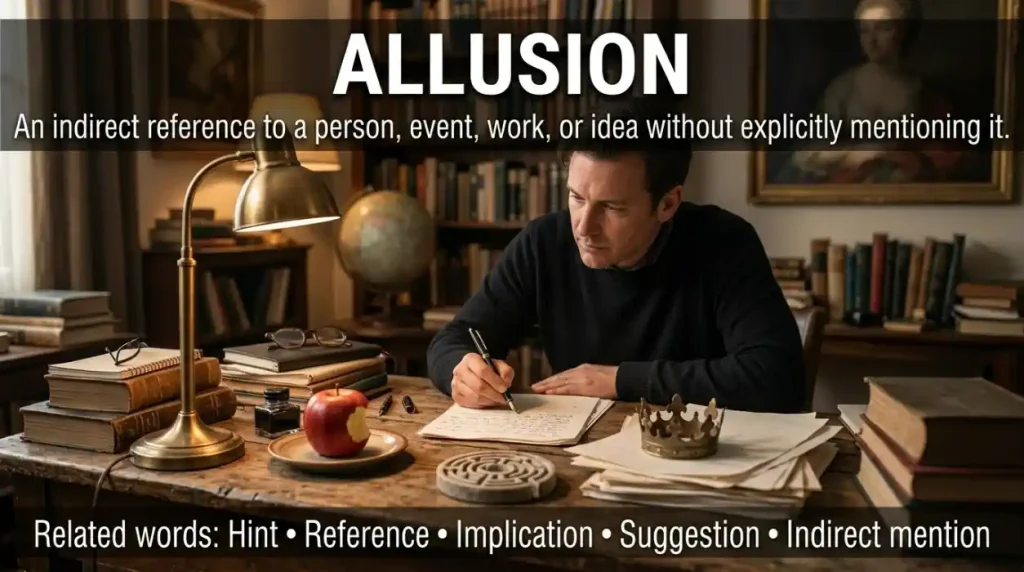
A synonym for allusion is a word or phrase that expresses a similar idea to an indirect reference, such as reference, mention, hint, implication, or suggestion. The best choice depends on whether you mean a subtle clue, a direct mention, or a reference to literature, history, or popular culture.
Imagine a friend says, “He finally met his Waterloo,” after someone loses an important competition. The friend is making an allusion to a famous historical defeat. Knowing related words helps you explain this kind of reference more clearly.
The word allusion appears in books, films, essays, speeches, and everyday conversations. It helps speakers connect an idea to something their audience may already recognize.
Finding the right synonym for allusion can make your writing more precise. Students can improve essays, while bloggers and content writers can avoid repetitive wording and explain references more naturally.
Daily English users benefit, too. Once you understand words such as hint, reference, and implication, you can describe indirect meanings with greater confidence.
What Does “Allusion” Really Mean?
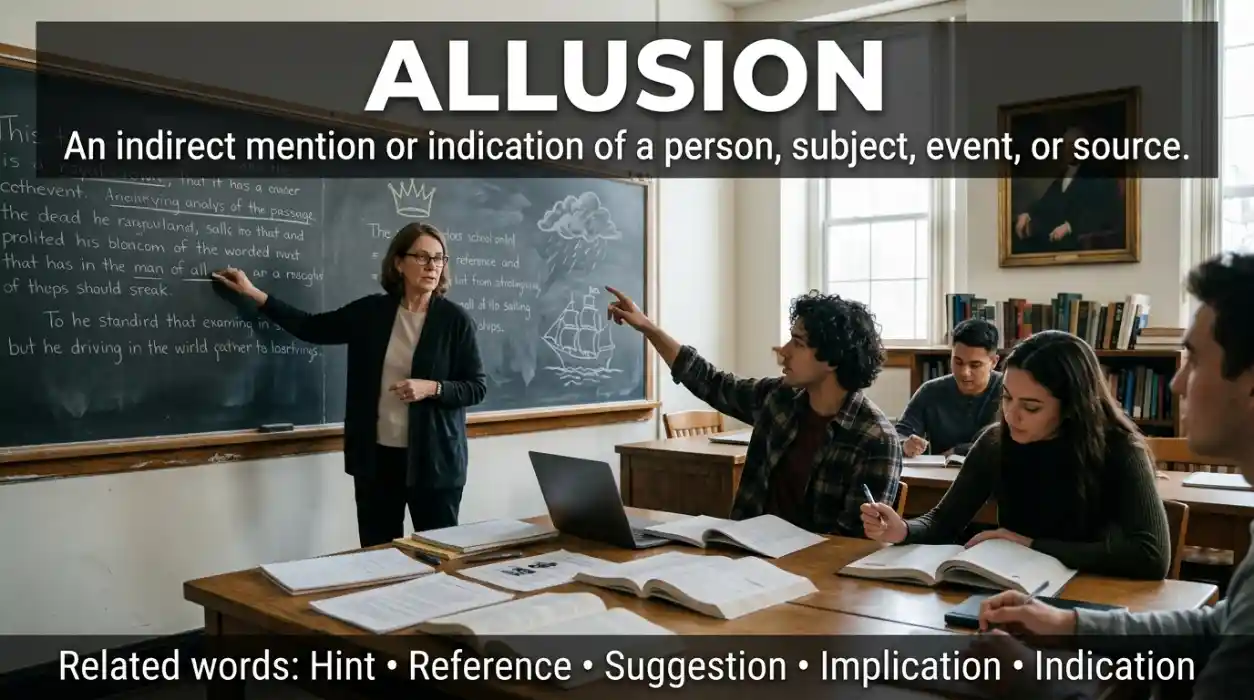
Allusion is a noun that means an indirect or brief reference to a person, event, place, text, or idea. The speaker or writer expects the audience to recognize the connection.
For example, “She has the patience of Job” alludes to the biblical figure Job, who is known for enduring suffering. The sentence does not explain the entire story. It relies on the reader’s background knowledge.
Native English speakers often use allusion when discussing literature, art, politics, history, religion, and entertainment. It can also describe a subtle reference in ordinary conversation.
An allusion is usually indirect. If a writer names a person or event plainly, that may be a mention or reference rather than an allusion in the narrower literary sense.
Part of Speech and Simple Definition
- Part of speech: Noun
- Plural: Allusions
- Simple definition: An indirect reference to something familiar.
- Related verb: Allude
- Common phrase: “Make an allusion to something”
Example: “The film contains an allusion to an old fairy tale.”
This means the film subtly refers to the fairy tale without necessarily retelling it.
Connotative Meaning
Connotation (the feeling, attitude, or association a word carries beyond its basic dictionary meaning) depends on how an allusion is used.
- Positive tone: An allusion can create admiration, shared understanding, humor, or cultural depth. A writer might allude to a respected historical leader.
- Negative tone: An allusion can suggest criticism, mockery, embarrassment, or an unpleasant comparison. A political speech might allude to a past scandal.
- Neutral tone: An allusion can simply connect a statement with a familiar text, event, or person without praising or criticizing anyone.
The word allusion itself is generally neutral. Its effect comes from the reference being made and the context surrounding it.
Etymology: Where Does “Allusion” Come From?
The English word allusion came through French from Latin allusio, meaning a play, jest, or indirect reference. It is connected to the Latin verb alludere, meaning “to play with” or “to make a reference to.”
The word developed from the idea of hinting at something rather than stating it outright.
A short history of the word:
- Old English (450–1100): Allusion was not an established Old English word. Writers used other words and expressions to convey ideas of reference or hinting.
- Middle English (1100–1500): The word entered English through French and Latin influence during the period when many learned and literary terms became established. Its use developed around indirect reference and verbal play.
- Modern English (1500–present): Allusion became a familiar term in literary criticism, rhetoric, education, and everyday discussion. Today, it commonly describes references to books, myths, historical events, public figures, and popular culture.
Pronunciation: US and UK
- US IPA: /əˈluːʒən/
- UK IPA: /əˈluːʒən/
Syllables
al-lu-sion — three syllables.
The main stress falls on the second syllable: LOO.
Affixation Pattern of “Allusion”
- Root: Related to Latin alludere, meaning “to play with” or “refer indirectly.”
- Prefix: No productive English prefix is normally identified in the modern word.
- Suffix: -ion, a noun-forming ending found in many English words.
Although the word has a historical connection to Latin word parts, it is best learned as a complete vocabulary item rather than built from modern English affixes.
Synonyms List
Not every word below is interchangeable with allusion in every sentence. Some describe indirect references, while others work better for a direct mention, a subtle clue, or a literary technique. Choose the word that preserves your intended meaning.
1. Reference (Noun) — US / UK: /ˈrɛfərəns/
Meaning: A reference is a mention or indication of a person, subject, event, or source.
Tone/Register: Neutral; everyday, academic, and professional.
Examples:
“The opening scene contains a reference to Greek mythology.”
“Please add a reference to the original research.”
2. Hint (Noun) — US / UK: /hɪnt/
Meaning: A hint is a small clue that suggests something without explaining it fully.
Tone/Register: Neutral to informal; conversational.
Examples:
“His comment was a hint that he wanted to leave early.”
“She dropped a hint about the surprise party.”
3. Suggestion (Noun) — US / UK: /səˈdʒɛstʃən/
Meaning: A suggestion is an idea or clue presented indirectly rather than stated as a fact.
Tone/Register: Neutral; everyday and professional.
Examples:
“There was a suggestion of jealousy in her reply.”
“The final paragraph contains a suggestion of hope.”
4. Implication (Noun) — US / UK: /ˌɪmplɪˈkeɪʃən/
Meaning: An implication is a meaning or conclusion that is hinted at rather than directly expressed.
Tone/Register: Formal; academic and professional.
Examples:
“His words carried the implication that the project had failed.”
“I understood the implication without asking another question.”
5. Alluding (Verb form) — US / UK: /əˈluːdɪŋ/
Meaning: Alluding means referring to something indirectly.
Tone/Register: Neutral to formal; spoken and written English.
Examples:
“She was alluding to an argument from last week.”
“The speaker kept alluding to a famous political speech.”
6. Mention (Noun) — US / UK: /ˈmɛnʃən/
Meaning: A mention is a brief statement about a person, thing, or subject.
Tone/Register: Neutral; highly common.
Examples:
“The article includes a mention of the recent court ruling.”
“His brief mention of the novel caught my attention.”
7. Indirect Reference (Noun phrase) — US / UK: /ˌɪndəˈrɛkt ˈrɛfərəns/
Meaning: An indirect reference points toward something without naming or explaining it fully.
Tone/Register: Neutral to formal; literary and academic.
Examples:
“The poem makes an indirect reference to the author’s childhood.”
“I noticed an indirect reference to the earlier episode.”
8. Hinting (Noun/Verb form) — US / UK: /ˈhɪntɪŋ/
Meaning: Hinting is the act of suggesting something without saying it openly.
Tone/Register: Neutral to informal; conversational.
Examples:
“He was hinting that he knew more than he admitted.”
“Her hinting about a new job made us curious.”
9. Innuendo (Noun) — US / UK: /ˌɪnjuˈɛndoʊ/; UK also /ˌɪnjuˈɛndəʊ/
Meaning: Innuendo is an indirect remark that often suggests something critical, insulting, or suggestive.
Tone/Register: Often negative; social, journalistic, and literary.
Examples:
“The interview was full of innuendo about the manager’s private life.”
“Rather than make a clear accusation, he relied on innuendo.”
10. Intimation (Noun) — US / UK: /ˌɪntɪˈmeɪʃən/
Meaning: An intimation is a subtle indication that something exists or may happen.
Tone/Register: Formal; literary and professional.
Examples:
“She gave no intimation that she planned to resign.”
“The letter offered an intimation of future changes.”
11. Indication (Noun) — US / UK: /ˌɪndɪˈkeɪʃən/
Meaning: An indication is a sign or statement that points toward a fact or possibility.
Tone/Register: Neutral to formal; academic and professional.
Examples:
“His silence was an indication that he disagreed.”
“The report gives an indication of how the policy may change.”
12. Allusionary Reference (Noun phrase) — US / UK: /əˈluːʒənˌɛri ˈrɛfərəns/
Meaning: An allusionary reference is a reference that evokes a familiar person, story, event, or idea indirectly.
Tone/Register: Academic; literary analysis.
Examples:
“The passage uses an allusionary reference to a tragic hero.”
“Students identified the allusionary reference in the final stanza.”
13. Evocation (Noun) — US / UK: /ˌɛvəˈkeɪʃən/
Meaning: Evocation is the act of bringing a memory, feeling, image, or association to mind.
Tone/Register: Literary; formal and descriptive.
Examples:
“The song’s imagery is an evocation of summers by the sea.”
“Her description creates an evocation of an earlier, quieter era.”
14. Echo (Noun) — US / UK: /ˈɛkoʊ/
Meaning: An echo is a recognizable repetition or reminder of an earlier idea, phrase, story, or style.
Tone/Register: Neutral to literary; common in criticism.
Examples:
“The novel contains an echo of an ancient creation myth.”
“His closing line echoes a phrase from the opening chapter.”
15. Nod (Noun) — US / UK: /nɑːd/ (US), /nɒd/ (UK)
Meaning: A nod is a brief acknowledgment of, or subtle tribute to, a person, work, or tradition.
Tone/Register: Informal to neutral; entertainment and everyday speech.
Examples:
“The costume is a nod to classic science-fiction films.”
“The director included a nod to the original series.”
16. Tip of the Hat (Noun phrase) — US / UK: /ˌtɪp əv ðə ˈhæt/
Meaning: A tip of the hat is an informal acknowledgment or expression of respect for someone or something.
Tone/Register: Informal; conversational and journalistic.
Examples:
“The final scene is a tip of the hat to the original director.”
“Her speech included a tip of the hat to the teachers who helped her.”
17. Tribute (Noun) — US / UK: /ˈtrɪbjuːt/
Meaning: A tribute is an expression of respect, admiration, or appreciation.
Tone/Register: Positive; formal, public, and personal.
Examples:
“The mural is a tribute to the city’s early musicians.”
“His latest book pays tribute to the people who raised him.”
18. Homage (Noun) — US / UK: /ˈhɑːmɪdʒ/ (US), /ˈhɒmɪdʒ/ (UK)
Meaning: Homage is a public or artistic expression of respect for a person, tradition, or work.
Tone/Register: Formal to literary; usually positive.
Examples:
“The film is an homage to the thrillers of the 1970s.”
“She designed the collection as an homage to her grandmother.”
19. Shout-Out (Noun) — US / UK: /ˈʃaʊt aʊt/
Meaning: A shout-out is a public, usually informal acknowledgment of someone or something.
Tone/Register: Informal; social media and spoken English.
Examples:
“The host gave a shout-out to the volunteers.”
“I added a shout-out to the book that inspired my project.”
20. Callback (Noun) — US / UK: /ˈkɔːlˌbæk/
Meaning: A callback is a deliberate return to an earlier line, event, joke, or detail in a story or performance.
Tone/Register: Informal to technical; entertainment and writing.
Examples:
“The finale includes a clever callback to the pilot episode.”
“Fans laughed when the character repeated the old joke.”
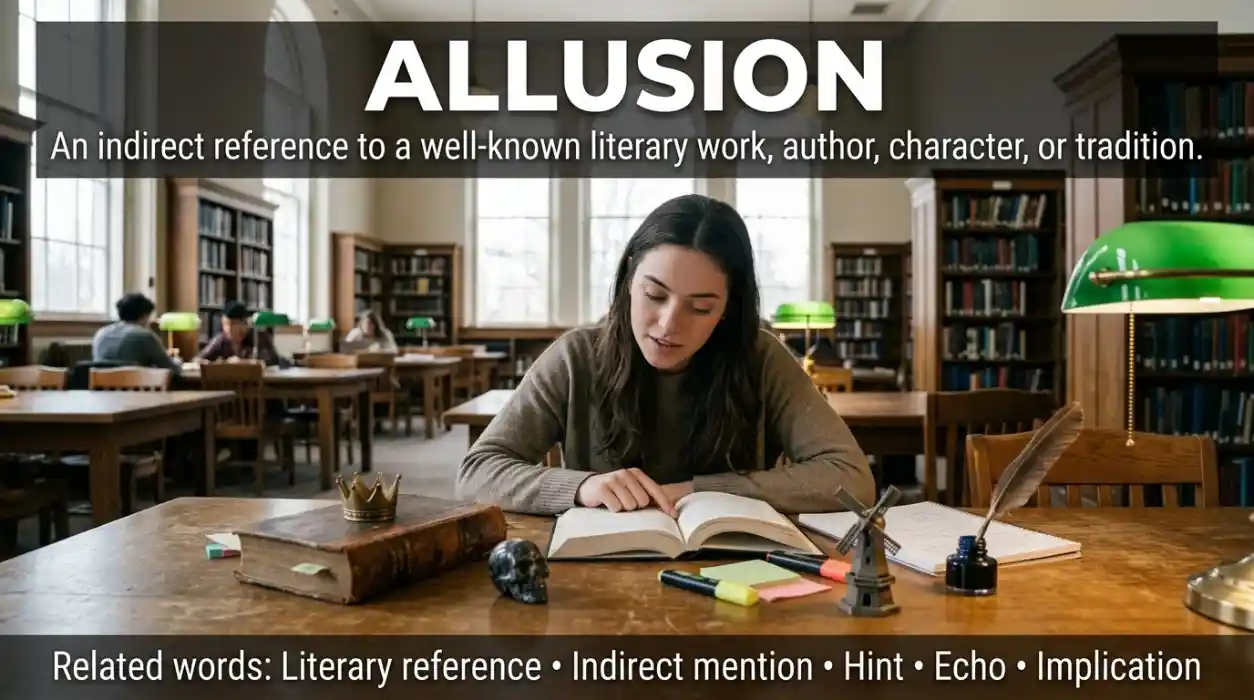
21. Literary Reference (Noun phrase) — US / UK: /ˈlɪtəˌrɛri ˈrɛfərəns/
Meaning: A literary reference points to a known work, author, character, or literary tradition.
Tone/Register: Academic; literature and education.
Examples:
“The essay includes a literary reference to Shakespeare.”
“Our teacher asked us to explain the literary reference in the poem.”
22. Cultural Reference (Noun phrase) — US / UK: /ˈkʌltʃərəl ˈrɛfərəns/
Meaning: A cultural reference points to a shared element of a culture, such as a custom, public figure, film, or song.
Tone/Register: Neutral; media, education, and conversation.
Examples:
“The comedy relies on a cultural reference that younger viewers may miss.”
“She added a familiar cultural reference to make the speech more engaging.”
23. Historical Reference (Noun phrase) — US / UK: /hɪˈstɔːrɪkəl ˈrɛfərəns/
Meaning: A historical reference connects a statement to a past event, person, or period.
Tone/Register: Academic to neutral; history and journalism.
Examples:
“The debate included a historical reference to the civil rights movement.”
“His comparison made a historical reference that the audience recognized.”
24. Biblical Reference (Noun phrase) — US / UK: /ˈbɪblɪkəl ˈrɛfərəns/
Meaning: A biblical reference points to a person, story, phrase, or idea from the Bible.
Tone/Register: Literary, religious, or academic; context-dependent.
Examples:
“The expression contains a biblical reference to the Garden of Eden.”
“Her lecture explained the biblical reference in the poem.”
25. Mythological Reference (Noun phrase) — US / UK: /ˌmɪθəˈlɑːdʒɪkəl ˈrɛfərəns/
Meaning: A mythological reference points to a figure, story, or symbol from mythology.
Tone/Register: Academic to literary.
Examples:
“The character’s name is a mythological reference to Athena.”
“The designer used a mythological reference to suggest courage.”
26. Allusion to (Noun phrase) — US / UK: /əˈluːʒən tuː/
Meaning: An allusion to something is an indirect reference that invites the audience to recognize a connection.
Tone/Register: Neutral to formal; a standard phrase in literary discussion.
Examples:
“The speech contains an allusion to an ancient legend.”
“Her joke was an allusion to the team’s famous defeat.”
27. Indirect Mention (Noun phrase) — US / UK: /ˌɪndəˈrɛkt ˈmɛnʃən/
Meaning: An indirect mention brings up a subject without naming it plainly or discussing it in detail.
Tone/Register: Neutral; everyday and professional.
Examples:
“His indirect mention of the merger raised questions.”
“She made an indirect mention of the disagreement during lunch.”
28. Oblique Reference (Noun phrase) — US / UK: /əˈbliːk ˈrɛfərəns/
Meaning: An oblique reference points toward a subject in a roundabout or deliberately indirect way.
Tone/Register: Formal; analytical and literary.
Examples:
“The columnist made an oblique reference to the mayor’s recent mistake.”
“I recognized the oblique reference to the earlier controversy.”
29. Veiled Reference (Noun phrase) — US / UK: /veɪld ˈrɛfərəns/
Meaning: A veiled reference is a deliberately concealed or disguised mention of a person or subject.
Tone/Register: Formal; often critical or cautious.
Example:
“The statement included a veiled reference to the rival company.”
“Her post seemed to contain a veiled reference to their argument.”
30. Subtle Reference (Noun phrase) — US / UK: /ˈsʌtəl ˈrɛfərəns/
Meaning: A subtle reference hints at something without drawing strong attention to the connection.
Tone/Register: Neutral to literary; descriptive.
Examples:
“The set design contains a subtle reference to the director’s earlier film.”
“Only a few readers noticed the subtle reference in the final paragraph.”
31. Passing Reference (Noun phrase) — US / UK: /ˈpæsɪŋ ˈrɛfərəns/
Meaning: A passing reference is a brief mention that receives little further discussion.
Tone/Register: Neutral; everyday, academic, and journalistic.
Examples:
“She made a passing reference to her university days.”
“The report includes a passing reference to the proposed changes.”
32. Brief Mention (Noun phrase) — US / UK: /briːf ˈmɛnʃən/
Meaning: A brief mention is a short acknowledgment of a person, event, or subject.
Tone/Register: Neutral; general use.
Examples:
“The introduction gives a brief mention of the author’s early work.”
“His brief mention of the delay reassured the team.”
33. Inference (Noun) — US / UK: /ˈɪnfərəns/
Meaning: An inference is a conclusion drawn from clues or evidence rather than a directly stated fact.
Tone/Register: Academic and analytical; neutral.
Examples:
“From her expression, I drew the inference that she disagreed.”
“The reader makes an inference based on the character’s silence.”
34. Undertone (Noun) — US / UK: /ˈʌndərˌtoʊn/ (US), /ˈʌndətəʊn/ (UK)
Meaning: An undertone is a subtle feeling or meaning present beneath the surface of words or behavior.
Tone/Register: Neutral to literary; sometimes negative.
Examples:
“His cheerful reply had an undertone of frustration.”
“The story carries an undertone of sadness despite its humor.”
35. Subtext (Noun) — US / UK: /ˈsʌbˌtɛkst/
Meaning: Subtext is an underlying meaning that is not directly expressed in words.
Tone/Register: Literary and analytical; common in film and writing.
Examples:
“The dialogue’s subtext reveals the sisters’ rivalry.”
“I enjoyed the scene because its subtext was more revealing than its words.”
36. Hidden Meaning (Noun phrase) — US / UK: /ˈhɪdən ˈmiːnɪŋ/
Meaning: Hidden meaning is a message or idea that is not immediately obvious from the surface wording.
Tone/Register: Neutral; everyday and analytical.
Examples:
“The repeated image of a locked door suggests a hidden meaning.”
“We discussed the hidden meaning behind the character’s final remark.”
37. Double Meaning (Noun phrase) — US / UK: /ˈdʌbəl ˈmiːnɪŋ/
Meaning: A double meaning occurs when a word or expression can be understood in two different ways.
Tone/Register: Neutral to playful; humor and wordplay.
Examples:
“Her reply had a double meaning that made everyone laugh.”
“The headline uses a double meaning to attract attention.”
38. Wordplay (Noun) — US / UK: /ˈwɜːrdˌpleɪ/ (US), /ˈwɜːdpleɪ/ (UK)
Meaning: Wordplay uses language creatively, often to create humor or more than one interpretation.
Tone/Register: Playful to literary; informal and creative writing.
Examples:
“The comedian’s wordplay kept the audience engaged.”
“I added a little wordplay to the title of my short story.”
39. Metaphorical Reference (Noun phrase) — US / UK: /ˌmɛtəˈfɔːrɪkəl ˈrɛfərəns/
Meaning: A metaphorical reference describes or points to something through a figurative comparison.
Tone/Register: Literary and analytical.
Examples:
“The storm becomes a metaphorical reference to the family’s conflict.”
“Her description makes a metaphorical reference to a journey through darkness.”
40. Figurative Reference (Noun phrase) — US / UK: /ˈfɪɡjərətɪv ˈrɛfərəns/
Meaning: A figurative reference points to an idea through nonliteral language rather than a strictly factual description.
Tone/Register: Literary and educational.
Examples:
“The passage uses a figurative reference to describe grief.”
“His phrase was a figurative reference to starting over.”
41. Symbolic Reference (Noun phrase) — US / UK: /sɪmˈbɑːlɪk ˈrɛfərəns/
Meaning: A symbolic reference uses an object, image, or action to represent a broader idea.
Tone/Register: Literary, academic, and analytical.
Examples:
“The white bird serves as a symbolic reference to freedom.”
“The broken clock is a symbolic reference to lost time.”
42. Association (Noun) — US / UK: /əˌsoʊsiˈeɪʃən/ (US), /əˌsəʊsiˈeɪʃən/ (UK)
Meaning: An association is a connection that a person makes between two ideas, experiences, or things.
Tone/Register: Neutral; general and academic.
Examples:
“The phrase creates an association with childhood memories.”
“For many viewers, that color has an association with danger.”
43. Connection (Noun) — US / UK: /kəˈnɛkʃən/
Meaning: A connection is a relationship or link between two things.
Tone/Register: Neutral; everyday and professional.
Examples:
“I noticed a connection between the song and the novel’s ending.”
“The lecturer explained the connection to an earlier historical event.”
44. Parallel (Noun) — US / UK: /ˈpærəˌlɛl/
Meaning: A parallel is a similarity between two people, situations, stories, or ideas.
Tone/Register: Neutral to formal; analytical and academic.
Examples:
“The journalist drew a parallel between the two elections.”
“Readers may see a parallel between the hero and a figure from legend.”
45. Comparison (Noun) — US / UK: /kəmˈpærɪsən/
Meaning: A comparison points out similarities or differences between two or more things.
Tone/Register: Neutral; general, academic, and professional.
Examples:
“Her comparison to a chess player highlighted his careful strategy.”
“The essay makes a comparison between modern life and an earlier era.”
46. Analogy (Noun) — US / UK: /əˈnælədʒi/
Meaning: An analogy explains or clarifies an idea by showing how it resembles another situation.
Tone/Register: Academic to conversational; explanatory.
Examples:
“The teacher used an analogy to explain how memory works.”
“Comparing the team to an orchestra was a useful analogy.”
47. Paralleling (Verb form) — US / UK: /ˈpærəˌlɛlɪŋ/
Meaning: Paralleling means showing a similarity or developing a corresponding feature between two things.
Tone/Register: Formal; academic and literary analysis.
Examples:
“The second chapter is paralleling the events of the opening scene.”
“The writer uses two characters, paralleling their struggles throughout the novel.”
48. Resemblance (Noun) — US / UK: /rɪˈzɛmbləns/
Meaning: Resemblance is a similarity in appearance, character, style, or structure.
Tone/Register: Neutral; general and descriptive.
Examples:
“The new song has a resemblance to a classic jazz standard.”
“Readers noticed a resemblance between the two fictional cities.”
49. Allusive Language (Noun phrase) — US / UK: /əˈluːsɪv ˈlæŋɡwɪdʒ/
Meaning: Allusive language uses indirect references to evoke familiar people, stories, or ideas.
Tone/Register: Literary and academic.
Examples:
“The poet’s allusive language rewards readers who know classical mythology.”
“The speech uses allusive language without explaining every reference.”
50. Evocative Reference (Noun phrase) — US / UK: /ɪˈvɑːkətɪv ˈrɛfərəns/
Meaning: An evocative reference calls up a vivid memory, feeling, image, or cultural association.
Tone/Register: Literary; descriptive and often positive.
Examples:
“The old railway station is an evocative reference to the town’s industrial past.”
“Her opening line offers an evocative reference to a childhood summer.”
Synonyms by Tone
Tone affects how readers interpret your message. A word that sounds respectful in one setting may seem sarcastic or overly formal in another. Use the following groups as a guide, remembering that context can change the effect.
Positive
- Tribute
- Homage
- Tip of the hat
- Nod
- Shout-out
These words often communicate appreciation or acknowledgment. Use them when the reference celebrates a person, tradition, or creative work.
Neutral
- Reference
- Mention
- Hint
- Indication
- Passing reference
- Cultural reference
- Historical reference
- Connection
- Association
These choices suit everyday explanations, reports, and most educational writing. They focus on the link itself rather than a strong emotional judgment.
Negative or Potentially Critical
- Innuendo
- Veiled reference
- Oblique reference
- Implication
- Undertone
These words can suggest concealed criticism, tension, or an unspoken accusation. They are not always negative, so check the surrounding sentence before choosing one.
Playful or Informal
- Shout-out
- Nod
- Callback
- Wordplay
- Hint
These alternatives work well in casual conversation, entertainment reviews, social posts, and discussions about jokes or familiar scenes.
Literary or Academic
- Evocation
- Subtext
- Allusive language
- Literary reference
- Mythological reference
- Symbolic reference
- Indirect reference
Choose these terms when you need to explain how a text creates meaning or connects with another work. They are especially useful in essays, close reading, and literary criticism.
“Allusion” vs. Close Alternatives
| Word | Main difference | Best use |
|---|---|---|
| Allusion | An indirect reference that often relies on shared knowledge | Literary analysis, cultural references, speeches |
| Reference | A broad term for pointing to or mentioning something | General writing, reports, academic work |
| Hint | A clue that helps someone guess or infer something | Conversation, advice, subtle suggestions |
| Implication | A meaning suggested by words or circumstances | Analysis, disagreement, professional communication |
Quick rule: Use allusion when the reference invites recognition of another person, story, event, or cultural idea. Use reference for the broadest meaning. Choose hint for a clue and implication for an unstated meaning or conclusion.
How “Allusion” Changes by Context
Daily Conversation
In casual speech, people often say hint, mention, or reference instead of allusion. The simpler words usually feel more natural when discussing an indirect comment or a familiar joke.
For example, “Was that a hint?” sounds more conversational than “Was that an allusion?”
Writing and Blogging
Bloggers and content writers can use reference, nod, callback, or cultural reference to explain links between films, books, trends, and public events. The best choice depends on whether the connection is subtle, appreciative, or deliberately repeated.
Avoid using a more complicated word simply to sound sophisticated. Precision makes content easier to understand and more useful to readers.
Professional and Academic English
In essays, reports, and presentations, allusion, implication, indirect reference, and historical reference can communicate specific relationships between ideas.
For example, a literature student may analyze an allusion to a myth, while a business analyst may describe the implications of a manager’s statement. These words are related, but they do not mean the same thing.
Creative and Informal Use
Writers, filmmakers, and comedians often use callback, echo, homage, and wordplay to describe recognizable links or repeated details. These terms are particularly useful when discussing storytelling techniques.
In a friendly conversation, a nod or shout-out may express the same general idea more naturally.
Common Mistakes Learners Make
Mistake 1: Treating Every Mention as an Allusion
A direct statement such as “The author mentions Paris” is not automatically an allusion. An allusion usually creates an indirect connection to something the audience is expected to recognize.
Mistake 2: Confusing Allusion With Illusion
Allusion means an indirect reference. Illusion means something that deceives the senses or creates a false impression.
Example: “The novel alludes to a famous legend” is different from “The magician creates an illusion.”
Mistake 3: Using “Innuendo” for Every Indirect Reference
An innuendo often suggests something critical, insulting, or suggestive. It is not a neutral substitute for every allusion. Use reference or hint when no such implication exists.
Mistake 4: Confusing an Allusion With a Metaphor
A metaphor describes one thing in terms of another. An allusion points toward a recognizable person, story, event, or idea. A sentence can contain both techniques, but they serve different purposes.
Mistake 5: Overusing Formal Vocabulary
Words such as intimation and oblique reference can sound stiff in casual conversation. Prefer clear, familiar wording when speaking with friends or writing for a broad audience.
Register Notes: Formal vs. Informal
- Formal: Allusion, implication, intimation, oblique reference, indirect reference.
- Neutral: Reference, mention, hint, indication, connection.
- Informal: Nod, shout-out, callback, tip of the hat.
- Literary or analytical: Evocation, subtext, symbolic reference, allusive language.
Native usage tip: English speakers usually choose the simplest word that conveys the intended meaning. In everyday speech, hint or reference is often more natural than allusion.
For further vocabulary practice, explore related literary terms in a trusted dictionary or an introductory guide to figures of speech.
Real-Life Examples Using
Workplace
During a presentation, a manager says, “We don’t want another Titanic situation.” This is an allusion to the famous shipwreck. It warns the team about a possible disaster without explaining every detail.
Social Situations
A friend calls someone “the Sherlock Holmes of our group” after they solve a mystery. The comment alludes to the famous fictional detective and suggests that the person is observant.
Media and Pop Culture
A television episode recreates a famous scene from an older film. Viewers who recognize the original can enjoy the allusion, while others may simply follow the plot.
Writing and Storytelling
A novelist describes a character facing a seemingly impossible task as “a modern Hercules.” This alludes to the mythological hero and suggests strength, courage, or a difficult challenge.
Practice Quiz
1. A film quietly refers to a famous Greek myth. What is the best term?
A. Allusion
B. Invoice
C. Instruction
2. Your friend says, “Some people here could arrive on time more often,” without naming anyone. What might this be?
A. A recipe
B. An indirect hint
C. A formal citation
3. A novelist includes a respectful scene inspired by an older filmmaker’s work. Which term fits best?
A. Homage
B. Innuendo
C. Mistake
4. A joke in the final episode repeats a funny line from the first episode. What is this called?
A. Callback
B. Intimation
C. Inference
5. A speaker’s words suggest that a colleague may be dishonest, without saying so directly. Which word may fit?
A. Tribute
B. Innuendo
C. Shout-out
6. You briefly mention a book in a blog post without discussing it further. Which phrase is most suitable?
A. Passing reference
B. Hidden meaning
C. Mythological reference
7. A reader works out a character’s feelings from their silence and behavior. What is the reader making?
A. An inference
B. A shout-out
C. A tribute
8. A poem uses a locked door to represent a person’s lack of freedom. What is the door acting as?
A. A symbolic reference
B. A brief mention
C. A direct quotation
9. You want to describe a casual public acknowledgment of a helpful teammate. Which phrase sounds natural?
A. Shout-out
B. Oblique reference
C. Intimation
Reflection task:
Write one sentence about a film, book, song, or conversation that includes an allusion or one of its close alternatives. Then explain why your chosen word fits.
Answer key: 1-A · 2-B · 3-A · 4-A · 5-B · 6-A · 7-A · 8-A · 9-A
Suggested external source:
Merriam-Webster Dictionary — Allusion for a trusted dictionary definition, usage examples, and related vocabulary.
Conclusion
Learning a synonym for allusion helps you express indirect references with greater accuracy. Words such as hint, reference, and homage each add a different shade of meaning to your sentences.
For students, these alternatives can strengthen essays and literary analysis. Bloggers and content writers can make explanations more varied, while everyday English users can communicate ideas more naturally.
The key is to notice context and tone. A tribute expresses respect, an innuendo may suggest criticism, and a callback brings an earlier detail back into a story.
Practice using these words in emails, essays, reviews, and daily conversations. Choose one new synonym today, write your own example, and see how confidently you can use it tomorrow.
FAQs
1. What is the closest synonym for allusion in academic writing?
Reference is the broadest close alternative, but indirect reference may be more precise when the writer hints at a person, event, text, or idea without naming it directly. In literary analysis, allusion remains the most specific term when the connection depends on the reader recognizing another work or cultural source.
2. Is an allusion the same as an indirect reference?
An allusion is a type of indirect reference, but the terms do not always carry the same emphasis. Indirect reference describes the general method of pointing toward something indirectly. Allusion often highlights a recognizable connection to literature, mythology, history, religion, or popular culture.
3. What verb form should I use instead of the noun “allusion”?
Use allude when you need a verb. For example, “The author alludes to an ancient myth.” The form alluding works in continuous verb phrases, as in “She is alluding to the earlier debate.” Avoid using allusion as a verb because it is a noun.
4. How can I identify an allusion in a poem or novel?
Look for a name, phrase, image, or situation that seems to point beyond the immediate story. It may resemble a known myth, religious narrative, historical event, or earlier literary work. Then ask whether recognizing that connection adds meaning to the passage. Do not assume every similarity is an intentional allusion.
5. Can an allusion be humorous or sarcastic?
Yes. An allusion can create humor, irony, praise, or criticism. A comedian might refer to a famous fictional detective to tease a friend who notices every detail. The allusion itself is not necessarily sarcastic; the speaker’s wording, purpose, and surrounding context determine the effect.

Hasnain Ali is an SEO Content Strategist and the founder of wordvora.com, a trusted vocabulary platform that helps writers, students, professionals, and English learners find accurate synonyms, antonyms, word meanings, and real-life usage examples. He specializes in keyword research, on-page SEO, topical authority, and creating search-first content that aligns with Google’s latest Search Quality and E-E-A-T guidelines. His work focuses on producing clear, well-structured, and reader-friendly resources that satisfy search intent while maintaining high editorial standards.
Through extensive hands-on experience with SEO tools such as Google Search Console, Google Analytics, SEMrush, and Ahrefs, Hasnain researches user search behavior and develops content that is both informative and easy to understand. Every article published on wordvora.com is carefully reviewed for accuracy, readability, and contextual relevance before publication. His mission is to build one of the web’s most reliable English vocabulary resources by providing practical language guidance, trustworthy explanations, and content that helps readers improve their writing, communication, and vocabulary with confidence.