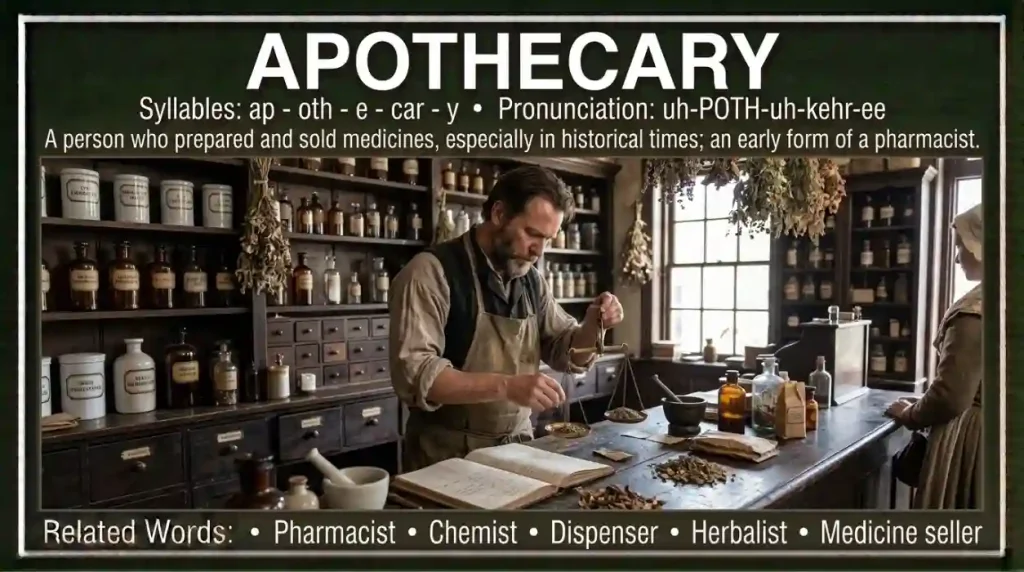
A synonym for apothecary is pharmacist, druggist, or chemist, depending on the context. An apothecary traditionally prepared and sold medicines, herbs, and remedies. Today, the word often describes a historical medicine seller or a traditional herbal shop. Although these alternatives overlap, they are not always interchangeable.
Synonym for apothecary searches often begin with a simple writing problem. Imagine describing an old-fashioned shop filled with glass bottles, dried herbs, and mysterious remedies. The right word can bring that scene to life.
An apothecary once prepared and supplied medicines for everyday illnesses. Today, you might encounter the word in historical novels, fantasy stories, museum displays, and discussions of traditional remedies.
Knowing a synonym for apothecary helps you choose words that fit your meaning. A pharmacist suggests a modern healthcare professional, while a herbalist emphasizes plant-based remedies.
These distinctions matter to students, bloggers, content writers, and everyday English users. Learning related vocabulary makes descriptions clearer, improves word choice, and helps you avoid awkward repetition.
What Does “Apothecary” Really Mean?
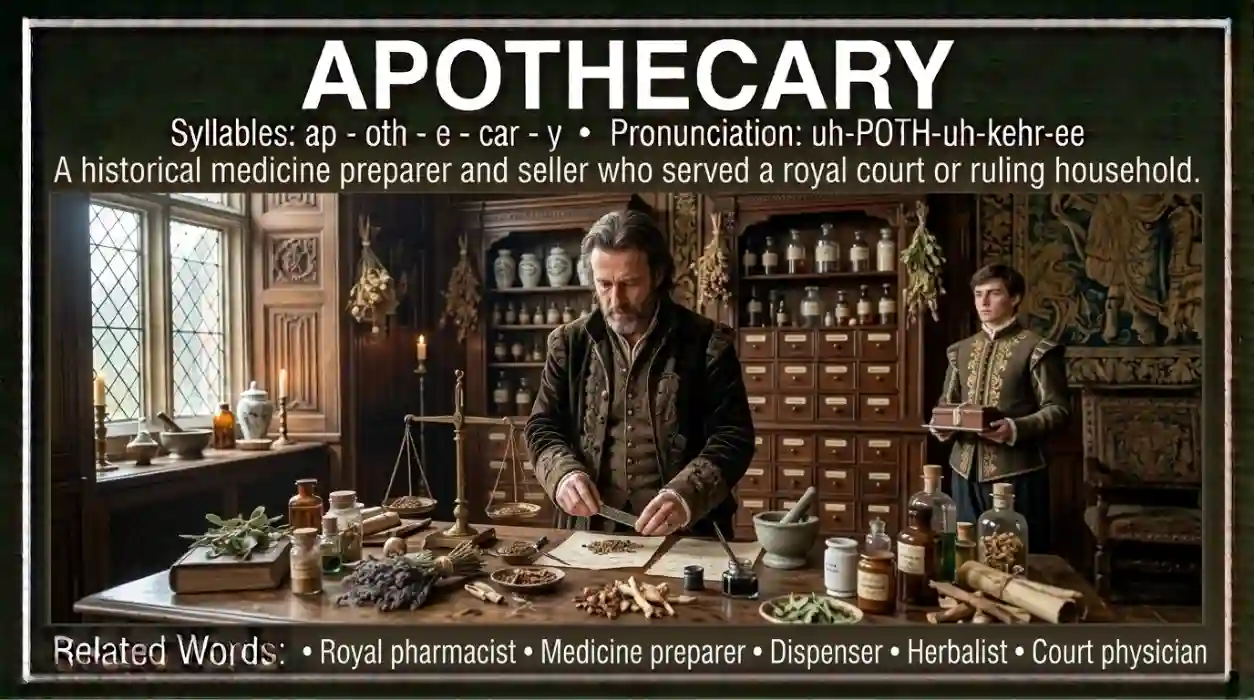
Apothecary is a noun that traditionally refers to a person who prepared, compounded, and sold medicines. It can also refer to the shop where that person worked.
In simple English, an apothecary was an early form of medicine seller who often prepared remedies from herbs, minerals, and other ingredients.
The word has a historical and slightly old-fashioned feel. Modern readers may associate it with antique shops, traditional medicine, historical dramas, and fantasy settings.
Native English speakers generally understand apothecary as a historical or stylistic term rather than the usual name for someone who dispenses prescription medicines today.
Connotative Meaning
(Connotation means the feelings, associations, or impressions a word carries beyond its basic definition.)
- Positive tone: The word may suggest natural remedies, traditional knowledge, craftsmanship, and care.
- Negative tone: In a critical context, it may suggest outdated medical practices, superstition, or unregulated remedies.
- Neutral tone: In historical writing, it simply identifies a person or establishment associated with preparing and selling medicines.
The word itself is not inherently positive or negative. The surrounding context determines its emotional effect.
Etymology
The word apothecary entered English through Old French forms related to Latin apothecarius, meaning a person associated with a storehouse or repository. The deeper origin is the Greek apothēkē, meaning a storehouse or place for storing things.
Its meaning gradually became associated with the storage, preparation, and sale of medicines.
Old English Period (450–1100)
The modern English word apothecary was not an established everyday term in Old English. People relied on other vocabulary for healers, remedies, herbs, and medicine preparation.
Middle English Period (1100–1500)
The word entered English through French and Latin influence during the Middle English period. It became associated with people who prepared and supplied medicinal substances.
Modern English Period (1500–Present)
Apothecaries became important figures in the history of pharmacy. Over time, the modern professions of pharmacy and medicine developed more specialized roles.
Today, apothecary often appears in historical writing, fiction, heritage settings, and descriptions of traditional herbal products.
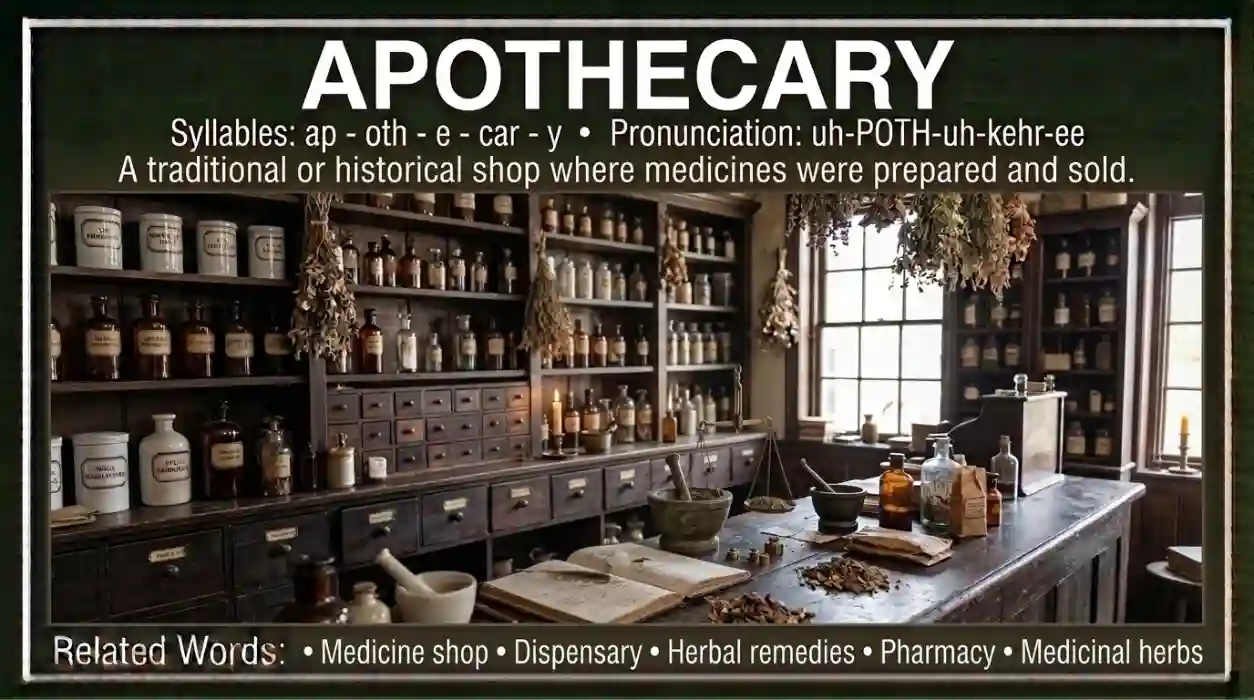
Pronunciation of Apothecary
- US IPA: /əˈpɑːθəˌkeri/
- UK IPA: /əˈpɒθɪkəri/
Syllables: a-poth-e-car-y
Part of speech: Noun
Affixation Pattern
- Root: Historically connected to Greek apothēkē, meaning a storehouse.
- Prefix: No productive English prefix in the modern word.
- Suffix: The ending -ary forms part of the inherited word structure. It should not be treated as a straightforward modern suffix added to an English word meaning medicine.
Synonyms List
Not every related word is a perfect synonym. Some describe the person, some describe the shop, and others emphasize a particular type of medicine or remedy. The distinctions below help you select the most accurate alternative.
1. Pharmacist (Noun) — US: /ˈfɑːrməsɪst/ | UK: /ˈfɑːməsɪst/
Meaning: A trained professional who prepares, checks, or dispenses medicines and advises patients about their safe use.
Tone/Register: Neutral, professional.
Examples:
- I asked the pharmacist whether the two medicines could interact.
- The pharmacist explained how to take the prescription safely.
2. Druggist (Noun) — US: /ˈdrʌɡɪst/ | UK: /ˈdrʌɡɪst/
Meaning: A person who sells medicines, especially in traditional or American English usage.
Tone/Register: Neutral, slightly traditional in some contexts.
Examples:
- The local druggist knew many of his customers by name.
- Her grandfather worked as a druggist in a small town.
3. Chemist (Noun) — US: /ˈkemɪst/ | UK: /ˈkemɪst/
Meaning: In British English, a chemist can mean a pharmacy or a person who works in one; elsewhere, it commonly means a scientist who studies chemistry.
Tone/Register: Neutral; meaning varies by region.
Examples:
- I need to stop at the chemist for my prescription.
- She bought a bottle of cough syrup at the chemist.
4. Pharmacy (Noun) — US: /ˈfɑːrməsi/ | UK: /ˈfɑːməsi/
Meaning: An establishment where medicines are prepared or dispensed, rather than the person who supplies them.
Tone/Register: Neutral, professional.
Examples:
- The pharmacy closes at six this evening.
- He collected his medicine from the hospital pharmacy.
5. Apothecary Shop (Noun Phrase) — US: /əˈpɑːθəˌkeri ʃɑːp/ | UK: /əˈpɒθɪkəri ʃɒp/
Meaning: A traditional or historical shop associated with preparing and selling medicines.
Tone/Register: Historical, descriptive.
Examples:
- The village apothecary shop stood beside the old church.
- Tourists explored a reconstructed apothecary shop at the museum.
6. Herbalist (Noun) — US: /ˈhɝːbəlɪst/ | UK: /ˈhɜːbəlɪst/
Meaning: A person who specializes in identifying or using herbs, often for traditional wellness practices.
Tone/Register: Neutral, traditional.
Examples:
- The herbalist explained how the leaves were traditionally prepared.
- A local herbalist showed the class several medicinal plants.
7. Herb Seller (Noun Phrase) — US: /ˈɝːb ˌselər/ | UK: /ˈhɜːb ˌselə/
Meaning: Someone who sells herbs, whether for cooking, traditional remedies, or other purposes.
Tone/Register: Neutral, descriptive.
Examples:
- The herb seller arranged dried mint in small paper packets.
- We spoke to an herb seller at the village market.
8. Medicine Seller (Noun Phrase) — US: /ˈmedɪsɪn ˌselər/ | UK: /ˈmedɪsɪn ˌselə/
Meaning: A person who sells medicinal products, especially in a historical or general context.
Tone/Register: Neutral, explanatory.
Examples:
- The medicine seller offered remedies prepared from local plants.
- The novel follows a medicine seller traveling between villages.
9. Pharmaceutical Professional (Noun Phrase) — US: /ˌfɑːrməˈsuːtɪkəl prəˈfeʃənəl/ | UK: /ˌfɑːməˈsjuːtɪkəl prəˈfeʃənəl/
Meaning: A broad term for a professional working in the pharmaceutical field.
Tone/Register: Formal, professional.
Examples:
- A pharmaceutical professional reviewed the medication records.
- The conference brought together pharmaceutical professionals from several countries.
10. Medicine Dispenser (Noun Phrase) — US: /ˈmedɪsɪn dɪˌspensər/ | UK: /ˈmedɪsɪn dɪˌspensə/
Meaning: A person responsible for supplying medicines, although the exact role and required qualifications vary.
Tone/Register: Neutral, technical.
Examples:
- The clinic appointed a trained medicine dispenser.
- A medicine dispenser checked the labels before handing over the packages.
11. Dispensary Worker (Noun Phrase) — US: /dɪˈspensəri ˈwɝːkər/ | UK: /dɪˈspensəri ˈwɜːkə/
Meaning: A person who works in a dispensary that supplies medicines or other prescribed items.
Tone/Register: Neutral, professional.
Examples:
- The dispensary worker organized the incoming medical supplies.
- She spoke with a dispensary worker about collection procedures.
12. Compounder (Noun) — US: /kəmˈpaʊndər/ | UK: /kəmˈpaʊndə/
Meaning: A person who combines ingredients to prepare a product, including a medicinal preparation in relevant contexts.
Tone/Register: Technical, historical.
Examples:
- The historical compounder measured each ingredient carefully.
- The museum display explains how a compounder prepared ointments.
13. Medicine Maker (Noun Phrase) — US: /ˈmedɪsɪn ˌmeɪkər/ | UK: /ˈmedɪsɪn ˌmeɪkə/
Meaning: A general term for someone who prepares medicinal substances.
Tone/Register: Neutral, descriptive.
Examples:
- The village medicine maker collected plants before sunrise.
- The story introduces a medicine maker who serves remote communities.
14. Remedy Maker (Noun Phrase) — US: /ˈremədi ˌmeɪkər/ | UK: /ˈremədi ˌmeɪkə/
Meaning: Someone who prepares remedies intended to relieve symptoms or address a problem.
Tone/Register: Neutral, informal.
Examples:
- The remedy maker recorded each traditional recipe in a notebook.
- In the story, the remedy maker helps travelers prepare for winter.
15. Herbal Practitioner (Noun Phrase) — US: /ˈɝːbəl prækˈtɪʃənər/ | UK: /ˈhɜːbəl prækˈtɪʃənə/
Meaning: A practitioner whose work focuses on herbal approaches to health or well-being.
Tone/Register: Professional, neutral.
Examples:
- The herbal practitioner discussed the history of medicinal plants.
- She interviewed an herbal practitioner for her research project.
16. Traditional Healer (Noun Phrase) — US: /trəˈdɪʃənəl ˈhiːlər/ | UK: /trəˈdɪʃənəl ˈhiːlə/
Meaning: A person who uses culturally established healing practices that may include herbs, rituals, or traditional knowledge.
Tone/Register: Cultural, descriptive.
Examples:
- The documentary explores the role of a traditional healer.
- The historian studied how traditional healers prepared plant-based remedies.
17. Folk Healer (Noun Phrase) — US: /ˈfoʊk ˌhiːlər/ | UK: /ˈfəʊk ˌhiːlə/
Meaning: A person associated with local or community-based healing traditions.
Tone/Register: Historical, cultural.
Examples:
- The village folk healer appears in several regional legends.
- The researcher documented stories about a respected folk healer.
18. Healer (Noun) — US: /ˈhiːlər/ | UK: /ˈhiːlə/
Meaning: A person believed to help restore health or well-being, though the word does not specify a particular method or qualification.
Tone/Register: Broad, neutral.
Examples:
- The fantasy novel introduces a healer who understands rare plants.
- The community sought advice from a well-known healer.
19. Mediciner (Noun) — US: /ˈmedɪsɪnər/ | UK: /ˈmedɪsɪnə/
Meaning: A rare or dated term for someone associated with preparing or administering medicine.
Tone/Register: Archaic, uncommon.
Examples:
- The author used mediciner to evoke an older period.
- Few modern readers use the word outside historical writing.
20. Herbal Medicine Practitioner (Noun Phrase) — US: /ˈɝːbəl ˈmedɪsɪn prækˈtɪʃənər/ | UK: /ˈhɜːbəl ˈmedɪsɪn prækˈtɪʃənə/
Meaning: A practitioner who focuses on the traditional or professional use of herbal preparations.
Tone/Register: Formal, descriptive.
Examples:
- The herbal medicine practitioner described the plant’s traditional uses.
- Her article distinguishes herbal practice from modern pharmacy.
21. Botanical Remedy Specialist (Noun Phrase) — US: /bəˈtænɪkəl ˈremədi ˈspeʃəlɪst/ | UK: /bəˈtænɪkəl ˈremədi ˈspeʃəlɪst/
Meaning: A descriptive phrase for someone who specializes in remedies made from plants.
Tone/Register: Descriptive, specialist.
Examples:
- The character works as a botanical remedy specialist.
- The exhibition highlights the knowledge of a botanical remedy specialist.
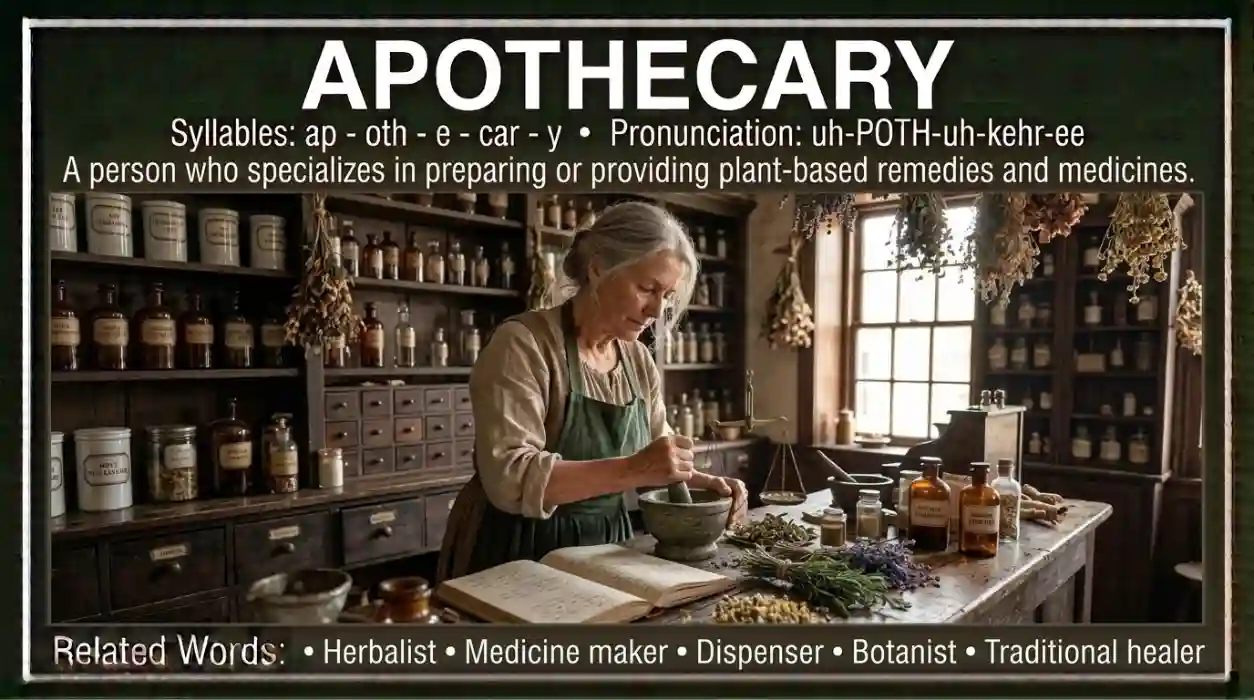
22. Herbal Remedies Seller (Noun Phrase) — US: /ˈɝːbəl ˈremədiz ˌselər/ | UK: /ˈhɜːbəl ˈremədiz ˌselə/
Meaning: A person who sells products marketed or traditionally used as herbal remedies.
Tone/Register: Neutral, descriptive.
Examples:
- The herbal remedies seller displayed dried flowers in glass jars.
- She interviewed an herbal remedies seller for a feature on traditional markets.
23. Apothecary Keeper (Noun Phrase) — US: /əˈpɑːθəˌkeri ˈkiːpər/ | UK: /əˈpɒθɪkəri ˈkiːpə/
Meaning: A descriptive, literary phrase for a person who manages a traditional apothecary.
Tone/Register: Literary, historical.
Examples:
- The apothecary keeper unlocked the shop before dawn.
- The story centers on an apothecary keeper guarding an old family recipe.
24. Medicinal Herb Dealer (Noun Phrase) — US: /məˈdɪsɪnəl ˈɝːb ˌdiːlər/ | UK: /məˈdɪsɪnəl ˈhɜːb ˌdiːlə/
Meaning: A person who trades in herbs intended for medicinal or traditional uses.
Tone/Register: Descriptive, historical.
Examples:
- The medicinal herb dealer sourced plants from nearby farms.
- The historical account describes a medicinal herb dealer working along a trade route.
25. Herb Merchant (Noun Phrase) — US: /ˈɝːb ˌmɝːtʃənt/ | UK: /ˈhɜːb ˌmɜːtʃənt/
Meaning: A trader who sells herbs for culinary, medicinal, or other uses.
Tone/Register: Neutral, traditional.
Examples:
- The herb merchant supplied several market stalls.
- A traveling herb merchant brought unfamiliar plants to the town.
26. Medicinal Merchant (Noun Phrase) — US: /məˈdɪsɪnəl ˈmɝːtʃənt/ | UK: /məˈdɪsɪnəl ˈmɜːtʃənt/
Meaning: A broad descriptive term for a trader dealing in medicinal goods.
Tone/Register: Formal, historical.
Examples:
- The novel’s medicinal merchant travels between trading ports.
- The archive records a medicinal merchant supplying a royal household.
27. Remedy Seller (Noun Phrase) — US: /ˈremədi ˌselər/ | UK: /ˈremədi ˌselə/
Meaning: A person who sells products presented as remedies for particular complaints.
Tone/Register: Neutral, descriptive.
Examples:
- The remedy seller explained the ingredients on the label.
- A remedy seller appears in the opening chapter of the historical novel.
28. Patent Medicine Seller (Noun Phrase) — US: /ˈpætənt ˈmedɪsɪn ˌselər/ | UK: /ˈpætənt ˈmedɪsɪn ˌselə/
Meaning: A seller of proprietary medicinal products, particularly in historical contexts when many products made unverified health claims.
Tone/Register: Historical, sometimes critical.
Examples:
- The museum exhibit examines the rise of the patent medicine seller.
- The novel portrays a patent medicine seller making extravagant promises.
29. Medicine Vendor (Noun Phrase) — US: /ˈmedɪsɪn ˌvendər/ | UK: /ˈmedɪsɪn ˌvendə/
Meaning: A person who sells or distributes medicinal products.
Tone/Register: Neutral, descriptive.
Examples:
- The report discusses medicine vendors in remote communities.
- The traveler bought basic supplies from a licensed medicine vendor.
30. Herbal Vendor (Noun Phrase) — US: /ˈɝːbəl ˌvendər/ | UK: /ˈhɜːbəl ˌvendə/
Meaning: A seller who offers herbs or herbal products.
Tone/Register: Neutral, descriptive.
Examples:
- The herbal vendor arranged fresh rosemary and dried sage.
- A herbal vendor explained the difference between several local plants.
31. Apothecary Proprietor (Noun Phrase) — US: /əˈpɑːθəˌkeri prəˈpraɪətər/ | UK: /əˈpɒθɪkəri prəˈpraɪətə/
Meaning: The owner of an apothecary business or traditional medicine shop.
Tone/Register: Formal, historical.
Examples:
- The apothecary proprietor kept detailed records of every order.
- The portrait depicts an apothecary proprietor in eighteenth-century clothing.
32. Apothecary Assistant (Noun Phrase) — US: /əˈpɑːθəˌkeri əˈsɪstənt/ | UK: /əˈpɒθɪkəri əˈsɪstənt/
Meaning: Someone who assists with tasks in an apothecary, especially in historical settings.
Tone/Register: Historical, descriptive.
Examples:
- The young apothecary assistant learned to identify dried roots.
- In the play, an apothecary assistant discovers a missing ledger.
33. Dispenser (Noun) — US: /dɪˈspensər/ | UK: /dɪˈspensə/
Meaning: A person or device that supplies something; in a medical context, the word may describe someone who dispenses medicine.
Tone/Register: Neutral, technical.
Examples:
- The clinic’s dispenser checked the supply register.
- The historical text refers to the dispenser as an important member of the household.
34. Pharmacy Technician (Noun Phrase) — US: /ˈfɑːrməsi tekˈnɪʃən/ | UK: /ˈfɑːməsi tekˈnɪʃən/
Meaning: A trained worker who supports pharmacists with dispensing and pharmacy operations within the scope of their role.
Tone/Register: Professional, modern.
Examples:
- The pharmacy technician organized the prescription queue.
- A pharmacy technician helped the pharmacist update the inventory.
35. Pharmaceutical Dispenser (Noun Phrase) — US: /ˌfɑːrməˈsuːtɪkəl dɪˈspensər/ | UK: /ˌfɑːməˈsjuːtɪkəl dɪˈspensə/
Meaning: A descriptive term for a person who dispenses pharmaceutical products.
Tone/Register: Formal, technical.
Examples:
- The pharmaceutical dispenser followed the clinic’s documented procedures.
- The report discusses training for pharmaceutical dispensers.
36. Medicine Preparer (Noun Phrase) — US: /ˈmedɪsɪn prɪˌperər/ | UK: /ˈmedɪsɪn prɪˌpeərə/
Meaning: A person who prepares medicinal products or ingredients.
Tone/Register: Neutral, descriptive.
Examples:
- The medicine preparer measured the ingredients for the historical demonstration.
- The manuscript describes a medicine preparer working in a royal household.
37. Herbal Compounder (Noun Phrase) — US: /ˈɝːbəl kəmˈpaʊndər/ | UK: /ˈhɜːbəl kəmˈpaʊndə/
Meaning: A person who combines herbal ingredients into preparations.
Tone/Register: Technical, traditional.
Examples:
- The herbal compounder recorded each mixture in a handwritten book.
- The historical drama features an herbal compounder serving a remote village.
38. Potion Maker (Noun Phrase) — US: /ˈpoʊʃən ˌmeɪkər/ | UK: /ˈpəʊʃən ˌmeɪkə/
Meaning: Someone who makes potions, particularly in fantasy, folklore, or fictional settings.
Tone/Register: Playful, literary.
Examples:
- The potion maker brewed a glowing mixture in the tower.
- Children imagined the potion maker hiding secrets beneath the floorboards.
39. Potion Seller (Noun Phrase) — US: /ˈpoʊʃən ˌselər/ | UK: /ˈpəʊʃən ˌselə/
Meaning: A character or person who sells potions, usually in fantasy or fictional worlds.
Tone/Register: Playful, fictional.
Examples:
- The potion seller offered travelers a bottle of blue liquid.
- The game lets players visit a potion seller between quests.
40. Elixir Maker (Noun Phrase) — US: /ɪˈlɪksər ˌmeɪkər/ | UK: /ɪˈlɪksə ˌmeɪkə/
Meaning: Someone who prepares an elixir, often in historical, literary, or fantasy contexts.
Tone/Register: Literary, imaginative.
Examples:
- The elixir maker claimed to know an ancient recipe.
- The story follows an elixir maker searching for a rare flower.
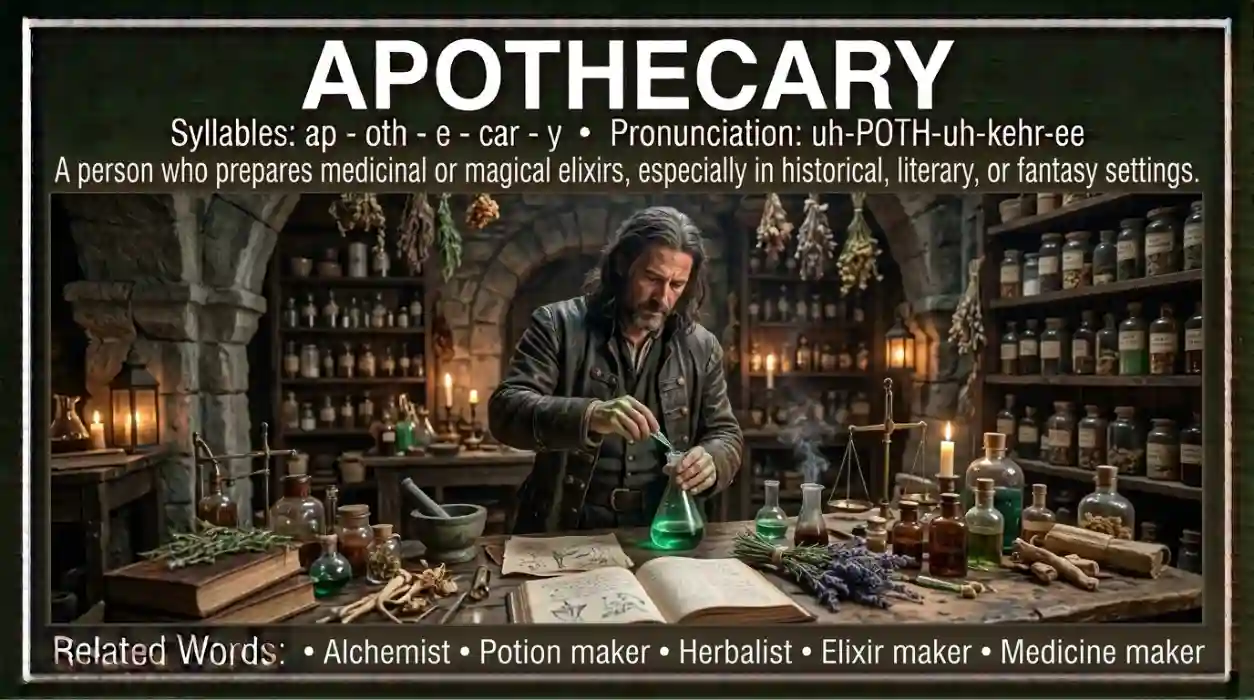
41. Elixir Seller (Noun Phrase) — US: /ɪˈlɪksər ˌselər/ | UK: /ɪˈlɪksə ˌselə/
Meaning: A person or fictional character who sells elixirs or liquid preparations.
Tone/Register: Literary, sometimes skeptical.
Examples:
- The traveling elixir seller attracted a crowd in the square.
- The satire follows an elixir seller who promises impossible results.
42. Apothecary Merchant (Noun Phrase) — US: /əˈpɑːθəˌkeri ˈmɝːtʃənt/ | UK: /əˈpɒθɪkəri ˈmɜːtʃənt/
Meaning: A descriptive phrase for a merchant who trades in goods associated with an apothecary.
Tone/Register: Historical, descriptive.
Examples:
- The apothecary merchant imported spices and medicinal ingredients.
- The historical novel features an apothecary merchant near the harbor.
43. Herbal Shopkeeper (Noun Phrase) — US: /ˈɝːbəl ˈʃɑːpˌkiːpər/ | UK: /ˈhɜːbəl ˈʃɒpˌkiːpə/
Meaning: A person who owns or manages a shop selling herbs and related products.
Tone/Register: Neutral, descriptive.
Examples:
- The herbal shopkeeper recommended a fragrant blend for the display.
- A herbal shopkeeper appears in the village’s local history.
44. Medicine Shopkeeper (Noun Phrase) — US: /ˈmedɪsɪn ˈʃɑːpˌkiːpər/ | UK: /ˈmedɪsɪn ˈʃɒpˌkiːpə/
Meaning: Someone who owns or manages a shop selling medicinal products.
Tone/Register: Neutral, descriptive.
Examples:
- The medicine shopkeeper recognized the visiting doctor.
- The biography describes a medicine shopkeeper who served the district for decades.
45. Herbal Apothecary (Noun Phrase) — US: /ˈɝːbəl əˈpɑːθəˌkeri/ | UK: /ˈhɜːbəl əˈpɒθɪkəri/
Meaning: An apothecary or traditional medicine establishment that emphasizes herbal products.
Tone/Register: Traditional, descriptive.
Examples:
- The historical village included a small herbal apothecary.
- The story begins inside an herbal apothecary filled with dried plants.
46. Natural Remedy Practitioner (Noun Phrase) — US: /ˈnætʃərəl ˈremədi prækˈtɪʃənər/ | UK: /ˈnætʃərəl ˈremədi prækˈtɪʃənə/
Meaning: A broad descriptive phrase for someone who works with approaches commonly described as natural remedies.
Tone/Register: Descriptive, contemporary.
Examples:
- The natural remedy practitioner discussed the cultural history of plant preparations.
- Her article examines how natural remedy practitioners describe their work.
47. Traditional Medicine Seller (Noun Phrase) — US: /trəˈdɪʃənəl ˈmedɪsɪn ˌselər/ | UK: /trəˈdɪʃənəl ˈmedɪsɪn ˌselə/
Meaning: A person who sells products associated with traditional medical practices.
Tone/Register: Neutral, cultural.
Examples:
- The documentary interviews a traditional medicine seller in the region.
- The researcher studied how traditional medicine sellers source their ingredients.
48. Village Apothecary (Noun Phrase) — US: /ˈvɪlɪdʒ əˈpɑːθəˌkeri/ | UK: /ˈvɪlɪdʒ əˈpɒθɪkəri/
Meaning: An apothecary associated with a village, often used to create a historical or rural atmosphere.
Tone/Register: Literary, historical.
Examples:
- The village apothecary was the first stop for weary travelers.
- The mystery begins when the village apothecary disappears overnight.
49. Court Apothecary (Noun Phrase) — US: /kɔːrt əˈpɑːθəˌkeri/ | UK: /kɔːt əˈpɒθɪkəri/
Meaning: A historical apothecary who served a royal court or another ruling household.
Tone/Register: Formal, historical.
Examples:
- The court apothecary prepared remedies for members of the royal household.
- The archive mentions a court apothecary who traveled with the king.
50. Apothecary (Noun) — US: /əˈpɑːθəˌkeri/ | UK: /əˈpɒθɪkəri/
Meaning: The original term itself, useful when its historical associations are more precise than those of a modern alternative.
Tone/Register: Historical, literary, sometimes contemporary branding.
Examples:
- The author called the character an apothecary to establish the historical setting.
- The word apothecary gives the scene an antique, old-world atmosphere.
Important vocabulary note: The list includes close alternatives, role descriptions, and context-specific expressions. Only pharmacist, druggist, and, in British usage, chemist are relatively direct alternatives in suitable contexts. The remaining expressions may be useful descriptions, but they should not all be treated as exact dictionary synonyms.
Synonyms by Tone
The best word depends on the impression you want to create. A neutral term suits factual writing, while a literary alternative can make a story feel historical or magical.
Positive or Warm Associations
- Herbalist: Highlights plant knowledge and traditional practices.
- Traditional healer: Emphasizes cultural knowledge and a helping role.
- Herbal practitioner: Sounds measured and professional.
- Village apothecary: Creates a sense of familiarity and community.
- Medicine maker: Highlights skill and preparation.
These expressions can feel warm or respectful. However, they do not automatically indicate medical expertise or proven effectiveness.
Neutral Alternatives
- Pharmacist: Best for a qualified modern medicine professional.
- Druggist: Suitable for traditional usage or American contexts.
- Chemist: Common for a pharmacy in British English.
- Medicine seller: Describes a person by their work.
- Herb merchant: Emphasizes trade rather than treatment.
Neutral vocabulary works well in reports, school assignments, and everyday explanations.
Negative or Critical Associations
- Patent medicine seller: Can suggest questionable historical health claims.
- Elixir seller: May sound skeptical when the context involves exaggerated promises.
- Remedy seller: Can be neutral, but may sound doubtful when unsupported claims are discussed.
These expressions are not inherently negative. The surrounding sentence creates the critical tone.
Playful or Informal Alternatives
- Potion maker
- Potion seller
- Elixir maker
These terms suit fantasy stories, games, children’s fiction, and humorous descriptions. They are not suitable replacements for pharmacist in ordinary healthcare communication.
Why Tone Matters
Word choice shapes the reader’s expectations. Calling someone a pharmacist suggests a modern professional role. Calling the same fictional character a potion maker creates a magical atmosphere.
Choose a synonym that matches the person’s actual role, the historical period, and the tone of your writing.
“Apothecary” vs. Close Alternatives
| Word | Main meaning | Best use |
|---|---|---|
| Apothecary | Historical medicine preparer or seller | Historical fiction, heritage writing |
| Pharmacist | Modern medicine professional | Healthcare, everyday conversation |
| Druggist | Person who sells medicines | Traditional or regional usage |
| Chemist | Pharmacy or chemistry professional, depending on region | British English or scientific contexts |
| Herbalist | Specialist in herbs and their uses | Herbal traditions and plant knowledge |
Which Word Should You Choose?
Use apothecary when historical atmosphere matters. Choose pharmacist when accuracy about a modern healthcare professional matters. Use herbalist when the person’s work specifically concerns herbs.
Remember that an apothecary was not necessarily a herbalist, and a herbalist is not necessarily a pharmacist. Their training, responsibilities, and practices may differ.
How “Apothecary” Changes by Context
Daily Conversation
In ordinary conversation, pharmacy and pharmacist are usually more natural for modern healthcare.
For example, “I’ll ask the pharmacist” sounds more contemporary than “I’ll ask the apothecary.”
The older word can still appear in a conversation about history, traditional shops, or an unusual place someone has visited.
Writing and Blogging
Writers can use apothecary to establish an atmosphere or avoid repeating a longer description. A historical travel blog might describe an old apothecary and then refer to its keeper or medicine shop.
Use more familiar alternatives when readers need quick understanding. Accuracy should come before variety.
Professional and Academic Writing
In professional healthcare writing, identify the person’s actual role. A pharmacist, pharmacy technician, herbal practitioner, and medicine seller do not necessarily have the same responsibilities.
In historical research, apothecary may be the most precise term. Define it briefly if your audience may not recognize it.
Creative and Informal Use
Fantasy writers often choose potion maker, elixir seller, or village apothecary to suggest mystery and old-world charm.
A simple word can shape an entire scene. Compare “She entered a pharmacy” with “She stepped into the village apothecary, where dried flowers hung from the ceiling.”
The second version creates a more specific atmosphere.
Common Mistakes Learners Make
Mistake 1: Treating Every Alternative as an Exact Synonym
A pharmacy is usually a place. A pharmacist is a person. An apothecary historically refers to a person and can also refer to a traditional shop.
Check whether your sentence needs a person, place, profession, or activity.
Mistake 2: Confusing a Herbalist With a Pharmacist
A herbalist focuses on herbs and their traditional or practical uses. A pharmacist has a distinct professional role involving medicines.
These terms describe different kinds of work and should not be swapped automatically.
Mistake 3: Using “Chemist” Without Considering the Audience
In British English, “I am going to the chemist” often means visiting a pharmacy. In American English, a chemist usually means a scientist who studies chemistry.
Regional vocabulary can change the meaning of an otherwise simple sentence.
Mistake 4: Choosing a Fantasy Word for a Factual Report
A potion seller may work in a fantasy novel. It would usually sound inappropriate in a modern healthcare report.
Use imaginative vocabulary only when the context supports it.
Mistake 5: Replacing Every Repeated Word
Writers sometimes believe every repeated noun needs a synonym. This can make writing confusing or inaccurate.
Repeat pharmacist when it is the clearest word. Good writing values precision more than variety.
Register Notes
- Formal: pharmacist, pharmaceutical professional, medicinal merchant.
- Neutral: medicine seller, herb seller, druggist.
- Historical: apothecary, apothecary keeper, court apothecary.
- Informal or fictional: potion maker, potion seller, elixir maker.
Some phrases above are descriptive expressions rather than established dictionary synonyms. Use them when their specific meaning fits your sentence.
For further vocabulary practice, you could link this topic internally to an article about synonyms for herbalist or other historical professions.
Real-Life Mini Scenarios
Workplace
A writer preparing a museum caption uses apothecary because the exhibit concerns a historical medicine shop. A modern hospital report uses pharmacist instead.
Social Situations
A friend asks where to collect a prescription. In British English, “the chemist” is a natural answer. In American English, “the pharmacy” is usually clearer.
Media and Pop Culture
A fantasy game introduces a potion seller who helps players prepare for an adventure. The title signals fiction rather than a real healthcare profession.
Writing and Storytelling
A novelist describes a village apothecary with jars of dried leaves and handwritten labels. This phrase gives readers a sense of time and place without a lengthy explanation.
Practice Exercise
1. You need to collect a prescription from a qualified healthcare professional. Which word is most appropriate?
A. Potion maker
B. Pharmacist
C. Elixir seller
2. Your British friend says they are going to the “chemist.” What do they most likely mean?
A. A pharmacy
B. A science laboratory
C. A history museum
3. A historical novel features a person who prepares and sells medicines in an old village. Which term fits best?
A. Software engineer
B. Apothecary
C. Travel agent
4. A person specializes in identifying herbs and discussing their traditional uses. Which term is most suitable?
A. Herbalist
B. Pharmacy technician
C. Chemist in every English-speaking region
5. You are writing a fantasy game about magical mixtures. Which term best suits the character?
A. Pharmacy technician
B. Potion maker
C. Pharmaceutical professional
6. Which word usually refers to the establishment rather than the person?
A. Pharmacy
B. Pharmacist
C. Herbalist
7. You are writing an academic report about a modern professional who checks medication safety. Which term should you choose?
A. Elixir seller
B. Pharmacist
C. Village apothecary
8. An article discusses a historical trader who sold proprietary remedies that made exaggerated health claims. Which phrase fits the context?
A. Patent medicine seller
B. Hospital pharmacist
C. Chemistry teacher
9. You want a phrase for someone who trades in herbs at a market. Which option is clearest?
A. Herb merchant
B. Court apothecary
C. Potion maker
Reflection Task
Write two original sentences about a medicine-related character or place. Use apothecary in one sentence and a suitable alternative in the other. Explain why you chose each word.
Answer Key
1-B | 2-A | 3-B | 4-A | 5-B | 6-A | 7-B | 8-A | 9-A
External Learning Sources
For reliable vocabulary and historical usage research, consult these established references:
- Merriam-Webster Dictionary — https://www.merriam-webster.com/
- Oxford English Dictionary — https://www.oed.com/
- Cambridge Dictionary — https://dictionary.cambridge.org/
Use dictionary definitions, pronunciation recordings, and historical usage notes to verify a term before publishing it in educational or professional writing.
Conclusion
Learning a synonym for apothecary is about more than memorizing words. It helps you understand historical professions, express precise meanings, and recognize the subtle differences between related terms.
The right vocabulary can strengthen essays, improve blog writing, and make everyday conversations more natural. A carefully chosen word can also help readers picture a person, place, or period.
Start with familiar alternatives such as pharmacist, druggist, and herbalist. Then explore the historical and creative expressions when your context calls for them.
Practice by writing your own sentences in emails, essays, stories, and everyday conversations. Notice how each word changes the meaning, and let your growing vocabulary make your English clearer and more confident.
FAQs
1. What is the difference between an apothecary and a pharmacist today?
An apothecary is primarily a historical term for someone who prepared and sold medicines. A pharmacist is a modern healthcare professional with specific education, training, and responsibilities involving medicines. Historical apothecaries contributed to the development of pharmacy, but the two titles do not automatically describe identical qualifications or duties.
2. Is “apothecary” still used in modern English?
Yes. The word remains in use, especially in historical writing, fiction, heritage settings, and names or descriptions of traditional-style shops. Some contemporary businesses also use it to suggest herbal or old-fashioned products. However, the word alone does not establish that a shop provides regulated pharmacy services or that its products have proven medical benefits.
3. What is an old-fashioned word for a pharmacist?
Apothecary is a common historical alternative. Druggist is another option, particularly in traditional usage. The best choice depends on the period and region you are describing. In historical fiction, apothecary often creates a stronger sense of time and place, while druggist may sound more familiar in some American contexts.
4. Can I use “apothecary” as a synonym for a herbal shop?
Sometimes, but the terms are not identical. An apothecary historically prepared or sold medicines, which could include herbal ingredients. A herbal shop may sell plants, teas, and related products without preparing medicines or operating as a pharmacy. Use herbal shop when the retail focus is herbs, and apothecary when the historical or traditional medicine association matters.
5. What is the plural form of apothecary?
The plural is apothecaries. For example: “Several apothecaries operated in the city during that period.” The spelling changes from y to ies, following the usual English pattern for many nouns ending in a consonant followed by y. The singular remains apothecary.

Hasnain Ali is an SEO Content Strategist and the founder of wordvora.com, a trusted vocabulary platform that helps writers, students, professionals, and English learners find accurate synonyms, antonyms, word meanings, and real-life usage examples. He specializes in keyword research, on-page SEO, topical authority, and creating search-first content that aligns with Google’s latest Search Quality and E-E-A-T guidelines. His work focuses on producing clear, well-structured, and reader-friendly resources that satisfy search intent while maintaining high editorial standards.
Through extensive hands-on experience with SEO tools such as Google Search Console, Google Analytics, SEMrush, and Ahrefs, Hasnain researches user search behavior and develops content that is both informative and easy to understand. Every article published on wordvora.com is carefully reviewed for accuracy, readability, and contextual relevance before publication. His mission is to build one of the web’s most reliable English vocabulary resources by providing practical language guidance, trustworthy explanations, and content that helps readers improve their writing, communication, and vocabulary with confidence.