

Synonyms for agitated can help when “agitated” feels too strong or too vague. Imagine a friend pacing before an important interview, unable to sit still.
In daily English, you may say someone is upset, anxious, restless, or tense. Each word adds a slightly different shade of emotion.
The word “agitated” is common because it describes visible emotional disturbance clearly. Still, varied vocabulary can make your English more precise.
Students, bloggers, content writers, and everyday speakers can use these alternatives to express feelings with greater accuracy and confidence.
What Does “Agitated” Really Mean?
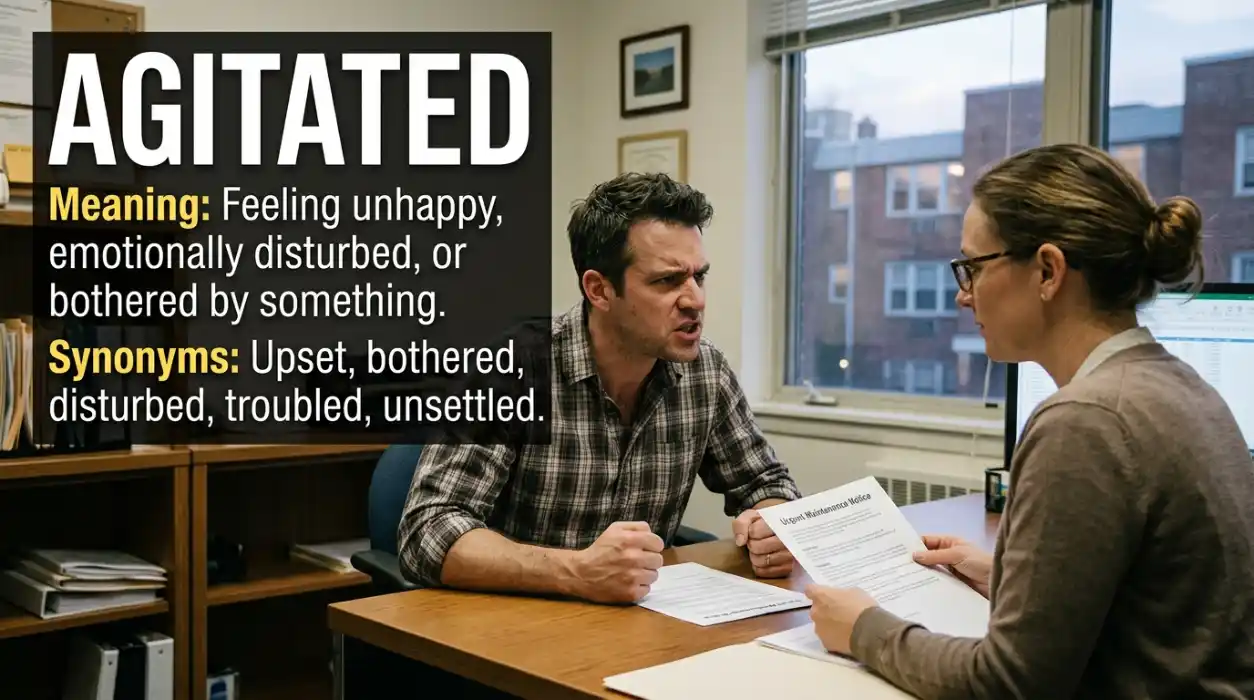
Agitated is an adjective that describes someone who is emotionally disturbed, worried, angry, nervous, or unable to remain calm.
In simple English, agitated means very unsettled or upset, often in a way that can be seen through words, movements, or behavior.
For example:
“She became agitated when the meeting ran late.”
The sentence suggests more than ordinary concern. Her emotional state has become visibly unsettled.
Native speakers commonly use agitated for situations involving stress, frustration, anger, fear, anxiety, or strong emotional disturbance.
It can also describe physical movement. For example, an agitated liquid has been stirred or disturbed.
Part of Speech
Agitated is mainly an adjective.
It comes from the verb agitate, as in:
- Verb: The news agitated him.
- Adjective: He looked agitated.
- Noun: Her agitation was obvious.
Connotative Meaning
Connotation means the emotional or cultural feeling that a word suggests beyond its basic dictionary meaning.
Positive tone
Agitated usually has little genuinely positive meaning. However, in some contexts, intense emotional energy can appear constructive.
For example, someone may be emotionally stirred because they care deeply about an important issue.
Negative tone
This is the most common use.
Agitated can suggest anxiety, irritation, anger, fear, frustration, or emotional disturbance.
“The customer sounded agitated after waiting for an hour.”
Neutral tone
In scientific or technical contexts, agitated can be neutral.
“The solution was kept agitated during the experiment.”
Here, it simply means stirred or continuously moved.
Etymology of “Agitated”
Agitated comes from the Latin verb agitāre, meaning “to drive,” “move,” “stir,” or “put into motion.”
The word entered English through French and Latin-based vocabulary. English developed agitate as a verb meaning to move physically and later to disturb the mind or emotions.
Old English: 450–1100
Agitated was not an established Old English word. Old English had native words for ideas such as disturbance, movement, fear, and trouble.
Middle English: 1100–1500
The Latin-derived family behind agitate had not yet become a normal part of everyday Middle English vocabulary in its modern form.
Modern English: 1500–Present
Agitate appeared in English during the early modern period. Its meanings developed from physical movement toward emotional disturbance and later toward the idea of strongly promoting an issue or cause.
Agitated developed as the past participle and adjective.
Pronunciation
US: /ˈædʒəteɪtɪd/
UK: /ˈædʒɪteɪtɪd/
Syllables
ag-i-tat-ed
A simple pronunciation guide is:
AJ-uh-tay-tid
Affixation Pattern of “Agitated”
Root: agit-
Prefix: none in the modern English word
Suffix: -ate forms the verb agitate, while -ed forms the past participle and adjective agitated.
Synonyms List
Upset (Adjective) — US /ʌpˈsɛt/ | UK /ʌpˈset/
Meaning: Feeling unhappy, emotionally disturbed, or bothered by something.
Tone/Register: Neutral, everyday.
Examples:
She was upset about the sudden cancellation.
He looked upset after reading the message.
Distressed (Adjective) — US /dɪˈstrɛst/ | UK /dɪˈstrɛst/
Meaning: Feeling serious emotional pain, worry, or suffering.
Tone/Register: Formal, serious.
Examples:
The child became distressed during the storm.
She sounded distressed on the phone.
Perturbed (Adjective) — US /pərˈtɝːbd/ | UK /pəˈtɜːbd/
Meaning: Feeling worried, unsettled, or disturbed by something unexpected.
Tone/Register: Formal, literary.
Examples:
He seemed perturbed by the unusual question.
The manager looked perturbed after the announcement.
Disturbed (Adjective) — US /dɪˈstɝːbd/ | UK /dɪˈstɜːbd/
Meaning: Emotionally unsettled or troubled.
Tone/Register: Neutral to formal.
Examples:
She felt disturbed by what she had witnessed.
His disturbed expression caught everyone’s attention.
Troubled (Adjective) — US /ˈtrʌbəld/ | UK /ˈtrʌbəld/
Meaning: Worried or emotionally burdened by a problem.
Tone/Register: Neutral, literary.
Examples:
He has been troubled by the decision.
Her troubled expression revealed her concern.
Unsettled (Adjective) — US /ʌnˈsɛtəld/ | UK /ʌnˈsetəld/
Meaning: Unable to feel calm, secure, or emotionally steady.
Tone/Register: Neutral.
Examples:
The strange noise left me unsettled.
She felt unsettled before the interview.
Uneasy (Adjective) — US /ʌnˈiːzi/ | UK /ʌnˈiːzi/
Meaning: Slightly worried, uncomfortable, or nervous.
Tone/Register: Neutral, everyday.
Examples:
I felt uneasy walking home alone.
His silence made everyone uneasy.
Anxious (Adjective) — US /ˈæŋkʃəs/ | UK /ˈæŋkʃəs/
Meaning: Worried or nervous about something that may happen.
Tone/Register: Neutral, common.
Examples:
She felt anxious before the presentation.
He became anxious when the train was delayed.
Nervous (Adjective) — US /ˈnɝːvəs/ | UK /ˈnɜːvəs/
Meaning: Worried, tense, or afraid about an upcoming situation.
Tone/Register: Everyday, informal to neutral.
Examples:
I was nervous before my first interview.
He gets nervous when speaking to large groups.
Restless (Adjective) — US /ˈrɛstləs/ | UK /ˈrestləs/
Meaning: Unable to relax, sit still, or remain calm.
Tone/Register: Neutral.
Examples:
The children became restless during the long flight.
She felt restless after staying all day indoors.
Tense (Adjective) — US /tɛns/ | UK /tens/
Meaning: Physically or emotionally tight because of stress or pressure.
Tone/Register: Neutral.
Examples:
He looked tense during the negotiation.
The room became tense after the disagreement.
Worried (Adjective) — US /ˈwɝːid/ | UK /ˈwʌrid/
Meaning: Thinking about a problem with fear or concern.
Tone/Register: Everyday.
Examples:
My parents were worried about the storm.
She looked worried when the bus did not arrive.
Concerned (Adjective) — US /kənˈsɝːnd/ | UK /kənˈsɜːnd/
Meaning: Feeling that something may be wrong or harmful.
Tone/Register: Neutral, professional.
Examples:
The teacher was concerned about his absence.
We are concerned about the sudden change.
Apprehensive (Adjective) — US /ˌæprɪˈhɛnsɪv/ | UK /ˌæprɪˈhensɪv/
Meaning: Nervous because you expect something unpleasant or uncertain.
Tone/Register: Formal.
Examples:
She felt apprehensive about moving abroad.
He was apprehensive before opening the results.
Fretful (Adjective) — US /ˈfrɛtfəl/ | UK /ˈfretfəl/
Meaning: Frequently worried, irritated, or unable to relax.
Tone/Register: Literary, somewhat old-fashioned.
Examples:
The baby became fretful before bedtime.
He had a fretful night before the exam.
Disquieted (Adjective) — US /dɪsˈkwaɪətɪd/ | UK /dɪsˈkwaɪətɪd/
Meaning: Made uneasy or worried by something troubling.
Tone/Register: Formal, literary.
Examples:
The report left investors disquieted.
She felt disquieted by the sudden silence.
Discomposed (Adjective) — US /ˌdɪskəmˈpoʊzd/ | UK /ˌdɪskəmˈpəʊzd/
Meaning: Emotionally disturbed and no longer calm or composed.
Tone/Register: Formal, literary.
Examples:
He appeared discomposed after the accusation.
The unexpected question left her discomposed.
Flustered (Adjective) — US /ˈflʌstərd/ | UK /ˈflʌstəd/
Meaning: Confused, nervous, or upset because of sudden pressure.
Tone/Register: Everyday.
Examples:
I got flustered when everyone started asking questions.
She looked flustered after missing her cue.
Rattled (Adjective) — US /ˈrætəld/ | UK /ˈrætəld/
Meaning: Shaken or made nervous by an unexpected event.
Tone/Register: Informal.
Examples:
The criticism left him rattled.
She was rattled by the sudden phone call.
Shaken (Adjective) — US /ˈʃeɪkən/ | UK /ˈʃeɪkən/
Meaning: Emotionally shocked or disturbed by an upsetting experience.
Tone/Register: Neutral.
Examples:
He was shaken after the accident.
She looked shaken but remained calm.
Frazzled (Adjective) — US /ˈfræzəld/ | UK /ˈfræzəld/
Meaning: Extremely tired, stressed, and unable to think calmly.
Tone/Register: Informal.
Examples:
I was completely frazzled after a busy morning.
She sounded frazzled during the hectic call.
Overwrought (Adjective) — US /ˌoʊvərˈrɔːt/ | UK /ˌəʊvəˈrɔːt/
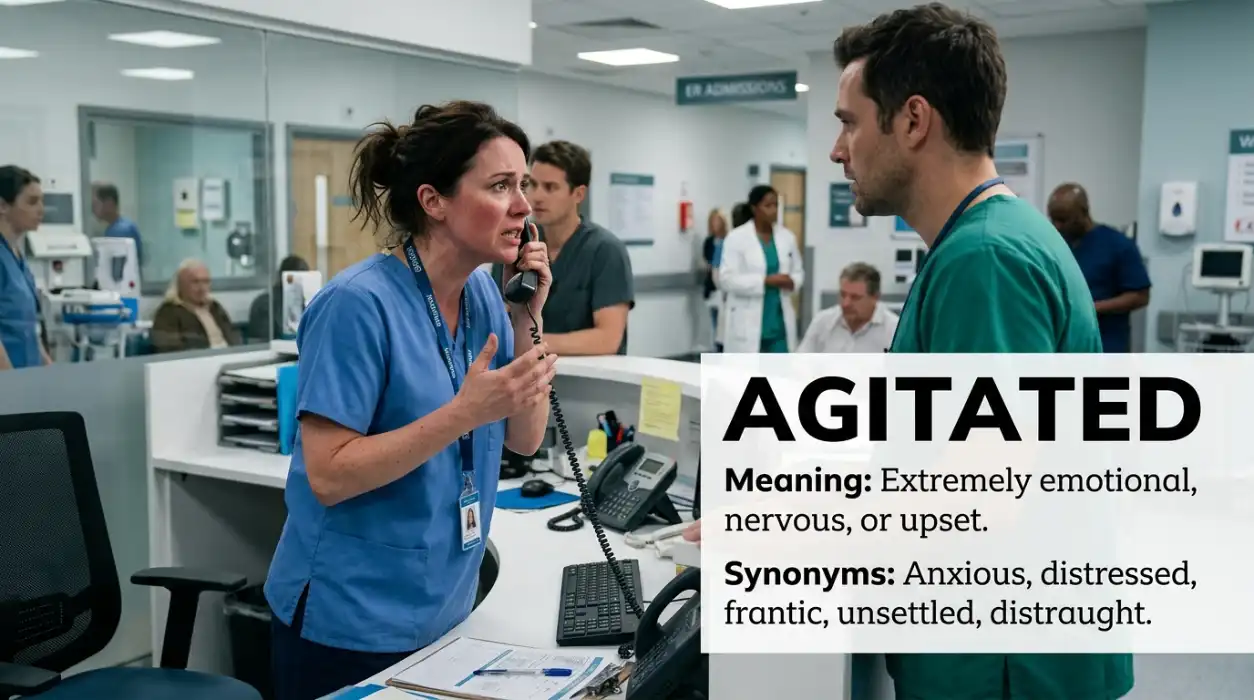
Meaning: Extremely emotional, nervous, or upset.
Tone/Register: Formal, literary.
Examples:
His overwrought reaction surprised the team.
The character becomes overwrought after the revelation.
Worked-up (Adjective) — US /ˌwɝːkt ˈʌp/ | UK /ˌwɜːkt ˈʌp/
Meaning: Very upset, excited, or angry about something.
Tone/Register: Informal.
Examples:
Don’t get so worked up about a small mistake.
He was worked up after the argument.
Heated (Adjective) — US /ˈhiːtɪd/ | UK /ˈhiːtɪd/
Meaning: Emotionally intense, especially because of anger or disagreement.
Tone/Register: Neutral.
Examples:
The discussion became heated quickly.
They had a heated exchange about the proposal.
Irritated (Adjective) — US /ˈɪrɪteɪtɪd/ | UK /ˈɪrɪteɪtɪd/
Meaning: Slightly angry or annoyed because something is bothersome.
Tone/Register: Neutral.
Examples:
She sounded irritated by the repeated interruptions.
He became irritated when the printer stopped working.
Annoyed (Adjective) — US /əˈnɔɪd/ | UK /əˈnɔɪd/
Meaning: Mildly angry because someone or something is bothersome.
Tone/Register: Everyday.
Examples:
I was annoyed by the constant noise.
She looked annoyed when the meeting started late.
Exasperated (Adjective) — US /ɪɡˈzæspəreɪtɪd/ | UK /ɪɡˈzɑːspəreɪtɪd/
Meaning: Extremely annoyed because a frustrating problem continues.
Tone/Register: Formal to neutral.
Examples:
The teacher sounded exasperated after repeating the instructions.
He gave an exasperated sigh.
Irate (Adjective) — US /aɪˈreɪt/ | UK /aɪˈreɪt/
Meaning: Very angry, especially because of a perceived wrong.
Tone/Register: Formal, professional.
Examples:
An irate customer demanded an explanation.
The editor received an irate email.
Incensed (Adjective) — US /ɪnˈsenst/ | UK /ɪnˈsenst/
Meaning: Extremely angry because something seems unfair or offensive.
Tone/Register: Formal.
Examples:
Residents were incensed by the sudden closure.
She was incensed by the unfair accusation.
Enraged (Adjective) — US /ɪnˈreɪdʒd/ | UK /ɪnˈreɪdʒd/
Meaning: Extremely angry and emotionally intense.
Tone/Register: Strong, dramatic.
Examples:
The unfair decision left him enraged.
She became enraged when she discovered the deception.
Furious (Adjective) — US /ˈfjʊriəs/ | UK /ˈfjʊəriəs/
Meaning: Extremely angry.
Tone/Register: Everyday, strong.
Examples:
Dad was furious about the broken window.
She was furious when the appointment was canceled.
Livid (Adjective) — US /ˈlɪvɪd/ | UK /ˈlɪvɪd/
Meaning: Extremely angry.
Tone/Register: Informal to neutral.
Examples:
He was livid after discovering the mistake.
She looked livid when she heard the news.
Fuming (Adjective) — US /ˈfjuːmɪŋ/ | UK /ˈfjuːmɪŋ/
Meaning: Extremely angry, often while showing visible frustration.
Tone/Register: Informal.
Examples:
She was fuming after missing the flight.
He left the office fuming.
Wrathful (Adjective) — US /ˈræθfəl/ | UK /ˈræθfəl/
Meaning: Showing or feeling intense anger.
Tone/Register: Literary, formal.
Examples:
The novel describes a wrathful king.
His wrathful speech frightened the audience.
Frantic (Adjective) — US /ˈfræntɪk/ | UK /ˈfræntɪk/
Meaning: Extremely anxious or excited and unable to think or act calmly.
Tone/Register: Neutral, strong.
Examples:
The parents made frantic calls for help.
I became frantic when I could not find my passport.
Feverish (Adjective) — US /ˈfiːvərɪʃ/ | UK /ˈfiːvərɪʃ/
Meaning: Showing intense excitement, nervous energy, or restless activity.
Tone/Register: Literary, descriptive.
Examples:
The newsroom was feverish before the announcement.
She worked at a feverish pace all night.
Hectic (Adjective) — US /ˈhɛktɪk/ | UK /ˈhektɪk/
Meaning: Full of busy, rushed, and stressful activity.
Tone/Register: Everyday.
Examples:
The office was hectic before the deadline.
It was a hectic morning at the airport.
Restive (Adjective) — US /ˈrɛstɪv/ | UK /ˈrestɪv/
Meaning: Unable to remain still or calm, especially because of impatience.
Tone/Register: Formal.
Examples:
The audience grew restive during the delay.
The horses became restive before the storm.
Agitated (Adjective) — US /ˈædʒəteɪtɪd/ | UK /ˈædʒɪteɪtɪd/
Meaning: Emotionally disturbed, restless, worried, or angry.
Tone/Register: Neutral, formal.
Examples:
The caller became agitated during the conversation.
She looked agitated after hearing the complaint.
Stirred (Adjective) — US /stɝːd/ | UK /stɜːd/
Meaning: Emotionally moved or disturbed by something.
Tone/Register: Literary, neutral.
Examples:
The speech left the audience deeply stirred.
He felt stirred by memories of home.
Stirred-up (Adjective) — US /ˌstɝːd ˈʌp/ | UK /ˌstɜːd ˈʌp/
Meaning: Emotionally excited, disturbed, or upset.
Tone/Register: Informal.
Examples:
The controversy left the community stirred up.
He seemed stirred up after reading the comments.
Excitable (Adjective) — US /ɪkˈsaɪtəbəl/ | UK /ɪkˈsaɪtəbəl/
Meaning: Easily made emotionally excited or nervous.
Tone/Register: Neutral.
Examples:
The puppy is excitable around new people.
He has an excitable personality during competitions.
Animated (Adjective) — US /ˈænəmeɪtɪd/ | UK /ˈænɪmeɪtɪd/
Meaning: Showing strong emotion, energy, or excitement.
Tone/Register: Neutral, often positive.
Examples:
She became animated while describing the trip.
The children were animated during the game.
Aroused (Adjective) — US /əˈraʊzd/ | UK /əˈraʊzd/
Meaning: Emotionally or mentally stimulated by something.
Tone/Register: Formal, context-dependent.
Examples:
The announcement aroused strong public concern.
The story aroused his curiosity.
Activated (Adjective) — US /ˈæktəveɪtɪd/ | UK /ˈæktəveɪtɪd/
Meaning: Brought into a state of increased activity or response.
Tone/Register: Technical, formal.
Examples:
The alarm activated an immediate response.
The event activated strong emotions in the audience.
Excited (Adjective) — US /ɪkˈsaɪtɪd/ | UK /ɪkˈsaɪtɪd/
Meaning: Feeling strong enthusiasm, anticipation, or emotional energy.
Tone/Register: Everyday, often positive.
Examples:
The students were excited about the school trip.
She sounded excited about the new opportunity.
Eager (Adjective) — US /ˈiːɡər/ | UK /ˈiːɡə/
Meaning: Very interested and enthusiastic about doing or receiving something.
Tone/Register: Neutral, positive.
Examples:
The interns were eager to begin.
He was eager to hear the final result.
Impatient (Adjective) — US /ɪmˈpeɪʃənt/ | UK /ɪmˈpeɪʃənt/
Meaning: Unable to wait calmly because of frustration or urgency.
Tone/Register: Neutral.
Examples:
The children became impatient in the long queue.
She grew impatient with the repeated delays.
Aggravated (Adjective) — US /ˈæɡrəveɪtɪd/ | UK /ˈæɡrəveɪtɪd/
Meaning: Annoyed or frustrated by a difficult situation.
Tone/Register: Everyday, especially common in American English.
Examples:
He felt aggravated by the software error.
She became aggravated after several failed attempts.
Vexed (Adjective) — US /vɛkst/ | UK /vekst/
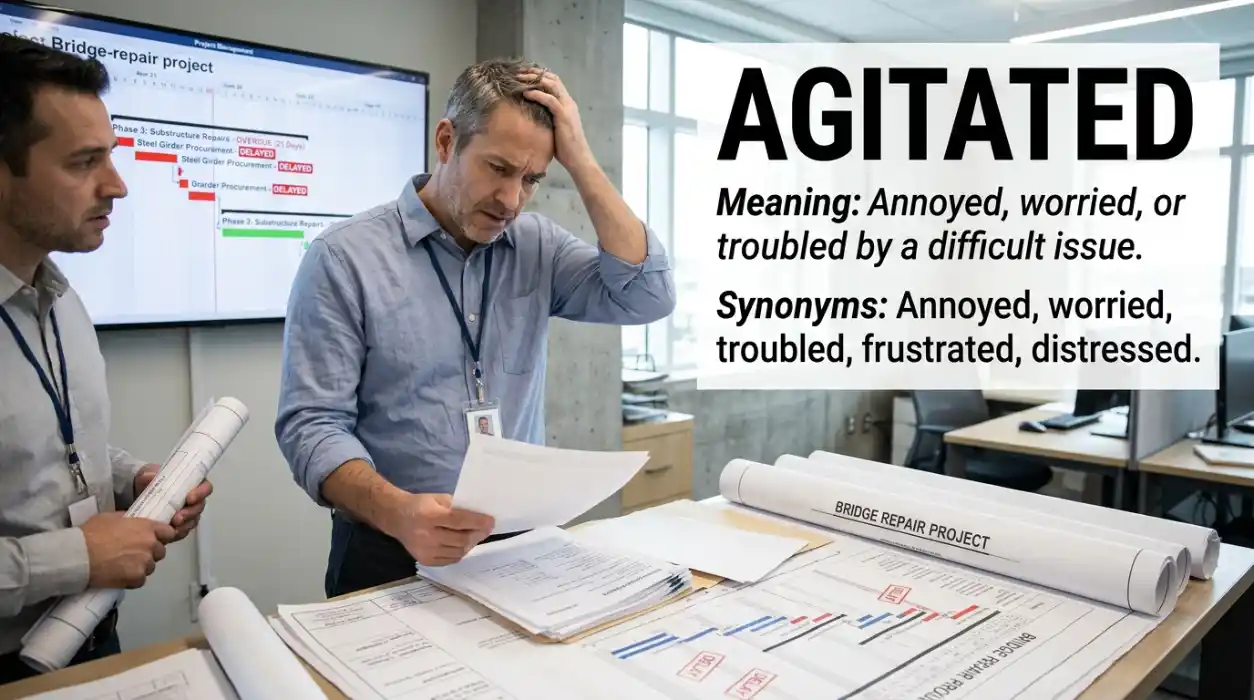
Meaning: Annoyed, worried, or troubled by a difficult issue.
Tone/Register: Formal, literary.
Examples:
The committee remained vexed by the problem.
She looked vexed by the unexpected request.
Synonyms for Agitated by Tone
Word choice matters because two words can describe similar emotions while creating very different impressions.
Positive or energetic
Some alternatives can suggest energy rather than distress.
- Animated
- Excited
- Eager
- Stirred
- Aroused
- Breathless
- Agog
These are useful when emotional energy is enthusiastic rather than angry or troubled.
Neutral
These choices work well when you want to describe emotional disturbance without sounding overly dramatic.
- Upset
- Uneasy
- Unsettled
- Worried
- Concerned
- Nervous
- Tense
- Disturbed
- Troubled
- Shaken
Negative or intense
Use these when the person’s emotional state is clearly unpleasant or severe.
- Distressed
- Perturbed
- Distraught
- Furious
- Enraged
- Incensed
- Irate
- Livid
- Fuming
- Exasperated
- Frantic
- Overwrought
Playful or informal
These choices sound more conversational.
- Flustered
- Rattled
- Frazzled
- Worked-up
- Touchy
- Testy
- Snappy
- High-strung
The best synonym depends on what caused the emotion, how intense it is, and whether you are speaking or writing.
“Agitated” vs Close Alternatives
Anxious vs Agitated
Agitated suggests visible emotional disturbance. The person may pace, argue, speak quickly, or appear unable to settle.
Anxious focuses more directly on worry or fear about something that may happen.
Use agitated when the emotional disturbance is noticeable. Use anxious when worry is the central idea.
Agitated vs Upset
Upset is broader and more common in everyday conversation.
Someone can be upset without appearing restless or intensely disturbed. Agitated usually suggests a stronger, more visible reaction.
Agitated vs Irritated
Irritated normally means annoyed.
Agitated can include annoyance, but it can also involve anxiety, fear, nervousness, or emotional restlessness.
How “Agitated” Changes by Context
Daily Conversation
In casual speech, upset, nervous, worked-up, annoyed, and restless often sound more natural than agitated.
For example, a friend might say:
“Don’t get so worked-up about it.”
In a casual conversation, agitated can sound slightly more formal or observational.
Writing or Blogging
Writers often choose agitated when they want readers to notice a character’s visible emotional state.
Instead of repeatedly writing “angry,” you can use irritated, fuming, livid, or exasperated when those shades are accurate.
This creates stronger descriptions without unnecessary adjectives.
Professional or Academic English
Agitated works well in reports, observations, and formal descriptions.
For example:
“The customer became agitated during the discussion.”
In professional writing, concerned, distressed, perturbed, or uneasy may provide greater precision.
Creative or Informal Use
Creative writing allows stronger and more colorful choices.
Words such as rattled, frazzled, fuming, and high-strung can create a more conversational character voice.
However, the emotional intensity should match the scene.
Common Mistakes Learners Make
Mistake 1: Treating every synonym as identical
The words are related, but they are not interchangeable in every sentence.
Anxious emphasizes worry.
Furious emphasizes extreme anger.
Restless emphasizes difficulty staying still.
Flustered emphasizes confusion under pressure.
Mistake 2: Using “agitated” for every kind of excitement
Agitated usually carries a sense of disturbance.
If someone is happily excited about a birthday, excited or eager is usually more natural.
Mistake 3: Confusing “irate” with “anxious”
Irate means very angry.
Anxious means worried or nervous.
The emotional causes are different.
Mistake 4: Using formal words in casual conversations
Words such as discomposed, disquieted, and vexed are valid, but they may sound literary or formal.
In ordinary conversation, upset, worried, annoyed, or nervous often sounds more natural.
Mistake 5: Overusing one synonym
Repeating agitated throughout an essay can make your writing feel flat.
However, replacing it with random synonyms can create a different problem: inaccurate word choice.
Choose a synonym based on meaning first.
Register Notes
Formal: perturbed, disquieted, discomposed, irate, incensed, apprehensive, disconcerted
Neutral: agitated, upset, anxious, concerned, uneasy, tense, troubled, disturbed
Informal: worked-up, rattled, frazzled, touchy, testy, snappy
Literary: vexed, overwrought, wrathful, tumultuous, stirred
Professional: concerned, distressed, perturbed, agitated, apprehensive
A useful internal linking strategy is to connect this article with a related guide about synonyms for angry when building a vocabulary-focused content cluster.
Real-Life Mini Scenarios
Workplace
A manager may become concerned about a missed deadline.
If a disagreement becomes intense, the manager may appear agitated or heated.
If frustration becomes extreme, exasperated may be more precise.
Social Situations
A friend waiting for important news may feel anxious.
Someone dealing with an awkward surprise may become flustered.
A person who has just experienced something frightening may look shaken.
Media and Pop Culture
News reports often use agitated, irate, or incensed when describing a person’s visible reaction.
Entertainment writing may prefer furious, rattled, or worked-up because these words create a stronger voice.
Writing and Storytelling
A novelist can show emotion through behavior rather than simply naming it.
For example:
“He paced across the room, visibly agitated.”
Or:
“She was rattled by the unexpected message.”
The second version gives the reader a slightly different emotional picture.
Practice Exercise
1. You feel worried before your first job interview. Which word fits best?
A. Furious
B. Anxious
C. Livid
D. Incensed
2. A customer is extremely angry about a serious service failure. Which word is strongest?
A. Uneasy
B. Nervous
C. Irate
D. Eager
3. You cannot sit still because the long meeting is boring. Which word fits?
A. Restless
B. Incensed
C. Distraught
D. Wrathful
4. You become confused when five people ask questions at once. Which word fits best?
A. Flustered
B. Eager
C. Concerned
D. Tranquil
5. Someone is extremely angry after discovering a major betrayal. Which word fits?
A. Livid
B. Uneasy
C. Restive
D. Apprehensive
6. A person is worried about an uncertain future event. Which word is most precise?
A. Anxious
B. Furious
C. Heated
D. Snappy
7. A discussion becomes emotionally intense because both sides are arguing. Which word fits?
A. Heated
B. Eager
C. Breathless
D. Concerned
8. Someone is extremely tired and stressed after a chaotic morning. Which word fits?
A. Frazzled
B. Agog
C. Eager
D. Animated
9. A person feels slightly uncomfortable because something seems wrong. Which word fits?
A. Uneasy
B. Enraged
C. Fuming
D. Wrathful
10. A person is very angry and speaks sharply after repeated mistakes. Which word fits?
A. Exasperated
B. Eager
C. Breathless
D. Animated
Answer key: 1-B | 2-C | 3-A | 4-A | 5-A | 6-A | 7-A | 8-A | 9-A | 10-A
Reflection Task
Write one sentence about a real situation using agitated, anxious, flustered, irritated, or another synonym from this guide.
Conclusion
Understanding the meaning and synonyms of agitated can help you express emotions more accurately and naturally. Whether someone is feeling upset, restless, anxious, irritated, or disturbed, choosing the right word can make your communication clearer and more effective.
The word agitated is commonly used to describe a person who is emotionally disturbed, uneasy, or visibly upset. Depending on the situation, synonyms such as frustrated, tense, unsettled, or distressed can provide a more specific description of someone’s feelings and behavior.
By learning different alternatives to agitated, you can improve your vocabulary and avoid repeating the same word in your writing or everyday conversations. Selecting the most suitable synonym based on the context will make your sentences more precise, engaging, and meaningful.
FAQs
1. What are the best synonyms for agitated when someone is nervous?
Useful choices include anxious, uneasy, apprehensive, nervous, tense, unsettled, and unnerved. The best option depends on the situation. Anxious emphasizes worry, while apprehensive often suggests concern about something expected in the future. Uneasy is milder and more conversational. Unnerved suggests that something has disturbed a person’s confidence or sense of calm.
2. Which synonym for agitated is appropriate for professional writing?
For professional writing, concerned, distressed, perturbed, apprehensive, and agitated can work well. The choice depends on the evidence you have. If you are describing observable behavior, “agitated” can be precise. If the person appears worried, “concerned” may be clearer. Avoid dramatic terms such as “furious” unless the context genuinely supports that level of emotion.
3. What is a polite alternative to saying someone is agitated?
Concerned, uneasy, unsettled, or distressed can sound less confrontational, depending on the situation. For example, instead of saying “The customer was agitated,” you could write, “The customer appeared concerned about the delay.” This approach can be useful in workplace communication because it describes the situation without unnecessarily assigning a strong emotional judgment.
4. What is the difference between agitated and frustrated?
Agitated describes a visibly unsettled emotional state. Frustrated focuses on annoyance caused by an obstacle, failure, delay, or inability to achieve something. A frustrated person may become agitated, but the words are not exact equivalents. For example, someone can feel frustrated by a difficult task while remaining calm. Agitation usually suggests that the emotional reaction is more noticeable.
5. Which synonyms for agitated are suitable for essays?
For essays, consider disturbed, concerned, uneasy, apprehensive, perturbed, unsettled, and distressed when their meanings fit. Academic writing benefits from precision, so avoid selecting a word simply because it sounds sophisticated. Explain the specific emotional state you mean. Perturbed may suit formal prose, while upset may be better when clarity and simplicity are more important.

Hasnain Ali is an SEO Content Strategist and the founder of wordvora.com, a trusted vocabulary platform that helps writers, students, professionals, and English learners find accurate synonyms, antonyms, word meanings, and real-life usage examples. He specializes in keyword research, on-page SEO, topical authority, and creating search-first content that aligns with Google’s latest Search Quality and E-E-A-T guidelines. His work focuses on producing clear, well-structured, and reader-friendly resources that satisfy search intent while maintaining high editorial standards.
Through extensive hands-on experience with SEO tools such as Google Search Console, Google Analytics, SEMrush, and Ahrefs, Hasnain researches user search behavior and develops content that is both informative and easy to understand. Every article published on wordvora.com is carefully reviewed for accuracy, readability, and contextual relevance before publication. His mission is to build one of the web’s most reliable English vocabulary resources by providing practical language guidance, trustworthy explanations, and content that helps readers improve their writing, communication, and vocabulary with confidence.