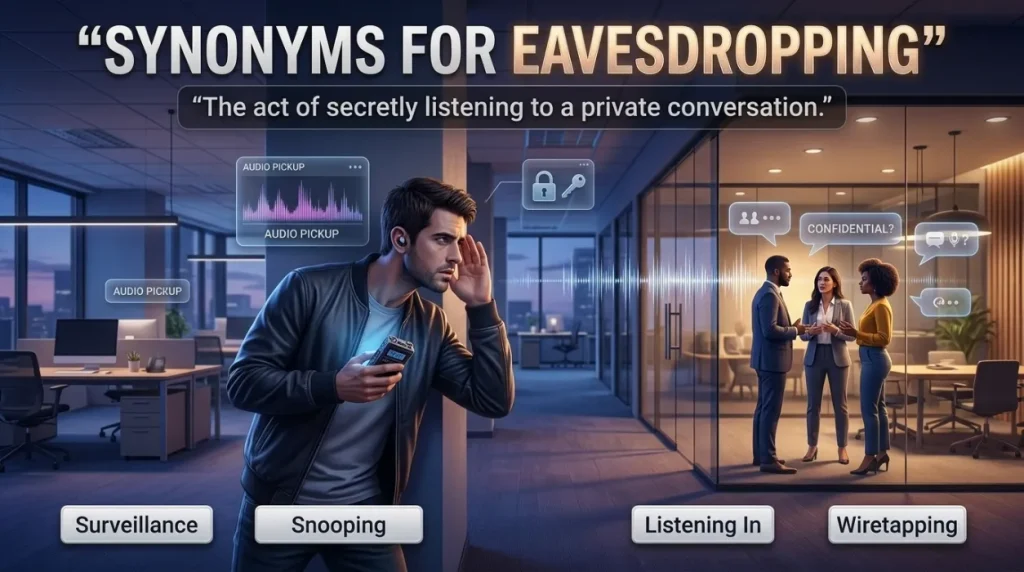
In today’s digital world, privacy has become more important than ever. Eavesdropping means secretly listening to someone’s private conversation without their knowledge or permission. It can happen in person or through phones, computers, and other connected devices.
The practice of eavesdropping can take many forms, from overhearing conversations in public places to monitoring digital communications. As technology continues to evolve, understanding these privacy risks can help people protect their personal and sensitive information.
People may engage in eavesdropping for different reasons, including curiosity, information gathering, or malicious intent. However, secretly accessing private conversations can damage trust and create serious privacy and security concerns for individuals and organizations.
In this article, we will explore the meaning, common forms, risks, and prevention methods associated with eavesdropping. By understanding how unauthorized listening can occur, readers can take practical steps to improve their privacy, protect sensitive conversations, and communicate more securely.
What Does “Eavesdropping” Really Mean?
Eavesdropping means secretly listening to the private conversation of others without their consent or knowledge. It describes the act of gathering confidential spoken words through stealth.
Native speakers use this word when discussing security breaches, nosy neighbors, or corporate espionage. It carries a sneaky, intrusive, and often unethical emotional tone. It usually suggests privacy violations, hidden microphones, or curious plotting.
Connotative Meaning
- Positive tone: Never used positively, as it inherently describes a breach of privacy.
- Negative tone: Associated with spying, untrustworthiness, secrecy, and boundary violations.
- Neutral tone: Sometimes used in technical or legal settings to describe authorized audio interception.
- Connotation definition: (The emotional or cultural feeling attached to a word beyond its strict dictionary definition).
Etymology
- Source Language: Old English (eavesdrop meaning the ground where water drips from the eaves of a house).
- Original Meaning: Originally referred to standing close to a house wall under the eaves to listen secretly to indoor conversations.
- Old English (450–1100): Derived from efes (edge or rim of a roof) and dropian (to drop water), evolving into the place where listeners hid.
- Middle English (1100–1500): The noun evesdropper emerged in legal codes to penalize those who loitered under windows to gossip.
- Modern English (1500–Present): Shifted from literal wall loitering to general secret listening, including modern digital wiretaps.

Pronunciation (US & UK – IPA)
- US: /ˈiːvzˌdrɑːpɪŋ/
- UK: /iːvzˌdrɒpɪŋ/
Syllables & Affixation Pattern
- Syllables: eaves-drop-ping
- Root: eavesdrop (verb derived from house eaves)
- Prefix: None
- Suffix: -ing (present participle suffix)
Synonyms List
Listening In (Verb Phrase) — US: /ˈlɪsənɪŋ ɪn/ — UK: /ˈlɪsnɪŋ ɪn/
- Meaning: Monitoring a conversation quietly without letting participants know you are present.
- Tone/Register: Informal, conversational.
- Example: She caught her brother listening in on her phone call from the hallway.
- Example: Parents sometimes find themselves listening in on teenage text conversations.
Wiretapping (Noun/Verb) — US: /ˈwaɪərˌtæpɪŋ/ — UK: /ˈwaɪəˌtæpɪŋ/
- Meaning: Connecting a secret listening device to a telephone line to record calls.
- Tone/Register: Legal, technical.
- Example: Investigators secured a judge’s warrant for legal wiretapping of the suspect.
- Example: Cyber criminals attempt illegal wiretapping to steal private banking details.
Intercepting (Verb) — US: /ˌɪntərˈsɛptɪŋ/ — UK: /ˌɪntəˈsɛptɪŋ/
- Meaning: Stopping or seizing communication signals traveling from one point to another.
- Tone/Register: Technical, formal.
- Example: Intelligence agents spent hours intercepting secret radio communications.
- Example: The firewall blocked hackers from intercepting confidential company data packets.
Monitoring (Verb) — US: /ˈmɑːnɪtərɪŋ/ — UK: /ˈmɒnɪtərɪŋ/
- Meaning: Closely watching, observing, or listening to a process or transmission over time.
- Tone/Register: Professional, technical.
- Example: Security guards spent the night monitoring closed-circuit camera feeds.
- Example: Network engineers began monitoring server traffic for unusual activity spikes.
Surveillance (Noun) — US: /sɜːrˈveɪləns/ — UK: /sɜːˈveɪləns/
- Meaning: Close observation of a person or group, especially by law enforcement.
- Tone/Register: Formal, legal.
- Example: Police placed the abandoned warehouse under heavy electronic surveillance.
- Example: Public security cameras provide constant surveillance across downtown streets.
Bugging (Noun/Verb) — US: /ˈbʌɡɪŋ/ — UK: /ˈbʌɡɪŋ/
- Meaning: Concealing a miniature electronic microphone inside a room to record conversations.
- Tone/Register: Informal, criminal.
- Example: Spies suspected the hotel room featured hidden bugging equipment.
- Example: Detectives checked the conference table for illegal office bugging devices.
Snooping (Verb) — US: /ˈsnuːpɪŋ/ — UK: /ˈsnuːpɪŋ/
- Meaning: Investigating or prying around secret places in a sneaky manner.
- Tone/Register: Informal, everyday.
- Example: He hated when his younger sister started snooping through his desk drawers.
- Example: Nosy neighbors spent their afternoon snooping into community gossip.
Prying (Adjective/Verb) — US: /ˈpraɪɪŋ/ — UK: /ˈpraɪɪŋ/
- Meaning: Inquisitive in an annoying, intrusive, or overly nosy way.
- Tone/Register: Conversational, descriptive.
- Example: She ignored the prying questions from her relatives during dinner.
- Example: Reporters kept prying into the personal life of the celebrity.
Overhearing (Verb) — US: /ˌoʊvərˈhɜːrɪŋ/ — UK: /ˌəʊvəˈhɜːdɪŋ/
- Meaning: Hearing something accidentally without intending to listen to secret talk.
- Tone/Register: Standard, everyday.
- Example: He avoided overhearing the private argument next door by closing his window.
- Example: She ended up overhearing the secret project plans on the bus.
Espionage (Noun) — US: /ˈɛspiəˌnɑːʒ/ — UK: /ˈɛspiəniːʒ/
- Meaning: The practice of spying or using secret spies to obtain political information.
- Tone/Register: Formal, political.
- Example: The government charged the foreign diplomat with industrial espionage.
- Example: Cold war thrillers often feature intense plots revolving around corporate espionage.
Infiltration (Noun) — US: /ˌɪnfɪlˈtreɪʃən/ — UK: /ˌɪnfɪlˈtreɪʃn/
- Meaning: Entering an organization or group secretly to gather intelligence.
- Tone/Register: Formal, military.
- Example: Security teams blocked an attempted infiltration by rival corporate agents.
- Example: The undercover operation depended on successful infiltration of the syndicate.
Peeping (Verb) — US: /ˈpiːpɪŋ/ — UK: /ˈpiːpɪŋ/
- Meaning: Looking secretly through a small opening or from a hidden spot.
- Tone/Register: Informal, descriptive.
- Example: The toddler was caught peeping through the wrapped holiday presents.
- Example: He spent hours peeping out the blinds to watch street traffic.
Stalking (Verb) — US: /ˈstɔːkɪŋ/ — UK: /stɔːkɪŋ/
- Meaning: Pursuing or observing someone stealthily and obsessively over time.
- Tone/Register: Serious, legal.
- Example: Police arrested the individual for cyber stalking the local public figure.
- Example: Victims of online stalking require immediate legal and technical protection.
Escutcheoning (Noun) — US: /ɪˈskʌtʃənɪŋ/ — UK: /ɪˈskʌtʃənɪŋ/
- Meaning: Architectural framing term historically linked to structural wall edges.
- Tone/Register: Architectural, rare.
- Example: Carpenters inspected the decorative escutcheoning around the doorway.
- Example: Historical building guides explained the traditional escutcheoning methods.
Tailing (Verb) — US: /ˈteɪlɪŋ/ — UK: /ˈteɪlɪŋ/
- Meaning: Following someone closely and secretly to track their daily movements.
- Tone/Register: Informal, detective work.
- Example: Private investigators spent days tailing the cheating business partner.
- Example: The detective enjoyed tailing suspects through crowded subway stations.
Shadowing (Verb) — US: /ˈʃædoʊɪŋ/ — UK: /ˈʃædəʊɪŋ/
- Meaning: Following someone stealthily to observe their actions and conversations.
- Tone/Register: Professional, investigative.
- Example: New security recruits spent weeks shadowing senior undercover agents.
- Example: The journalist began shadowing the mayor during campaign events.

Intermeddling (Verb) — US: /ˌɪntərˈmɛdəlɪŋ/ — UK: /ˌɪntəˈmɛdlɪŋ/
- Meaning: Interfering in the affairs of others without invitation or authority.
- Tone/Register: Formal, literary.
- Example: She resented her family intermeddling in her career decisions.
- Example: Laws exist to prevent unauthorized corporate intermeddling in private contracts.
Nosiness (Noun) — US: /ˈnoʊzinəs/ — UK: /ˈnəʊzinəs/
- Meaning: Inquisitive behavior regarding other people’s private business.
- Tone/Register: Informal, conversational.
- Example: Her neighbor’s excessive nosiness drove her to install tall privacy fences.
- Example: He regretted his nosiness after reading the diary page.
Curiosity (Noun) — US: /ˌkjʊriˈɑːsəti/ — UK: /ˌkjʊəriˈɒsɪti/
- Meaning: A strong desire to know or learn something new or hidden.
- Tone/Register: Neutral, standard.
- Example: Natural curiosity pushed the student to research hidden historical archives.
- Example: Cat curiosity often leads to messy kitchen adventures.
Prying Eyes (Noun Phrase) — US: /ˈpraɪɪŋ aɪz/ — UK: /ˈpraɪɪŋ aɪz/
- Meaning: Unwanted observational gaze from nosy or intrusive onlookers.
- Tone/Register: Descriptive, figurative.
- Example: They drew the heavy curtains to block out prying eyes from outside.
- Example: Celebrities crave privacy away from prying eyes and media cameras.
Sapping (Verb) — US: /ˈsæpɪŋ/ — UK: /ˈsæpɪŋ/
- Meaning: Gradually undermining or draining energy and resources from a system.
- Tone/Register: Formal, figurative.
- Example: Secret leaks were sapping employee morale across the department.
- Example: Constant background noise kept sapping his concentration.
Capturing (Verb) — US: /ˈkæptʃərɪŋ/ — UK: /ˈkæptʃərɪŋ/
- Meaning: Recording audio or visual data streams using electronic gear.
- Tone/Register: Technical, standard.
- Example: Audio recorders excelled at capturing whispered conference room dialogue.
- Example: The software specialized in capturing encrypted packet data.
Secret Listening (Noun Phrase) — US: /ˈsiːkrət ˈlɪsənɪŋ/ — UK: /ˈsiːkrət ˈlɪsnɪŋ/
- Meaning: The plain descriptive act of hearing private talk without disclosure.
- Tone/Register: Descriptive, clear.
- Example: The company banned secret listening devices in executive boardrooms.
- Example: Whistleblowers exposed the practice of secret listening among managers.
Hidden Recording (Noun Phrase) — US: /ˈhɪdən rɪˈkɔːrdɪŋ/ — UK: /ˈhɪdn rɪˈkɔːdɪŋ/
- Meaning: Audio documentation gathered using concealed microphones or digital tools.
- Tone/Register: Technical, legal.
- Example: Lawyers debated the admissibility of the hidden recording in court.
- Example: Journalistic ethics committees condemned the use of hidden recording gear.
Audio Tapping (Noun Phrase) — US: /ˈɔːdioʊ ˈtæpɪŋ/ — UK: /ˈɔːdiəʊ ˈtæpɪŋ/
- Meaning: Tapping into phone lines or intercom systems to capture verbal audio.
- Tone/Register: Technical, criminal.
- Example: Police discovered complex audio tapping equipment in the basement.
- Example: Federal agents monitored the audio tapping operation closely.
Intercepting (Verb) — US: /ˌɪntərˈsɛptɪŋ/ — UK: /ˌɪntəˈsɛptɪŋ/
- Meaning: Stopping or seizing communication signals traveling from one point to another.
- Tone/Register: Technical, formal.
- Example: Intelligence agents spent hours intercepting secret radio communications.
- Example: The firewall blocked hackers from intercepting confidential company data packets.
Monitoring (Verb) — US: /ˈmɑːnɪtərɪŋ/ — UK: /ˈmɒnɪtərɪŋ/
- Meaning: Closely watching, observing, or listening to a process or transmission over time.
- Tone/Register: Professional, technical.
- Example: Security guards spent the night monitoring closed-circuit camera feeds.
- Example: Network engineers began monitoring server traffic for unusual activity spikes.
Surveillance (Noun) — US: /sɜːrˈveɪləns/ — UK: /sɜːˈveɪləns/
- Meaning: Close observation of a person or group, especially by law enforcement.
- Tone/Register: Formal, legal.
- Example: Police placed the abandoned warehouse under heavy electronic surveillance.
- Example: Public security cameras provide constant surveillance across downtown streets.
Bugging (Noun/Verb) — US: /ˈbʌɡɪŋ/ — UK: /ˈbʌɡɪŋ/
- Meaning: Concealing a miniature electronic microphone inside a room to record talk.
- Tone/Register: Informal, criminal.
- Example: Spies suspected the hotel room featured hidden bugging equipment.
- Example: Detectives checked the conference table for illegal office bugging devices.
Snooping (Verb) — US: /ˈsnuːpɪŋ/ — UK: /ˈsnuːpɪŋ/
- Meaning: Investigating or prying around secret places in a sneaky manner.
- Tone/Register: Informal, everyday.
- Example: He hated when his younger sister started snooping through his desk drawers.
- Example: Nosy neighbors spent their afternoon snooping into community gossip.
Prying (Adjective/Verb) — US: /ˈpraɪɪŋ/ — UK: /ˈpraɪɪŋ/
- Meaning: Inquisitive in an annoying, intrusive, or overly nosy way.
- Tone/Register: Conversational, descriptive.
- Example: She ignored the prying questions from her relatives during dinner.
- Example: Reporters kept prying into the personal life of the celebrity.
Overhearing (Verb) — US: /ˌoʊvərˈhɜːrɪŋ/ — UK: /ˌəʊvəˈhɜːdɪŋ/
- Meaning: Hearing something accidentally without intending to listen to secret talk.
- Tone/Register: Standard, everyday.
- Example: He avoided overhearing the private argument next door by closing his window.
- Example: She ended up overhearing the secret project plans on the bus.

Espionage (Noun) — US: /ˈɛspiəˌnɑːʒ/ — UK: /ˈɛspiəniːʒ/
- Meaning: The practice of spying or using secret spies to obtain political information.
- Tone/Register: Formal, political.
- Example: The government charged the foreign diplomat with industrial espionage.
- Example: Cold war thrillers often feature intense plots revolving around corporate espionage.
Infiltration (Noun) — US: /ˌɪnfɪlˈtreɪʃən/ — UK: /ˌɪnfɪlˈtreɪʃn/
- Meaning: Entering an organization or group secretly to gather intelligence.
- Tone/Register: Formal, military.
- Example: Security teams blocked an attempted infiltration by rival corporate agents.
- Example: The undercover operation depended on successful infiltration of the syndicate.
Peeping (Verb) — US: /ˈpiːpɪŋ/ — UK: /ˈpiːpɪŋ/
- Meaning: Looking secretly through a small opening or from a hidden spot.
- Tone/Register: Informal, descriptive.
- Example: The toddler was caught peeping through the wrapped holiday presents.
- Example: He spent hours peeping out the blinds to watch street traffic.
Stalking (Verb) — US: /ˈstɔːkɪŋ/ — UK: /stɔːkɪŋ/
- Meaning: Pursuing or observing someone stealthily and obsessively over time.
- Tone/Register: Serious, legal.
- Example: Police arrested the individual for cyber stalking the local public figure.
- Example: Victims of online stalking require immediate legal and technical protection.
Escutcheoning (Noun) — US: /ɪˈskʌtʃənɪŋ/ — UK: /ɪˈskʌtʃənɪŋ/
- Meaning: Architectural framing term historically linked to structural wall edges.
- Tone/Register: Architectural, rare.
- Example: Carpenters inspected the decorative escutcheoning around the doorway.
- Example: Historical building guides explained the traditional escutcheoning methods.
Tailing (Verb) — US: /ˈteɪlɪŋ/ — UK: /ˈteɪlɪŋ/
- Meaning: Following someone closely and secretly to track their daily movements.
- Tone/Register: Informal, detective work.
- Example: Private investigators spent days tailing the cheating business partner.
- Example: The detective enjoyed tailing suspects through crowded subway stations.
Shadowing (Verb) — US: /ˈʃædoʊɪŋ/ — UK: /ˈʃædəʊɪŋ/
- Meaning: Following someone stealthily to observe their actions and conversations.
- Tone/Register: Professional, investigative.
- Example: New security recruits spent weeks shadowing senior undercover agents.
- Example: The journalist began shadowing the mayor during campaign events.
Intermeddling (Verb) — US: /ˌɪntərˈmɛdəlɪŋ/ — UK: /ˌɪntəˈmɛdlɪŋ/
- Meaning: Interfering in the affairs of others without invitation or authority.
- Tone/Register: Formal, literary.
- Example: She resented her family intermeddling in her career decisions.
- Example: Laws exist to prevent unauthorized corporate intermeddling in private contracts.
Nosiness (Noun) — US: /ˈnoʊzinəs/ — UK: /ˈnəʊzinəs/
- Meaning: Inquisitive behavior regarding other people’s private business.
- Tone/Register: Informal, conversational.
- Example: Her neighbor’s excessive nosiness drove her to install tall privacy fences.
- Example: He regretted his nosiness after reading the diary page.
Curiosity (Noun) — US: /ˌkjʊriˈɑːsəti/ — UK: /ˌkjʊəriˈɒsɪti/
- Meaning: A strong desire to know or learn something new or hidden.
- Tone/Register: Neutral, standard.
- Example: Natural curiosity pushed the student to research hidden historical archives.
- Example: Cat curiosity often leads to messy kitchen adventures.
Prying Eyes (Noun Phrase) — US: /ˈpraɪɪŋ aɪz/ — UK: /ˈpraɪɪŋ aɪz/
- Meaning: Unwanted observational gaze from nosy or intrusive onlookers.
- Tone/Register: Descriptive, figurative.
- Example: They drew the heavy curtains to block out prying eyes from outside.
- Example: Celebrities crave privacy away from prying eyes and media cameras.
Sapping (Verb) — US: /ˈsæpɪŋ/ — UK: /ˈsæpɪŋ/
- Meaning: Gradually undermining or draining energy and resources from a system.
- Tone/Register: Formal, figurative.
- Example: Secret leaks were sapping employee morale across the department.
- Example: Constant background noise kept sapping his concentration.
Capturing (Verb) — US: /ˈkæptʃərɪŋ/ — UK: /ˈkæptʃərɪŋ/
- Meaning: Recording audio or visual data streams using electronic gear.
- Tone/Register: Technical, standard.
- Example: Audio recorders excelled at capturing whispered conference room dialogue.
- Example: The software specialized in capturing encrypted packet data.
Secret Listening (Noun Phrase) — US: /ˈsiːkrət ˈlɪsənɪŋ/ — UK: /ˈsiːkrət ˈlɪsnɪŋ/
- Meaning: The plain descriptive act of hearing private talk without disclosure.
- Tone/Register: Descriptive, clear.
- Example: The company banned secret listening devices in executive boardrooms.
- Example: Whistleblowers exposed the practice of secret listening among managers.
Hidden Recording (Noun Phrase) — US: /ˈhɪdən rɪˈkɔːrdɪŋ/ — UK: /ˈhɪdn rɪˈkɔːdɪŋ/
- Meaning: Audio documentation gathered using concealed microphones or digital tools.
- Tone/Register: Technical, legal.
- Example: Lawyers debated the admissibility of the hidden recording in court.
- Example: Journalistic ethics committees condemned the use of hidden recording gear.
Audio Tapping (Noun Phrase) — US: /ˈɔːdioʊ ˈtæpɪŋ/ — UK: /ˈɔːdiəʊ ˈtæpɪŋ/
- Meaning: Tapping into phone lines or intercom systems to capture verbal audio.
- Tone/Register: Technical, criminal.
- Example: Police discovered complex audio tapping equipment in the basement.
- Example: Federal agents monitored the audio tapping operation closely.
Playing the Fly on the Wall (Verb Phrase) — US: /pleɪɪŋ ðə flaɪ ɒn ðə wɔːl/ — UK: /pleɪɪŋ ðə flaɪ ɒn ðə wɔːl/
- Meaning: Remaining quietly unnoticed in a room to observe events and conversations unfold.
- Tone/Register: Idiomatic, informal.
- Example: She preferred playing the fly on the wall during family strategy meetings.
- Example: He spent the afternoon playing the fly on the wall in the art studio.
Catching Snippets (Verb Phrase) — US: /ˈkætʃɪŋ ˈsnɪpəts/ — UK: /ˈkætʃɪŋ ˈsnɪpɪts/
- Meaning: Accidentally hearing short parts of a conversation while passing by.
- Tone/Register: Conversational, standard.
- Example: Walking down the corridor, she kept catching snippets of their argument.
- Example: He enjoyed catching snippets of foreign languages spoken on the train.
Synonyms by Tone
Choosing the right synonym depends entirely on the tone you want to convey in your writing or speech.
- Positive tone: None exist, because the core concept involves privacy intrusion.
- Neutral tone: Monitoring, intercepting, capturing, overhearing.
- Negative tone: Wiretapping, bugging, espionage, stalking.
- Playful / Informal tone: Snooping, nosiness, listening in.
Tone matters because using an intense legal word like espionage for a child listening at a door sounds overly dramatic, while using a casual term like snooping in a serious national security report lacks professional weight.
Mini Comparison: Eavesdropping vs. Snooping vs. Wiretapping
- Eavesdropping specifically focuses on secretly listening to spoken conversations without consent.
- Snooping is a broader, casual term for poking around private spaces, drawers, or files.
- Wiretapping is a technical, often illegal practice of intercepting electronic phone or digital lines.
Use eavesdropping for secret audio listening, snooping for casual prying, and wiretapping for technical telephone interception.
Context-Based Usage
- Daily conversation: In casual talk, native speakers say listening in or snooping instead of clinical terms.
- Writing or blogging: Journalists and mystery writers use terms like surveillance, espionage, or bugging to create suspense.
- Professional or academic tone: Legal and security experts rely on precise terms like wiretapping, interception, and monitoring.
- Creative or informal use: Novelists use words like prying or shadowing to depict stealthy character behaviors.
Common Mistakes & Native Usage
Common Mistakes Learners Make
- Misuse scenarios: Using eavesdropping to describe accidentally hearing someone shout across a park. Eavesdropping requires deliberate stealth or intent.
- Confusing tone: Treating casual words like nosiness as harsh criminal accusations.
- Overuse warnings: Repeating the exact word eavesdropping across every sentence makes dialogue scenes feel unnatural.
Register Notes
- Spoken English favors casual phrases like listening in or snooping.
- Written English rewards formal descriptive terms like surveillance and espionage.
Real-Life Mini Scenarios
- Workplace: The manager warned staff about listening in on confidential human resources meetings.
- Social situations: She scolded her sibling for snooping through her personal diary entries.
- Media/pop culture: Investigative podcasts detailed the history of government wiretapping and digital surveillance scandals.
- Writing or storytelling: The spy thriller featured agents discovering a hidden bugging device behind the embassy painting.
Practice Exercise
- Which synonym best describes secretly listening to a private phone call via electronic equipment?
- A) Wiretapping
- B) Jogging
- C) Painting
- D) Gardening
- What tone does the word espionage carry in modern news writing?
- A) Cheerful
- B) Serious and political
- C) Playful
- D) Commercial
- Which term refers to casually looking through someone’s private desk drawers?
- A) Snooping
- B) Swimming
- C) Cooking
- D) Baking
- If a security team watches closed-circuit camera monitors, they are performing:
- A) Surveillance
- B) Sapping
- C) Weaving
- D) Stitching
- Hearing something accidentally without trying to listen is called:
- A) Overhearing
- B) Forgetting
- C) Ignoring
- D) Sleeping
- What part of speech is the word eavesdropping in a sentence?
- A) Noun / Present Participle
- B) Adverb only
- C) Interjection only
- D) Preposition only
- Which synonym refers to placing a hidden microphone in a room?
- A) Bugging
- B) Polishing
- C) Sweeping
- D) Sanding
- Inquisitive behavior regarding other people’s private business is known as:
- A) Nosiness
- B) Silence
- C) Calmness
- D) Quietness
- Following someone closely and stealthily to track their movements is called:
- A) Tailing
- B) Floating
- C) Resting
- D) Standing
- Which word describes unwanted observational gaze from onlookers?
- A) Prying eyes
- B) Open hands
- C) Clear skies
- D) Bright lights
Reflection Task
Write one short, original sentence using the word snooping to describe catching someone reading your notes.
Answer Key: 1: A | 2: B | 3: A | 4: A | 5: A | 6: A | 7: A | 8: A | 9: A | 10: A
Conclusion
Mastering synonyms for eavesdropping can make your writing more engaging, precise, and expressive. Choosing the right word allows you to describe secret listening or monitoring in a way that perfectly matches your context, whether you are writing a story, article, or essay.
Using different terms for eavesdropping can also improve your vocabulary and communication skills. Words such as overhearing, snooping, spying, listening in, and monitoring can help you describe covert actions clearly while avoiding unnecessary repetition in your writing.
We encourage you to practice using eavesdropping and its related synonyms in your emails, stories, articles, and everyday conversations. Selecting the most suitable word can make your writing sound more natural, professional, and interesting while helping readers understand your intended meaning.
Frequently Asked Questions
Can eavesdropping happen digitally or only in person?
Yes, eavesdropping can occur both in person and through digital communication. It may involve secretly listening to private conversations, intercepting VoIP calls, monitoring online voice chats, or accessing communications without permission.
What is the main difference between eavesdropping and wiretapping?
Eavesdropping is a broad term for secretly listening to or monitoring private conversations. Wiretapping is more specific and generally refers to intercepting telephone or digital communications through a technical connection or monitoring method.
Which synonym is best for corporate security reports?
For professional and corporate security content, terms such as surveillance, monitoring, and interception are effective alternatives. These words sound more formal and can describe security-related activities without using overly casual language.
How can I remember the origin of the word eavesdropping?
A simple way to remember the origin of eavesdropping is to think about old houses with roof eaves. Historically, an “eavesdropper” was someone who stood beneath the eaves of a building to secretly listen to conversations taking place inside.
Are there casual alternatives to eavesdropping for everyday conversation?
Yes. Common casual alternatives include listening in, snooping, spying, and overhearing. The best choice depends on the situation and whether the action was intentional or accidental.

Hasnain Ali is an SEO Content Strategist and the founder of wordvora.com, a trusted vocabulary platform that helps writers, students, professionals, and English learners find accurate synonyms, antonyms, word meanings, and real-life usage examples. He specializes in keyword research, on-page SEO, topical authority, and creating search-first content that aligns with Google’s latest Search Quality and E-E-A-T guidelines. His work focuses on producing clear, well-structured, and reader-friendly resources that satisfy search intent while maintaining high editorial standards.
Through extensive hands-on experience with SEO tools such as Google Search Console, Google Analytics, SEMrush, and Ahrefs, Hasnain researches user search behavior and develops content that is both informative and easy to understand. Every article published on wordvora.com is carefully reviewed for accuracy, readability, and contextual relevance before publication. His mission is to build one of the web’s most reliable English vocabulary resources by providing practical language guidance, trustworthy explanations, and content that helps readers improve their writing, communication, and vocabulary with confidence.