
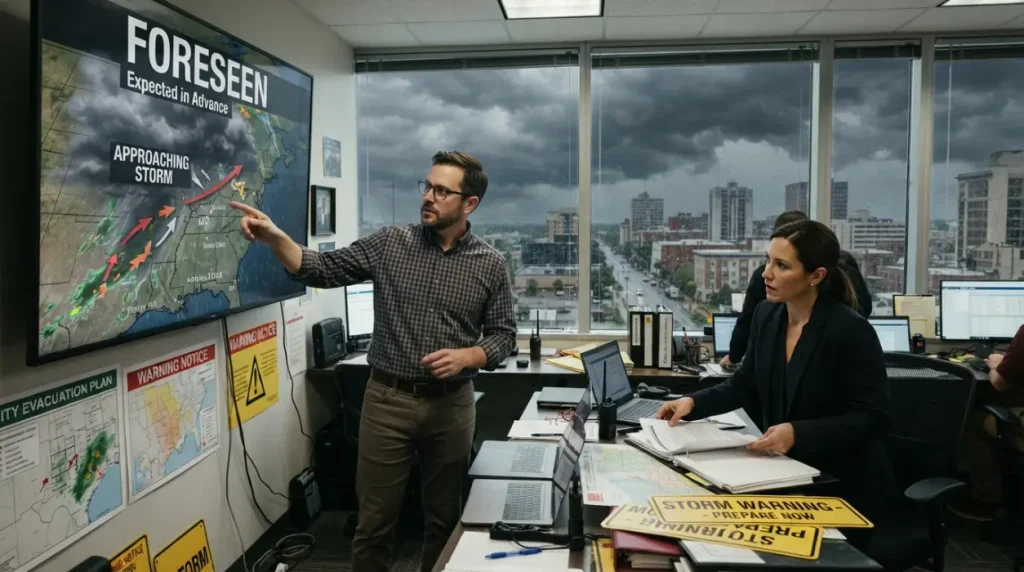
Synonyms for foreseen become useful when you want to describe something expected before it happens. Imagine a manager predicting a busy Monday before the week even begins.
When an event is expected in advance, English speakers often use “foreseen.” For example, a storm may be foreseen because weather experts notice warning signs early.
Learning synonyms for foreseen helps students, bloggers, content writers, and everyday English users express prediction more naturally. Moreover, each alternative can show a slightly different level of certainty.
This guide explains synonyms for foreseen with meanings, pronunciation, tone, and practical examples. Therefore, you can choose the right word for essays, conversations, blogs, reports, and stories.
What Does “Foreseen” Really Mean?
Foreseen means expected, predicted, or recognized as likely to happen before it actually happens.
It is the past participle of foresee, which means to understand or imagine beforehand that something is likely to happen.
For example:
The company had foreseen the increase in demand.
This means the company expected the increase before it occurred.
Native speakers commonly use “foreseen” when discussing plans, risks, consequences, changes, problems, events, or future developments. It often appears in formal and written English.
Part of Speech
Foreseen is mainly the past participle of the verb “foresee.” It can also work as an adjective in some sentences.
Simple definition: Something that was expected, predicted, or recognized before it happened.

Connotative Meaning
Connotation (the feeling or association a word carries beyond its basic dictionary meaning) depends on the context.
Positive tone: “Foreseen” can suggest preparation, careful planning, and good judgment.
Neutral tone: It can simply mean that someone expected an event beforehand.
Negative tone: It may describe an unwanted problem that someone predicted in advance.
For example, “foreseen opportunities” sounds positive, while “foreseen difficulties” sounds more cautious.
Etymology
The word foreseen comes from the verb foresee, which combines fore-, meaning “before,” with see, meaning to perceive or understand.
The literal idea is “to see beforehand.”
Old English: 450–1100
The element fore- was already used in Old English to express the idea of “before” or “in front of.” The verb related to “see” also had Old English roots.
Middle English: 1100–1500
During Middle English, forms related to “foresee” developed as English continued to use compounds beginning with “fore-.” The concept remained connected with recognizing something before it occurred.
Modern English: 1500–Present
In Modern English, foresee became firmly established as a verb meaning to anticipate or predict something. Foreseen developed as its past participle and is now common in formal, professional, academic, and everyday contexts.
Pronunciation
US: /fɔːrˈsiːn/
UK: /fɔːˈsiːn/
Syllables
fore-seen
Affixation Pattern
Root: see
Prefix: fore-
Suffix: none
The prefix fore- gives the word the meaning of something happening or being recognized beforehand.
Synonyms List
Anticipated (Adjective/Past Participle) — US /ænˈtɪsəˌpeɪtɪd/ | UK /ænˈtɪsɪˌpeɪtɪd/
Meaning: Expected or prepared for before an event happens.
Tone/Register: Neutral, Professional
Example:
The team anticipated heavy traffic.
We anticipated several questions from the audience.
Expected (Adjective/Past Participle) — US /ɪkˈspɛktɪd/ | UK /ɪkˈspektɪd/
Meaning: Considered likely to happen or arrive.
Tone/Register: Neutral, Everyday
Example:
Rain was expected throughout the afternoon.
The results were expected by Friday.
Predicted (Adjective/Past Participle) — US /prɪˈdɪktɪd/ | UK /prɪˈdɪktɪd/
Meaning: Stated or estimated as likely to happen in the future.
Tone/Register: Academic, Professional
Example:
Experts predicted a warmer summer.
The analyst predicted strong growth next year.
Anticipated in Advance (Phrase) — US /ænˈtɪsəˌpeɪtɪd ɪn ədˈvæns/ | UK /ænˈtɪsɪˌpeɪtɪd ɪn ədˈvɑːns/
Meaning: Expected before the event actually occurred.
Tone/Register: Formal
Example:
The delays were anticipated in advance.
The organizers prepared for the problems they had anticipated.
Expected Ahead of Time (Phrase) — US /ɪkˈspɛktɪd əˌhɛd əv ˈtaɪm/ | UK /ɪkˈspektɪd əˌhed əv ˈtaɪm/
Meaning: Considered likely before the relevant time.
Tone/Register: Neutral
Example:
The demand was expected ahead of time.
We knew the road would be busy.
Predicted in Advance (Phrase) — US /prɪˈdɪktɪd ɪn ədˈvæns/ | UK /prɪˈdɪktɪd ɪn ədˈvɑːns/
Meaning: Forecasted or stated as likely before something happened.
Tone/Register: Formal, Academic
Example:
The change was predicted in advance.
Scientists predicted the pattern several months earlier.
Anticipated (Verb) — US /ænˈtɪsəˌpeɪtɪd/ | UK /ænˈtɪsɪˌpeɪtɪd/
Meaning: Thought about a future event and expected it to happen.
Tone/Register: Professional
Example:
She anticipated a difficult conversation.
The coach anticipated the opponent’s strategy.
Projected (Adjective/Past Participle) — US /prəˈdʒɛktɪd/ | UK /prəˈdʒektɪd/
Meaning: Estimated as likely to happen based on available information.
Tone/Register: Business, Academic
Example:
Sales are projected to rise next quarter.
The project is projected to finish in June.
Forecast (Verb) — US /ˈfɔːrˌkæst/ | UK /ˈfɔːˌkɑːst/
Meaning: To predict a future event using information or evidence.
Tone/Register: Professional, Academic
Example:
Economists forecast slower growth.
Weather experts forecast heavy rainfall.
Forecasted (Past Participle) — US /ˈfɔːrˌkæstɪd/ | UK /ˈfɔːˌkɑːstɪd/
Meaning: Predicted as likely to happen.
Tone/Register: Business, Technical
Example:
The forecasted demand exceeded expectations.
The forecasted storm arrived overnight.
Envisaged (Adjective/Past Participle) — US /ɛnˈvɪzɪdʒd/ | UK /ɪnˈvɪzɪdʒd/
Meaning: Imagined or expected as a possible future situation.
Tone/Register: Formal, British
Example:
The designers envisaged a much larger project.
Few people envisaged such a rapid change.
Envisioned (Adjective/Past Participle) — US /ɛnˈvɪʒənd/ | UK /ɪnˈvɪʒənd/
Meaning: Imagined or pictured as something that could happen.
Tone/Register: Formal, Creative
Example:
She envisioned a peaceful future.
The founders envisioned a global community.
Projected in Advance (Phrase) — US /prəˈdʒɛktɪd ɪn ədˈvæns/ | UK /prəˈdʒektɪd ɪn ədˈvɑːns/
Meaning: Estimated beforehand using available data.
Tone/Register: Business, Academic
Example:
The costs were projected in advance.
The analysts projected demand before the launch.
Foretold (Past Participle) — US /fɔːrˈtoʊld/ | UK /fɔːˈtəʊld/
Meaning: Predicted or announced before an event occurred.
Tone/Register: Literary, Formal
Example:
The legend foretold a great battle.
The prophecy foretold years of hardship.
Expected to Happen (Phrase) — US /ɪkˈspɛktɪd tə ˈhæpən/ | UK /ɪkˈspektɪd tə ˈhæpən/
Meaning: Considered likely to occur.
Tone/Register: Neutral
Example:
The meeting was expected to happen soon.
A decision was expected to happen before the deadline.
Likely (Adjective) — US /ˈlaɪkli/ | UK /ˈlaɪkli/
Meaning: Having a high probability of happening.
Tone/Register: Neutral, Everyday
Example:
A delay is likely this evening.
The team is likely to win the match.
Probable (Adjective) — US /ˈprɑːbəbəl/ | UK /ˈprɒbəbəl/
Meaning: More likely to happen than not.
Tone/Register: Formal, Academic
Example:
Further changes are probable.
A short delay is probable during construction.
Possible (Adjective) — US /ˈpɑːsəbəl/ | UK /ˈpɒsəbəl/
Meaning: Able or likely enough to happen, although not certain.
Tone/Register: Neutral
Example:
A power cut is possible tonight.
Several outcomes are possible.
Projected to Occur (Phrase) — US /prəˈdʒɛktɪd tə əˈkɜːr/ | UK /prəˈdʒektɪd tə əˈkɜː/
Meaning: Estimated or calculated as likely to happen.
Tone/Register: Technical, Academic
Example:
The decline is projected to occur gradually.
The increase is projected to occur next year.
Expected in Advance (Phrase) — US /ɪkˈspɛktɪd ɪn ədˈvæns/ | UK /ɪkˈspektɪd ɪn ədˈvɑːns/
Meaning: Known or considered likely before the event.
Tone/Register: Neutral, Formal
Example:
The shortage was expected in advance.
The team had expected the change.
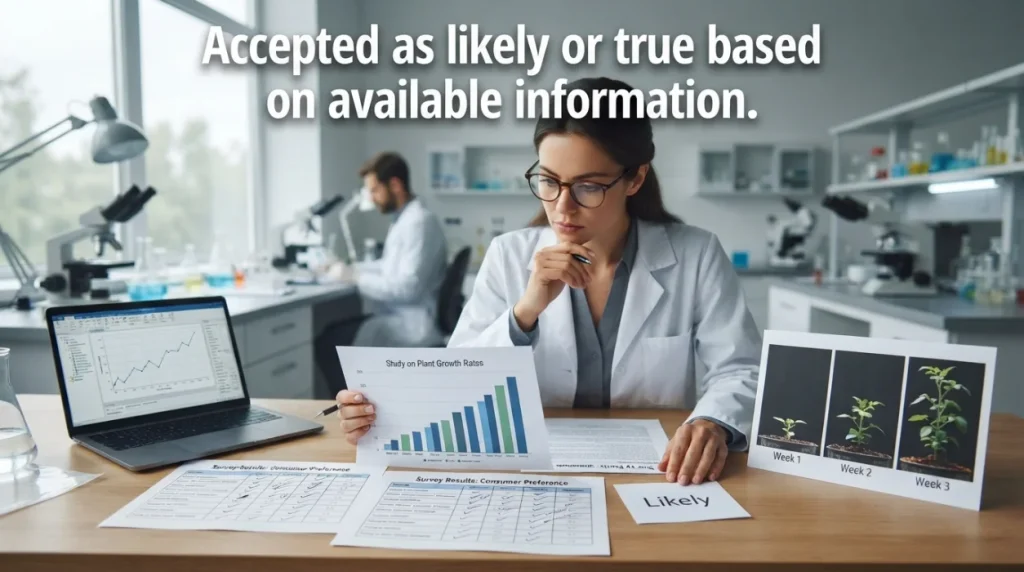
Presumed (Adjective/Past Participle) — US /prɪˈzuːmd/ | UK /prɪˈzjuːmd/
Meaning: Accepted as likely or true based on available information.
Tone/Register: Formal, Legal
Example:
The missing files were presumed lost.
The delay was presumed unavoidable.
Projected (Verb) — US /prəˈdʒɛktɪd/ | UK /prəˈdʒektɪd/
Meaning: Estimated a future amount, result, or event.
Tone/Register: Business, Technical
Example:
Analysts projected higher demand.
The researchers projected future population growth.
Envisioned (Verb) — US /ɛnˈvɪʒənd/ | UK /ɪnˈvɪʒənd/
Meaning: Imagined a particular future situation.
Tone/Register: Professional, Creative
Example:
The architect envisioned an open workspace.
The author envisioned a very different ending.
Anticipatable (Adjective) — US /ænˈtɪsəˌpeɪtəbəl/ | UK /ænˈtɪsɪˌpeɪtəbəl/
Meaning: Able to be reasonably expected beforehand.
Tone/Register: Formal, Technical
Example:
The risks were largely anticipatable.
Most delays were anticipatable from the start.
Predictable (Adjective) — US /prɪˈdɪktəbəl/ | UK /prɪˈdɪktəbəl/
Meaning: Likely to happen in a way that can be expected.
Tone/Register: Neutral
Example:
The outcome was predictable.
Her reaction was completely predictable.
Prescient (Adjective) — US /ˈprɛʃənt/ | UK /ˈpresiənt/
Meaning: Showing an unusual ability to know what will happen before it occurs.
Tone/Register: Formal, Literary
Example:
His warning proved prescient.
Her prescient prediction impressed the entire team.
Anticipatory (Adjective) — US /ænˈtɪsəpəˌtɔːri/ | UK /ænˈtɪsɪpəˌtəri/
Meaning: Related to preparing for something expected to happen.
Tone/Register: Formal, Academic
Example:
The company took anticipatory measures.
Their anticipatory planning reduced delays.
Premeditated (Adjective) — US /priːˈmɛdəˌteɪtɪd/ | UK /priːˈmedɪˌteɪtɪd/
Meaning: Planned or considered before an action occurred.
Tone/Register: Formal, Legal
Example:
The decision was carefully premeditated.
Investigators found evidence of a premeditated plan.
Preplanned (Adjective) — US /ˌpriːˈplænd/ | UK /ˌpriːˈplænd/
Meaning: Arranged or planned before an event takes place.
Tone/Register: Neutral, Professional
Example:
The route was preplanned.
The team followed a preplanned schedule.
Predestined (Adjective) — US /ˌpriːˈdɛstənd/ | UK /ˌpriːˈdestɪnd/
Meaning: Believed to be determined to happen in advance.
Tone/Register: Literary, Philosophical
Example:
He felt the meeting was predestined.
The story presents the hero’s fate as predestined.
Presaged (Past Participle) — US /ˈprɛsɪdʒd/ | UK /ˈpresɪdʒd/
Meaning: Gave an early sign that something would happen.
Tone/Register: Literary, Formal
Example:
The warning presaged a difficult winter.
Early tensions presaged a larger dispute.
Foreshadowed (Past Participle) — US /fɔːrˈʃædoʊd/ | UK /fɔːˈʃædəʊd/
Meaning: Gave an earlier indication of a later event.
Tone/Register: Literary, Academic
Example:
The opening scene foreshadowed the final conflict.
Her strange comment foreshadowed the surprise.
Signaled (Past Participle) — US /ˈsɪɡnəld/ | UK /ˈsɪɡnəld/
Meaning: Gave a clear indication that something was likely to happen.
Tone/Register: Neutral, Professional
Example:
The announcement signaled a major change.
Falling sales signaled a difficult quarter.
Indicated (Past Participle) — US /ˈɪndəˌkeɪtɪd/ | UK /ˈɪndɪˌkeɪtɪd/
Meaning: Showed or suggested that something was likely or possible.
Tone/Register: Academic, Formal
Example:
The data indicated a coming slowdown.
The early results indicated stronger demand.
Suggested (Past Participle) — US /səˈdʒɛstɪd/ | UK /səˈdʒestɪd/
Meaning: Gave an idea that something might happen or be true.
Tone/Register: Neutral
Example:
The evidence suggested a change was coming.
Her expression suggested that she already knew.
Implied (Past Participle) — US /ɪmˈplaɪd/ | UK /ɪmˈplaɪd/
Meaning: Communicated an idea indirectly rather than stating it directly.
Tone/Register: Academic, Formal
Example:
His comments implied further changes.
The report implied that demand might fall.
Projected Outcome (Noun Phrase) — US /prəˈdʒɛktɪd ˈaʊtˌkʌm/ | UK /prəˈdʒektɪd ˈaʊtˌkʌm/
Meaning: A result estimated to happen in the future.
Tone/Register: Business, Academic
Example:
The projected outcome looked positive.
The researchers compared the actual result with the projected outcome.
Anticipated Result (Noun Phrase) — US /ænˈtɪsəˌpeɪtɪd rɪˈzʌlt/ | UK /ænˈtɪsɪˌpeɪtɪd rɪˈzʌlt/
Meaning: A result expected before an activity or process is completed.
Tone/Register: Academic, Professional
Example:
The study produced the anticipated result.
The team prepared for the anticipated result.
Expected Outcome (Noun Phrase) — US /ɪkˈspɛktɪd ˈaʊtˌkʌm/ | UK /ɪkˈspektɪd ˈaʊtˌkʌm/
Meaning: A result that people believe will happen.
Tone/Register: Academic, Professional
Example:
The expected outcome was positive.
Everyone understood the expected outcome.
Likely Outcome (Noun Phrase) — US /ˈlaɪkli ˈaʊtˌkʌm/ | UK /ˈlaɪkli ˈaʊtˌkʌm/
Meaning: The result considered most likely to occur.
Tone/Register: Neutral
Example:
A compromise seemed the likely outcome.
The team discussed the likely outcome.
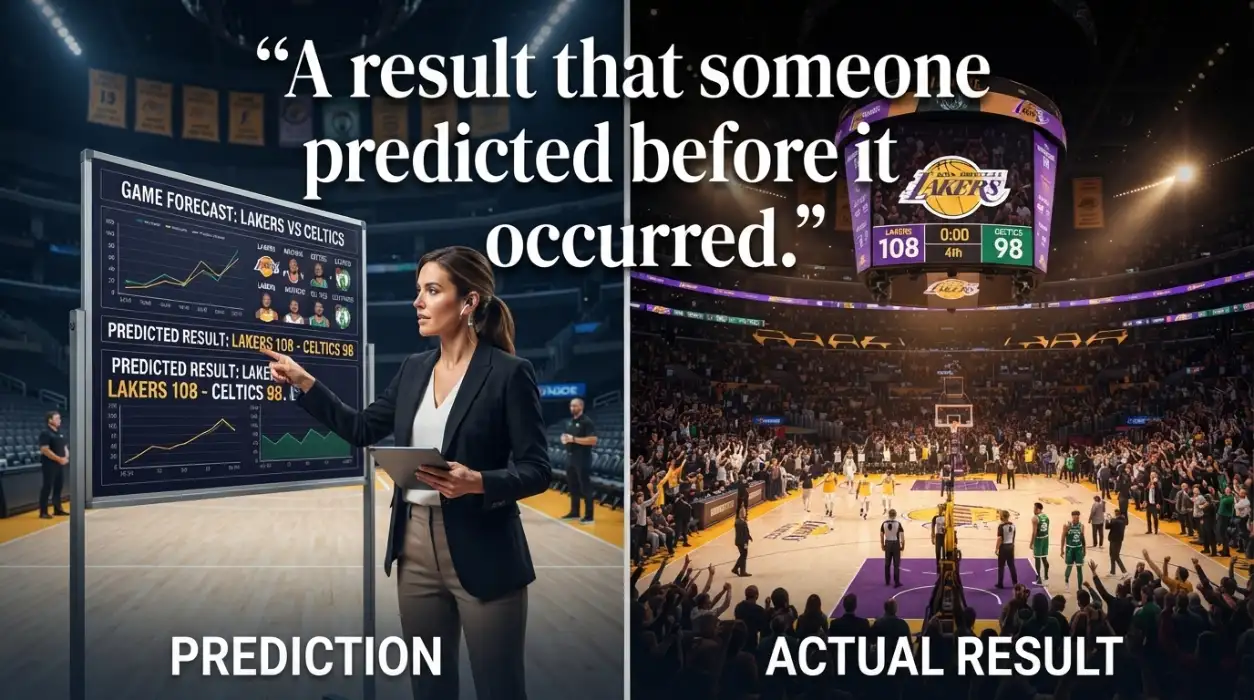
Predicted Outcome (Noun Phrase) — US /prɪˈdɪktɪd ˈaʊtˌkʌm/ | UK /prɪˈdɪktɪd ˈaʊtˌkʌm/
Meaning: A result that someone predicted before it occurred.
Tone/Register: Academic, Professional
Example:
The predicted outcome matched the final result.
Researchers compared the data with the predicted outcome.
Anticipated Event (Noun Phrase) — US /ænˈtɪsəˌpeɪtɪd ɪˈvɛnt/ | UK /ænˈtɪsɪˌpeɪtɪd ɪˈvent/
Meaning: An event that people expected to happen.
Tone/Register: Formal
Example:
The anticipated event attracted many visitors.
Security teams prepared for the anticipated event.
Expected Development (Noun Phrase) — US /ɪkˈspɛktɪd dɪˈvɛləpmənt/ | UK /ɪkˈspektɪd dɪˈveləpmənt/
Meaning: A change or event believed likely to occur.
Tone/Register: Professional, Academic
Example:
The policy change was an expected development.
The industry prepared for this expected development.
Foreseen Possibility (Noun Phrase) — US /fɔːrˈsiːn ˌpɑːsəˈbɪləti/ | UK /fɔːˈsiːn ˌpɒsəˈbɪləti/
Meaning: A possible situation recognized before it occurred.
Tone/Register: Formal
Example:
The team had prepared for every foreseen possibility.
A backup plan covered each foreseen possibility.
Expected Scenario (Noun Phrase) — US /ɪkˈspɛktɪd səˈnɛrioʊ/ | UK /ɪkˈspektɪd sɪˈnɑːriəʊ/
Meaning: A situation considered likely before it happens.
Tone/Register: Professional
Example:
The company planned for the expected scenario.
The expected scenario required additional staff.
Anticipated Change (Noun Phrase) — US /ænˈtɪsəˌpeɪtɪd tʃeɪndʒ/ | UK /ænˈtɪsɪˌpeɪtɪd tʃeɪndʒ/
Meaning: A change expected before it takes place.
Tone/Register: Professional, Academic
Example:
Employees discussed the anticipated change.
The department prepared for the anticipated change.
Foreseen Risk (Noun Phrase) — US /fɔːrˈsiːn rɪsk/ | UK /fɔːˈsiːn rɪsk/
Meaning: A danger or problem recognized before it occurs.
Tone/Register: Business, Professional
Example:
The team addressed every foreseen risk.
Proper planning can reduce a foreseen risk.
Anticipated Difficulty (Noun Phrase) — US /ænˈtɪsəˌpeɪtɪd ˈdɪfɪkəlti/ | UK /ænˈtɪsɪˌpeɪtɪd ˈdɪfɪkəlti/
Meaning: A problem expected before work begins.
Tone/Register: Professional
Example:
The engineers prepared for every anticipated difficulty.
The anticipated difficulty did not stop the project.
Foreseeable (Adjective) — US /fɔːrˈsiːəbəl/ | UK /fɔːˈsiːəbəl/
Meaning: Able to be reasonably predicted or expected.
Tone/Register: Formal, Legal
Example:
The risks were foreseeable.
No one expected such an unusual problem beyond the foreseeable risks.
Predictable in Advance (Phrase) — US /prɪˈdɪktəbəl ɪn ədˈvæns/ | UK /prɪˈdɪktəbəl ɪn ədˈvɑːns/
Meaning: Able to be expected before an event occurs.
Tone/Register: Neutral, Academic
Example:
The pattern was predictable in advance.
The results were predictable from the available data.
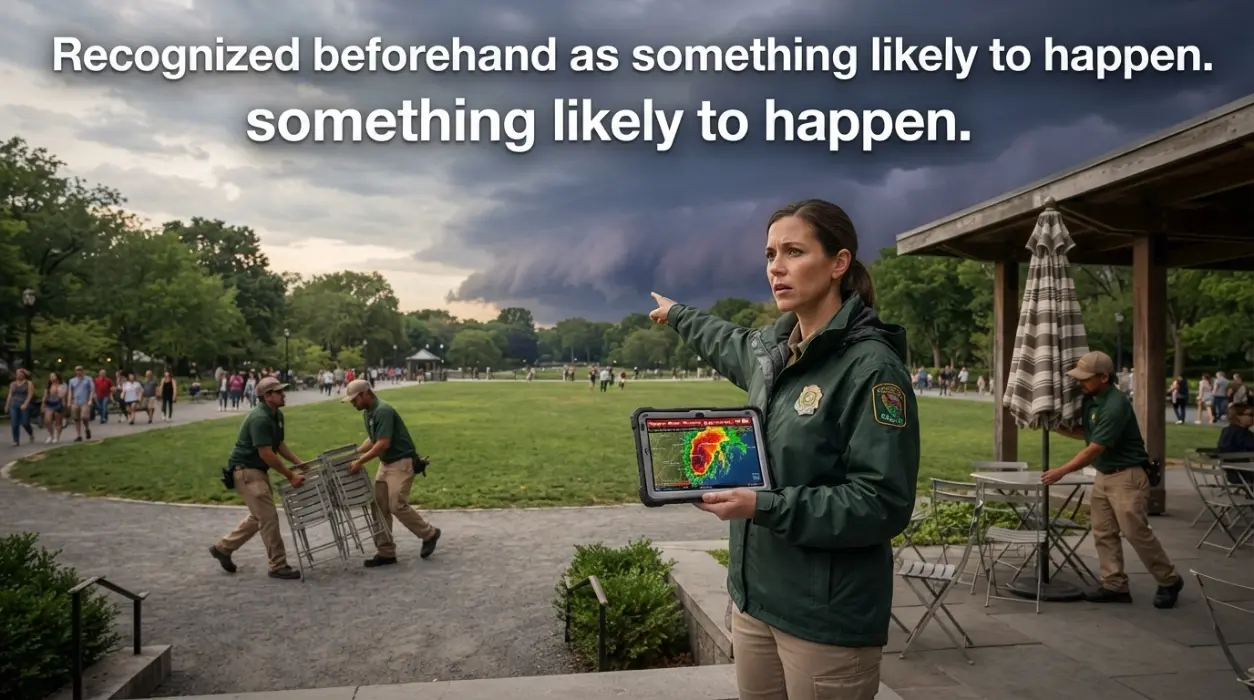
Seen Coming (Phrase) — US /siːn ˈkʌmɪŋ/ | UK /siːn ˈkʌmɪŋ/
Meaning: Recognized beforehand as something likely to happen.
Tone/Register: Informal, Conversational
Example:
We all saw the argument coming.
She had seen the change coming for months.
Synonyms by Tone
Positive
Anticipated, envisioned, prescient, anticipated result, anticipated change
These words can suggest preparation, insight, planning, or thoughtful decision-making.
Neutral
Expected, predicted, projected, likely, probable, indicated, suggested, foreseeable
These choices work when you simply want to explain that something was considered likely.
Negative or Cautionary
Foreseen risk, anticipated difficulty, presaged, foreshadowed, omen-related expressions
These alternatives often appear when an expected event involves danger, trouble, or uncertainty.
Formal or Academic
Forecasted, envisaged, antecedent-style predictive language, projected, presumed, prescient, foreseeable
These choices fit reports, research papers, professional documents, and analytical writing.
Informal
Seen coming, expected to happen
These expressions sound more natural in casual conversations than highly formal alternatives.
Tone matters because “expected” sounds straightforward, while “prescient” suggests unusual insight. Similarly, “seen coming” sounds conversational, whereas “projected” sounds analytical.
“Foreseen” vs. Close Alternatives
| Word | Meaning Difference | Best Use |
|---|---|---|
| Foreseen | Recognized or expected beforehand | General and formal writing |
| Anticipated | Expected and often prepared for | Planning and professional contexts |
| Predicted | Stated as likely based on judgment or evidence | Forecasting and analysis |
| Expected | Considered likely to happen | Everyday English |
| Projected | Estimated using data or calculations | Business and research |
For example, a problem can be foreseen when someone recognizes it in advance. It is anticipated when someone expects it and may prepare for it. It is predicted when someone makes a forecast about it.
How “Foreseen” Changes by Context
Daily Conversation
“Foreseen” is understandable in everyday English, but it can sound slightly formal. Native speakers often choose expected, anticipated, or seen coming.
For example, “I saw that argument coming” sounds much more natural in casual speech than “I foreseen the argument.” Note that the correct form is “I foresaw the argument.”
Writing and Blogging
In blogs and general articles, “foreseen” can make writing sound polished. However, repeated use may feel formal.
Therefore, alternate it with expected, predicted, anticipated, and projected when their meanings fit.
Professional and Academic Tone
Professional writers often use anticipated, projected, forecasted, expected, and foreseeable.
For example, a business report might discuss “projected growth,” while a risk assessment might mention “foreseeable risks.”
Creative or Informal Use
Creative writing can benefit from foretold, prescient, foreshadowed, and seen coming.
These alternatives create different moods. “Foretold” sounds dramatic, while “seen coming” feels modern and conversational.
Common Mistakes & Native Usage
Mistake 1: Using “Foreseen” Instead of “Foresaw”
“Foreseen” is the past participle. It usually needs an auxiliary verb.
Correct: She had foreseen the problem.
Incorrect: She foreseen the problem.
For the simple past tense, use foresaw:
She foresaw the problem.
Mistake 2: Assuming Every Prediction Is “Foreseen”
“Foreseen” emphasizes recognition beforehand. A random guess may not deserve this word.
For example, if someone makes an unsupported guess, predicted may be more suitable than foreseen.
Mistake 3: Confusing “Foreseen” and “Foreseeable”
Foreseen means something was actually expected or recognized beforehand.
Foreseeable means something could reasonably have been expected, whether or not anyone actually predicted it.
Mistake 4: Using Formal Words in Casual Speech
“Prescient,” “presaged,” and “envisaged” can sound formal or literary. In casual conversation, expected or saw coming is usually more natural.
Register Notes
Formal: foreseeable, presumed, prescient, envisaged, presaged
Academic: predicted, projected, indicated, anticipated
Neutral: expected, likely, possible, suggested
Informal: seen coming, expected to happen
Literary: foretold, foreshadowed, prescient
Real-Life Mini Scenarios
Workplace
A project manager notices that a deadline is too tight. She foresees delays and assigns extra staff before the problem appears.
Social Situation
A friend notices two people becoming increasingly frustrated. He says, “I saw that argument coming.”
Media and Pop Culture
A critic notices early hints about a character’s future. Later, those details prove to be foreshadowing.
Writing and Storytelling
A novelist describes dark clouds before a dramatic event. The weather foreshadows what happens next.
Business
A company studies customer behavior before launching a product. Its analysts project strong demand based on the available data.
Why Choosing the Right Synonym Matters
A synonym should preserve the main meaning while matching the context.
For example, expected is simple and flexible. Predicted emphasizes a forecast. Projected often suggests numbers or data. Anticipated can imply preparation. Prescient suggests exceptional foresight.
Therefore, ask yourself three quick questions:
- Was the event simply expected?
- Was it predicted using evidence?
- Did someone prepare for it beforehand?
The answer will help you select the most natural alternative.
A strong vocabulary does not mean using the most complicated word. Instead, it means choosing the word that communicates your exact idea.
Practice Exercise
1. The team ______ heavy traffic before the event.
A) anticipated
B) ignored
C) removed
D) repeated
2. Scientists ______ a rise in temperatures.
A) predicted
B) decorated
C) borrowed
D) questioned
3. The company ______ higher sales for the next quarter.
A) projected
B) forgot
C) denied
D) interrupted
4. “I saw the argument ______” is best for casual conversation.
A) coming
B) projected
C) presaged
D) envisaged
5. The warning ______ a difficult winter.
A) presaged
B) followed
C) copied
D) replaced
6. The opening scene ______ the ending of the movie.
A) foreshadowed
B) measured
C) repaired
D) explained
7. The risk was ______ because the warning signs were obvious.
A) foreseeable
B) playful
C) accidental
D) unrelated
8. The unusual prediction proved ______.
A) prescient
B) ordinary
C) temporary
D) silent
9. Which word best fits a business report about estimated future sales?
A) projected
B) foretold
C) seen coming
D) likely
10. Which word is most natural in everyday English?
A) expected
B) presaged
C) prescient
D) envisaged
11. The architect ______ a modern community center.
A) envisioned
B) denied
C) confused
D) avoided
12. The researchers’ data ______ a possible decline.
A) indicated
B) celebrated
C) destroyed
D) invented
Answer Key: 1-A | 2-A | 3-A | 4-A | 5-A | 6-A | 7-A | 8-A | 9-A | 10-A | 11-A | 12-A
Reflection Task :
Write one sentence using foreseen, anticipated, or predicted. Then replace it with another synonym and notice how the tone or meaning changes.
Conclusion
Learning synonyms for foreseen helps you describe future events with greater accuracy and flexibility. Words such as expected, predicted, and anticipated each add a useful shade of meaning.
For professional writing, alternatives like projected and foreseeable can sound precise. Meanwhile, everyday speakers may prefer expected or “saw coming.” Therefore, context should guide your choice.
Using synonyms for foreseen can strengthen essays, blogs, reports, stories, and conversations. A wider vocabulary also helps you avoid repetition while keeping your message clear and natural.
Finally, practice synonyms for foreseen by using them in emails, essays, and daily conversations. Try one new alternative each day and notice how it changes your expression.
Frequently Asked Questions
1. What is the simplest synonym for foreseen?
The simplest synonym for foreseen is usually expected. Both words describe something considered likely before it happens. “Expected” sounds natural in everyday English, while “foreseen” can sound more formal. Depending on context, “anticipated” is also a useful alternative, especially when someone prepared for the event in advance.
2. What is the difference between foreseen and anticipated?
“Foreseen” means that something was recognized or expected beforehand. “Anticipated” often carries an additional sense of preparation. For example, a company may have foreseen a delay, but it anticipated the delay and prepared extra resources. Therefore, “anticipated” is especially useful when planning or readiness matters.
3. Is predicted the same as foreseen?
The two words are closely related but not identical. Predicted usually suggests that someone made a forecast about what would happen, often using evidence or analysis. Foreseen focuses more generally on recognizing an event before it occurs. Therefore, “predicted” works especially well for scientific, financial, weather, and analytical contexts.
4. What is the difference between foreseen and foreseeable?
Foreseen means something was actually expected or recognized beforehand. Foreseeable means something could reasonably have been predicted, whether or not someone actually predicted it. For example, “The delay was foreseen” says the team expected it. “The delay was foreseeable” says the delay could reasonably have been anticipated.
5. Can foreseen be used for future events?
Yes. “Foreseen” is commonly used when discussing future events that someone expected before they occurred. For example, “The problems had been foreseen by the project team.” The word often appears with risks, changes, difficulties, consequences, opportunities, and developments that people identify in advance.

Hasnain Ali is an SEO Content Strategist and the founder of wordvora.com, a trusted vocabulary platform that helps writers, students, professionals, and English learners find accurate synonyms, antonyms, word meanings, and real-life usage examples. He specializes in keyword research, on-page SEO, topical authority, and creating search-first content that aligns with Google’s latest Search Quality and E-E-A-T guidelines. His work focuses on producing clear, well-structured, and reader-friendly resources that satisfy search intent while maintaining high editorial standards.
Through extensive hands-on experience with SEO tools such as Google Search Console, Google Analytics, SEMrush, and Ahrefs, Hasnain researches user search behavior and develops content that is both informative and easy to understand. Every article published on wordvora.com is carefully reviewed for accuracy, readability, and contextual relevance before publication. His mission is to build one of the web’s most reliable English vocabulary resources by providing practical language guidance, trustworthy explanations, and content that helps readers improve their writing, communication, and vocabulary with confidence.