
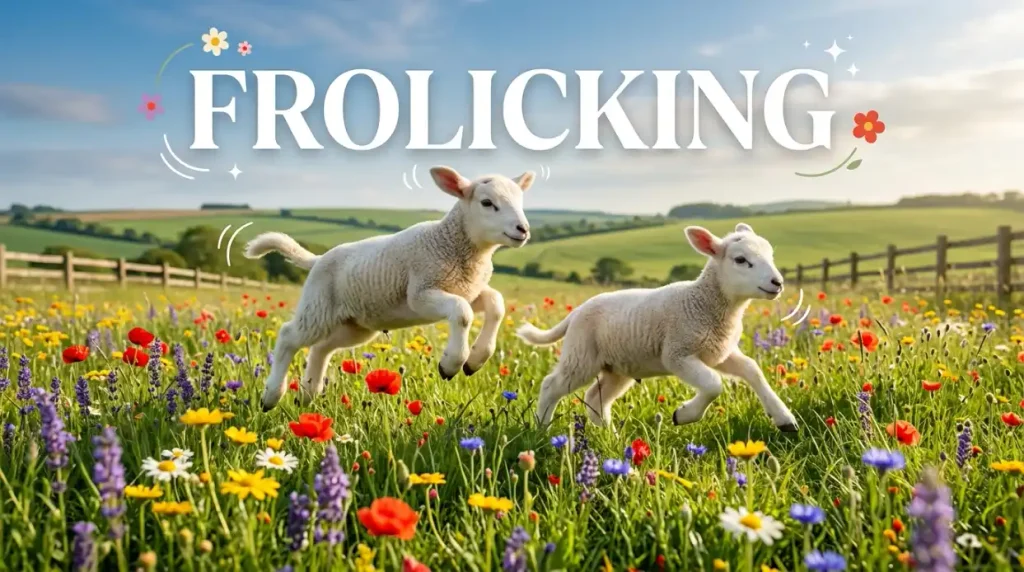
Frolicking is a delightful word that describes playful, energetic, and carefree activity. It often brings to mind images of children running happily through a park, animals playing in an open field, or friends enjoying a lighthearted moment together.
The word frolicking is commonly used to express joy, freedom, and excitement. Unlike simple movement, it suggests an enthusiastic and cheerful way of playing or moving around, making it a popular choice in descriptive and creative writing.
Understanding the meaning and synonyms of frolicking can help writers choose the right words for different situations. Words such as playing, romping, prancing, skipping, and gamboling can provide similar meanings while adding variety and richness to your writing.
In this article, we will explore the meaning, synonyms, examples, and proper usage of the word. Whether you are improving your vocabulary or looking for better ways to describe playful behavior, this guide will help you understand and use the word confidently.
What Does “Frolicking” Really Mean?
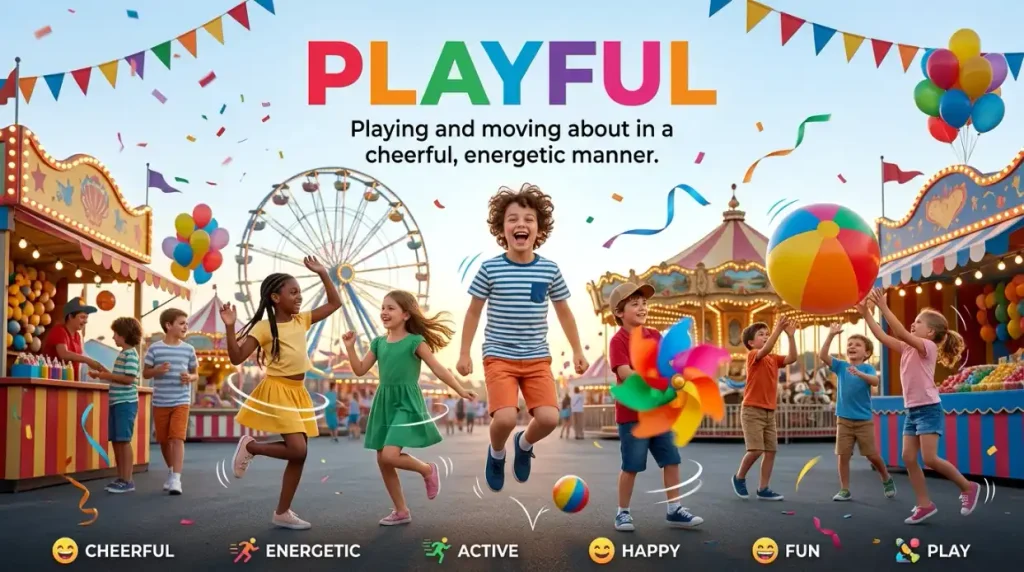
Frolicking means playing and moving about in a cheerful, excited, and energetic way. It describes carefree physical activity filled with high spirits and laughter.
Native speakers use this word when discussing children playing outdoors, pets running across grass, or lighthearted vacation moments. It carries a joyful, light, and whimsical emotional tone. It usually suggests playful abandon, vibrant energy, and unbothered happiness.
Connotative Meaning
- Positive tone: Associated with youth, freedom, sunny weather, innocent joy, and lighthearted fun.
- Negative tone: None; it remains purely cheerful in normal usage.
- Neutral tone: Occasionally used to describe carefree animal behavior in nature documentaries.
- Connotation definition: (The emotional or cultural feeling attached to a word beyond its strict dictionary definition).
Etymology
- Source Language: Germanic roots, linked to Middle Dutch vrolijc, meaning joyful or merry.
- Original Meaning: Originally meant being full of joy, happiness, or merry disposition.
- Old English (450–1100): Not directly recorded in early Anglo-Saxon texts; precursor terms focused on simple mirth.
- Middle English (1100–1500): Adopted into English via continental trade and Germanic contact routes.
- Modern English (1500–Present): Shifted specifically to mean playing happily and moving around with lively abandon.
Pronunciation (US & UK – IPA)
- US: /ˈfrɒlɪkɪŋ/
- UK: /ˈfrɒlɪkɪŋ/
Syllables & Affixation Pattern
- Syllables: frol-ick-ing
- Root: frolik (joyful or merry)
- Prefix: None
- Suffix: -ing (present participle suffix indicating ongoing action)
Synonyms List :
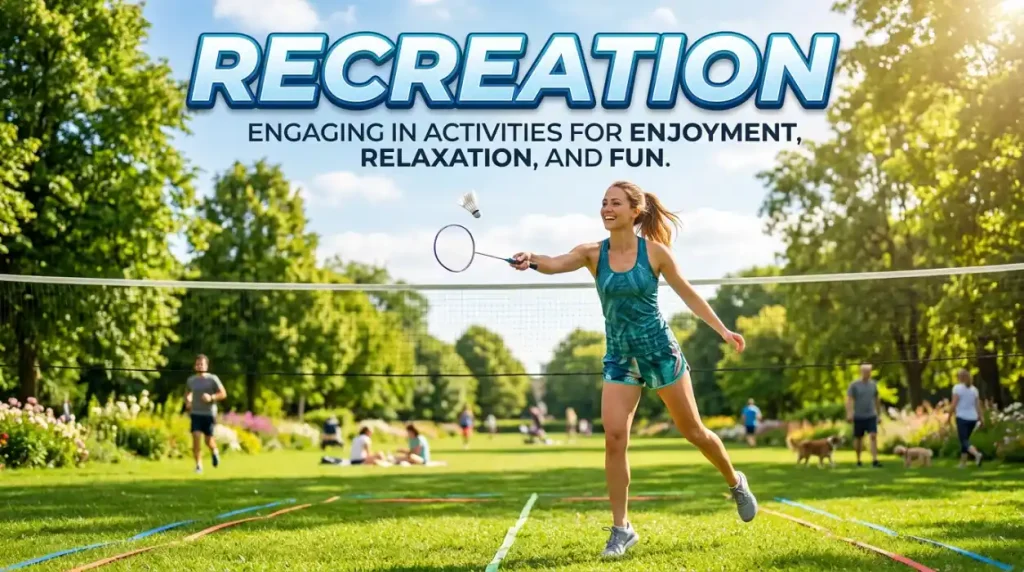
Playing (Verb) — US: /ˈpleɪɪŋ/ — UK: /ˈpleɪɪŋ/
- Meaning: Engaging in activity for enjoyment and recreation rather than serious work.
- Tone/Register: Everyday, informal.
- Example: The children were playing tag in the backyard.
- Example: Puppies spent the afternoon playing with rubber toys.
Capering (Verb) — US: /ˈkeɪpərɪŋ/ — UK: /ˈkeɪpərɪŋ/
- Meaning: Skipping or leaping playfully about in a lively manner.
- Tone/Register: Literary, descriptive.
- Example: Lambs were capering across the green spring meadow.
- Example: Dancers came capering down the festival street.
Gamboling (Verb) — US: /ˈɡæmbəlɪŋ/ — UK: /ˈɡambəlɪŋ/
- Meaning: Running or jumping about playfully.
- Tone/Register: Literary, descriptive.
- Example: Little goats were gamboling near the rocky stream.
- Example: Horses spent the morning gamboling in pasture grass.
Romping (Verb) — US: /ˈrɒmpɪŋ/ — UK: /ˈrɒmpɪŋ/
- Meaning: Playing rough-and-tumble games with lively energy.
- Tone/Register: Informal, energetic.
- Example: Dogs were romping through the autumn leaves.
- Example: Kids enjoyed romping around the playground structure.
Skipping (Verb) — US: /ˈskɪpɪŋ/ — UK: /ˈskɪpɪŋ/
- Meaning: Moving along with light steps, hopping from one foot to the other.
- Tone/Register: Everyday, cheerful.
- Example: She was skipping happily down the sidewalk.
- Example: Children practiced skipping across the gym floor.
Prancing (Verb) — US: /ˈprænsɪŋ/ — UK: /ˈprɑːnsɪŋ/
- Meaning: Moving with high springy steps confidently or playfully.
- Tone/Register: Descriptive, vivid.
- Example: The show pony came prancing into the ring.
- Example: Actors were prancing around the stage in bright costumes.
Cavorting (Verb) — US: /kəˈvɔːrtɪŋ/ — UK: /kəˈvɔːtɪŋ/
- Meaning: Jump or dance around excitedly and exuberantly.
- Tone/Register: Informal, lively.
- Example: Fans were cavorting on the concert lawn.
- Example: Friends spent the evening cavorting at the beach party.
Dancing (Verb) — US: /ˈdænsɪŋ/ — UK: /ˈdɑːnsɪŋ/
- Meaning: Moving rhythmically to music, usually following a set pattern.
- Tone/Register: Standard, expressive.
- Example: Couples were dancing under the glowing string lights.
- Example: She loved dancing to lively jazz music.
Leaping (Verb) — US: /ˈliːpɪŋ/ — UK: /ˈliːpɪŋ/
- Meaning: Jumping or springing a long way, to a great height.
- Tone/Register: Action, descriptive.
- Example: Frogs were leaping across the pond lilies.
- Example: The cat made a quick leap onto shelves.
Hopping (Verb) — US: /ˈhɒpɪŋ/ — UK: /ˈhɒpɪŋ/
- Meaning: Moving by quick short jumps on one foot or all feet together.
- Tone/Register: Everyday, informal.
- Example: Bunnies were hopping through the vegetable garden.
- Example: Kids played hopscotch, hopping on marked chalk squares.
Bound (Verb) — US: /baʊnd/ — UK: /baʊnd/
- Meaning: Walking or running with leaps and energetic strides.
- Tone/Register: Energetic, literary.
- Example: The happy dog would bound across the yard.
- Example: Deer began to bound up the mountain slope.
Sportive (Adjective) — US: /ˈspɔːrtɪv/ — UK: /ˈspɔːtɪv/
- Meaning: Playful, merry, or humorous in disposition.
- Tone/Register: Literary, formal.
- Example: The kitten showed a sportive attitude with yarn.
- Example: Writers adopted a sportive tone in essays.
Joking (Verb) — US: /ˈdʒoʊkɪŋ/ — UK: /ˈdʒəʊkɪŋ/
- Meaning: Making jokes or speaking humorously.
- Tone/Register: Casual, friendly.
- Example: Friends sat chatting and joking over dinner.
- Example: He was only joking about the surprise party.
Merrymaking (Noun) — US: /ˈmɛriˌmeɪkɪŋ/ — UK: /ˈmɛriˌmeɪkɪŋ/
- Meaning: Engaging in lively, joyful festivities and celebrations.
- Tone/Register: Festive, traditional.
- Example: Townspeople joined in weekend holiday merrymaking.
- Example: Music filled the air during festival merrymaking.
Reveling (Verb) — US: /ˈrɛvəlɪŋ/ — UK: /ˈrɛvəlɪŋ/
- Meaning: Enjoying oneself in a lively and noisy way, celebrating.
- Tone/Register: Festive, energetic.
- Example: Supporters were reveling after the team victory.
- Example: Vacationers spent nights reveling on the coast.
Sporting (Verb) — US: /ˈspɔːrtɪŋ/ — UK: /ˈspɔːtɪŋ/
- Meaning: Playing games or engaging in lighthearted fun.
- Tone/Register: Casual, traditional.
- Example: Youth were sporting on the village green.
- Example: Athletes spent weekends sporting outdoors.
Frolic (Verb) — US: /ˈfrɒlɪk/ — UK: /ˈfrɒlɪk/
- Meaning: To play and move about cheerfully and energetically.
- Tone/Register: Descriptive, cheerful.
- Example: Dolphins like to frolic near ocean waves.
- Example: Children love to frolic in fresh snow.
Skylarking (Verb) — US: /ˈskaɪˌlɑːrkɪŋ/ — UK: /ˌskaɪˈlɑːkɪŋ/
- Meaning: Playing prankish or boisterous games; running about foolishly.
- Tone/Register: Informal, nautical.
- Example: Sailors were skylarking on the deck during breaks.
- Example: Teens spent afternoon hours skylarking near parks.
Larking (Verb) — US: /ˈlɑːrkɪŋ/ — UK: /ˈlɑːkɪŋ/
- Meaning: Playing harmless pranks or having lighthearted fun.
- Tone/Register: British, informal.
- Example: Students were larking about in the common room.
- Example: He spent weekends larking with old friends.
Splashing (Verb) — US: /ˈsplæʃɪŋ/ — UK: /ˈsplæʃɪŋ/
- Meaning: Striking water causing it to fly about playfully.
- Tone/Register: Descriptive, fun.
- Example: Toddlers were splashing in the shallow pool.
- Example: Ducks kept splashing around the muddy bank.
Scampering (Verb) — US: /ˈskæmpərɪŋ/ — UK: /ˈskampərɪŋ/
- Meaning: Running with quick, small steps, especially out of fear or play.
- Tone/Register: Lively, descriptive.
- Example: Squirrels were scampering up the oak tree.
- Example: Mice went scampering across the pantry floor.
Dallying (Verb) — US: /ˈdæliɪŋ/ — UK: /ˈdæliɪŋ/
- Meaning: Doing something slowly or spending time idly playing.
- Tone/Register: Literary, relaxed.
- Example: They spent hours dallying in the garden.
- Example: Avoid dallying when morning deadlines approach.
Frisking (Verb) — US: /ˈfrɪskɪŋ/ — UK: /ˈfrɪskɪŋ/
- Meaning: Skipping and jumping playfully; frolicking about.
- Tone/Register: Descriptive, lively.
- Example: Calves were frisking in the morning pasture.
- Example: The energetic pup came frisking to the door.
Antics (Noun) — US: /ˈæntɪks/ — UK: /ˈæntɪks/
- Meaning: Foolish, outrageous, or amusing behavior.
- Tone/Register: Playful, descriptive.
- Example: Monkeys entertained visitors with funny antics.
- Example: Kittens performed silly antics with yarn balls.
Frolicking (Verb) — US: /ˈfrɒlɪkɪŋ/ — UK: /ˈfrɒlɪkɪŋ/
- Meaning: Playing and moving about in a cheerful, energetic manner.
- Tone/Register: Cheerful, expressive.
- Example: Dogs were frolicking across the grassy lawn.
- Example: Children spent hours frolicking in summer sunshine.
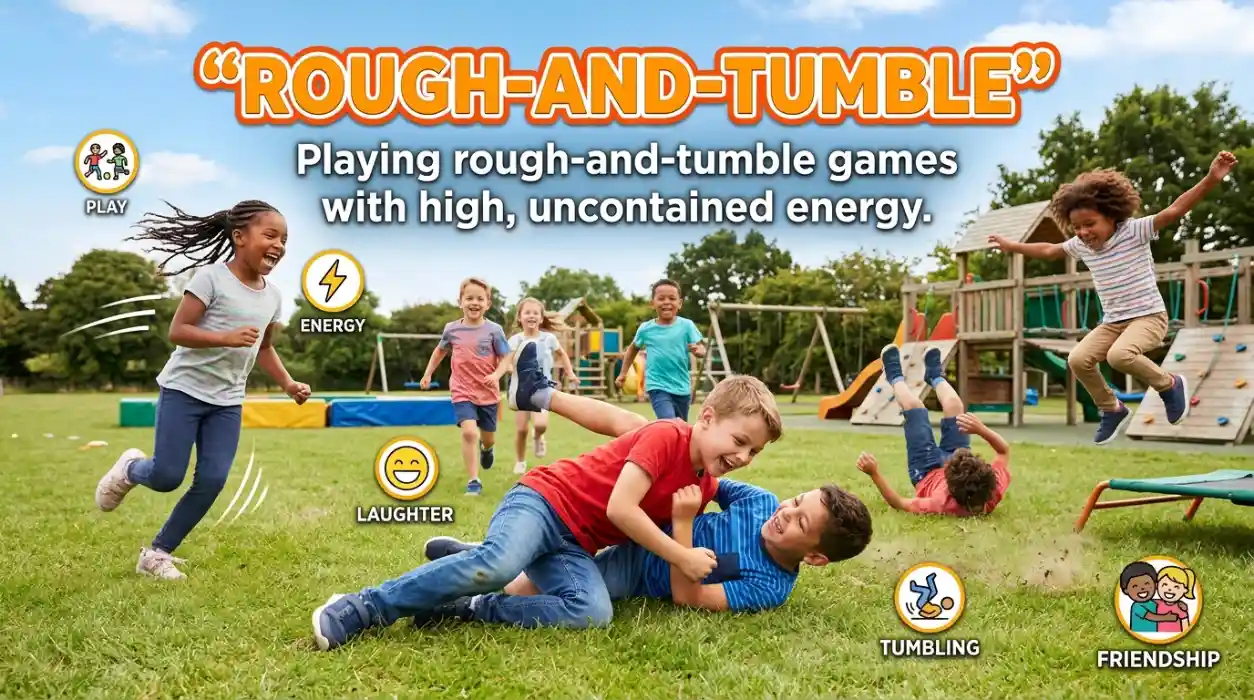
Romping (Verb) — US: /ˈrɒmpɪŋ/ — UK: /ˈrɒmpɪŋ/
- Meaning: Playing rough-and-tumble games with high, uncontained energy.
- Tone/Register: Informal, energetic.
- Example: The golden retrievers were romping through the tall meadow grass.
- Example: Children spent the sunny afternoon romping around the park.
Capering (Verb) — US: /ˈkeɪpərɪŋ/ — UK: /ˈkeɪpərɪŋ/
- Meaning: Skipping or leaping playfully about in a lively manner.
- Tone/Register: Literary, descriptive.
- Example: Spring lambs were capering across the green hillside.
- Example: Festival dancers came capering down the historic street.
Gamboling (Verb) — US: /ˈɡæmbəlɪŋ/ — UK: /ˈɡambəlɪŋ/
- Meaning: Running or jumping about playfully like young animals.
- Tone/Register: Literary, descriptive.
- Example: Baby goats were gamboling near the rocky mountain stream.
- Example: Horses spent the morning gamboling in the pasture.
Cavorting (Verb) — US: /kəˈvɔːrtɪŋ/ — UK: /kəˈvɔːtɪŋ/
- Meaning: Jumping or dancing around excitedly and exuberantly.
- Tone/Register: Informal, lively.
- Example: Fans were cavorting joyfully on the concert lawn.
- Example: Friends spent the summer evening cavorting at the beach party.
Skipping (Verb) — US: /ˈskɪpɪŋ/ — UK: /ˈskɪpɪŋ/
- Meaning: Moving along with light steps, hopping from one foot to the other.
- Tone/Register: Everyday, cheerful.
- Example: She was skipping happily down the paved sidewalk.
- Example: Little kids practiced skipping across the school gymnasium.
Prancing (Verb) — US: /ˈprænsɪŋ/ — UK: /ˈprɑːnsɪŋ/
- Meaning: Moving with high, springy steps confidently or playfully.
- Tone/Register: Descriptive, vivid.
- Example: The show horse came prancing into the arena.
- Example: Actors were prancing around the stage in bright costumes.
Frisking (Verb) — US: /ˈfrɪskɪŋ/ — UK: /ˈfrɪskɪŋ/
- Meaning: Skipping and jumping playfully; frolicking about with high spirits.
- Tone/Register: Descriptive, lively.
- Example: Calves were frisking in the morning pasture.
- Example: The energetic pup came frisking straight to the door.
Scampering (Verb) — US: /ˈskæmpərɪŋ/ — UK: /ˈskampərɪŋ/
- Meaning: Running with quick, small steps in a playful rush.
- Tone/Register: Lively, descriptive.
- Example: Squirrels were scampering up the ancient oak tree.
- Example: Mice went scampering across the pantry floor.
Splashing (Verb) — US: /ˈsplæʃɪŋ/ — UK: /ˈsplæʃɪŋ/
- Meaning: Striking water causing it to fly about playfully.
- Tone/Register: Descriptive, fun.
- Example: Toddlers were splashing in the shallow community pool.
- Example: Ducks kept splashing around the muddy riverbank.
Dancing (Verb) — US: /ˈdænsɪŋ/ — UK: /ˈdɑːnsɪŋ/
- Meaning: Moving rhythmically to music, usually following a set pattern.
- Tone/Register: Standard, expressive.
- Example: Couples were dancing under the glowing string lights.
- Example: She loved dancing to lively jazz music on weekends.
Leaping (Verb) — US: /ˈliːpɪŋ/ — UK: /ˈliːpɪŋ/
- Meaning: Jumping or springing a long way, to a great height.
- Tone/Register: Action, descriptive.
- Example: Frogs were leaping across the pond lily pads.
- Example: The cat made a quick leap onto bookshelves.
Hopping (Verb) — US: /ˈhɒpɪŋ/ — UK: /ˈhɒpɪŋ/
- Meaning: Moving by quick short jumps on one foot or all feet together.
- Tone/Register: Everyday, informal.
- Example: Bunnies were hopping through the vegetable garden.
- Example: Kids played hopscotch, hopping on marked chalk squares.
Bound (Verb) — US: /baʊnd/ — UK: /baʊnd/
- Meaning: Walking or running with leaps and energetic strides.
- Tone/Register: Energetic, literary.
- Example: The happy dog would bound across the yard.
- Example: Deer began to bound up the mountain slope.
Reveling (Verb) — US: /ˈrɛvəlɪŋ/ — UK: /ˈrɛvəlɪŋ/
- Meaning: Enjoying oneself in a lively and noisy way, celebrating.
- Tone/Register: Festive, energetic.
- Example: Supporters were reveling after the championship victory.
- Example: Vacationers spent nights reveling on the warm coast.
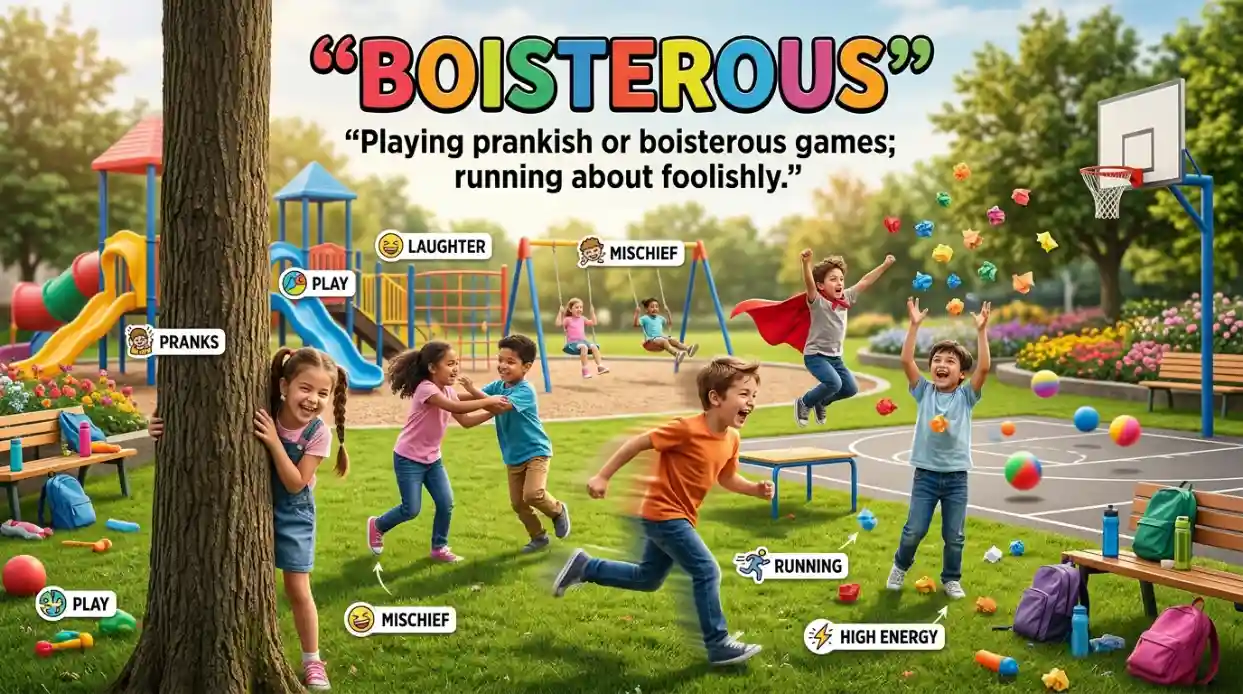
Skylarking (Verb) — US: /ˈskaɪˌlɑːrkɪŋ/ — UK: /ˌskaɪˈlɑːkɪŋ/
- Meaning: Playing prankish or boisterous games; running about foolishly.
- Tone/Register: Informal, nautical.
- Example: Sailors were skylarking on the deck during breaks.
- Example: Teens spent afternoon hours skylarking near local parks.
Larking (Verb) — US: /ˈlɑːrkɪŋ/ — UK: /ˈlɑːkɪŋ/
- Meaning: Playing harmless pranks or having lighthearted fun.
- Tone/Register: British, informal.
- Example: Students were larking about in the common room.
- Example: He spent weekends larking with old friends.
Sporting (Verb) — US: /ˈspɔːrtɪŋ/ — UK: /ˈspɔːtɪŋ/
- Meaning: Playing games or engaging in lighthearted fun.
- Tone/Register: Casual, traditional.
- Example: Youth were sporting on the village green.
- Example: Athletes spent weekends sporting outdoors.
Dallying (Verb) — US: /ˈdæliɪŋ/ — UK: /ˈdæliɪŋ/
- Meaning: Doing something slowly or spending time idly playing.
- Tone/Register: Literary, relaxed.
- Example: They spent hours dallying in the botanical garden.
- Example: Avoid dallying when morning deadlines approach quickly.
Playing (Verb) — US: /ˈpleɪɪŋ/ — UK: /ˈpleɪɪŋ/
- Meaning: Engaging in activity for enjoyment and recreation.
- Tone/Register: Everyday, informal.
- Example: The children were playing tag in the backyard.
- Example: Puppies spent the afternoon playing with rubber toys.
Antics (Noun used as action context) — US: /ˈæntɪks/ — UK: /ˈæntɪks/
- Meaning: Performing foolish, outrageous, or amusing behavior.
- Tone/Register: Playful, descriptive.
- Example: Monkeys entertained visitors with funny acrobatic antics.
- Example: Kittens performed silly antics with colorful yarn balls.
Joking (Verb) — US: /ˈdʒoʊkɪŋ/ — UK: /ˈdʒəʊkɪŋ/
- Meaning: Making jokes or speaking in a humorous, playful way.
- Tone/Register: Casual, friendly.
- Example: Friends sat chatting and joking over dinner.
- Example: He was only joking about the surprise party.
Merrymaking (Noun used as action context) — US: /ˈmɛriˌmeɪkɪŋ/ — UK: /ˈmɛriˌmeɪkɪŋ/
- Meaning: Engaging in lively, joyful festivities and celebrations.
- Tone/Register: Festive, traditional.
- Example: Townspeople joined in weekend holiday merrymaking.
- Example: Music filled the air during festival merrymaking.
Sportive (Adjective used as action context) — US: /ˈspɔːrtɪv/ — UK: /ˈspɔːtɪv/
- Meaning: Acting in a playful, merry, or humorous disposition.
- Tone/Register: Literary, formal.
- Example: The kitten showed a sportive attitude with yarn.
- Example: Writers adopted a sportive tone in essays.
Frolic (Verb) — US: /ˈfrɒlɪk/ — UK: /ˈfrɒlɪk/
- Meaning: To play and move about cheerfully and energetically.
- Tone/Register: Descriptive, cheerful.
- Example: Dolphins like to frolic near ocean waves.
- Example: Children love to frolic in fresh winter snow.
Frolicking (Verb) — US: /ˈfrɒlɪkɪŋ/ — UK: /ˈfrɒlɪkɪŋ/
- Meaning: Playing and moving about in a cheerful, energetic manner.
- Tone/Register: Cheerful, expressive.
- Example: Dogs were frolicking across the grassy lawn.
- Example: Children spent hours frolicking in summer sunshine.
Synonyms by Tone
Choosing the right synonym depends entirely on the atmosphere you want to evoke in your storytelling.
- Positive tone: Romping, capering, gamboling, cavorting, frolicking.
- Neutral tone: Playing, skipping, leaping, hopping, sporting.
- Negative tone: Rare, though boisterous skylarking can occasionally imply disruptive play.
- Playful / Informal tone: Larking, splashing, scampering, frisking, antics.
Tone matters because using a formal literary word like gamboling in a casual text message sounds unusual, while using simple playground slang in a nature novel lacks poetic depth.
Mini Comparison: Frolicking vs. Romping vs. Capering
- Frolicking emphasizes general carefree joy and cheerful outdoor play.
- Romping highlights rough-and-tumble, high-energy physical play common with kids or pets.
- Capering points specifically to light, leaping, dancing movements full of whimsical grace.
Use frolicking for general sunny play, romping for energetic rough play, and capering for graceful leaps.
What Does Frolicking Around Mean?
Frolicking around means moving, running, jumping, or playing happily and energetically without a specific serious purpose. It often describes children or animals enjoying themselves outdoors.
Example 1: The puppies were frolicking around in the garden.
Example 2: The children spent the afternoon frolicking around in the park.
Synonyms: Playing around, romping around, running around, capering, and cavorting.
What Does Whimsically Frolicking Mean?
Whimsically frolicking describes playful, carefree movement that appears imaginative, amusing, or delightfully unpredictable. The word whimsically adds a sense of fancy, charm, or unusual playfulness to the action.
Example: The fairies were whimsically frolicking among the colorful flowers.
This phrase is especially suitable for creative writing, fantasy stories, and poetic descriptions.
Frolicking in the Meadow Meaning
Frolicking in the meadow means playing, running, or jumping happily in an open grassy field. It commonly describes children enjoying nature or young animals moving playfully through the grass.
Example: The lambs were frolicking in the meadow on a sunny morning.
Simple meaning: Happily playing and moving around in a grassy field.
Frolicking in the Forest Meaning
Frolicking in the forest means playing or moving about cheerfully among trees and natural surroundings. It can describe children exploring the woods or animals jumping and running through the forest.
Example: The young deer were frolicking in the forest.
Simple meaning: Enjoying playful, energetic movement in a wooded area.
Is Frolicking Slang?
No, frolicking is not generally considered slang. It is a standard English word used to describe cheerful, carefree, and energetic play. However, it can sound playful, informal, or literary depending on the context.
Example: The children were frolicking on the beach.
In casual conversation, people may use simpler expressions such as playing around, running around, or having fun.
Common Misspellings of Frolicking
The correct spelling is frolicking. Some people may accidentally type similar-looking variations when searching online.
Common misspellings or search variations include:
- Froliking
- Frollicking
- Floricking
- Floriking
- Frolicing
- Froñicking
- Frolecking
- Frockiling
These variations are not the standard spelling of the word. Use frolicking in formal writing, articles, schoolwork, and professional communication.
Correct example: The children were frolicking in the garden.
Incorrect spelling: The children were frollicking in the garden.
Frolicking, Frolicked, and Frolic: What Is the Difference?
These words come from the same verb, frolic, but they are used differently in sentences.
- Frolic: The base form of the verb. Example: The puppies frolic in the garden.
- Frolicking: The -ing form, used for an ongoing action. Example: The puppies are frolicking in the garden.
- Frolicked: The simple past tense, used for an action that happened in the past. Example: The puppies frolicked in the garden.
- Frolics: The third-person singular verb form or a plural noun, depending on the sentence. Example: The puppy frolics in the garden.
Synonyms of Frolicked
Depending on the context, synonyms for frolicked include played, romped, capered, gambolled, cavorted, and frisked.
Example: The lambs frolicked across the meadow.
Alternative: The lambs gambolled across the meadow.
These alternatives describe similar playful actions, although their meanings and tones may differ slightly.
Context-Based Usage
- Daily conversation: In casual talk, native speakers say playing, running around, or having fun instead of literary verbs.
- Writing or blogging: Novelists and travel writers use terms like frolicking, capering, or cavorting to paint vivid imagery.
- Professional or academic tone: Researchers in animal behavior prefer descriptive terms like gamboling or frisking.
- Creative or informal use: Storytellers use words like scampering, skylarking, or romping to show energetic character actions.
Common Mistakes & Native Usage
Common Mistakes Learners Make
- Misuse scenarios: Using frolicking to describe serious athletic training or professional work tasks. Pure recreation fits better.
- Confusing tone: Treating playful words like cavorting as formal business verbs.
- Overuse warnings: Repeating frolicking in every paragraph makes narrative descriptions sound overly repetitive and childish.
Register Notes
- Spoken English favors direct words like playing or running.
- Written English rewards descriptive choices like capering and gamboling.
Real-Life Mini Scenarios
- Workplace: The team enjoyed a lighthearted company retreat with outdoor games on the lawn.
- Social situations: Friends spent a sunny weekend afternoon playing beach volleyball and swimming.
- Media/pop culture: Wildlife documentaries featured playful bear cubs running through mountain streams.
- Writing or storytelling: Chapter scenes opened with cheerful children frolicking across emerald hills.
Conclusion:
In conclusion, frolicking is a joyful and playful way of enjoying life, often associated with carefree movement, fun, and happiness. It can describe people, children, animals, or anyone engaging in lighthearted activity.
Whether it is children frolicking in a park, animals playing in an open field, or friends enjoying a fun day together, the word beautifully expresses energy and freedom. Its synonyms, such as playing, romping, prancing, and gamboling, can add variety to your writing.
Overall, frolicking is a lively word that brings a sense of joy and playfulness to any description. Understanding its meaning and synonyms can help you use it naturally and effectively in both everyday and creative writing.
Practice Exercise
- Which synonym best describes rough-and-tumble, high-energy physical play?
- A) Romping
- B) Sleeping
- C) Studying
- D) Typing
- What tone does the word capering typically carry in narrative writing?
- A) Graceful and leaping play
- B) Dull work
- C) Commercial only
- D) Strictly legal
- Which term refers specifically to young animals jumping playfully about?
- A) Gamboling
- B) Hammering
- C) Drilling
- D) Plowing
- If a travel writer describes dancers jumping excitedly at a festival, the best word is:
- A) Cavorting
- B) Cementing
- C) Bricklaying
- D) Plumbing
- The general everyday term for engaging in recreation is:
- A) Playing
- B) Asphalt
- C) Concrete
- D) Gravel
- What part of speech is the word frolicking in English grammar?
- A) Verb (participle)
- B) Adverb only
- C) Interjection only
- D) Preposition only
- Which synonym describes moving along with light, hopping steps?
- A) Skipping
- B) Stumbling
- C) Sinking
- D) Falling
- A quick, small-stepped run often used by small animals is called:
- A) Scampering
- B) Insulating
- C) Drywalling
- D) Siding
- Engaging in festive celebrations and joyful noisy fun is known as:
- A) Reveling
- B) Stumbling
- C) Slipping
- D) Falling
- Which word describes high-spirited, playful animal movement?
- A) Frisking
- B) Paving
- C) Tiling
- D) Plastering
Reflection Task :
Write one short, original sentence using the word romping to describe energetic dogs in a park.
Answer Key: 1: A | 2: A | 3: A | 4: A | 5: A | 6: A | 7: A | 8: A | 9: A | 10: A
Frequently Asked Questions
1. What does frolicking mean?
Frolicking means playing, moving, or behaving in a lively, joyful, and carefree way.
2. What are the best synonyms for frolicking?
Common synonyms include playing, romping, prancing, skipping, cavorting, and gamboling.
3. How do you use frolicking in a sentence?
Example: The children were frolicking happily in the garden.
4. Is frolicking a positive word?
Yes. Frolicking generally has a positive meaning and suggests happiness, playfulness, and carefree activity.
5. Can frolicking be used for animals?
Yes. The word can describe animals playing or moving energetically, such as: The lambs were frolicking in the meadow.

Hasnain Ali is an SEO Content Strategist and the founder of wordvora.com, a trusted vocabulary platform that helps writers, students, professionals, and English learners find accurate synonyms, antonyms, word meanings, and real-life usage examples. He specializes in keyword research, on-page SEO, topical authority, and creating search-first content that aligns with Google’s latest Search Quality and E-E-A-T guidelines. His work focuses on producing clear, well-structured, and reader-friendly resources that satisfy search intent while maintaining high editorial standards.
Through extensive hands-on experience with SEO tools such as Google Search Console, Google Analytics, SEMrush, and Ahrefs, Hasnain researches user search behavior and develops content that is both informative and easy to understand. Every article published on wordvora.com is carefully reviewed for accuracy, readability, and contextual relevance before publication. His mission is to build one of the web’s most reliable English vocabulary resources by providing practical language guidance, trustworthy explanations, and content that helps readers improve their writing, communication, and vocabulary with confidence.