Synonyms for prototype can save a writer when “prototype” starts appearing in every paragraph. A designer, student, or blogger often needs a fresher word.
Imagine a team showing an early version of a new phone. They may call it a model, mock-up, test version, or demonstrator, depending on its purpose.
The word “prototype” is common because it clearly describes an early form used for development. Learning synonyms for prototype makes your English more precise.
Students can improve essays, while bloggers and content writers can avoid repetition. Daily English users can also choose words that sound more natural in context.
What Does “Prototype” Really Mean?
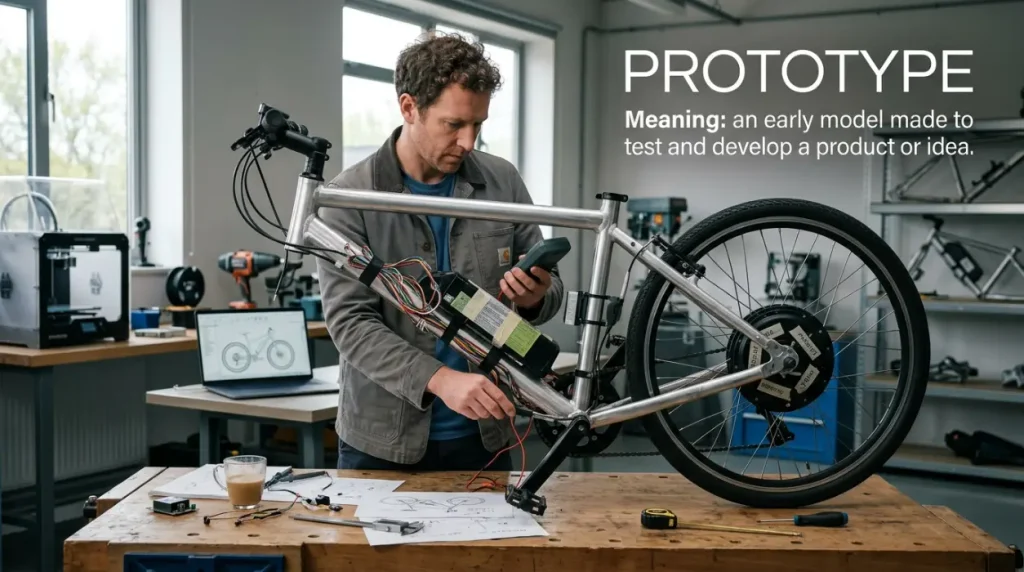
The word “prototype” refers to a preliminary model of a product, system, or idea built to test a concept. In simple terms, it is the first working sample created before mass production or final publication takes place.
Native speakers view it as a practical, functional draft rather than a finished result. It carries a neutral to positive tone, implying innovation, experimentation, and progress. You will frequently hear it in technology, engineering, design, manufacturing, and general business discussions.
- Part of Speech: Noun (can also act as a verb or adjective in modern usage)
- Simple Definition: A preliminary model of something from which other forms are developed or copied.
Connotation
Connotation is the emotional tone or cultural association that a word carries beyond its explicit dictionary definition.
- Positive Tone: Suggests innovation, active progress, creative testing, and fresh ideas.
- Negative Tone: Implies an unfinished state, instability, potential bugs, or unproven functionality.
- Neutral Tone: Simply denotes a preliminary trial version or original pattern.
Etymology
The word originates from the Ancient Greek prōtotypon, formed by prōtos (meaning “first”) and typos (meaning “impression, pattern, or model”). It passed into Late Latin as prototypum and then into French before entering the English language.
- Old English (450–1100): The word did not exist in Old English. Concepts were described using native Germanic terms for patterns or shapes.
- Middle English (1100–1500): Early variants appeared in academic texts derived from Latin roots, referring strictly to original patterns.
- Modern English (1500–Present): Adopted formal usage in the late 16th century, later evolving in the 20th century to fit modern engineering, software, and design practices.
Pronunciation & Word Structure
- US Pronunciation: /ˈproʊ.tə.taɪp/
- UK Pronunciation: /ˈprəʊ.tə.taɪp/
- Syllables: pro-to-type (3 syllables)
Affixation Pattern:
- Root: Type (from Greek typos)
- Prefix: Proto- (meaning “first” or “earliest”)
- Suffix: None
Synonyms List
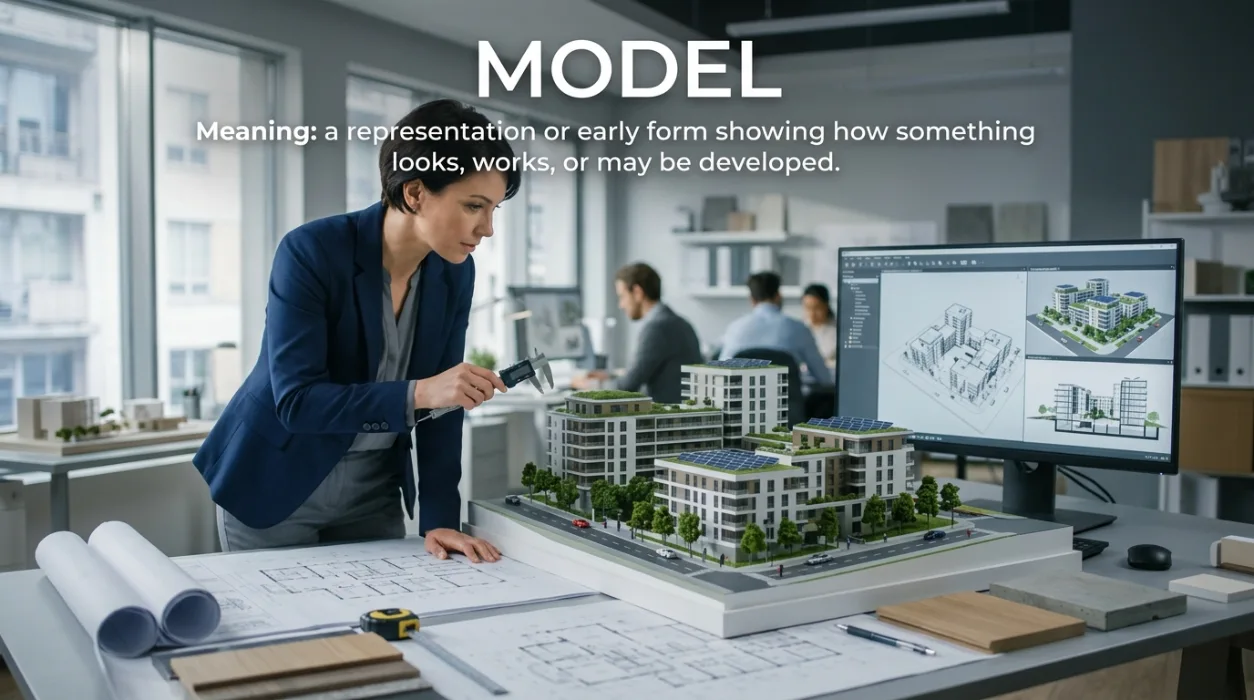
Model (noun) — US /ˈmɑː.dəl/ | UK /ˈmɒd.əl/
Meaning: A model is a representation or early form used to show how something looks, works, or may be developed.
Tone/Register: Neutral, academic, business.
Example:
The designer built a model of the new device.
The model helped the team explain the idea clearly.
Original (noun) — US /əˈrɪdʒ.ə.nəl/ | UK /əˈrɪdʒ.ɪ.nəl/
Meaning: An original is the first or source version from which later versions may develop.
Tone/Register: Neutral, formal.
Example:
The museum displayed the original design.
Engineers studied it before producing newer versions.
Archetype (noun) — US /ˈɑːr.kə.taɪp/ | UK /ˈɑː.kɪ.taɪp/
Meaning: An archetype is an ideal or highly representative original pattern.
Tone/Register: Academic, literary, formal.
Example:
The character became an archetype of the modern hero.
The design later influenced many similar products.
Exemplar (noun) — US /ɪɡˈzæm.plɚ/ | UK /ɪɡˈzɑːm.plə/
Meaning: An exemplar is a representative example that demonstrates a particular type or quality.
Tone/Register: Formal, academic.
Example:
The researcher selected the device as an exemplar.
Its structure represented the wider design class.
Pattern (noun) — US /ˈpæt̬.ɚn/ | UK /ˈpæt.ən/
Meaning: A pattern is a model or form that can guide the creation of similar things.
Tone/Register: Neutral, academic.
Example:
The architect used the early structure as a pattern.
Later buildings followed the same basic approach.
Paradigm (noun) — US /ˈper.ə.daɪm/ | UK /ˈpær.ə.daɪm/
Meaning: A paradigm is a model or framework that provides an example for future development or thinking.
Tone/Register: Academic, formal.
Example:
The study introduced a new research paradigm.
The approach became a model for later projects.
Template (noun) — US /ˈtem.plət/ | UK /ˈtem.plət/
Meaning: A template is a prepared model or structure that others can follow.
Tone/Register: Neutral, business, technical.
Example:
The designer created a template for the new interface.
Developers used it as the basis for later screens.
Forerunner (noun) — US /ˈfɔːrˌrʌn.ɚ/ | UK /ˈfɔːˌrʌn.ə/
Meaning: A forerunner is an earlier thing that comes before and helps lead to a later development.
Tone/Register: Formal, journalistic.
Example:
The experimental vehicle was a forerunner of today’s electric cars.
Its technology influenced later designs.
Predecessor (noun) — US /ˈpred.ə.ses.ɚ/ | UK /ˈpred.ɪˌses.ə/
Meaning: A predecessor is an earlier version or product that came before another one.
Tone/Register: Neutral, business.
Example:
The new camera is smaller than its predecessor.
The earlier model introduced the basic technology.
Precursor (noun) — US /priːˈkɝː.sɚ/ | UK /priːˈkɜː.sə/
Meaning: A precursor is something that exists earlier and helps lead to a later development.
Tone/Register: Formal, academic.
Example:
The laboratory device was a precursor to the final system.
Researchers tested several versions before reaching the finished design.
Maquette (noun) — US /mæˈket/ | UK /mæˈket/
Meaning: A maquette is a small preliminary model, especially of a sculpture or architectural design.
Tone/Register: Artistic, specialist.
Example:
The sculptor made a maquette before creating the full statue.
The small model helped refine the figure’s proportions.
Mock-up (noun) — US /ˈmɑːk.ʌp/ | UK /ˈmɒk.ʌp/
Meaning: A mock-up is a preliminary representation made to show appearance or layout.
Tone/Register: Neutral, design, business.
Example:
The team presented a mock-up of the new website.
The client suggested changes to the layout.
Dummy (noun) — US /ˈdʌm.i/ | UK /ˈdʌm.i/
Meaning: A dummy is a nonfunctional or partly functional model used for demonstration or testing.
Tone/Register: Informal, technical.
Example:
The safety team tested a dummy version of the device.
It showed where the controls should be placed.
Demonstrator (noun) — US /ˈdem.ən.streɪ.t̬ɚ/ | UK /ˈdem.ən.streɪ.tə/
Meaning: A demonstrator is a model or system built mainly to demonstrate an idea or capability.
Tone/Register: Technical, formal.
Example:
The engineers presented a working demonstrator.
It proved that the new mechanism could operate.
Proof of concept (noun phrase) — US /ˌpruː əv ˈkɑːn.sept/ | UK /ˌpruː əv ˈkɒn.sept/
Meaning: A proof of concept demonstrates that an idea is technically or practically possible.
Tone/Register: Business, technical, academic.
Example:
The team built a proof of concept for the sensor.
It confirmed that the basic idea could work.
Concept model (noun) — US /ˈkɑːn.sept ˌmɑː.dəl/ | UK /ˈkɒn.sept ˌmɒd.əl/
Meaning: A concept model is an early representation created to explore an idea.
Tone/Register: Design, technical.
Example:
The concept model showed the proposed vehicle shape.
The engineers later added functional components.
Concept design (noun) — US /ˈkɑːn.sept dɪˈzaɪn/ | UK /ˈkɒn.sept dɪˈzaɪn/
Meaning: A concept design presents an early idea before detailed development.
Tone/Register: Professional, design.
Example:
The architect shared the concept design with the team.
Everyone discussed its main features.
Trial model (noun) — US /ˈtraɪəl ˌmɑː.dəl/ | UK /ˈtraɪəl ˌmɒd.əl/
Meaning: A trial model is an early model used to test an idea or approach.
Tone/Register: Neutral, technical.
Example:
The factory produced a trial model of the machine.
Workers tested it under normal conditions.
Test model (noun) — US /ˈtest ˌmɑː.dəl/ | UK /ˈtest ˌmɒd.əl/
Meaning: A test model is created primarily for testing rather than final production.
Tone/Register: Technical, neutral.
Example:
The laboratory received a test model yesterday.
Researchers will examine its performance.
Test article (noun) — US /ˈtest ˌɑːr.t̬ɪ.kəl/ | UK /ˈtest ˌɑː.tɪ.kəl/
Meaning: A test article is a physical item prepared for controlled testing.
Tone/Register: Engineering, aerospace, formal.
Example:
The engineers inspected the test article carefully.
The structure then underwent stress testing.
Test version (noun) — US /ˈtest ˌvɝː.ʒən/ | UK /ˈtest ˌvɜː.ʃən/
Meaning: A test version is an early version released or created for evaluation.
Tone/Register: Technical, software.
Example:
The team installed the test version of the application.
Users reported several interface problems.
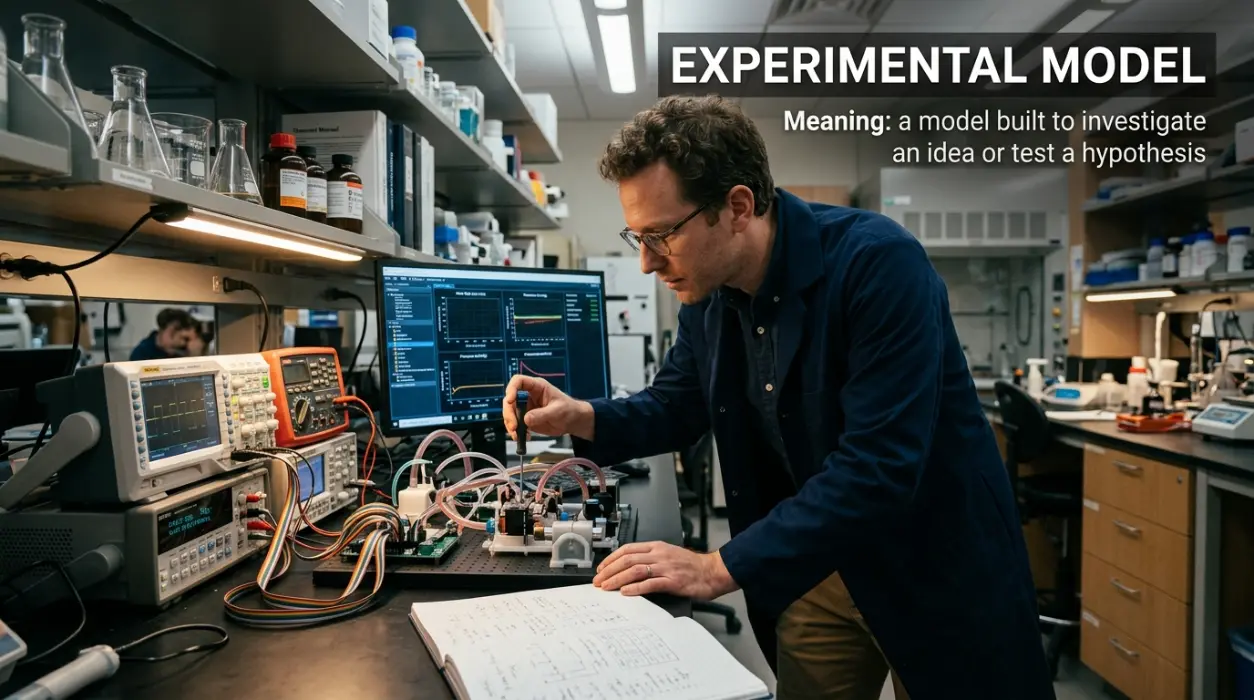
Experimental model (noun) — US /ɪkˌsper.əˈmen.t̬əl ˌmɑː.dəl/ | UK /ɪkˌsper.ɪˈmen.təl ˌmɒd.əl/
Meaning: An experimental model is built to investigate an idea or test a hypothesis.
Tone/Register: Academic, scientific.
Example:
Scientists developed an experimental model.
The results helped shape the next study.
Experimental version (noun) — US /ɪkˌsper.əˈmen.t̬əl ˌvɝː.ʒən/ | UK /ɪkˌsper.ɪˈmen.təl ˌvɜː.ʃən/
Meaning: An experimental version is an early form that is still being tested or explored.
Tone/Register: Technical, academic.
Example:
The researchers tested an experimental version of the program.
It included several features that were not yet finalized.
Development model (noun) — US /dɪˈvel.əp.mənt ˌmɑː.dəl/ | UK /dɪˈvel.əp.mənt ˌmɒd.əl/
Meaning: A development model is a model used while a product or system is being developed.
Tone/Register: Technical, business.
Example:
The development model revealed a problem with the controls.
The designers adjusted the layout afterward.
Development version (noun) — US /dɪˈvel.əp.mənt ˌvɝː.ʒən/ | UK /dɪˈvel.əp.mənt ˌvɜː.ʃən/
Meaning: A development version is an unfinished version created during the development process.
Tone/Register: Software, technical.
Example:
The developers tested a development version overnight.
Several functions were still incomplete.
Working model (noun) — US /ˈwɝː.kɪŋ ˌmɑː.dəl/ | UK /ˈwɜː.kɪŋ ˌmɒd.əl/
Meaning: A working model is an early model that actually performs some or all of its intended functions.
Tone/Register: Neutral, technical.
Example:
The students built a working model of the bridge.
Their model successfully carried the test load.
Working version (noun) — US /ˈwɝː.kɪŋ ˌvɝː.ʒən/ | UK /ˈwɜː.kɪŋ ˌvɜː.ʃən/
Meaning: A working version is an early version that operates well enough for testing or use.
Tone/Register: Neutral, technical.
Example:
We finally have a working version of the app.
The team will improve the design next.
Pilot model (noun) — US /ˈpaɪ.lət ˌmɑː.dəl/ | UK /ˈpaɪ.lət ˌmɒd.əl/
Meaning: A pilot model is an early model tested before wider production or adoption.
Tone/Register: Business, technical.
Example:
The company tested a pilot model in one location.
Feedback shaped the next version.
Pilot version (noun) — US /ˈpaɪ.lət ˌvɝː.ʒən/ | UK /ˈpaɪ.lət ˌvɜː.ʃən/
Meaning: A pilot version is an early version tested with a limited group or setting.
Tone/Register: Business, professional.
Example:
Teachers used the pilot version of the course.
Their comments guided the final revision.
Early version (noun) — US /ˈɝː.li ˌvɝː.ʒən/ | UK /ˈɜː.li ˌvɜː.ʃən/
Meaning: An early version is a form produced near the beginning of development.
Tone/Register: Neutral.
Example:
I saw an early version of the website.
The final design looks very different.
Initial version (noun) — US /ɪˈnɪʃ.əl ˌvɝː.ʒən/ | UK /ɪˈnɪʃ.əl ˌvɜː.ʃən/
Meaning: An initial version is the first form prepared for further revision or development.
Tone/Register: Formal, academic, business.
Example:
The initial version contained several errors.
The editor corrected them before publication.
Preliminary version (noun) — US /prɪˈlɪm.ə.ner.i ˌvɝː.ʒən/ | UK /prɪˈlɪm.ɪ.nər.i ˌvɜː.ʃən/
Meaning: A preliminary version is an early form prepared before the final version.
Tone/Register: Formal, academic.
Example:
The researcher shared a preliminary version of the report.
Readers suggested several useful changes.
First version (noun) — US /ˈfɝːst ˌvɝː.ʒən/ | UK /ˈfɜːst ˌvɜː.ʃən/
Meaning: The first version is the earliest completed form of something.
Tone/Register: Neutral.
Example:
The first version of the product was quite simple.
Later versions added more features.
First model (noun) — US /ˈfɝːst ˌmɑː.dəl/ | UK /ˈfɜːst ˌmɒd.əl/
Meaning: A first model is the earliest physical or conceptual model in a development sequence.
Tone/Register: Neutral, technical.
Example:
The first model was made from lightweight materials.
Engineers later strengthened the frame.
Original model (noun) — US /əˈrɪdʒ.ə.nəl ˌmɑː.dəl/ | UK /əˈrɪdʒ.ɪ.nəl ˌmɒd.əl/
Meaning: An original model is the source model from which later forms are developed or copied.
Tone/Register: Neutral, formal.
Example:
The original model is still stored in the laboratory.
Researchers use it for comparison.
Sample model (noun) — US /ˈsæm.pəl ˌmɑː.dəl/ | UK /ˈsɑːm.pəl ˌmɒd.əl/
Meaning: A sample model is a representative model used to show or evaluate a possible design.
Tone/Register: Neutral, business.
Example:
The designer prepared a sample model for the presentation.
It helped the audience understand the proposed shape.
Sample (noun) — US /ˈsæm.pəl/ | UK /ˈsɑːm.pəl/
Meaning: A sample is a representative example, although it is broader than prototype and does not always imply development.
Tone/Register: Neutral.
Example:
The manufacturer sent a sample for inspection.
The team checked its size and materials.
Specimen (noun) — US /ˈspes.ə.mən/ | UK /ˈspes.ɪ.mɪn/
Meaning: A specimen is an individual example selected for examination or study.
Tone/Register: Scientific, academic.
Example:
The laboratory examined the specimen under controlled conditions.
The measurements were recorded carefully.
Representation (noun) — US /ˌrep.rə.zenˈteɪ.ʃən/ | UK /ˌrep.rɪ.zenˈteɪ.ʃən/
Meaning: A representation is something that stands for or depicts another thing.
Tone/Register: Academic, technical.
Example:
The diagram provides a representation of the proposed system.
It makes the structure easier to understand.
Embodiment (noun) — US /ɪmˈbɑː.di.mənt/ | UK /ɪmˈbɒd.i.mənt/
Meaning: An embodiment is a concrete form that expresses or realizes an idea.
Tone/Register: Formal, academic.
Example:
The device became an embodiment of the team’s design concept.
Its shape reflected the original idea.
Instantiation (noun) — US /ɪnˌstæn.ʃiˈeɪ.ʃən/ | UK /ɪnˌstæn.ʃiˈeɪ.ʃən/
Meaning: Instantiation refers to creating a concrete example of an abstract model or concept.
Tone/Register: Technical, academic.
Example:
The software creates an instantiation of the data model.
Each instance follows the defined structure.
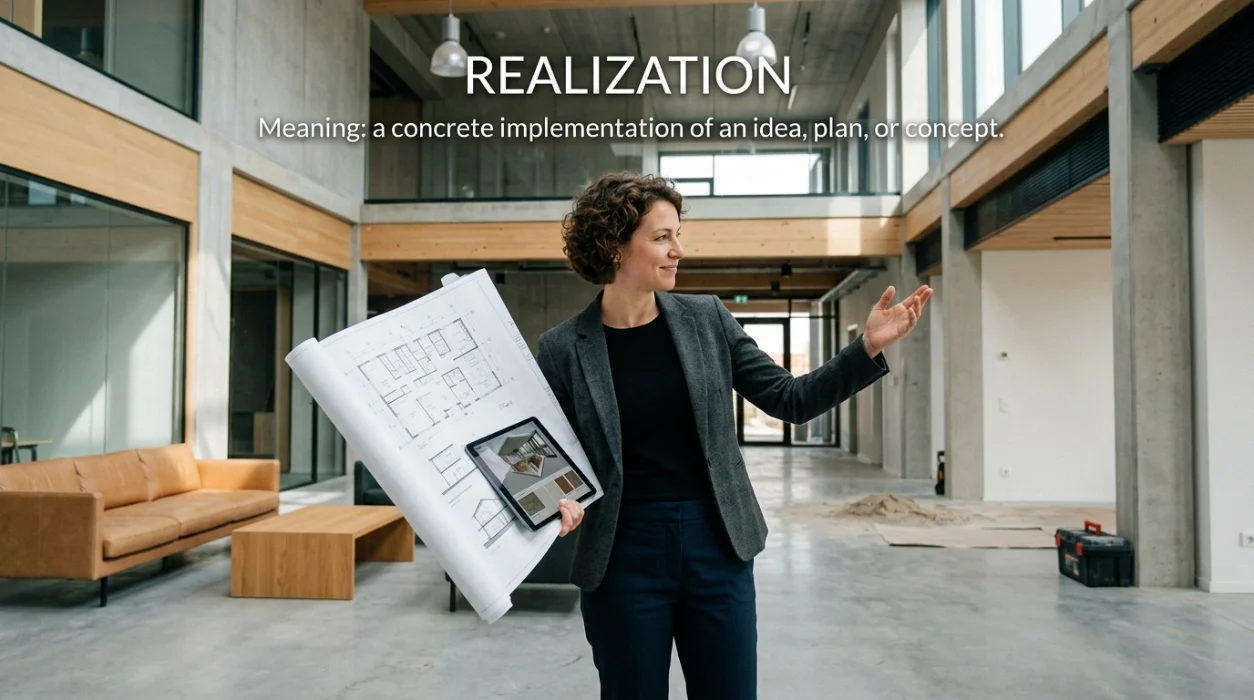
Realization (noun) — US /ˌriː.ə.ləˈzeɪ.ʃən/ | UK /ˌrɪə.laɪˈzeɪ.ʃən/
Meaning: A realization is a concrete implementation of an idea, plan, or concept.
Tone/Register: Formal, academic.
Example:
The prototype represented the first realization of the concept.
The team then tested its practical limits.
Implementation (noun) — US /ˌɪm.plə.mənˈteɪ.ʃən/ | UK /ˌɪm.plɪ.menˈteɪ.ʃən/
Meaning: An implementation is a practical form of a design, method, or system.
Tone/Register: Technical, professional.
Example:
The developers produced an early implementation.
It allowed them to test the new algorithm.
Scale model (noun) — US /ˈskeɪl ˌmɑː.dəl/ | UK /ˈskeɪl ˌmɒd.əl/
Meaning: A scale model represents an object at a fixed proportion of its actual size.
Tone/Register: Technical, architectural.
Example:
The architect displayed a scale model of the building.
Visitors could see the overall structure easily.
Full-scale model (noun) — US /ˈfʊl skeɪl ˌmɑː.dəl/ | UK /ˈfʊl skeɪl ˌmɒd.əl/
Meaning: A full-scale model has the same dimensions as the intended real object.
Tone/Register: Technical, engineering.
Example:
The team constructed a full-scale model of the cockpit.
Pilots used it to test the layout.
Functional model (noun) — US /ˈfʌŋk.ʃən.əl ˌmɑː.dəl/ | UK /ˈfʌŋk.ʃən.əl ˌmɒd.əl/
Meaning: A functional model is designed to demonstrate or perform important functions of the intended product.
Tone/Register: Technical, professional.
Example:
The functional model allowed engineers to test the controls.
It did not yet include the final materials.
Reference model (noun) — US /ˈref.ər.əns ˌmɑː.dəl/ | UK /ˈref.ər.əns ˌmɒd.əl/
Meaning: A reference model provides a standard structure or example for comparison or development.
Tone/Register: Technical, academic.
Example:
The team used the reference model during development.
It provided a consistent structure for comparison.
Engineering model (noun) — US /ˌen.dʒəˈnɪr.ɪŋ ˌmɑː.dəl/ | UK /ˌen.dʒɪˈnɪə.rɪŋ ˌmɒd.əl/
Meaning: An engineering model is a model created to evaluate technical features or performance.
Tone/Register: Engineering, formal.
Example:
The engineering model was tested for structural strength.
The results informed the next design stage.
Preproduction model (noun) — US /ˌpriː.prəˈdʌk.ʃən ˌmɑː.dəl/ | UK /ˌpriː.prəˈdʌk.ʃən ˌmɒd.əl/
Meaning: A preproduction model is made shortly before full production to check the final design and process.
Tone/Register: Manufacturing, business.
Example:
The factory inspected the preproduction model.
The checks focused on quality and assembly.
Pre-release version (noun) — US /ˌpriː rɪˈliːs ˌvɝː.ʒən/ | UK /ˌpriː rɪˈliːs ˌvɜː.ʃən/
Meaning: A pre-release version is a version prepared before an official public release.
Tone/Register: Software, business.
Example:
Reviewers received a pre-release version of the application.
They tested it before the public launch.
Alpha version (noun) — US /ˈæl.fə ˌvɝː.ʒən/ | UK /ˈæl.fə ˌvɜː.ʃən/
Meaning: An alpha version is an early software version used mainly for internal testing and development.
Tone/Register: Technical, software.
Example:
The developers are testing the alpha version internally.
Some features are still unstable.
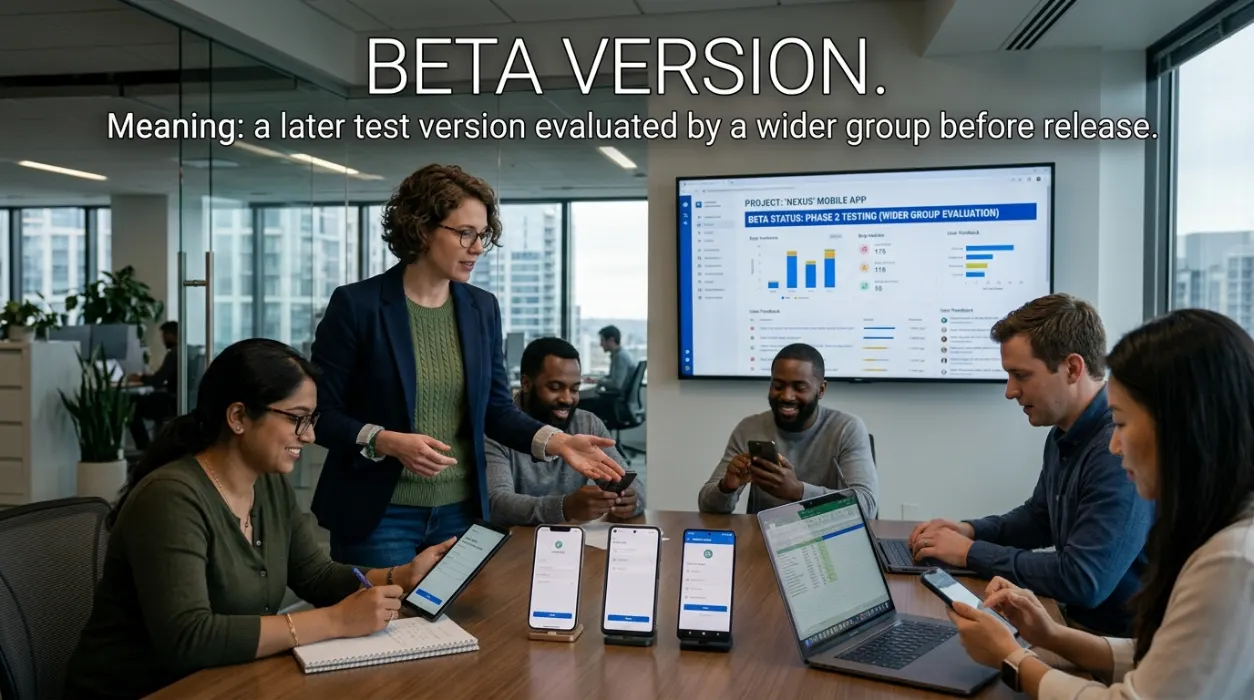
Beta version (noun) — US /ˈbeɪ.t̬ə ˌvɝː.ʒən/ | UK /ˈbiː.tə ˌvɜː.ʃən/
Meaning: A beta version is a later test version that is often evaluated by a wider group before release.
Tone/Register: Technical, software.
Example:
The beta version was tested by selected users.
Their feedback helped identify remaining problems.
Synonyms by Tone
Understanding tone matters tremendously in word choice because using a word with the wrong register can confuse your audience. For example, using “wireframe” in a formal academic essay might sound too informal or overly specialized, whereas calling a simple digital sketch an “archetype” would sound pretentious. Matching your term to your tone ensures clear, effective communication.
Positive
These terms emphasize progress, excellence, leadership, or success:
- Archetype
- Exemplar
- Paradigm
- Vanguard
- Benchmark
Neutral
These words objectively describe an initial version without emotional bias:
- Model
- Blueprint
- Pattern
- Template
- Standard
- Framework
- Original
- Specimen
- Prototype Structure
- Concept Model
- Preliminary Design
Negative or Primitive
These choices highlight an unrefined, incomplete, or potentially unstable state:
- Rough Draft
- Dummy
- Skeleton
- Alpha Version
- Early Build
Playful or Informal
These synonyms work best in casual conversations, tech-slang, or modern creative contexts:
- Sketch
- Mockup
- First Cut
- Version 1.0
- Trial Run
Prototype vs. Close Alternatives
Understanding subtle differences between close synonyms prevents embarrassing writing mistakes. While these terms all relate to early stages of creation, their practical applications differ significantly.
| Term | Meaning Difference | Tone / Register | Best Used When… |
| Prototype | A functional early model built to test mechanics or user experience. | Professional / Technical | Testing how an actual physical or digital product works in real conditions. |
| Archetype | An ideal, classic original pattern that serves as a universal model. | Formal / Academic | Describing recurring character tropes, psychological patterns, or historic ideals. |
| Mockup | A visual or physical replica used solely to show appearance, not function. | Professional / Design | Demonstrating layout, color schemes, and aesthetics to clients without back-end code. |
How “Prototype” Changes by Context
Your choice of vocabulary should shift depending on your channel, format, and target audience.
Daily Conversation
In casual discussions, native speakers rarely use complex terms. They lean heavily toward simple, relatable words like sample, sketch, rough draft, or trial run. For instance, you might tell a friend, “This project is just a rough draft, so do not expect perfection yet.”
Writing or Blogging
Bloggers and digital content creators need dynamic vocabulary to keep readers engaged. Terms like mockup, framework, or Version 1.0 work well here. Using distinct synonyms for prototype prevents repetitive phrasing and improves overall SEO readability.
Professional or Academic Tone
Formal writing demands precise, authoritative language. In research papers, corporate presentations, or technical documentation, opt for words such as archetype, paradigm, precursor, exemplar, or preliminary design. These terms convey deep expertise and exact meaning.
Creative or Informal Use
Creative professionals, graphic designers, and software developers often use industry slang. Words like wireframe, alpha version, first cut, or early build fit perfectly in fast-paced studio environments.
Common Mistakes & Native Usage
Misuse Scenarios
A frequent mistake English learners make is using “archetype” when they simply mean a basic physical sample. An archetype is a perfect, ideal pattern (like the “hero” archetype in literature), while a prototype is an experimental test model. Calling a buggy software build an archetype sounds confusing and grammatically out of place.
Another error is confusing mockup with prototype. A mockup only shows how something looks visually, whereas a prototype actually functions.
Register Notes
Avoid using tech-heavy terms like wireframe or alpha version when writing formal academic essays about literature or history. Conversely, avoid using literary terms like exemplar when discussing software bug tracking.
For additional vocabulary breakdowns on technical and design terms, exploring related language resources can help refine your style.
Real-Life Mini Scenarios
- Workplace: An engineer shows a working model of a medical device to investors to demonstrate its safety features before securing manufacturing funds.
- Social Situations: A friend bakes a sample batch of cookies and offers them to guests to test a new recipe before hosting a party.
- Media / Pop Culture: Film directors screen a first cut of an action movie to studio executives to fix pacing issues before adding special effects.
- Storytelling: An author drafts an initial outline of plot twists to ensure character arcs make sense before writing full chapters.
Practice Quiz
1. A company builds an early car to test its design before production. What is the best word?
A. Specimen
B. Prototype
C. Predecessor
D. Archetype
2. A designer creates a simple picture of a website layout. Which term fits best?
A. Mock-up
B. Predecessor
C. Specimen
D. Precursor
3. A scientist creates an early system to test a research idea. Which phrase is most suitable?
A. Experimental model
B. Original
C. Archetype
D. Predecessor
4. A finished phone from last year is compared with this year’s phone. What is last year’s phone?
A. Prototype
B. Wireframe
C. Predecessor
D. Maquette
5. A software team releases an early internal version for testing. Which term fits?
A. Alpha version
B. Scale model
C. Specimen
D. Archetype
6. An architect creates a small physical version of a building. What is it?
A. Scale model
B. Beta version
C. Precursor
D. Dummy
7. A team wants to prove that a technical idea can work. Which term is most precise?
A. Proof of concept
B. Sample
C. Predecessor
D. Template
8. A sculptor makes a small preliminary sculpture before the final work. Which term fits best?
A. Maquette
B. Beta version
C. Test article
D. Implementation
9. A developer creates a concrete version of an abstract software design. Which term is suitable?
A. Instantiation
B. Archetype
C. Predecessor
D. Pattern
10. A team creates a simple clickable version of an app interface. Which term fits best?
A. Interactive mock-up
B. Precursor
C. Specimen
D. Full-scale model
Reflection task:
Choose one synonym from this article and write a sentence about a product, app, school project, or idea you know.
Answer key:
1-B | 2-A | 3-A | 4-C | 5-A | 6-A | 7-A | 8-A | 9-A | 10-A
Conclusion
Understanding prototype can help you describe an early model or sample created to test an idea, product, or design. Learning its synonyms, meaning, and examples can improve your English vocabulary and make your communication more precise.
The word prototype is commonly used in product development, engineering, technology, and design. Knowing its related synonyms can help you express the concept of an initial model or working version in different contexts.
By practicing prototype in sentences and exploring related words, you can strengthen your vocabulary and writing skills. A clear understanding of this term will help you communicate ideas more accurately and confidently in everyday and professional English.
FAQs
1. What is the best synonym for prototype in academic writing?
The best academic alternative depends on the intended meaning. Model, experimental model, preliminary version, exemplar, and implementation can all work in specific contexts. If you mean an early product built for testing, prototype remains the clearest choice. If you mean a representative example, exemplar may be more accurate.
2. What is another word for prototype in product design?
In product design, useful alternatives include model, mock-up, concept model, working model, functional model, demonstrator, and preproduction model. The best choice depends on whether the object shows appearance, tests functionality, demonstrates an idea, or represents a near-final production design.
3. Can “model” replace “prototype” in every sentence?
No. Model is broader than prototype. A model can represent something mathematically, visually, physically, or conceptually. A prototype normally refers to an early form developed for testing, evaluation, or future production. Therefore, replacing prototype with model can sometimes remove important meaning.
4. What is a good synonym for prototype in software development?
Common software alternatives include early version, development version, test version, alpha version, beta version, working version, and prototype implementation. However, these terms describe different stages. An alpha or beta version is specifically associated with software testing, while a prototype can exist much earlier.
5. Is “mock-up” the same as “prototype”?
Not exactly. A mock-up usually emphasizes appearance, layout, or presentation and may not function. A prototype can be functional and is often created to test behavior, engineering, usability, or performance. In digital design, however, the two terms sometimes overlap.

Hasnain Ali is an SEO Content Strategist and the founder of wordvora.com, a trusted vocabulary platform that helps writers, students, professionals, and English learners find accurate synonyms, antonyms, word meanings, and real-life usage examples. He specializes in keyword research, on-page SEO, topical authority, and creating search-first content that aligns with Google’s latest Search Quality and E-E-A-T guidelines. His work focuses on producing clear, well-structured, and reader-friendly resources that satisfy search intent while maintaining high editorial standards.
Through extensive hands-on experience with SEO tools such as Google Search Console, Google Analytics, SEMrush, and Ahrefs, Hasnain researches user search behavior and develops content that is both informative and easy to understand. Every article published on wordvora.com is carefully reviewed for accuracy, readability, and contextual relevance before publication. His mission is to build one of the web’s most reliable English vocabulary resources by providing practical language guidance, trustworthy explanations, and content that helps readers improve their writing, communication, and vocabulary with confidence.