
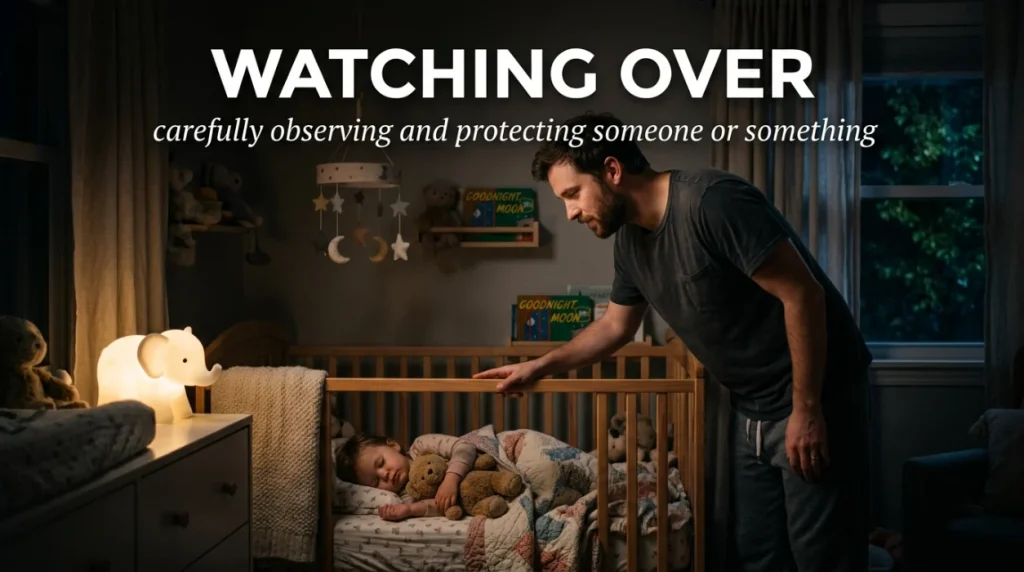
The phrase watching over is commonly used when talking about keeping someone or something safe, protected, or under careful observation. It can describe a person who takes responsibility for another person or keeps an eye on a particular situation.
There are many synonyms for watching over, including monitoring, supervising, guarding, protecting, observing, and keeping an eye on. Choosing the right synonym depends on the context and the level of care, attention, or protection being described.
Understanding related words can make your writing more varied and precise. Whether you are describing a parent caring for a child, a security guard monitoring a building, or someone protecting a valuable possession, using suitable alternatives can help communicate your meaning clearly.
In this article, we will explore watching over synonyms, their meanings, and examples of how they can be used in different sentences. This guide will help you expand your vocabulary and choose the most appropriate expression for your writing.
What Does “Synonyms For Watching Over” Really Mean?
Synonyms for watching over mean finding alternative phrases and verbs that express protecting, guarding, supervising, or caring for someone or something. It sets up a supportive or vigilant tone aimed at capturing protective oversight, careful observation, or steady guidance.
Native speakers use these terms when discussing parents guarding children, managers supervising projects, or security staff protecting buildings. It carries a diverse emotional tone ranging from warm maternal affection to stern professional surveillance. It usually suggests constant attention, safety assurance, and protective care.
Connotative Meaning
- Positive tone: Associated with loving parental guidance, dedicated nursing care, and protective mentorship.
- Negative tone: Linked with overbearing surveillance, intrusive micromanagement, and suspicious policing.
- Neutral tone: Used in professional supervision reports, security logs, and project management updates.
- Connotation definition: (The emotional or cultural feeling attached to a word or phrase beyond its strict dictionary definition).

Etymology
- Source Language: Old English combinations of wæccian (to watch) and ofer (over).
- Original Meaning: Originally meant keeping awake or maintaining physical vigil over a territory or person.
- Old English (450–1100): Early Germanic guilds used native phrasing for keeping guard during night shifts.
- Middle English (1100–1500): Expanded to include spiritual protection and physical guardianship in chivalric texts.
- Modern English (1500–Present): Fully established as standard verbal phrases for general supervision, caregiving, and protection.
Pronunciation (US & UK – IPA)
- US: /ˈsɪnənɪmz fɔːr ˈwɑːtʃɪŋ ˈoʊvər/
- UK: /ˈsɪnənɪmz fɔːr ˈwɒtʃɪŋ ˈəʊvə/
Syllables & Affixation Pattern
- Syllables: syn-o-nyms-for-watch-ing-o-ver
- Root: watch (to observe) + over (positional preposition)
- Prefixes: syn- (together)
- Suffix: -ing (present participle marker)
Synonyms List
Superintending (Verb) — US: /ˌsuːpərɪnˈtɛndɪŋ/ — UK: /ˌsuːpərɪnˈtendɪŋ/
- Meaning: Overseeing the operation or management of something.
- Tone/Register: Formal, administrative.
- Example: Directors spent the morning superintending factory safety upgrades.
- Example: She enjoyed superintending community garden development projects.
Overseeing (Verb) — US: /ˌoʊvərˈsiːɪŋ/ — UK: /ˌəʊvəˈsiːɪŋ/
- Meaning: Supervising persons or work.
- Tone/Register: Professional, standard.
- Example: The manager is overseeing the construction of the new office.
- Example: Experienced editors spent hours overseeing manuscript revisions.
Supervising (Verb) — US: /ˈsuːpərˌvaɪzɪŋ/ — UK: /ˈsuːpəˌvaɪzɪŋ/
- Meaning: Observing and directing the execution of a task or activity.
- Tone/Register: Professional, common.
- Example: Lifeguards spent the afternoon supervising children at the pool.
- Example: Teachers kept busy supervising students during museum tours.
Guarding (Verb) — US: /ˈɡɑːrdɪŋ/ — UK: /ˈɡɑːdɪŋ/
- Meaning: Protecting against damage or harm.
- Tone/Register: Protective, standard.
- Example: Loyal dogs spent all night guarding the country home.
- Example: Soldiers stood outside the gates guarding the perimeter.
Protecting (Verb) — US: /prəˈtɛktɪŋ/ — UK: /prəˈtektɪŋ/
- Meaning: Keeping safe from harm or injury.
- Tone/Register: Caring, common.
- Example: Parents dedicated their lives to protecting their children.
- Example: Thick winter coats help with protecting people from cold winds.
Shielding (Verb) — US: /ˈʃiːldɪŋ/ — UK: /ˈʃiːldɪŋ/
- Meaning: Protecting from a danger, risk, or unpleasant experience.
- Tone/Register: Protective, emotive.
- Example: She used her jacket to shield her face from rain.
- Example: Laws exist for shielding consumers from unfair business practices.
Defending (Verb) — US: /dɪˈfɛndɪŋ/ — UK: /dɪˈfendɪŋ/
- Meaning: Resisting an attack or protecting from harm.
- Tone/Register: Formal, resolute.
- Example: Lawyers spent weeks defending their clients in court.
- Example: Animals show fierce instincts when defending their young.
Safeguarding (Verb) — US: /ˈseɪfˌɡɑːrdɪŋ/ — UK: /ˈseɪfˌɡɑːdɪŋ/
- Meaning: Protecting from harm or damage.
- Tone/Register: Formal, administrative.
- Example: Banks use advanced encryption for safeguarding user accounts.
- Example: Conservation laws focus on safeguarding endangered forest wildlife.
Preserving (Verb) — US: /prɪˈzɜːrvɪŋ/ — UK: /prɪˈzɜːvɪŋ/
- Meaning: Maintaining something in its original or existing state.
- Tone/Register: Formal, standard.
- Example: Historians dedicated years to preserving ancient manuscripts.
- Example: Local volunteers worked hard preserving historical downtown buildings.
Tending (Verb) — US: /ˈtɛndɪŋ/ — UK: /ˈtendɪŋ/
- Meaning: Regularly caring for or attending to someone or something.
- Tone/Register: Gentle, caring.
- Example: The gardener spent hours tending flowers in the greenhouse.
- Example: Nurses worked diligently tending patients recovering from surgery.
Nursing (Verb) — US: /ˈnɜːrsɪŋ/ — UK: /ˈnɜːsɪŋ/
- Meaning: Caring for someone who is ill or infirm.
- Tone/Register: Caring, medical.
- Example: She spent the weekend nursing her sick puppy back to health.
- Example: Hospital staff excelled at nursing injured wildlife.
Fostering (Verb) — US: /ˈfɑːstərɪŋ/ — UK: /ˈfɒstərɪŋ/
- Meaning: Encouraging the development of something, or raising a child temporarily.
- Tone/Register: Supportive, warm.
- Example: The organization specializes in fostering rescue kittens.
- Example: Mentors play key roles in fostering youth leadership skills.
Nurturing (Verb) — US: /ˈnɜːrtʃərɪŋ/ — UK: /ˈnɜːtʃərɪŋ/
- Meaning: Caring for and encouraging the growth or development of someone.
- Tone/Register: Warm, nurturing.
- Example: Teachers take pride in nurturing young creative minds.
- Example: Gardeners enjoy nurturing seedlings into blooming plants.
Cultivating (Verb) — US: /ˈkʌltɪˌveɪtɪŋ/ — UK: /ˈkʌltɪveɪtɪŋ/
- Meaning: Preparing and using land for crops, or trying to acquire a quality.
- Tone/Register: Agricultural, formal.
- Example: Farmers started cultivating organic vegetables in spring.
- Example: She focused on cultivating good daily reading habits.
Herding (Verb) — US: /ˈhɜːrdɪŋ/ — UK: /ˈhɜːdɪŋ/
- Meaning: Moving or managing a group of animals or people.
- Tone/Register: Rural, practical.
- Example: Ranchers spent the morning herding cattle across the meadow.
- Example: Tour guides struggled with herding distracted visitors through museums.
Managing (Verb) — US: /ˈmænɪdʒɪŋ/ — UK: /ˈmænɪdʒɪŋ/
- Meaning: Being in charge of a business, department, or project.
- Tone/Register: Business, professional.
- Example: He excelled at managing busy restaurant kitchen staff.
- Example: She started managing a team of software developers.
Directing (Verb) — US: /dəˈrɛktɪŋ/ — UK: /daɪˈrektɪŋ/
- Meaning: Controlling the operations of, or managing.
- Tone/Register: Professional, authoritative.
- Example: The head coach spent evenings directing soccer practice drills.
- Example: She took charge of directing the annual theater production.
Guiding (Verb) — US: /ˈɡaɪdɪŋ/ — UK: /ˈɡaɪdɪŋ/
- Meaning: Showing or telling someone the way to a destination.
- Tone/Register: Helpful, supportive.
- Example: Experienced hikers enjoyed guiding tourists up the mountain.
- Example: Senior staff focused on guiding junior employees through training.
Leading (Verb) — US: /ˈliːdɪŋ/ — UK: /ˈliːdɪŋ/
- Meaning: Showing the way by going in front.
- Tone/Register: Leadership, common.
- Example: The tour guide started leading visitors through the castle.
- Example: Captains take pride in leading their teams to victory.
Steering (Verb) — US: /ˈstɪərɪŋ/ — UK: /ˈstɪərɪŋ/
- Meaning: Controlling the direction of a vehicle or situation.
- Tone/Register: Practical, metaphorical.
- Example: Sailors practiced steering boats through heavy ocean waves.
- Example: Advisors helped with steering the company toward profit.

Piloting (Verb) — US: /ˈpaɪlətɪŋ/ — UK: /ˈpaɪlətɪŋ/
- Meaning: Operating an aircraft or ship, or testing a project.
- Tone/Register: Technical, professional.
- Example: Captains spent years training before piloting commercial airplanes.
- Example: The firm began piloting software programs in select branches.
Patrolling (Verb) — US: /pəˈtroʊlɪŋ/ — UK: /pəˈtrəʊlɪŋ/
- Meaning: Keeping watch over an area by walking or driving around it.
- Tone/Register: Security, formal.
- Example: Security officers began patrolling the warehouse parking lot.
- Example: Police cars spent the night patrolling suburban streets.
Monitoring (Verb) — US: /ˈmɑːnɪtərɪŋ/ — UK: /ˈmɒnɪtərɪŋ/
- Meaning: Observing and checking the progress or quality of something over time.
- Tone/Register: Technical, professional.
- Example: Scientists spent months monitoring volcanic seismic activity.
- Example: IT specialists kept busy monitoring server network performance.
Tracking (Verb) — US: /ˈtrækɪŋ/ — UK: /ˈtrækɪŋ/
- Meaning: Following the trail or movement of someone or something.
- Tone/Register: Technical, outdoor.
- Example: Researchers used GPS collars for tracking wildlife migrations.
- Example: Shipping companies excel at tracking package deliveries online.
Observing (Verb) — US: /əbˈzɜːrvɪŋ/ — UK: /əbˈzɜːvɪŋ/
- Meaning: Watching someone or something carefully.
- Tone/Register: Formal, academic.
- Example: Astronomers spent nights observing distant planetary constellations.
- Example: Biologists enjoyed observing bird nesting habits outdoors.
Surveying (Verb) — US: /sərˈveɪɪŋ/ — UK: /sɜːˈveɪɪŋ/
- Meaning: Looking closely at or assessing someone or something.
- Tone/Register: Professional, formal.
- Example: Engineers started surveying land for the new highway.
- Example: The store manager stood back surveying customer traffic.
Inspecting (Verb) — US: /ɪnˈspɛktɪŋ/ — UK: /ɪnˈspektɪŋ/
- Meaning: Looking at something closely, typically to assess its condition.
- Tone/Register: Professional, official.
- Example: Inspectors arrived early to inspect restaurant kitchens.
- Example: Mechanics spent hours inspecting engine components.
Examining (Verb) — US: /ɪɡˈzæmɪnɪŋ/ — UK: /ɪɡˈzæmɪnɪŋ/
- Meaning: Inspecting someone or something in detail.
- Tone/Register: Academic, formal.
- Example: Doctors began examining patients in the clinic.
- Example: Scientists spent days examining fossil samples under microscopes.
Scrutinizing (Verb) — US: /ˈskruːtɪˌnaɪzɪŋ/ — UK: /ˈskruːtɪnaɪzɪŋ/
- Meaning: Examining or inspecting closely and thoroughly.
- Tone/Register: Formal, intense.
- Example: Auditors spent weeks scrutinizing corporate tax records.
- Example: Critics sat scrutinizing every scene of the new film.
Perusing (Verb) — US: /pəˈruːzɪŋ/ — UK: /pəˈruːzɪŋ/
- Meaning: Reading through something carefully or reading in a relaxed way.
- Tone/Register: Literary, formal.
- Example: Customers enjoyed perusing bookstore shelves on rainy afternoons.
- Example: She spent Sunday morning perusing the weekend newspaper.
Attending (Verb) — US: /əˈtɛndɪŋ/ — UK: /əˈtendɪŋ/
- Meaning: Being present at an event, or caring for someone’s needs.
- Tone/Register: Formal, standard.
- Example: Professionals gathered to attend the annual tech conference.
- Example: Flight attendants dedicated themselves to attending to passenger requests.
Ministering (Verb) — US: /ˈmɪnɪstərɪŋ/ — UK: /ˈmɪnɪstərɪŋ/
- Meaning: Attending to the needs of someone.
- Tone/Register: Formal, literary.
- Example: Volunteers spent weekends ministering to homeless shelter residents.
- Example: Nurses worked tirelessly ministering to hospital patients.
Servicing (Verb) — US: /ˈsɜːrvɪsɪŋ/ — UK: /ˈsɜːvɪsɪŋ/
- Meaning: Performing routine maintenance on equipment or machinery.
- Tone/Register: Technical, business.
- Example: Technicians scheduled appointments for servicing office printers.
- Example: Mechanics finished servicing delivery vans before morning routes.
Maintaining (Verb) — US: /meɪnˈteɪnɪŋ/ — UK: /meɪnˈteɪnɪŋ/
- Meaning: Keeping something in good condition by checking or repairing it.
- Tone/Register: Practical, standard.
- Example: Landlords are responsible for maintaining apartment building roofs.
- Example: Cyclists take pride in maintaining their bicycles regularly.
Upkeep (Noun variant acting as verbal care) — US: /ˈʌpkiːp/ — UK: /ˈʌpkiːp/
- Meaning: The process of keeping something in good condition.
- Tone/Register: Practical, administrative.
- Example: The historic mansion requires expensive daily upkeep.
- Example: Tenants shared costs for lawn upkeep in summer.
Sustaining (Verb) — US: /səˈsteɪnɪŋ/ — UK: /səˈsteɪnɪŋ/
- Meaning: Strengthening or supporting physically or mentally.
- Tone/Register: Formal, literary.
- Example: Community gardens help with sustaining local food supplies.
- Example: Hope kept her going, sustaining her through hardships.
Supporting (Verb) — US: /səˈpɔːrtɪŋ/ — UK: /səˈpɔːtɪŋ/
- Meaning: Bearing the weight of something or giving assistance.
- Tone/Register: Common, supportive.
- Example: Strong pillars are required for supporting the balcony roof.
- Example: Friends rallied around him, supporting his career goals.

Backing (Verb) — US: /ˈbækɪŋ/ — UK: /ˈbækɪŋ/
- Meaning: Giving financial, moral, or logistical support.
- Tone/Register: Business, common.
- Example: Investors offered financial backing for the green energy startup.
- Example: Local voters showed strong backing for library expansions.
Endorsing (Verb) — US: /ɪnˈdɔːrsɪŋ/ — UK: /ɪnˈdɔːsɪŋ/
- Meaning: Declaring public approval or support of something.
- Tone/Register: Formal, professional.
- Example: Celebrities earned fees for endorsing skincare products online.
- Example: The committee delayed endorsing the new city budget plan.
Championing (Verb) — US: /ˈtʃæmpiənɪŋ/ — UK: /ˈtʃæmpiənɪŋ/
- Meaning: Supporting or defending a cause or person vigorously.
- Tone/Register: Emotive, formal.
- Example: She spent her career championing equal pay rights.
- Example: Activists kept championing environmental protection laws.
Advocating (Verb) — US: /ˈædvəˌkeɪtɪŋ/ — UK: /ˈædvəkeɪtɪŋ/
- Meaning: Publicly recommending or supporting a cause or policy.
- Tone/Register: Formal, academic.
- Example: Doctors started advocating healthier school lunch menus.
- Example: Policy groups spent years advocating tenant rights.
Promoting (Verb) — US: /prəˈmoʊtɪŋ/ — UK: /prəˈməʊtɪŋ/
- Meaning: Supporting or actively encouraging the progress of something.
- Tone/Register: Business, common.
- Example: The agency launched campaigns promoting local tourism.
- Example: Teachers enjoy promoting literacy programs in schools.
Nurturing (Development variant) — US: /ˈnɜːrtʃərɪŋ/ — UK: /ˈnɜːtʃərɪŋ/
- Meaning: Helping grow and develop over time.
- Tone/Register: Warm, supportive.
- Example: Parents focus on nurturing strong self-esteem in children.
- Example: Leaders excel at nurturing creative team environments.
Shepherding (Verb) — US: /ˈʃɛpərdɪŋ/ — UK: /ˈʃepədɪŋ/
- Meaning: Guiding or directing gently and carefully.
- Tone/Register: Literary, metaphorical.
- Example: The senior senator spent months shepherding the bill through Congress.
- Example: Volunteers assisted in shepherding refugees through processing centers.
Herding (Group variant) — US: /ˈhɜːrdɪŋ/ — UK: /ˈhɜːdɪŋ/
- Meaning: Directing people or animals together.
- Tone/Register: Casual, practical.
- Example: Ushers worked hard herding guests into the auditorium.
- Example: Farmers practiced herding sheep into secure barns.
Guarding (Protection variant) — US: /ˈɡɑːrdɪŋ/ — UK: /ˈɡɑːdɪŋ/
- Meaning: Keeping watch over to prevent danger.
- Tone/Register: Vigilant, standard.
- Example: Security cameras operated 24/7, guarding the vault.
- Example: Watchdogs spent nights guarding the farmhouse.
Vigilance (Noun variant acting as watch) — US: /ˈvɪdʒɪləns/ — UK: /ˈvɪdʒɪləns/
- Meaning: Keeping careful watch for possible danger or difficulties.
- Tone/Register: Formal, intense.
- Example: Airport security requires constant staff vigilance.
- Example: Night guards maintained strict vigilance during storms.
Sentry (Noun role) — US: /ˈsɛntri/ — UK: /ˈsentri/
- Meaning: A soldier stationed to keep guard or control access.
- Tone/Register: Military, formal.
- Example: Sentries stood motionless outside the palace gates.
- Example: The military outpost posted sentries along ridges.
Outpost duty (Phrase variant) — US: /ˈaʊtˌpoʊst ˈduːti/ — UK: /ˈaʊtpəʊst ˈdjuːti/
- Meaning: Guarding a remote boundary or station.
- Tone/Register: Military, historical.
- Example: Soldiers took turns with outpost duty in winter.
- Example: Frontier scouts managed wilderness outpost duty.
Patrol duty (Phrase variant) — US: /pəˈtroʊl ˈduːti/ — UK: /pəˈtrəʊl ˈdjuːti/
- Meaning: Walking or riding to maintain security.
- Tone/Register: Professional, formal.
- Example: Officers reported calm conditions during night patrol duty.
- Example: Guards rotated shifts for facility patrol duty.
Security oversight (Phrase variant) — US: /sɪˈkjʊrɪti ˈoʊvərˌsaɪt/ — UK: /sɪˈkjʊərɪti ˈəʊvəˌsaɪt/
- Meaning: Supervisory care over safety protocols.
- Tone/Register: Professional, business.
- Example: Consultants provided security oversight for the festival.
- Example: The board requested strict security oversight on servers.
Protective care (Phrase variant) — US: /prəˈtɛktɪv kɛr/ — UK: /prəˈtektɪv keə/
- Meaning: Looking after someone with safety as the priority.
- Tone/Register: Caring, professional.
- Example: Social workers placed vulnerable children in protective care.
- Example: Wildlife officers took injured eagles into protective care.
Constant vigilance (Phrase variant) — US: /ˈkɑːnstənt ˈvɪdʒɪləns/ — UK: /ˈkɒnstənt ˈvɪdʒɪləns/
- Meaning: Uninterrupted watchful attention.
- Tone/Register: Formal, intense.
- Example: Managing electrical grids requires constant vigilance.
- Example: Pilots maintain constant vigilance during flights.
Watchful care (Phrase variant) — US: /ˈwɑːtʃfəl kɛr/ — UK: /ˈwɒtʃfl keə/
- Meaning: Attentive and protective supervision.
- Tone/Register: Warm, literary.
- Example: Children grew up under the watchful care of grandparents.
- Example: Rare plants flourished under watchful greenhouse care.
Attentive supervision (Phrase variant) — US: /əˈtɛntɪv ˌsuːpərˈvɪʒən/ — UK: /əˈtentɪv ˌsuːpəˈvɪʒn/
- Meaning: Careful oversight of tasks or individuals.
- Tone/Register: Professional, academic.
- Example: Laboratory experiments required attentive supervision by chemists.
- Example: Trainees worked under attentive supervision during shifts.
Synonyms by Tone
Choosing the right alternative depends entirely on whether you want to sound protective, professional, or administrative.
- Positive tone: Nurturing, fostering, guiding, supporting, guarding.
- Neutral tone: Overseeing, supervising, monitoring, inspecting, tracking.
- Negative tone: Micromanaging, policing, hovering, scrutinizing.
- Playful/informal tone: Keeping tabs, babysitting, looking out.
Tone matters because calling a caring parent micromanaging sounds overly critical, whereas describing an air traffic controller as babysitting misses the vital safety responsibilities of their job.
Mini Comparison: Watching Over vs. Overseeing vs. Safeguarding
- Watching over emphasizes affectionate, protective care or watchful personal observation.
- Overseeing highlights professional administrative supervision of work or projects.
- Safeguarding focuses strictly on protecting assets or people from harm or danger.
Use watching over for personal care and protection, overseeing for professional work management, and safeguarding for security and safety measures.
Context-Based Usage
- Daily conversation: In casual talk, native speakers use friendly phrases like looking out for, watching, or keeping an eye on.
- Writing or blogging: Authors use evocative terms like shepherding, nurturing, or safeguarding to build rich prose.
- Professional or academic tone: Specialists rely on precise terms like superintending, monitoring, or scrutinizing.
- Creative or informal use: Bloggers employ vivid terms like tending or guiding to describe mentorship.
Common Mistakes & Native Usage
Common Mistakes Learners Make
- Misuse scenarios: Applying harsh technical inspection words like scrutinizing to describe a mother caring for her sleeping child.
- Confusing tone: Mixing formal administrative verbs like superintending into casual chats about weekend plans.
- Overuse warnings: Repeating the same supervision phrase throughout an essay makes your vocabulary feel repetitive rather than rich.
Register Notes
- Spoken chats favor direct phrases like looking out and watching.
- Written essays reward descriptive choices like safeguarding, nurturing, and overseeing.
Real-Life Mini Scenarios
- Workplace: Project directors reviewed reports detailing the manager’s efficient overseeing of deadlines.
- Social situations: Older siblings spent Saturday afternoon watching over younger children at the park.
- Media/pop culture: Documentaries featured wildlife rangers safeguarding endangered species in reserves.
- Writing or storytelling: Authors revised book manuscripts, replacing basic verbs with shepherding for literary depth.

Conclusion
In conclusion, watching over means keeping someone or something under careful observation, protection, or supervision. It is commonly used when describing care, responsibility, safety, or attention.
There are several useful synonyms for watching over, such as monitoring, supervising, guarding, protecting, observing, and keeping an eye on. The best alternative depends on the context and the specific meaning you want to express.
By understanding watching over and its related synonyms, you can improve your vocabulary and make your writing more accurate and varied. Using the right synonym can also help you communicate your ideas clearly in different situations.
Practice Exercise
- Which verb best describes professional administrative supervision of a project or workplace?
- A) Overseeing
- B) Sleeping
- C) Ignoring
- D) Hiding
- What emotional tone does the positive, supportive term nurturing typically carry?
- A) Warm and encouraging
- B) Cold and hostile
- C) Angry and bitter
- D) Sleepy and slow
- Which term is ideal for describing the protection of assets or people from harm?
- A) Safeguarding
- B) Neglecting
- C) Abandoning
- D) Dropping
- If security guards walk around a warehouse perimeter to maintain safety, they are:
- A) Patrolling
- B) Sleeping
- C) Resting
- D) Leaving
- The refined formal term for directing legislation or people carefully is:
- A) Shepherding
- B) Emptying
- C) Clearing
- D) Dropping
- What part of speech category do words like supervising and overseeing belong to?
- A) Verbs (Participles)
- B) Nouns only
- C) Conjunctions only
- D) Interjections only
- Which expression is a common casual phrase for keeping someone safe or aware?
- A) Looking out for
- B) Walking away
- C) Turning blind
- D) Closing eyes
- Describing scientists who check volcanic seismic activity over time uses the term:
- A) Monitoring
- B) Guessing
- C) Forgetting
- D) Hiding
- The formal military term for a soldier stationed to keep guard is:
- A) Sentry
- B) Runner
- C) Painter
- D) Writer
- Which word describes teachers observing student behavior closely during tours?
- A) Supervising
- B) Absent
- C) Idle
- D) Dormant
Reflection Task
Write one short, original sentence using the word safeguarding to describe data protection practices.
Answer Key: 1: A | 2: A | 3: A | 4: A | 5: A | 6: A | 7: A | 8: A | 9: A | 10: A
FAQs
1. What does “watching over” mean?
“Watching over” means keeping someone or something under careful observation, protection, or supervision.
2. What are the synonyms for “watching over”?
Common synonyms include monitoring, supervising, guarding, protecting, observing, and keeping an eye on.
3. Is “watching over” the same as “watching”?
Not exactly. “Watching over” usually implies care, protection, or responsibility, while “watching” simply means observing something.
4. How do you use “watching over” in a sentence?
Example: “The mother stayed nearby, watching over her sleeping baby.”
5. What is the opposite of “watching over”?
Depending on the context, opposites can include neglecting, ignoring, abandoning, or leaving unattended.

Hasnain Ali is an SEO Content Strategist and the founder of wordvora.com, a trusted vocabulary platform that helps writers, students, professionals, and English learners find accurate synonyms, antonyms, word meanings, and real-life usage examples. He specializes in keyword research, on-page SEO, topical authority, and creating search-first content that aligns with Google’s latest Search Quality and E-E-A-T guidelines. His work focuses on producing clear, well-structured, and reader-friendly resources that satisfy search intent while maintaining high editorial standards.
Through extensive hands-on experience with SEO tools such as Google Search Console, Google Analytics, SEMrush, and Ahrefs, Hasnain researches user search behavior and develops content that is both informative and easy to understand. Every article published on wordvora.com is carefully reviewed for accuracy, readability, and contextual relevance before publication. His mission is to build one of the web’s most reliable English vocabulary resources by providing practical language guidance, trustworthy explanations, and content that helps readers improve their writing, communication, and vocabulary with confidence.