

The word fallible is commonly used to describe someone or something that is capable of making mistakes or being wrong. It reminds us that people and systems are not always perfect and can sometimes make errors or incorrect judgments.
There are several synonyms for fallible, including imperfect, error-prone, unreliable, flawed, and capable of making mistakes. The best synonym depends on the context and the specific type of weakness or possibility of error being described.
Understanding alternatives to fallible can make your writing more precise and varied. Using suitable synonyms can help you clearly describe human limitations, mistakes, uncertain judgments, or imperfections in different situations.
In this article, we will explore fallible synonyms, their meanings, and useful examples. Learning these related words will help you expand your vocabulary and choose the most appropriate expression for different writing and communication contexts.
What Does “Which Word Is A Synonym For The Word Fallible” Really Mean?
Which word is a synonym for the word fallible means finding alternative adjectives and phrases that express being capable of making mistakes or being erroneous. It sets up an analytical or philosophical tone aimed at capturing human imperfection, vulnerability, and flawed judgment.
Native speakers use these terms when discussing flawed human decision-making, imperfect scientific theories, or prone-to-error memories. It carries a diverse emotional tone ranging from warm, humble acceptance to critical judgment. It usually suggests susceptibility to error and human limitations.
Connotative Meaning
- Positive tone: Associated with humble self-awareness, realistic expectations, and compassionate understanding of human nature.
- Negative tone: Linked with severe incompetence, unreliable performance, and untrustworthy judgment.
- Neutral tone: Used in psychological error research, philosophical treatises, and logical debate analyses.
- Connotation definition: (The emotional or cultural feeling attached to a word or phrase beyond its strict dictionary definition).
Etymology
- Source Language: Latin fallibilis, derived from fallere,e meaning to deceive or cause to err.
- Original Meaning: Originally meant capable of being deceived or liable to make mistakes.
- Old English (450–1100): Not present in Old English, sh as the root entered later through Anglo-Norman legal and clerical Latin.
- Middle English (1100–1500): Evolved into theological and philosophical terminology describing human vulnerability to sin and error.
- Modern English (1500–Present): Fully established as standard academic and literary adjectives for error-prone human nature.
Pronunciation (US & UK – IPA)
- US: /ˈwɪtʃ wɜːrd ɪz ə ˈsɪnənɪm fɔːr ðə wɜːrd ˈfælɪbəl/
- UK: /ˈwɪtʃ wɜːd ɪz ə ˈsɪnənɪm fɔːr ðə wɜːd ˈfælɪbl/
Syllables & Affixation Pattern
- Syllables: which-word-is-a-syn-o-nym-for-the-word-fal-li-ble
- Root: fallible (liable to err) + synonym (alternative word)
- Prefixes: syn- (together)
- Suffix: -ible (capable of)
Synonyms List
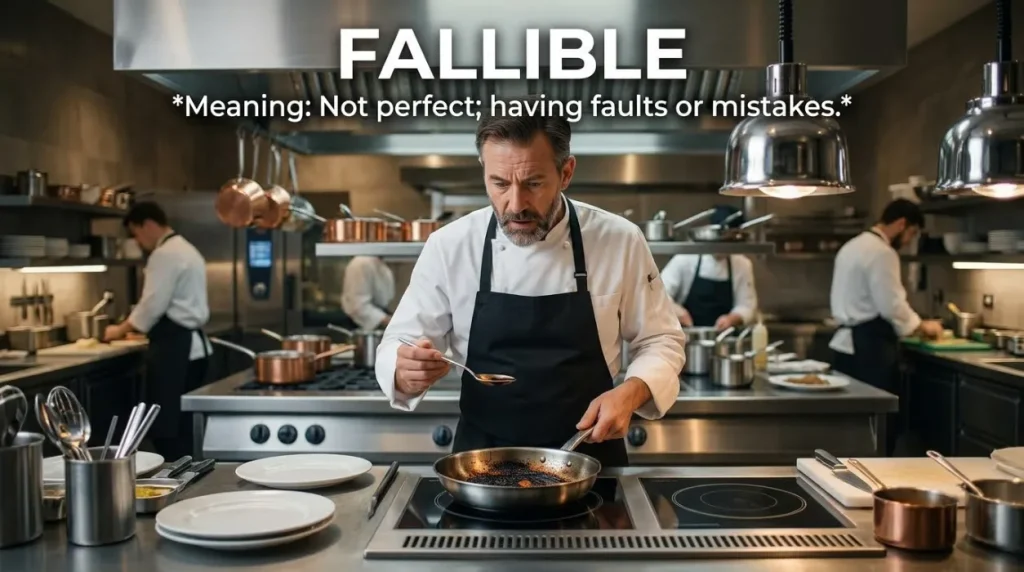
Imperfect (Adjective) — US: /ɪmˈpɜːrfɪkt/ — UK: /ɪmˈpɜːfɪkt/
- Meaning: Not perfect; having faults or mistakes.
- Tone/Register: Common, standard.
- Example: Every human being lives an imperfect life.
- Example: She accepted her imperfect draft and edited further.
Flawed (Adjective) — US: /flɔːd/ — UK: /flɔːd/
- Meaning: Having a flaw, damage, or weakness.
- Tone/Register: Analytical, common.
- Example: Analysts found flawed logic in the financial report.
- Example: The building design proved flawed during storms.
Erroneous (Adjective) — US: /ɪˈroʊniəs/ — UK: /ɪˈrəʊniəs/
- Meaning: Wrong; incorrect.
- Tone/Register: Formal, academic.
- Example: The textbook contained erroneous historical dates.
- Example: He based his argument on erroneous assumptions.
Defective (Adjective) — US: /dɪˈfɛktɪv/ — UK: /dɪˈfektɪv/
- Meaning: Imperfect or faulty.
- Tone/Register: Technical, formal.
- Example: Mechanics recalled cars with defective brakes.
- Example: The shipment contained defective electrical components.
Errant (Adjective) — US: /ˈɛrənt/ — UK: /ˈerənt/
- Meaning: Straying from the proper course or standards.
- Tone/Register: Literary, formal.
- Example: The teacher corrected errant student behavior.
- Example: An errant golf ball shattered the window.
Mistaken (Adjective) — US: /mɪˈsteɪkən/ — UK: /mɪˈsteɪkən/
- Meaning: Wrong in one’s opinion or judgment.
- Tone/Register: Common, everyday.
- Example: She was mistaken about the meeting time.
- Example: He realized he was mistaken regarding the facts.
Inaccurate (Adjective) — US: /ɪnˈækjərət/ — UK: /ɪnˈækjərət/
- Meaning: Not accurate or exact.
- Tone/Register: Formal, professional.
- Example: The news article provided inaccurate statistics.
- Example: Records contained inaccurate address listings.
Faulty (Adjective) — US: /ˈfɔːlti/ — UK: /ˈfɔːlti/
- Meaning: Working badly or producing wrong results because of defects.
- Tone/Register: Common, descriptive.
- Example: Chefs discarded faulty kitchen equipment.
- Example: Investigators blamed faulty wiring for the fire.
Unreliable (Adjective) — US: /ˌʌnrɪˈlaɪəbəl/ — UK: /ˌʌnrɪˈlaɪəbl/
- Meaning: Not able to be relied upon.
- Tone/Register: Common, practical.
- Example: The old car proved unreliable on long trips.
- Example: Weather forecasts can sometimes feel unreliable.
Frail (Adjective) — US: /freɪl/ — UK: /freɪl/
- Meaning: Weak and delicate, physically or morally.
- Tone/Register: Descriptive, literary.
- Example: Humans possess frail and vulnerable emotional states.
- Example: The antique vase remained extremely frail.
Vulnerable (Adjective) — US: /ˈvʌlnərəbəl/ — UK: /ˈvʌlnərəbl/
- Meaning: Exposed to the possibility of being attacked or harmed.
- Tone/Register: Formal, psychological.
- Example: New businesses remain vulnerable to market shifts.
- Example: Children feel vulnerable during storms.
Weak (Adjective) — US: /wiːk/ — UK: /wiːk/
- Meaning: Lacking physical strength, power, or resilience.
- Tone/Register: Common, direct.
- Example: Illness left him feeling weak for days.
- Example: The argument had weak supporting evidence.
Lacking (Adjective) — US: /ˈlækɪŋ/ — UK: /ˈlækɪŋ/
- Meaning: Not available or falling short of a standard.
- Tone/Register: Formal, evaluative.
- Example: Her presentation felt lacking in depth.
- Example: Funds remained lacking for community projects.
Deficient (Adjective) — US: /dɪˈfɪʃənt/ — UK: /dɪˈfɪʃnt/
- Meaning: Not having enough of a specified quality or ingredient.
- Tone/Register: Medical, formal.
- Example: Diet tests showed iron-deficient blood levels.
- Example: The proposal proved deficient in safety rules.
Incomplete (Adjective) — US: /ˌɪŋkəmˈpliːt/ — UK: /ˌɪŋkəmˈpliːt/
- Meaning: Not having all the necessary or appropriate parts.
- Tone/Register: Common, standard.
- Example: Students submitted incomplete homework assignments.
- Example: Police records remained incomplete during investigations.
Blemished (Adjective) — US: /ˈblɛmɪʃt/ — UK: /ˈblemɪʃt/
- Meaning: Spoiled by a flaw or imperfection.
- Tone/Register: Descriptive, literary.
- Example: Inspectors rejected blemished apples at markets.
- Example: His reputation remained blemished by scandal.
Compromised (Adjective) — US: /ˈkɑːmprəˌmaɪzd/ — UK: /ˈkɒmprəmaɪzd/
- Meaning: Having been made vulnerable or imperfect.
- Tone/Register: Technical, security.
- Example: IT experts secured compromised computer networks.
- Example: Immunity was compromised during illness.

Uncertain (Adjective) — US: /ʌnˈsɜːrtən/ — UK: /ʌnˈsɜːtn/
- Meaning: Not able to be relied on; not confident or definite.
- Tone/Register: Common, psychological.
- Example: Future economic trends remained uncertain.
- Example: She felt uncertain about career choices.
Prone to Error (Phrase variant) — US: /proʊn tuː ˈɛrər/ — UK: /prəʊn tuː ˈerə/
- Meaning: Likely to make mistakes or fail.
- Tone/Register: Academic, formal.
- Example: Manual data entry is prone to error.
- Example: Complex systems are prone to error initially.
Subject to Mistake (Phrase variant) — US: /ˈsʌbdʒɪkt tuː mɪˈsteɪk/ — UK: /ˈsʌbdʒɪkt tuː mɪˈsteɪk/
- Meaning: Vulnerable to committing errors.
- Tone/Register: Formal, legal.
- Example: Human memory is subject to mistakes.
- Example: Estimates remain subject to mistakes without audits.
Liable to Err (Phrase variant) — US: /ˈlaɪəbəl tuː ɜːr/ — UK: /ˈlaɪəbl tuː ɜː/
- Meaning: Legally or naturally inclined toward making mistakes.
- Tone/Register: Philosophical, formal.
- Example: Philosophers noted mortals are liable to err.
- Example: Judgment calls are liable to err under stress.
Weak-Willed (Adjective) — US: /wiːk wɪld/ — UK: /wiːk wɪld/
- Meaning: Lacking resolve or determination.
- Tone/Register: Critical, descriptive.
- Example: He felt weak-willed when facing dessert menus.
- Example: Leaders cannot afford to be weak-willed.
Lacking Foresight (Phrase variant) — US: /ˈlækɪŋ ˈfɔːrsaɪt/ — UK: /ˈlækɪŋ ˈfɔːsaɪt/
- Meaning: Failing to anticipate future consequences.
- Tone/Register: Critical, formal.
- Example: Critics blamed a lack of foresight for the failure.
- Example: Short-term plans showed a lack of foresight.
Unwise (Adjective) — US: /ʌnˈwaɪz/ — UK: /ʌnˈwaɪz/
- Meaning: Showing poor judgment; foolish.
- Tone/Register: Formal, advisory.
- Example: Spending savings on luxury items was unwise.
- Example: Making hasty investments proved unwise.
Ill-Judged (Adjective) — US: /ɪl ˈdʒʌdʒd/ — UK: /ɪl ˈdʒʌdʒd/
- Meaning: Unwise; poorly planned.
- Tone/Register: Formal, journalistic.
- Example: Officials withdrew the ill-judged policy proposal.
- Example: The venture faced criticism for ill-judged risks.
Misguided (Adjective) — US: /ˌmɪsˈɡaɪdɪd/ — UK: /ˌmɪsˈɡaɪdɪd/
- Meaning: Showing faulty judgment or reasoning.
- Tone/Register: Critical, formal.
- Example: Protesters pursued misguided economic strategies.
- Example: His misguided efforts caused more delays.
Unsound (Adjective) — US: /ʌnˈsaʊnd/ — UK: /ʌnˈsaʊnd/
- Meaning: Not safe or robust; based on bad reasoning.
- Tone/Register: Formal, academic.
- Example: Engineers condemned the unsound bridge structure.
- Example: Economists rejected the unsound financial theory.
Inept (Adjective) — US: /ɪˈnɛpt/ — UK: /ɪˈnept/
- Meaning: Having or showing no skill; clumsy.
- Tone/Register: Critical, formal.
- Example: The manager’s inept handling upset staff.
- Example: Critics dismissed the inept theatrical performance.
Clumsy (Adjective) — US: /ˈklʌmzi/ — UK: /ˈklʌmzi/
- Meaning: Awkward in movement or handling things.
- Tone/Register: Common, descriptive.
- Example: The clumsy waiter dropped trays of plates.
- Example: Her explanation sounded clumsy and awkward.
Bumbling (Adjective) — US: /ˈbʌmbəlɪŋ/ — UK: /ˌbʌmblɪŋ/
- Meaning: Acting in a clumsy or inept way.
- Tone/Register: Informal, humorous.
- Example: Detectives solved cases despite bumbling efforts.
- Example: The comedy featured bumbling secret agents.
Botched (Adjective) — US: /bɑːtʃt/ — UK: /bɒtʃt/
- Meaning: Carried out badly or carelessly.
- Tone/Register: Informal, critical.
- Example: Contractors fixed the botched plumbing repairs.
- Example: The robbery failed due to botched timing.
Blundering (Adjective) — US: /ˈblʌndərɪŋ/ — UK: /ˈblʌndərɪŋ/
- Meaning: Making foolish or careless mistakes.
- Tone/Register: Literary, critical.
- Example: The blundering general lost key battles.
- Example: Officials corrected blundering administrative errors.
Floundering (Adjective) — US: /ˈflaʊndərɪŋ/ — UK: /ˈflaʊndərɪŋ/
- Meaning: Struggling mentally or showing great confusion.
- Tone/Register: Descriptive, dramatic.
- Example: Struggling students felt floundering during exams.
- Example: The company looked floundering without leadership.
Faltering (Adjective) — US: /ˈfɔːltərɪŋ/ — UK: /ˈfɔːltərɪŋ/
- Meaning: Starting to lose strength or momentum.
- Tone/Register: Descriptive, literary.
- Example: Athletes supported their faltering teammate.
- Example: Investors worried about faltering sales numbers.
Stumbling (Adjective) — US: /ˈstʌmbəlɪŋ/ — UK: /ˈstʌmblɪŋ/
- Meaning: Tripping or making repeated mistakes.
- Tone/Register: Descriptive, common.
- Example: The speaker gave a stumbling presentation.
- Example: Toddlers took stumbling steps across floors.
Unstable (Adjective) — US: /ʌnˈsteɪbəl/ — UK: /ʌnˈsteɪbl/
- Meaning: Likely to change or fail; not steady.
- Tone/Register: Technical, psychological.
- Example: Weather patterns remained unstable all spring.
- Example: Market conditions stayed unstable for weeks.
Precarious (Adjective) — US: /prɪˈkɛriəs/ — UK: /prɪˈkeəriəs/
- Meaning: Not securely held or in position; dangerously unstable.
- Tone/Register: Formal, literary.
- Example: Climbers balanced on precarious mountain ledges.
- Example: The startup held a precarious financial position.
Vulnerable to Failure (Phrase variant) — US: /ˈvʌlnərəbəl tuː ˈfeɪljər/ — UK: /ˈvʌlnərəbl tuː ˈfeɪljə/
- Meaning: Easily broken down or defeated.
- Tone/Register: Analytical, formal.
- Example: Untested software is vulnerable to failure.
- Example: Old systems remain vulnerable to failure.
Open to Error (Phrase variant) — US: /ˈoʊpən tuː ˈɛrər/ — UK: /ˈəʊpən tuː ˈerə/
- Meaning: Capable of containing mistakes.
- Tone/Register: Formal, academic.
- Example: Manual calculations are open to error.
- Example: Complex formulas remain open to error.
Susceptible to Mistakes (Phrase variant) — US: /səˈsɛptəbəl tuː mɪˈsteɪks/ — UK: /səˈseptəbl tuː mɪˈsteɪks/
- Meaning: Likely to be influenced or harmed by errors.
- Tone/Register: Formal, psychological.
- Example: Human memory is susceptible to mistakes.
- Example: Tired workers are susceptible to mistakes.
Humanly Imperfect (Phrase variant) — US: /ˈhjuːmənli ɪmˈpɜːrfɪkt/ — UK: /ˈhjuːmənli ɪmˈpɜːfɪkt/
- Meaning: Sharing natural flaws common to all people.
- Tone/Register: Literary, philosophical.
- Example: Philosophers reminded followers we are humanly imperfect.
- Example: Leaders showed humanly imperfect judgment.
Morally Flawed (Phrase variant) — US: /ˈmɔːrəli flɔːd/ — UK: /ˈmɒrəli flɔːd/
- Meaning: Having ethical or character shortcomings.
- Tone/Register: Literary, serious.
- Example: The villain was portrayed as morally flawed.
- Example: Historical figures can be morally flawed.
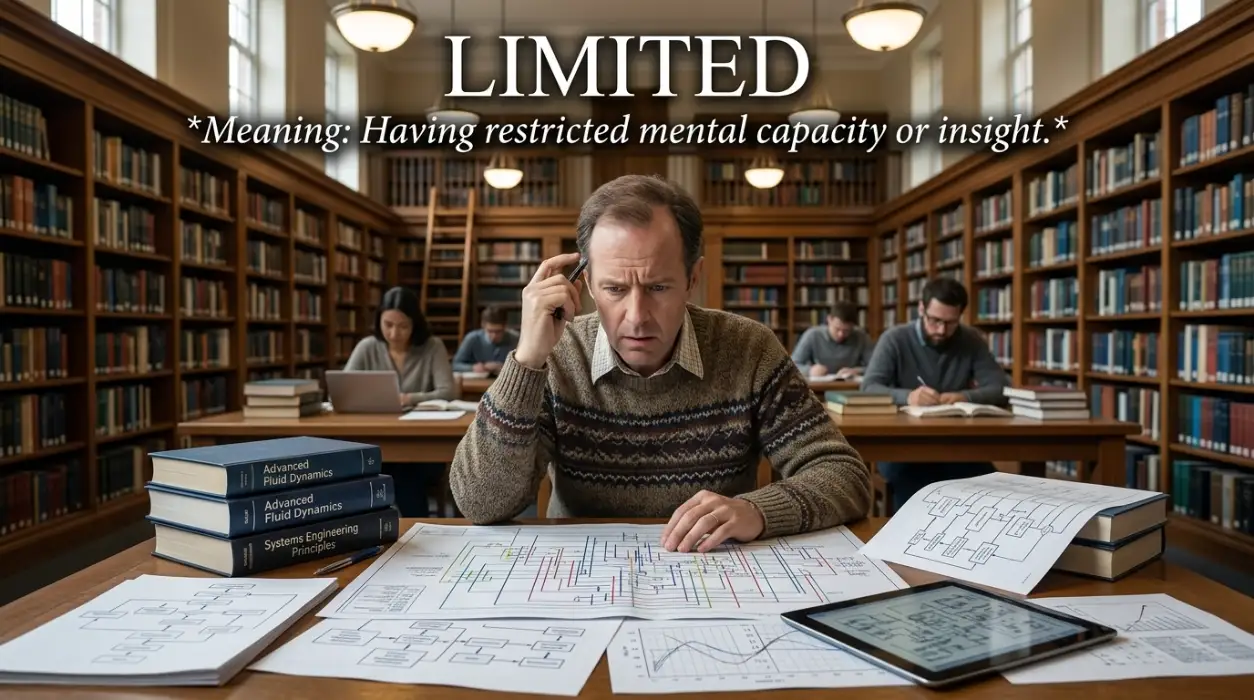
Intellectually Limited (Phrase variant) — US: /ˌɪntəˈlɛktʃuəli ˈlɪmɪtɪd/ — UK: /ˌɪntəˈlektʃuəli ˈlɪmɪtɪd/
- Meaning: Having restricted mental capacity or insight.
- Tone/Register: Critical, formal.
- Example: Critics dismissed the argument as intellectually limited.
- Example: Policies suffered from intellectually limited views.
Short-Sighted (Adjective) — US: /ˈʃɔːrt ˈsaɪtɪd/ — UK: /ʃɔːt ˈsaɪtɪd/
- Meaning: Lacking imagination or foresight.
- Tone/Register: Critical, common.
- Example: Canceling research funding was short-sighted.
- Example: Executives made short-sighted budget cuts.
Myopic (Adjective) — US: /maɪˈɑːpɪk/ — UK: /maɪˈɒpɪk/
- Meaning: Narrow-minded or lacking long-term perspective.
- Tone/Register: Academic, formal.
- Example: Economists criticized myopic fiscal policies.
- Example: The strategy suffered from myopic vision.
Blunderingly Flawed (Phrase variant) — US: /ˈblʌndərɪŋli flɔːd/ — UK: /ˈblʌndərɪŋli flɔːd/
- Meaning: Characterized by clumsy and foolish errors.
- Tone/Register: Critical, literary.
- Example: The plan was blunderingly flawed from day one.
- Example: Inspectors found blunderingly flawed safety records.
Imperfectly Rational (Phrase variant) — US: /ɪmˈpɜːrfɪktli ˈræʃənəl/ — UK: /ɪmˈpɜːfɪktli ˈræʃənəl/
- Meaning: Having logic impaired by emotional bias.
- Tone/Register: Academic, psychological.
- Example: Behavioral economists have proved that humans are imperfectly rational.
- Example: Consumers make imperfectly rational choices.
Error-Prone (Adjective) — US: /ˈɛrər proʊn/ — UK: /ˈerə prəʊn/
- Meaning: Likely to make mistakes.
- Tone/Register: Common, technical.
- Example: Manual data entry remains error-prone.
- Example: Old machinery proved highly error-prone.
Mistake-Ridden (Adjective) — US: /mɪˈsteɪk ˈrɪdən/ — UK: /mɪˈsteɪk ˈrɪdn/
- Meaning: Full of errors and mistakes.
- Tone/Register: Critical, common.
- Example: Editors rejected the mistake-ridden manuscript.
- Example: The test paper was mistake-ridden.
Fault-Finding (Adjective) — US: /ˈfɔːlt ˌfaɪndɪŋ/ — UK: /ˈfɔːlt ˈfaɪndɪŋ/
- Meaning: Captious; tending to point out flaws.
- Tone/Register: Critical, formal.
- Example: Supervisors adopted a fault-finding attitude.
- Example: Critics wrote fault-finding reviews.
Imperfection (Noun) — US: /ɪmˈpɜːrfɛkʃən/ — UK: /ɪmˈpɜːfekʃn/
- Meaning: A fault, blemish, or undesirable feature.
- Tone/Register: Common, standard.
- Example: Artisans embraced minor pottery imperfections.
- Example: She accepted her natural human imperfections.
Flaw (Noun) — US: /flɔː/ — UK: /flɔː/
- Meaning: A mark, blemish, or fault that mars quality.
- Tone/Register: Common, everyday.
- Example: Jewelers inspected diamonds for internal flaws.
- Example: Lawyers found a fatal flaw in contracts.
Defect (Noun) — US: /ˈdiːfɛkt/ — UK: /ˈdiːfekt/
- Meaning: A shortcoming, imperfection, or lack.
- Tone/Register: Technical, formal.
- Example: Factories tested products for manufacturing defects.
- Example: Geneticists studied rare cellular defects.
Fallibility (Noun) — US: /ˌfælɪˈbɪlɪti/ — UK: /ˌfælɪˈbɪlɪti/
- Meaning: The tendency to make mistakes or be wrong.
- Tone/Register: Philosophical, formal.
- Example: Scientists openly admitted their scientific fallibility.
- Example: Philosophy essays explored human fallibility.
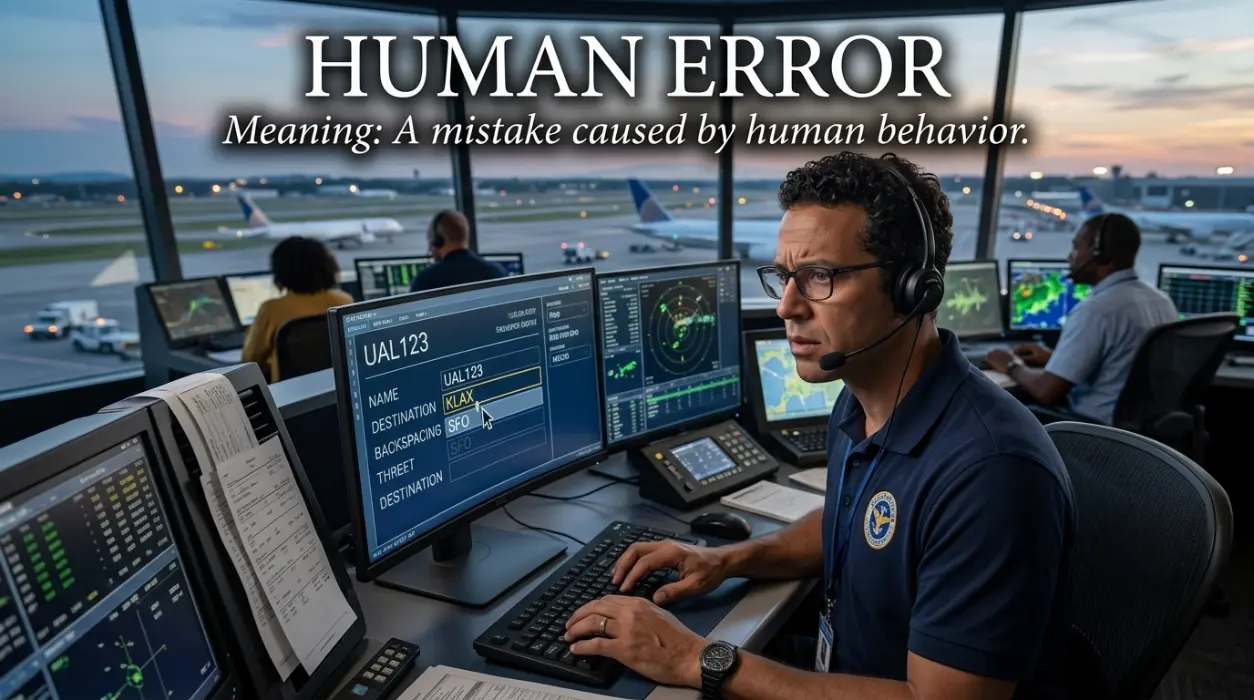
Human Error (Noun phrase) — US: /ˈhjuːmən ˈɛrər/ — UK: /ˈhjuːmən ˈerə/
- Meaning: Mistake caused by human behavior.
- Tone/Register: Professional, technical.
- Example: Investigators blamed human error for the accident.
- Example: Automation helps reduce costly human error.
Synonyms by Tone
Choosing the right alternative depends entirely on whether you want to sound philosophical, critical, or technical.
- Positive tone: Imperfect, humanly imperfect, imperfection, fallibility (in self-aware contexts).
- Neutral tone: Flawed, inaccurate, uncertain, error-prone, prone to error.
- Negative tone: Defective, inept, botched, blunder-ridden, short-sighted.
- Playful/informal tone: Bumbling, clumsy.
Tone matters because calling a scientific theory botched sounds overly harsh and insulting, whereas describing it as flawed or erroneous maintains professional academic respect.
Mini Comparison: Fallible vs. Flawed vs. Erroneous
- Fallible emphasizes the natural human capacity or susceptibility to making mistakes and erring.
- Flawed focuses on an existing imperfection, structural weakness, or defect in an object or idea.
- Erroneous describes statements, theories, or calculations that are factually incorrect or wrong.
Use fallible for human nature, flawed for imperfect structures or designs, and erroneous for factual inaccuracies.
Context-Based Usage
- Daily conversation: In casual talk, native speakers use friendly terms like mistaken, faulty, or unreliable.
- Writing or blogging: Authors use evocative terms like imperfect, frail, or flawed to build rich prose.
- Professional or academic tone: Specialists rely on precise terms like erroneous, deficient, or subject to mistake.
- Creative or informal use: Bloggers employ vivid terms like error-prone, misguided, or botched to describe daily mishaps.
Common Mistakes & Native Usage
Common Mistakes Learners Make
- Misuse scenarios: Applying harsh technical words like defective when describing human emotional vulnerability.
- Confusing tone: Mixing overly clinical medical terms like deficient into casual conversations about making simple mistakes.
- Overuse warnings: Repeating the same adjective throughout an essay makes your vocabulary feel repetitive rather than rich.
Register Notes
- Spoken chats favor direct words like mistaken and faulty.
- Written essays reward descriptive choices like erroneous, flawed, and fallible.
Real-Life Mini Scenarios
- Workplace: Project managers reviewed flawed software code to prevent recurring system errors.
- Social situations: Friends laughed about their mistaken travel directions after taking wrong turns.
- Media/pop culture: Documentaries examined historical leaders who made erroneous strategic decisions.
- Writing or storytelling: Authors revised book manuscripts, replacing basic words with fallible for literary depth.
Conclusion
In conclusion, fallible is a useful word for describing someone or something capable of making mistakes or being wrong. It highlights the fact that perfection is not always possible.
There are several helpful synonyms for fallible, including imperfect, flawed, error-prone, unreliable, and capable of making mistakes. Choosing the right alternative can make your writing clearer and more precise.
By understanding fallible and its related synonyms, you can improve your vocabulary and express ideas about mistakes and imperfections more effectively. Using these alternatives appropriately can make your writing more natural and engaging.
Interactive Practice Quiz
- Which adjective best describes being capable of making mistakes or being prone to error?
- A) Fallible
- B) Infallible
- C) Perfect
- D) Omniscient
- What emotional tone does the neutral analytical term flawed typically carry?
- A) Having a weakness or imperfection
- B) Absolute perfection
- C) Divine wisdom
- D) Pure brilliance
- Which term is ideal for describing factual statements or calculations that are wrong?
- A) Erroneous
- B) Correct
- C) Accurate
- D) Precise
- If machinery or manufactured products break down due to poor construction, they are:
- A) Defective
- B) Flawless
- C) Perfect
- D) Divine
- The formal philosophical term for the human tendency to make mistakes is:
- A) Fallibility
- B) Perfection
- C) Certainty
- D) Infallibility
- What part of speech category do words like fallible and imperfect belong to?
- A) Adjectives
- B) Nouns only
- C) Conjunctions only
- D) Interjections only
- Which expression is a common casual word for someone who has made a wrong judgment?
- A) Mistaken
- B) Omnipotent
- C) Absolute
- D) Infallible
- Describing plans or policies that lack long-term foresight uses the term:
- A) Short-sighted
- B) Visionary
- C) Foresighted
- D) Wise
- The formal critical term for lacking skill or showing clumsy ineptitude is:
- A) Inept
- B) Expert
- C) Skilled
- D) Masterful
- Which phrase describes a system or process that is likely to produce mistakes?
- A) Error-prone
- B) Foolproof
- C) Flawless
- D) Perfect
Reflection Task
Write one short, original sentence using the word flawed to describe a broken plan.
Answer Key: 1: A | 2: A | 3: A | 4: A | 5: A | 6: A | 7: A | 8: A | 9: A | 10: A
Frequently Asked Questions
Can I use defective instead of fallible when describing human character?
Defective is typically used for machinery or physical products, whereas fallible or flawed fits human character and judgment much better.
What is the best synonym for describing factual mistakes in written reports?
Erroneous or inaccurate are exact choices for describing incorrect data or false statements in professional reports.
How can I make my writing about human imperfection sound less repetitive?
Instead of repeating fallible, mix in descriptive variants like flawed, imperfect, error-prone, or frail depending on your specific context.
Are there informal alternatives for describing clumsy or mistake-ridden efforts?
Yes, everyday speakers use friendly words like bumbling, botched, or clumsy when describing awkward mishaps.
Which synonym works best for academic discussions on philosophy and logic?
Fallibility or erroneous are fantastic choices because they precisely evoke academic rigor, logical analysis, and philosophical precision.

Hasnain Ali is an SEO Content Strategist and the founder of wordvora.com, a trusted vocabulary platform that helps writers, students, professionals, and English learners find accurate synonyms, antonyms, word meanings, and real-life usage examples. He specializes in keyword research, on-page SEO, topical authority, and creating search-first content that aligns with Google’s latest Search Quality and E-E-A-T guidelines. His work focuses on producing clear, well-structured, and reader-friendly resources that satisfy search intent while maintaining high editorial standards.
Through extensive hands-on experience with SEO tools such as Google Search Console, Google Analytics, SEMrush, and Ahrefs, Hasnain researches user search behavior and develops content that is both informative and easy to understand. Every article published on wordvora.com is carefully reviewed for accuracy, readability, and contextual relevance before publication. His mission is to build one of the web’s most reliable English vocabulary resources by providing practical language guidance, trustworthy explanations, and content that helps readers improve their writing, communication, and vocabulary with confidence.