
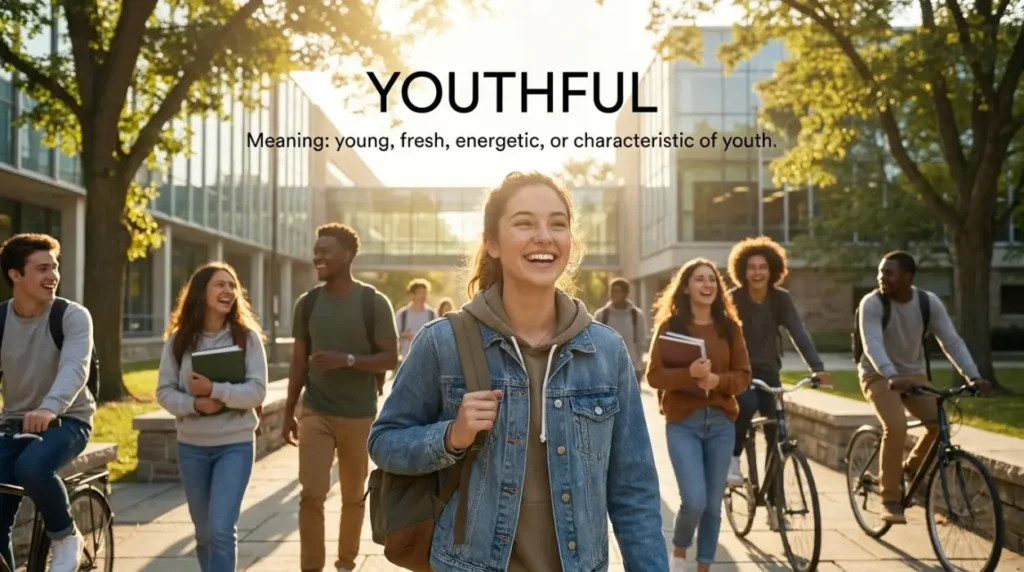
The word youthful commonly describes someone or something with the qualities, appearance, energy, or characteristics associated with young people. It can refer to a person’s appearance, attitude, behavior, or lively spirit.
Synonyms for youthful include young, young-looking, energetic, lively, fresh, vibrant, and juvenile. The most appropriate synonym depends on the context and the specific quality you want to describe.
Using different alternatives to youthful can make your writing more interesting and expressive. These words can help describe a person who looks young, someone who has a lot of energy, or an attitude that reflects enthusiasm and freshness.
In this article, we will explore youthful synonyms, their meanings, and useful examples. Understanding these alternatives will help you expand your vocabulary and choose the right word for different writing and communication situations.
What Does “Synonyms For Youthful” Really Mean?
Synonyms for youthful mean finding alternative adjectives and phrases that express possessing the qualities, appearance, or energy characteristic of young people. It sets up a vibrant or energetic tone aimed at capturing freshness, vitality, lively spirit, or physical vigor.
Native speakers use these terms when discussing energetic entrepreneurs, blooming garden styles, or ageless artistic enthusiasm. It carries a diverse emotional tone ranging from warm, admiring praise to critical superficiality. It usually suggests physical vitality, mental agility, and fresh enthusiasm.
Connotative Meaning
- Positive tone: Associated with vibrant health, blooming vitality, and inspiring creative enthusiasm.
- Negative tone: Linked with perceived immaturity, foolish inexperience, and childish irresponsibility.
- Neutral tone: Used in demographic studies, biological aging reports, and fashion industry descriptions.
- Connotation definition: (The emotional or cultural feeling attached to a word or phrase beyond its strict dictionary definition).
Etymology
- Source Language: Old English geogop combined with adjectival suffixes meaning early stage of life.
- Original Meaning: Originally meant belonging to or characteristic of early life stages and vigor.
- Old English (450–1100): Early Germanic groups used root words denoting early growth and family lineage.
- Middle English (1100–1500): Evolved into standard descriptive terms for vigor and early adulthood.
- Modern English (1500–Present): Fully established as standard literary and conversational adjectives for fresh vitality.
Pronunciation (US & UK – IPA)
- US: /ˈsɪnənɪmz fɔːr ˈjuːθfəl/
- UK: /ˈsɪnənɪmz fɔːr ˈjuːθfl/
Syllables & Affixation Pattern
- Syllables: syn-o-nyms-for-youth-ful
- Root: youth (early life stage) + -ful (full of)
- Prefixes: syn- (together)
- Suffix: -ful (possessing qualities of)
Synonyms List
Young (Adjective) — US: /jʌŋ/ — UK: /jʌŋ/
- Meaning: Having lived or existed for only a short time.
- Tone/Register: Common, standard.
- Example: Young athletes trained hard for the championship match.
- Example: She offered guidance to young aspiring artists.
Juvenile (Adjective) — US: /ˈdʒuːvənaɪl/ — UK: /ˈdʒuːvənaɪl/
- Meaning: For or relating to young people; immature.
- Tone/Register: Formal, legal.
- Example: The community center hosted juvenile sports leagues.
- Example: Critics dismissed his remarks as juvenile behavior.
Adolescent (Adjective) — US: /ˌædəˈlɛsənt/ — UK: /ˌædəˈlesənt/
- Meaning: In the process of developing from a child into an adult.
- Tone/Register: Psychological, formal.
- Example: Adolescent students explored career options in workshops.
- Example: The clinic specialized in adolescent health care.
Teen (Adjective) — US: /tiːn/ — UK: /tiːn/
- Meaning: Aged between thirteen and nineteen years.
- Tone/Register: Casual, common.
- Example: Teen volunteers cleaned up the local park.
- Example: The magazine published articles for teen readers.
Teenage (Adjective) — US: /ˈtiːn.eɪdʒ/ — UK: /ˌtiːnˈeɪdʒ/
- Meaning: Relating to teenagers or their age group.
- Tone/Register: Common, everyday.
- Example: Teenage musicians practiced in the garage.
- Example: Parents supported teenage children through exams.
Boyish (Adjective) — US: /ˈbɔɪɪʃ/ — UK: /ˈbɔɪɪʃ/
- Meaning: Characteristic of or resembling a boy.
- Tone/Register: Descriptive, warm.
- Example: He smiled with a charming boyish enthusiasm.
- Example: The actor kept his boyish haircut for roles.
Girlish (Adjective) — US: /ˈɡɜːrlɪʃ/ — UK: /ˈɡɜːlɪʃ/
- Meaning: Characteristic of or resembling a girl.
- Tone/Register: Descriptive, light.
- Example: She laughed with girlish excitement at the news.
- Example: The room featured bright girlish pastel decor.
Pubescent (Adjective) — US: /pjuːˈbɛsənt/ — UK: /pjuːˈbesənt/
- Meaning: Arriving at or having reached puberty.
- Tone/Register: Medical, formal.
- Example: Pubescent teenagers experience rapid bodily changes.
- Example: Education programs supported pubescent youth groups.
Minor (Adjective) — US: /ˈmaɪnər/ — UK: /ˈmaɪnə/
- Meaning: Under the legal age of full adulthood.
- Tone/Register: Legal, formal.
- Example: Minor children require guardian signatures for trips.
- Example: The league restricted entry to minor players.
Junior (Adjective) — US: /ˈdʒuːnjər/ — UK: /ˈdʒuːnjə/
- Meaning: For young people or lower in standing.
- Tone/Register: Professional, common.
- Example: Junior executives attended the strategy seminar.
- Example: The club hosted junior tennis tournaments.
Immature (Adjective) — US: /ˌɪməˈtʊr/ — UK: /ˌɪməˈtjʊə/
- Meaning: Having or showing emotional development typical of someone younger.
- Tone/Register: Critical, common.
- Example: His immature reaction surprised meeting attendees.
- Example: Teachers corrected immature classroom behavior.
Callow (Adjective) — US: /ˈkæloʊ/ — UK: /ˈkæləʊ/
- Meaning: Inexperienced and immature.
- Tone/Register: Literary, formal.
- Example: The callow intern learned office procedures slowly.
- Example: Critics noted the author’s early callow style.
Green (Adjective) — US: /ɡriːn/ — UK: /griːn/
- Meaning: Lacking training or experience; naive.
- Tone/Register: Idiomatic, common.
- Example: Green recruits completed basic training drills.
- Example: She felt green during her first shift.
Fresh (Adjective) — US: /frɛʃ/ — UK: /fresh/
- Meaning: Showing recent origin, vigor, or youthful energy.
- Tone/Register: Positive, common.
- Example: Graduates brought fresh ideas to the firm.
- Example: She enjoyed a fresh perspective on art.
Vigorous (Adjective) — US: /ˈvɪɡərəs/ — UK: /ˈvɪɡərəs/
- Meaning: Characterized by physical strength, energy, or force.
- Tone/Register: Energetic, formal.
- Example: Athletes maintained a vigorous training schedule.
- Example: The debate featured vigorous arguments from all.
Energetic (Adjective) — US: /ˌɛnərˈdʒɛtɪk/ — UK: /ˌenəˈdʒetɪk/
- Meaning: Showing or involving great activity or vitality.
- Tone/Register: Positive, common.
- Example: Energetic puppies ran around the fenced yard.
- Example: The speaker delivered an energetic presentation.
Dynamic (Adjective) — US: /daɪˈnæmɪk/ — UK: /daɪˈnæmɪk/
- Meaning: Characterized by constant change, activity, or progress.
- Tone/Register: Professional, modern.
- Example: The startup team showed dynamic leadership.
- Example: Markets require dynamic business strategies.
Spry (Adjective) — US: /spraɪ/ — UK: /spraɪ/
- Meaning: Active; lively (especially of older people).
- Tone/Register: Descriptive, warm.
- Example: The spry grandfather gardened every morning.
- Example: Spry hikers reached the peak with ease.
Active (Adjective) — US: /ˈæktɪv/ — UK: /ˈæktɪv/
- Meaning: Engaging or ready to engage in physically energetic pursuits.
- Tone/Register: Common, healthy.
- Example: Older adults enjoyed an active lifestyle outdoors.
- Example: Active members volunteered for community boards.
Lively (Adjective) — US: /ˈlaɪvli/ — UK: /ˈlaɪvli/
- Meaning: Full of life and energy; outgoing and adventurous.
- Tone/Register: Friendly, common.
- Example: A lively discussion filled the dinner table.
- Example: Musicians played lively tunes at festivals.
Bouncy (Adjective) — US: /ˈbaʊnsi/ — UK: /ˈbaʊnsi/
- Meaning: Cheerful, lively, and optimistic.
- Tone/Register: Informal, cheerful.
- Example: She walked with a bouncy, cheerful step.
- Example: The puppy had a bouncy personality.
Brisk (Adjective) — US: /brɪsk/ — UK: /brɪsk/
- Meaning: Active, fast, and energetic.
- Tone/Register: Crisp, common.
- Example: Walkers took a brisk stroll through parks.
- Example: Morning air felt brisk and refreshing.
Agile (Adjective) — US: /ˈædʒəl/ — UK: /ˈædʒaɪl/
- Meaning: Able to move quickly and easily.
- Tone/Register: Athletic, formal.
- Example: Gymnasts showed agile movements on bars.
- Example: Programmers adopted agile software workflows.
Nimble (Adjective) — US: /ˈnɪmbəl/ — UK: /ˈnimbəl/
- Meaning: Quick and light in movement or action.
- Tone/Register: Descriptive, agile.
- Example: Dancers displayed nimble footwork on stage.
- Example: Her nimble fingers knitted sweaters fast.
Blooming (Adjective) — US: /ˈbluːmɪŋ/ — UK: /ˈbluːmɪŋ/
- Meaning: Having flowers blooming, or glowing with health and youth.
- Tone/Register: Poetic, vibrant.
- Example: Roses looked blooming in the garden beds.
- Example: She looked blooming after her holiday.
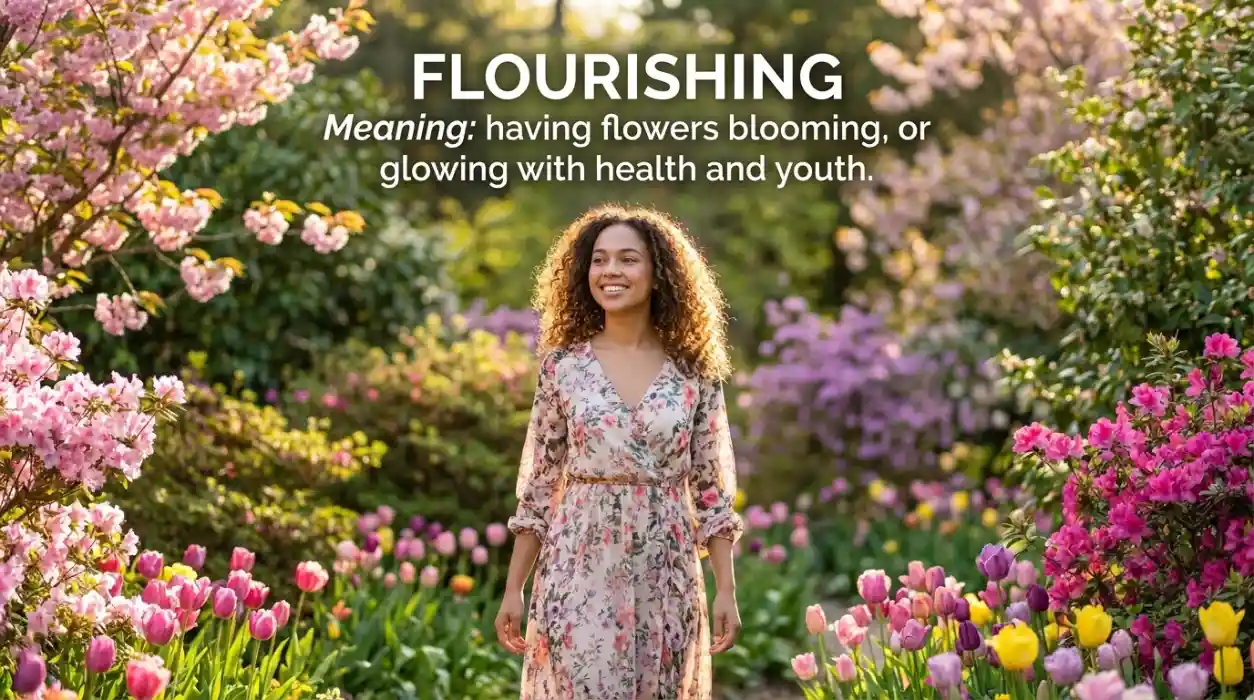
Flourishing (Adjective) — US: /ˈflɜːrɪʃɪŋ/ — UK: /ˈflʌrɪʃɪŋ/
- Meaning: Developing rapidly and successfully; thriving.
- Tone/Register: Successful, formal.
- Example: The flourishing business expanded downtown branches.
- Example: Plants remained flourishing in greenhouses.
Thriving (Adjective) — US: /ˈθraɪvɪŋ/ — UK: /ˈθraɪvɪŋ/
- Meaning: Prosperous and growing.
- Tone/Register: Positive, business.
- Example: Entrepreneurs built thriving tech startups.
- Example: Communities remained thriving cultural hubs.
Rosy (Adjective) — US: /ˈroʊzi/ — UK: /ˈrəʊzi/
- Meaning: Pink or reddish in color, suggesting health and youth.
- Tone/Register: Descriptive, warm.
- Example: Children had rosy cheeks from cold air.
- Example: Financial forecasts looked rosy for firms.
Glowing (Adjective) — US: /ˈɡloʊɪŋ/ — UK: /ˈgləʊɪŋ/
- Meaning: Emitting steady bright light, or expressing high praise and vitality.
- Tone/Register: Positive, expressive.
- Example: She received glowing reviews for acting.
- Example: Skin looked glowing after skincare routines.
Vibrant (Adjective) — US: /ˈvaɪbrənt/ — UK: /ˈvaɪbrənt/
- Meaning: Full of energy and enthusiasm.
- Tone/Register: Modern, expressive.
- Example: Artists painted vibrant murals on walls.
- Example: The city maintained a vibrant nightlife.
Zesty (Adjective) — US: /ˈzɛsti/ — UK: /ˈzesti/
- Meaning: Having a strong, pleasant, and appetizing flavor, or lively energy.
- Tone/Register: Enthusiastic, casual.
- Example: Chefs prepared zesty lemon salad dressings.
- Example: He approached projects with zesty spirit.
Peppy (Adjective) — US: /ˈpɛpi/ — UK: /ˈpepi/
- Meaning: Cheerful and energetic.
- Tone/Register: Informal, upbeat.
- Example: Cheerleaders performed peppy routines at games.
- Example: The upbeat song had a peppy rhythm.
Bubbly (Adjective) — US: /ˈbʌbli/ — UK: /ˈbʌbli/
- Meaning: Cheerful, enthusiastic, and talkative.
- Tone/Register: Friendly, upbeat.
- Example: Her bubbly personality brightened offices.
- Example: Fans enjoyed bubbly sparkling drinks.
Vivacious (Adjective) — US: /vɪˈveɪʃəs/ — UK: /vɪˈveɪʃəs/
- Meaning: Attractively lively and animated (typically used of a woman).
- Tone/Register: Literary, complimentary.
- Example: The vivacious host entertained guests well.
- Example: She brought vivacious charm to parties.
Exuberant (Adjective) — US: /ɪɡˈzuːbərənt/ — UK: /ɪgˈzjuːbərənt/
- Meaning: Filled with lively energy and excitement.
- Tone/Register: Enthusiastic, formal.
- Example: Crowds gave an exuberant cheer at goals.
- Example: Writers praised the exuberant prose style.
Spirited (Adjective) — US: /ˈspɪrɪtɪd/ — UK: /ˈspɪrɪtɪd/
- Meaning: Full of energy, enthusiasm, and determination.
- Tone/Register: Positive, descriptive.
- Example: Teams played a spirited match until dusk.
- Example: She offered a spirited defense of policies.
Blithe (Adjective) — US: /blaɪð/ — UK: /blaɪð/
- Meaning: Showing a casual and cheerful indifference considered improper, or joyous.
- Tone/Register: Literary, formal.
- Example: He showed blithe disregard for strict deadlines.
- Example: Poets wrote of blithe spring mornings.
Carefree (Adjective) — US: /ˈkɛrˌfriː/ — UK: /ˈkeəfriː/
- Meaning: Free from anxiety or responsibility.
- Tone/Register: Relaxed, positive.
- Example: Children enjoyed carefree days during summer.
- Example: Travelers relished carefree weekend getaways.
Untamed (Adjective) — US: /ʌnˈteɪmd/ — UK: /ʌnˈteɪmd/
- Meaning: Not cultivated or tamed; wild and free.
- Tone/Register: Descriptive, wild.
- Example: Explorers crossed untamed wilderness trails.
- Example: Mustangs roamed untamed prairie lands.
Fresh-Faced (Adjective) — US: /frɛʃ feɪst/ — UK: /fresh feɪst/
- Meaning: Having a clean, youthful, and healthy appearance.
- Tone/Register: Descriptive, common.
- Example: Fresh-faced graduates joined corporate teams.
- Example: Actors wore minimal makeup for looks.
Ageless (Adjective) — US: /ˈeɪɡləs/ — UK: /ˈeɪgləs/
- Meaning: Appearing not to age or grow old.
- Tone/Register: Complimentary, literary.
- Example: The actress maintained ageless beauty over decades.
- Example: Classic novels hold ageless wisdom.
Evergreen (Adjective) — US: /ˈɛvərˌɡriːn/ — UK: /ˈevəgriːn/
- Meaning: Fresh and enduring through time.
- Tone/Register: Metaphorical, enduring.
- Example: Gardens featured lush evergreen pine trees.
- Example: The song remains an evergreen favorite.
Newborn (Adjective) — US: /ˈnuːbɔːrn/ — UK: /ˈnjuːbɔːn/
- Meaning: Recently born.
- Tone/Register: Biological, tender.
- Example: Parents cared for newborn infants carefully.
- Example: Spring brought newborn lambs to farms.
Infant (Adjective) — US: /ˈɪnfənt/ — UK: /ˈinfənt/
- Meaning: In an early stage of development.
- Tone/Register: Formal, biological.
- Example: The infant tech industry grew rapidly.
- Example: Researchers studied infant developmental stages.
Puerile (Adjective) — US: /ˈpjʊərɪl/ — UK: /ˈpjʊəraɪl/
- Meaning: Childishly silly and trivial.
- Tone/Register: Critical, formal.
- Example: Critics criticized the puerile comedy sketches.
- Example: Leaders condemned puerile political arguments.
Childlike (Adjective) — US: /ˈtʃaɪldlaɪk/ — UK: /ˈtʃaɪldlaɪk/
- Meaning: Showing the good qualities of a child, such as innocence.
- Tone/Register: Warm, descriptive.
- Example: She gazed at stars with childlike wonder.
- Example: Artists captured childlike innocence in portraits.
Boylike (Adjective) — US: /ˈbɔɪlaɪk/ — UK: /ˈbɔɪlaɪk/
- Meaning: Resembling a boy in appearance or manner.
- Tone/Register: Descriptive, casual.
- Example: He kept a boylike grin during speeches.
- Example: The sketch had boylike charm.
Girllike (Adjective) — US: /ˈɡɜːrllaɪk/ — UK: /ˈgɜːllaɪk/
- Meaning: Resembling a girl in manner.
- Tone/Register: Descriptive, niche.
- Example: Her laughter had a girllike ring.
- Example: The dancer posed with girllike grace.
Youth-Oriented (Adjective) — US: /ˈjuːθ ˈɔːriəntɪd/ — UK: /ˈjuːθ ˈɔːrientɪd/
- Meaning: Designed or marketed for young people.
- Tone/Register: Business, marketing.
- Example: Brands launched youth-oriented social campaigns.
- Example: The station played youth-oriented pop hits.
Youngish (Adjective) — US: /ˈjʌŋɪʃ/ — UK: /ˈjʌŋɪʃ/
- Meaning: Fairly young.
- Tone/Register: Casual, conversational.
- Example: A youngish man offered help with bags.
- Example: She looked like a youngish manager.
Springlike (Adjective) — US: /ˈsprɪŋlaɪk/ — UK: /ˈsprɪŋlaɪk/
- Meaning: Having the fresh characteristics of spring.
- Tone/Register: Poetic, descriptive.
- Example: Warm breezes brought springlike weather.
- Example: Flowers added springlike color to rooms.
Verdant (Adjective) — US: /ˈvɜːrdənt/ — UK: /ˈvɜːdnt/
- Meaning: Green with grass or other rich vegetation; fresh.
- Tone/Register: Literary, botanical.
- Example: Cows grazed across verdant mountain pastures.
- Example: Parks remained verdant all summer.
Fresh-Blooming (Adjective) — US: /ˈfrɛʃ ˈbluːmɪŋ/ — UK: /ˈfresh ˈbluːmɪŋ/
- Meaning: Recently opened in flower or at peak vitality.
- Tone/Register: Poetic, floral.
- Example: Bouquets featured fresh-blooming roses.
- Example: Gardens looked fresh-blooming after rain.
Rejuvenated (Adjective) — US: /rɪˈdʒuːvəneɪtɪd/ — UK: /rɪˈdʒuːvəneɪtɪd/
- Meaning: Made to look or feel young, fresh, or lively again.
- Tone/Register: Positive, wellness.
- Example: Spas offered rejuvenated skin treatments.
- Example: Visitors felt rejuvenated after vacations.
Ageless Vigor (Phrase variant) — US: /ˈeɪɡləs ˈvɪɡər/ — UK: /ˈeɪgləs ˈvɪɡə/
- Meaning: Timeless energy and physical strength.
- Tone/Register: Literary, expressive.
- Example: Dancers performed with ageless vigor.
- Example: Athletes showed ageless vigor in matches.
Synonyms by Tone
Choosing the right alternative depends entirely on whether you want to sound complimentary, neutral, or critical.
- Positive tone: Vibrant, energetic, blooming, spry, exuberant.
- Neutral tone: Young, adolescent, teenage, junior, minor.
- Negative tone: Juvenile, immature, callow, puerile.
- Playful/informal tone: Bouncy, peppy, bubbly, youngish.
Tone matters because calling a mature business strategy juvenile sounds insulting and dismissive, whereas describing a fresh startup team as vibrant highlights healthy professional growth.
Mini Comparison: Youthful vs. Juvenile vs. Immature
- Youthful emphasizes fresh energy, positive vitality, and ageless enthusiasm without negative judgment.
- Juvenile focuses on age-related status or displays of childish behavior that lack maturity.
- Immature highlights a lack of emotional development or poor judgment relative to one’s age.
Use youthful for positive energy, juvenile for age categories or minor misbehavior, and immature for behavioral critique.
Context-Based Usage
- Daily conversation: In casual talk, native speakers use friendly terms like young, bouncy, or peppy.
- Writing or blogging: Authors use evocative terms like vibrant, blooming, or exuberant to build rich prose.
- Professional or academic tone: Specialists rely on precise terms like adolescent, juvenile, or vigorous.
- Creative or informal use: Bloggers employ vivid terms like fresh-faced, spry, or vivacious to describe style.
Common Mistakes & Native Usage
Common Mistakes Learners Make
- Misuse scenarios: Applying dismissive legal words like juvenile when praising an older person’s vibrant energy.
- Confusing tone: Mixing overly clinical medical terms like pubescent into casual fashion descriptions.
- Overuse warnings: Repeating the same age adjective throughout an essay makes your vocabulary feel repetitive rather than rich.
Register Notes
- Spoken chats favor direct words like young and peppy.
- Written essays reward descriptive choices like vibrant, vigorous, and exuberant.
Real-Life Mini Scenarios
- Workplace: Corporate wellness programs encouraged energetic staff to maintain active lifestyles.
- Social situations: Friends gathered at weekend garden parties with lively, bubbly enthusiasm.
- Media/pop culture: Fashion magazines profiled fresh-faced models wearing vibrant summer collections.
- Writing or storytelling: Authors revised book manuscripts, replacing basic words with vivacious for literary depth.

Conclusion
In conclusion, youthful is a useful word for describing someone or something that has the qualities, energy, or appearance associated with youth. It can express freshness, liveliness, and a young-looking appearance.
There are several useful synonyms for youthful, including young, energetic, lively, fresh, vibrant, and juvenile. Choosing the right synonym can make your writing more precise and help you describe different qualities effectively.
By understanding youthful and its related synonyms, you can improve your vocabulary and make your writing more varied and engaging. Using these alternatives correctly will help you communicate your ideas with greater clarity and confidence!
Practice Exercise
- Which adjective best describes possessing fresh energy and vitality without negative judgment?
- A) Youthful
- B) Ancient
- C) Aged
- D) Decrepit
- What emotional tone does the positive, energetic term vibrant typically carry?
- A) Full of life and enthusiasm
- B) Dull
- C) Angry and hostile
- D) Sad and weeping
- Which term is ideal for describing legal age categories or childish misbehavior?
- A) Juvenile
- B) Mature
- C) Advanced
- D) Senior
- If professionals lack training and experience in a new role, they are often called:
- A) Green
- B) Expert
- C) Master
- D) Veteran
- The formal medical term for having reached the stage of puberty is:
- A) Pubescent
- B) older people
- C) Living with dementia
- D)Ancient
- What part of speech category do words like youthful and vibrant belong to?
- A) Adjectives
- B) Nouns only
- C) Conjunctions only
- D) Interjections only
- Which expression is a common casual word for someone fairly young?
- A) Youngish
- B) Prehistoric
- C) Ancient
- D) Antiquated
- Describing an older person who is active and lively uses the term:
- A) Spry
- B) Feeble
- C) Frail
- D) Weak
- The formal critical term for childishly silly and trivial behavior is:
- A) Puerile
- B) Wise
- C) Mature
- D) Noble
- Which word describes plants or businesses that are growing successfully?
- A) Thriving
- B) Dying
- C) Fading
- D) Failing
Reflection Task
Write one short, original sentence using the word vibrant to describe an energetic art exhibition.
Answer Key: 1: A | 2: A | 3: A | 4: A | 5: A | 6: A | 7: A | 8: A | 9: A | 10: A
FAQs
1. What is the best synonym for youthful when describing a person?
The best synonym depends on what you mean. Use young for age, young-looking for appearance, lively or energetic for activity, and young at heart for an older person with a youthful outlook. If you are describing professional energy, dynamic can be a stronger choice.
2. What are good synonyms for youthful appearance?
Useful alternatives include young-looking, youthful-looking, fresh-faced, ageless, and sometimes fresh. These choices are not identical. Fresh-faced emphasizes a healthy, young-looking face, while ageless suggests an appearance that does not seem strongly affected by age.
3. What is a positive synonym for youthful personality?
For a positive personality, consider lively, spirited, vibrant, playful, vivacious, buoyant, or young at heart. The best choice depends on the trait you want to emphasize. For example, vivacious suggests lively charm, while young at heart highlights enthusiasm despite someone’s age.
4. Is “immature” a synonym for youthful?
Not usually. Youthful can be positive or neutral, while immature generally suggests insufficient emotional development, poor judgment, or inappropriate behavior. Although young people may sometimes behave immaturely, the words describe different qualities. Use immature only when lack of maturity is actually part of your intended meaning.
5. What is the difference between youthful and childlike?
Youthful broadly refers to qualities associated with youth, including energy, freshness, and enthusiasm. Childlike specifically suggests qualities associated with children, such as innocence, curiosity, or wonder. Childlike can be positive, while childish is usually negative. Therefore, these three adjectives should not be treated as interchangeable.

Hasnain Ali is an SEO Content Strategist and the founder of wordvora.com, a trusted vocabulary platform that helps writers, students, professionals, and English learners find accurate synonyms, antonyms, word meanings, and real-life usage examples. He specializes in keyword research, on-page SEO, topical authority, and creating search-first content that aligns with Google’s latest Search Quality and E-E-A-T guidelines. His work focuses on producing clear, well-structured, and reader-friendly resources that satisfy search intent while maintaining high editorial standards.
Through extensive hands-on experience with SEO tools such as Google Search Console, Google Analytics, SEMrush, and Ahrefs, Hasnain researches user search behavior and develops content that is both informative and easy to understand. Every article published on wordvora.com is carefully reviewed for accuracy, readability, and contextual relevance before publication. His mission is to build one of the web’s most reliable English vocabulary resources by providing practical language guidance, trustworthy explanations, and content that helps readers improve their writing, communication, and vocabulary with confidence.